Band Standing Straight Leg Raise
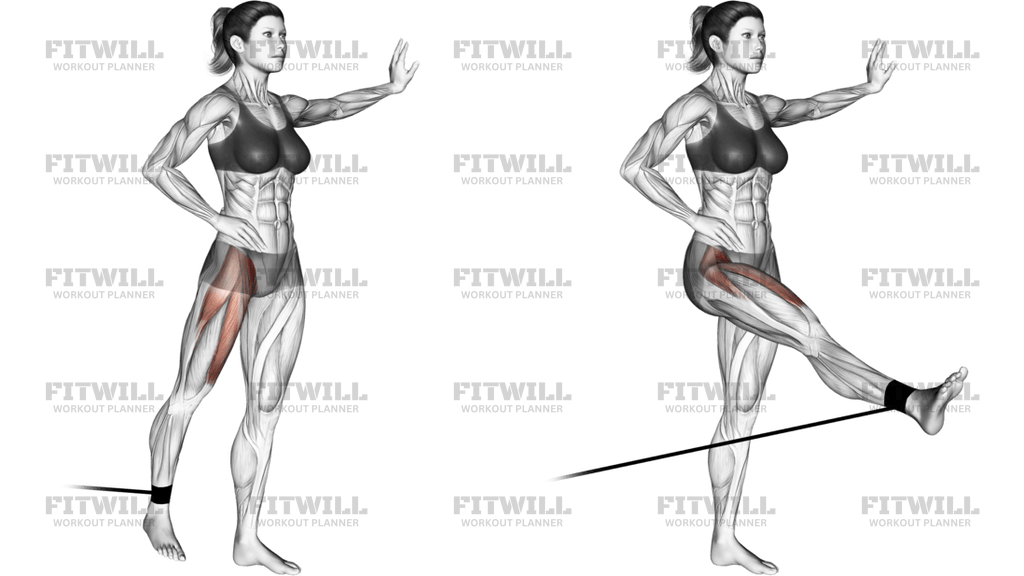
Band Standing Straight Leg Raise is a single-leg band drill that asks you to lift one straight leg against constant tension while the other leg stays planted. The movement is simple on paper, but the setup matters: the band needs to pull from a low anchor so the working leg has to travel through a clear path instead of swinging freely. That makes the exercise useful for hip control, pelvic stability, and clean single-leg coordination.
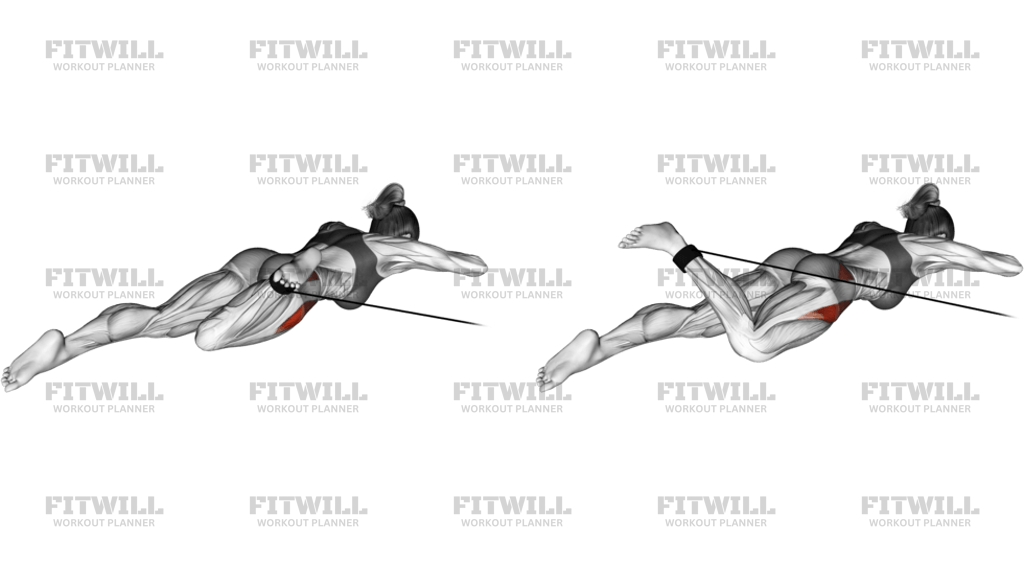
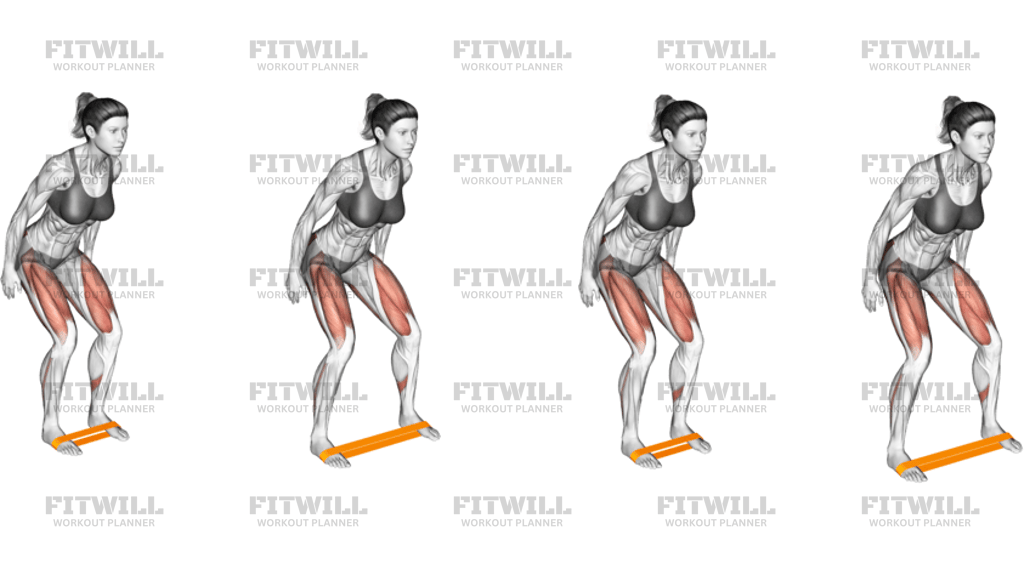
The image shows a standing position with one hand braced for balance, the support foot grounded, and the moving leg kept long as it travels forward. Because the knee stays straight, the work shifts to the hip and trunk instead of letting the rep become a knee lift. The standing side has to stay tall and quiet, and the pelvis has to stay level so the band tension does not twist the torso or dump the lower back into extension.
During the lift, the goal is not height for its own sake. Raise the straight leg only as far as you can keep the ribs stacked, the hips square, and the standing knee stable. The band should create a steady challenge from the first inch of motion through the top position, then you should lower the leg slowly enough that the tension never disappears. If the rep turns into a swing, the band is too heavy or the range is too big.
This exercise fits well in a warm-up, activation block, accessory circuit, or rehab-style lower-body session when you want controlled hip motion without heavy loading. It is also a good choice when you need single-leg balance work with a clear, repeatable path. Keep the load light enough that the ankle track stays smooth and the torso does not lean back to steal range.
For best results, think about the planted leg, the lifted leg, and the trunk as one unit. The support side should stay strong and quiet, the moving side should stay long and deliberate, and the breath should stay steady throughout the set. That combination gives you a cleaner rep pattern and a better training effect than simply chasing a bigger kick or a faster cadence.
[ Workout Log & Planner ]
Put your next workout in Fitwill
Keep your plan and training log ready when you are.


Instructions
- Anchor the band low behind you and loop it around the ankle of the working leg.
- Stand tall on the support leg, plant the whole foot, and hold a wall, rack, or post with one hand if needed.
- Set the pelvis square, keep the ribs stacked over the hips, and keep a soft bend in the standing knee.
- Start with the working leg straight and the foot relaxed or lightly dorsiflexed so the line of pull stays clean.
- Brace the trunk, then lift the straight leg forward against the band without leaning back or opening the hip.
- Raise the leg only until you can keep the pelvis level and the lower back from arching.
- Pause briefly at the top, then lower the leg slowly until the band tension is still under control.
- Reset your breath and repeat for the planned reps before switching sides.
Tips & Tricks
- Set the anchor low enough that the band is already challenging the leg at the start, not only at the top.
- Keep the knee straight, but do not lock it so hard that the thigh starts shaking or the foot swings.
- If your torso leans back to finish the rep, shorten the range instead of forcing a higher leg lift.
- Hold onto a support with the free hand if balance is limiting the quality of the leg path.
- Exhale as the leg lifts and keep the ribs from flaring up toward the ceiling.
- Use a slow lowering phase so the band does not snap the leg back into the start position.
- Stop the set when the standing hip starts hiking or the pelvis starts rotating toward the moving leg.
- Choose a lighter band if the ankle path gets jerky or the lower back starts taking over.
Frequently Asked Questions
What does Band Standing Straight Leg Raise work most?
It is mainly a single-leg hip control drill, so the lifting leg has to move cleanly while the standing leg and trunk keep you stable.
Do I need to face away from the band anchor?
Yes, the usual setup is a low anchor behind you so the band pulls the working ankle backward as you lift the straight leg forward.
How high should the leg rise?
Only raise it as far as you can keep the pelvis level and the lower back quiet; height matters less than control.
Should the knee stay straight the whole time?
Yes. Keeping the knee straight is what makes this a straight leg raise instead of a knee drive.
Can beginners use this exercise?
Yes, if the band is light and you can hold onto a support while you learn the path and balance requirements.
Where should I feel the work?
You should feel the lifting side working through the hip, with the standing glute, core, and balance muscles preventing sway.
What if the band rubs my ankle or foot?
Use an ankle cuff, move the anchor so the line of pull is cleaner, or switch to a band that sits more comfortably.
What is the most common mistake?
Leaning back or swinging the leg to get extra height is the main problem, because it turns the rep into momentum instead of control.