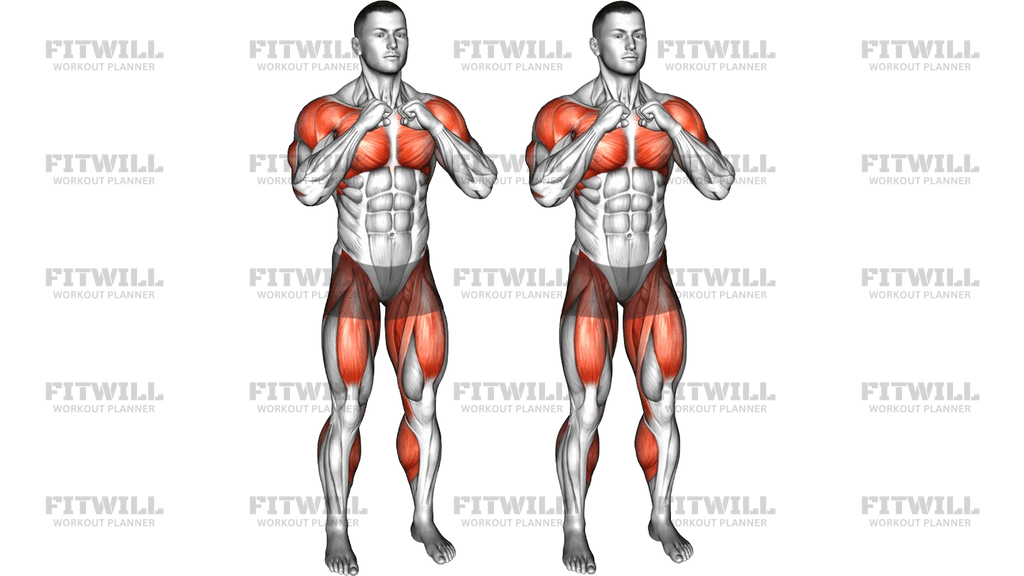
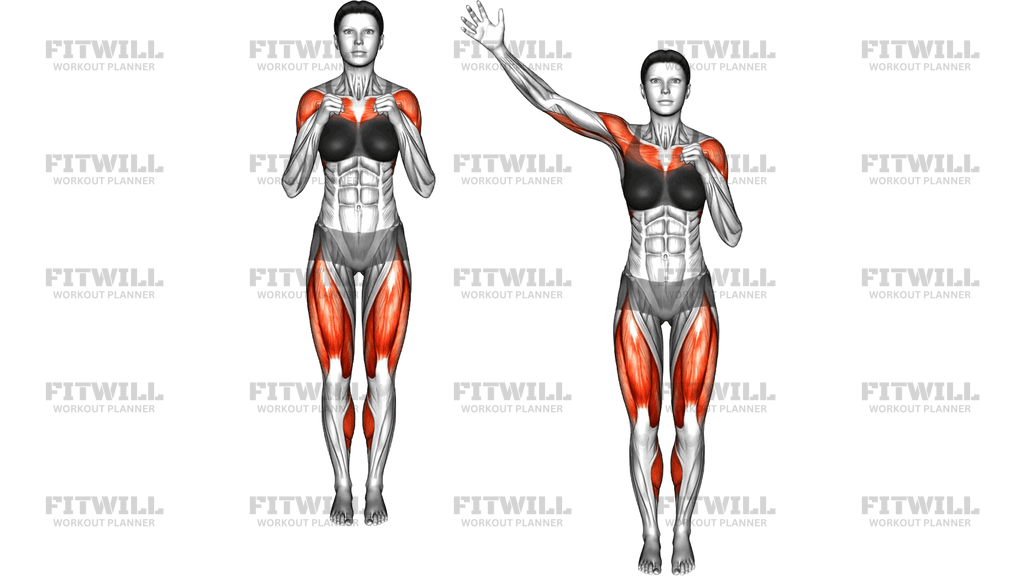
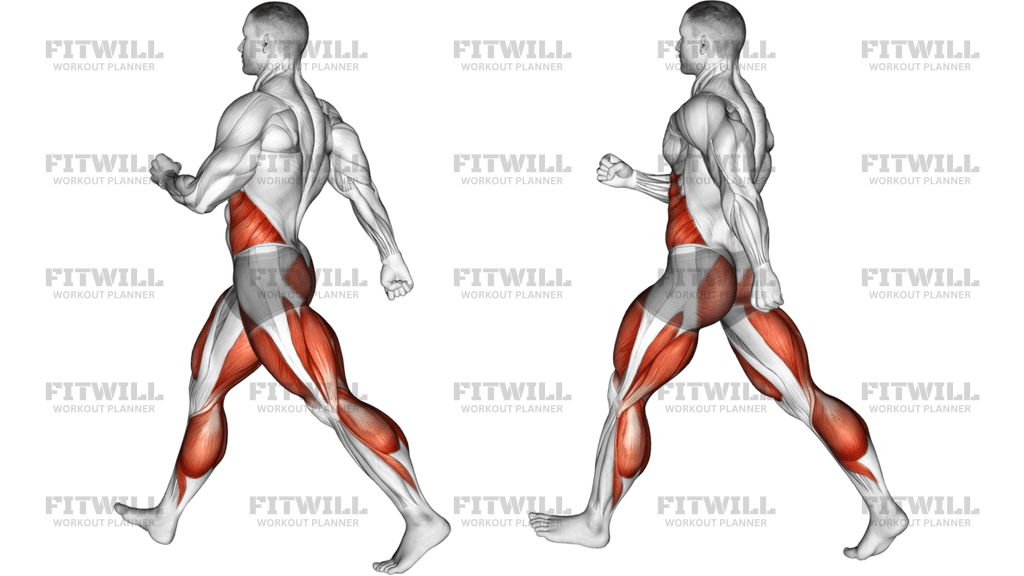
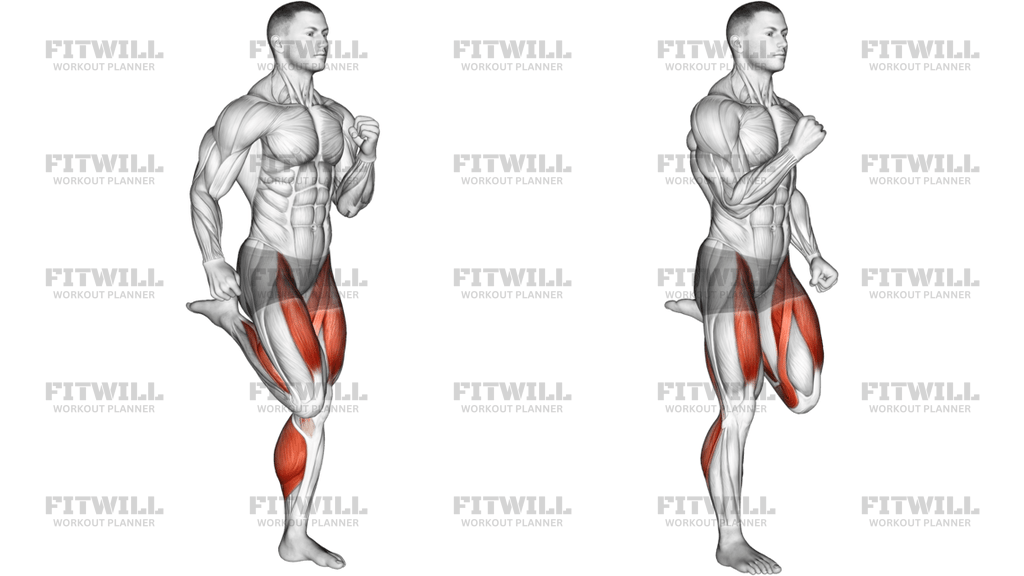
Lever Stepper
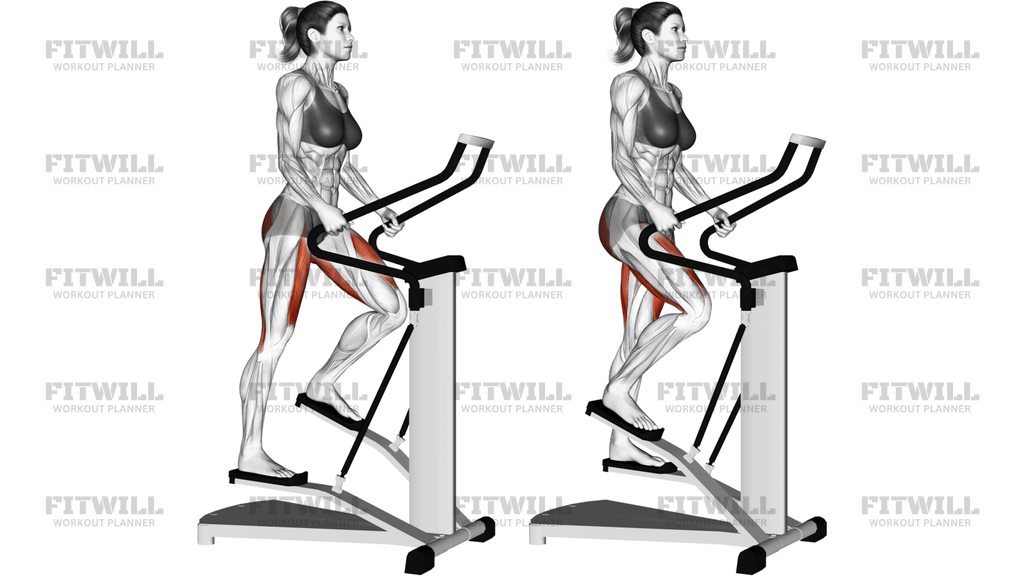
Lever Stepper is a guided cardio machine that combines alternating stepping with moving handles. It keeps you in an upright, supported position while the pedals and arm levers create a climbing pattern that raises the heart rate and loads the legs without the impact of running. Because the machine controls the path, the quality of the setup matters as much as the stepping itself.
This exercise is most useful when you want steady lower-body cardio with some upper-body involvement. The main work comes from the legs and glutes, while the arms, shoulders, and core help stabilize your body and keep the rhythm smooth. That makes Lever Stepper a practical choice for general conditioning, warm-ups, fat-loss sessions, and intervals when you want a repeatable movement you can hold for time.
Start by standing tall on the pedals with one foot on each platform and both hands on the handles. Keep your chest lifted, ribs stacked over your pelvis, and your weight centered so you are not hanging on the bars. A controlled setup lets the pedals move under you instead of forcing you to reach or lunge for every step, which keeps the stride cleaner and the joints happier.
As you step, press through the whole foot and let one pedal travel down as the other rises. The arms should move with the machine rather than overpower it, so the handle push and pull stays smooth and matched to the leg drive. Keep the steps even, avoid bouncing through the hips, and breathe rhythmically so the pace stays sustainable instead of turning into a rushed climb.
The best Lever Stepper reps look quiet and repeatable. If your knees collapse inward, your shoulders creep up, or you start leaning heavily on the handles, the resistance is probably too high or the cadence is too fast. A smaller, smoother range is usually better than forcing a bigger step, especially when you are working for time or using the machine for conditioning.
Use Lever Stepper when you want a low-impact cardio option that still asks for coordination and lower-body drive. It fits well in circuits, warm-ups, active recovery, and interval blocks, but it also works as a straightforward standalone cardio session. Keep the movement smooth, step off carefully when you finish, and treat the handles and pedals as a coordinated pattern rather than two separate tasks.
[ Workout Log & Planner ]
Put your next workout in Fitwill
Keep your plan and training log ready when you are.


Instructions
- Step onto the machine with one foot on each pedal and take a firm hold of the moving handles.
- Stand tall with your chest lifted, eyes forward, and your weight centered between both pedals.
- Keep your elbows softly bent and your shoulders down so you are not hanging on the handles.
- Press one pedal down by driving through the whole foot while the opposite pedal rises under control.
- Let the handles travel with the step and keep the arm action smooth instead of jerky or forced.
- Keep your hips level and your knees tracking in line with your toes as you alternate steps.
- Use a steady rhythm that lets you breathe without holding your breath or rushing the cadence.
- Stay light through the upper body and avoid rocking your torso to fake a bigger stride.
- When you finish the set, slow the pedals down and step off only after the machine is stable.
Tips & Tricks
- If you are leaning hard on the handles, reduce the resistance and let your legs do more of the work.
- Keep your feet planted through the pedal instead of bouncing on the toes at the top of each step.
- A shorter, quieter stride usually keeps the knees and hips happier than forcing the pedals to travel farther.
- Do not shrug into the grips; let the shoulders stay low while the elbows and wrists follow the machine.
- If your knees cave inward, slow the cadence and focus on driving each knee straight over the second toe.
- Use a pace you can hold for the full interval without losing the smooth push-pull rhythm in the arms.
- Try to keep your torso stacked over your hips instead of folding forward at the waist.
- When the set gets hard, smooth out the steps before you increase speed.
Frequently Asked Questions
What muscles does Lever Stepper work?
It mainly trains the legs and glutes, with the calves, shoulders, and core helping you stabilize and keep the machine moving smoothly.
Is Lever Stepper beginner-friendly?
Yes. Start with a slow pace and light resistance so you can learn how to step and move the handles without leaning on them.
Should I pull hard on the handles during Lever Stepper?
No. The handles should move with your stride, but the legs should still be doing most of the work. If your arms are taking over, the resistance is too high.
What is the most common Lever Stepper mistake?
People often lean forward and dump bodyweight into the handles. Stay tall and centered so each pedal drives smoothly under you.
How long should I stay on the Lever Stepper?
Use it for the duration that matches your goal: a few minutes for warm-ups or intervals, or a longer steady session for conditioning.
What should my feet do on the pedals?
Keep each foot planted and press through the whole foot as the pedal drops. Avoid bouncing on your toes or letting your heels lift aggressively.
Can I use Lever Stepper for interval training?
Yes. It works well for short hard efforts and recovery periods because the machine gives you a consistent climbing rhythm you can repeat.
What should I do if my knees feel stressed?
Lower the resistance, shorten the step, and keep your knees tracking in line with your toes. If the machine still feels rough, stop and reset your stance.