Bridge Pose Setu Bandhasana
Bridge Pose Setu Bandhasana is a floor-based backbend that lifts the pelvis while the feet, shoulders, and upper back stay anchored to the mat. It is often used in yoga and general training to build hip extension strength, open the front of the body, and teach cleaner control through the spine and pelvis. Because the position is simple, small changes in foot placement, rib position, and breath have a big effect on how the pose feels.
This movement places the most emphasis on the glutes and hamstrings, with the core and spinal muscles helping stabilize the trunk as the hips rise. When the setup is right, Bridge Pose Setu Bandhasana feels powerful through the back of the body without dumping pressure into the lower back. It can be a useful bridge between mobility work and strengthening work because it asks you to create shape and tension at the same time.
Start by lying on your back with your knees bent and your feet flat, about hip-width apart. Your heels should be close enough that your shins can stay nearly vertical when you lift. Keep your arms relaxed on the floor, palms down, and lengthen the back of your neck so the chin does not jut forward. That setup gives you a stable base and makes it easier to lift the hips from the glutes instead of arching the lumbar spine.
To perform Bridge Pose Setu Bandhasana well, exhale and press the floor away through your feet while you raise the hips in a smooth arc. Keep the knees tracking forward and let the pelvis come up only as high as you can hold without the ribs flaring or the neck tightening. At the top, the body should feel long from knees to shoulders rather than compressed through the lower back. Lower with control, keeping the feet planted and the motion steady instead of dropping straight down.
Bridge Pose Setu Bandhasana is useful as a warm-up, a glute activation drill, a recovery-focused strength movement, or a gentle back-opening pose at the end of a session. It also works well when you want to train the hips without equipment or when you need a low-impact option that still builds meaningful tension. If you feel the work mostly in the hamstrings, adjust the feet slightly closer; if the low back takes over, shorten the range and focus on a smaller, cleaner lift. The best reps look calm, even, and repeatable rather than high or forced.
[ Workout Log & Planner ]
Put your next workout in Fitwill
Keep your plan and training log ready when you are.


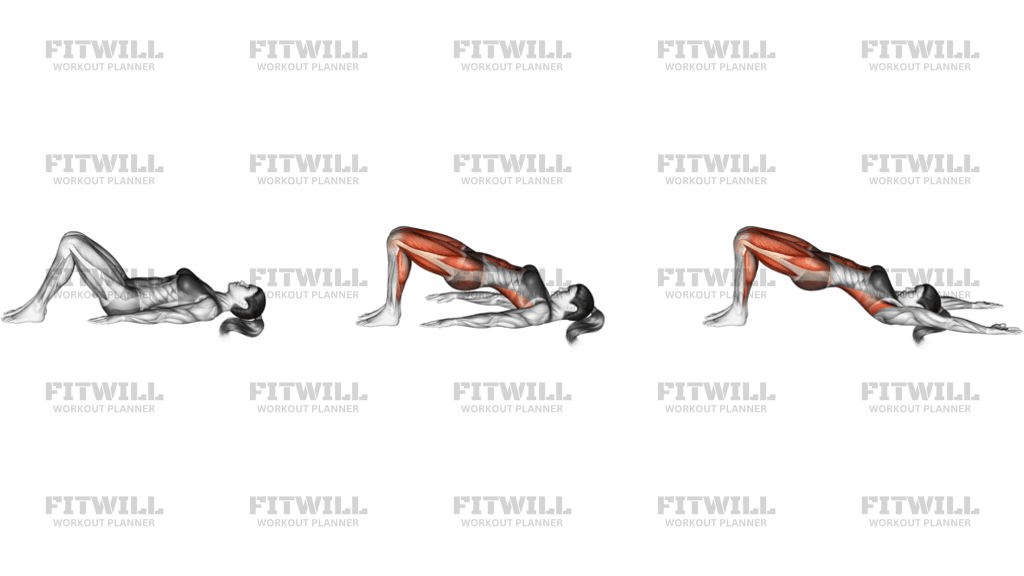
Instructions
- Lie on your back with your knees bent, feet flat on the floor, and heels placed under or just slightly in front of your knees.
- Set your feet hip-width apart, point your toes forward, and keep your arms long by your sides with your palms down.
- Lengthen the back of your neck, tuck your chin slightly, and keep your shoulder blades and upper back resting on the mat.
- Inhale to prepare, then exhale and press evenly through your feet to start lifting your hips off the floor.
- Raise your pelvis in a smooth arc until your thighs and torso form a comfortable line without forcing your lower back to arch.
- Keep your knees tracking straight ahead and avoid letting them drift wide or collapse inward as you rise.
- Pause briefly at the top, squeeze your glutes lightly, and keep your ribs from flaring up toward the ceiling.
- Lower your hips slowly back to the floor under control, then reset your feet and spine before the next rep.
Tips & Tricks
- Place your heels close enough that your shins stay nearly vertical at the top; if your feet are too far away, your hamstrings will take over.
- Drive through the whole foot, not just the toes, so the lift comes from the hips instead of the calves.
- Keep the ribs soft and stacked over the pelvis; if your chest pops up first, the low back is doing too much work.
- A small pause at the top usually creates better glute tension than trying to bridge higher.
- If your hamstrings cramp, walk your feet a little closer to your hips and make the lift smaller.
- If your neck feels crowded, keep the chin slightly tucked and look straight up instead of turning your head.
- For a gentler version, lift only halfway and focus on a slow, even exhale on the way up and down.
- If you want more challenge, slow the lowering phase and keep the pelvis level instead of dropping one side first.
Frequently Asked Questions
What muscle does Bridge Pose Setu Bandhasana target most?
It mainly targets the glutes, with the hamstrings, spinal muscles, and core helping stabilize the lift.
How should my feet be placed in Bridge Pose Setu Bandhasana?
Keep your feet about hip-width apart with your heels close enough that your shins stay close to vertical when your hips rise.
Should I feel Bridge Pose Setu Bandhasana in my lower back?
No, the load should stay mostly in the glutes and hamstrings. If your lower back takes over, lower the hips less and keep the ribs from flaring.
Is Bridge Pose Setu Bandhasana the same as a glute bridge?
They are very similar, but Bridge Pose Setu Bandhasana is usually performed with a slower, breath-led yoga style and a stronger focus on spinal length and control.
Why do my hamstrings cramp in Bridge Pose Setu Bandhasana?
Your feet are probably too far from your hips or you're trying to lift too high. Bring the feet a little closer and keep the bridge smaller.
Can beginners do Bridge Pose Setu Bandhasana?
Yes. Start with a small lift, hold it for a breath or two, and keep the motion smooth instead of chasing height.
What should I avoid at the top of the pose?
Avoid flaring the ribs and jamming the neck back. The top position should feel long through the front of the body, not compressed in the spine.
Can I hold Bridge Pose Setu Bandhasana instead of doing repetitions?
Yes. Short holds work well if you want more isometric glute work and a steadier backbend, as long as you can keep the pelvis level and the neck relaxed.