Crane Pose Bakasana
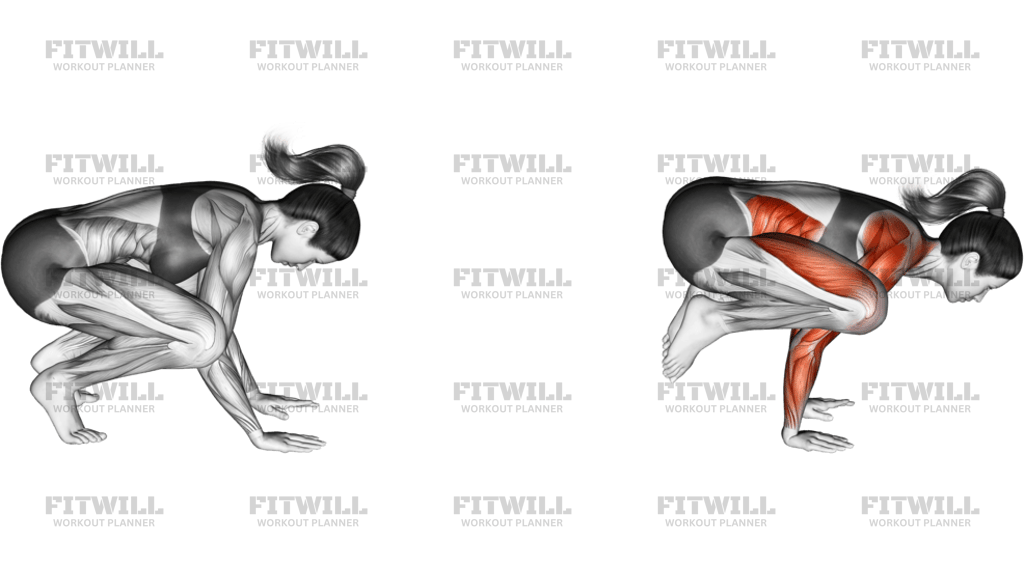
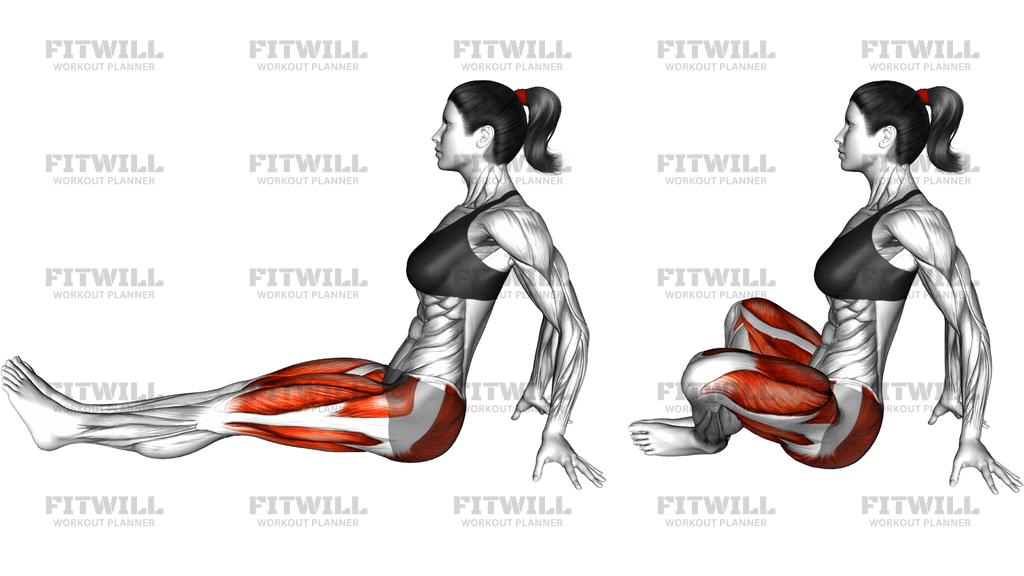
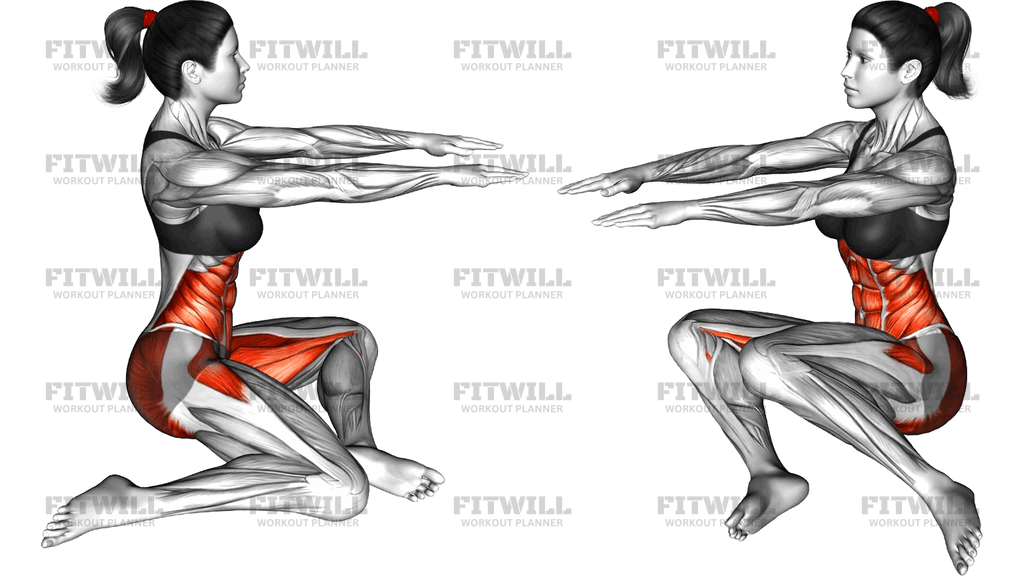
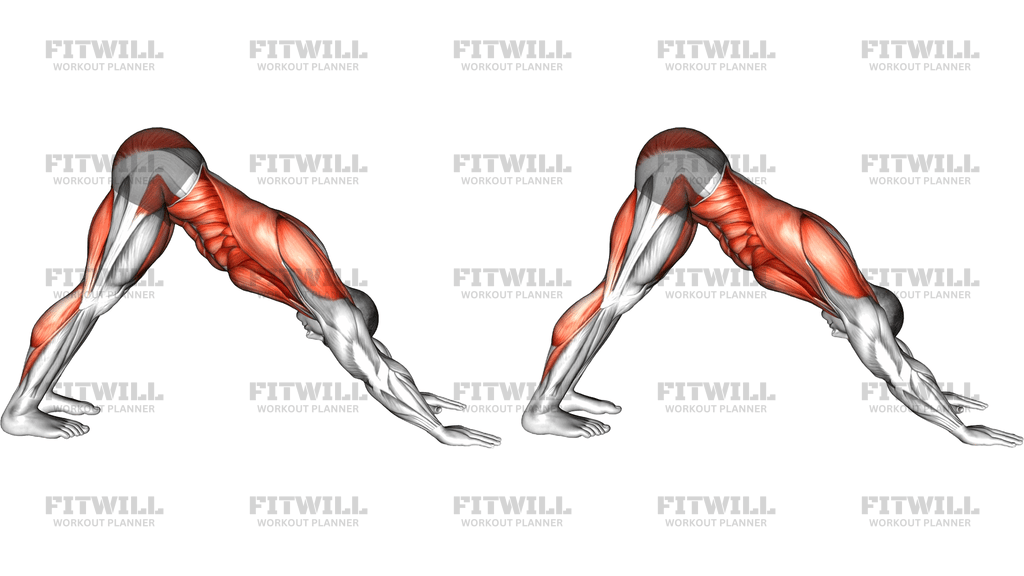
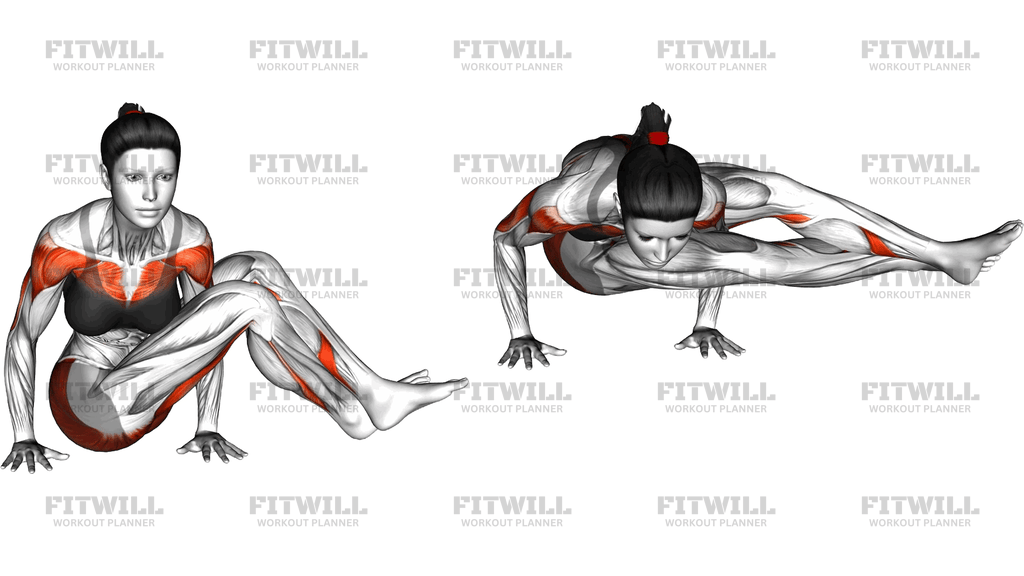
Crane Pose Bakasana is a bodyweight yoga arm balance built around forward weight shift, hip compression, and shoulder control. In the image, the hands are planted on the floor, the knees are tucked high onto the upper arms, and the feet lift off the ground as the torso rounds forward. The pose asks you to stack your center of mass over the palms without collapsing through the shoulders or letting the elbows flare out.
This movement trains more than balance alone. The wrists and fingers grip the floor, the triceps and shoulders support the body, and the core keeps the knees drawn toward the chest so the feet can stay light. The rounded upper-back position and strong exhale help create the compression that makes the lift possible, which is why this pose usually feels easier when the hips are high and the gaze stays slightly forward on the floor.
The setup matters because Bakasana is won before the feet leave the ground. If the hands are too wide, the knees are too low on the arms, or the elbows drift apart, the pose becomes unstable quickly. A clean attempt starts with the hands rooted firmly, the shoulders protracted, and the knees pressing into the triceps or upper arms so the torso can shift forward in one controlled line.
Use a slow, deliberate lift rather than a jump. Lean the weight into the fingertips, keep the elbows bent just enough to create a shelf for the knees, and bring one foot, then the other, off the floor only when the balance feels centered. Holding the top position with steady breathing teaches control, and lowering back down under control reinforces wrist and shoulder stability.
Crane Pose Bakasana is commonly used in yoga sequences, skill work, and core-focused conditioning because it builds confidence in arm support and body awareness. It is not a load-for-load strength drill; the quality of the shape is the training. For safety, warm up the wrists, use a mat or padded surface, and stop if the wrists or shoulders feel pinchy rather than steadily loaded.
[ Workout Log & Planner ]
Put your next workout in Fitwill
Keep your plan and training log ready when you are.


Instructions
- Start in a deep squat with your feet close together and place your hands flat on the floor shoulder-width apart, fingers spread wide.
- Bend your elbows slightly and set your knees high onto the backs of your upper arms, just above the triceps.
- Shift your chest forward until your shoulders move in front of your wrists and your weight begins to load into the hands.
- Lift one foot from the floor first, then bring the other foot up once you feel the balance point settle over the palms.
- Round your upper back, pull your knees toward your chest, and keep your gaze a short distance ahead of your fingertips.
- Press the floor away through your hands and keep the elbows tracking back rather than flaring wide.
- Hold the balance for the planned time or rep count while breathing steadily and keeping the core tight.
- Lower one foot at a time back to the floor with control, then reset your squat before the next attempt.
Tips & Tricks
- Spread the fingers wide and grip the floor through the fingertips so you can correct small forward shifts.
- Keep the knees high on the upper arms; if they sit too low, the feet usually feel too heavy to lift.
- Think about pushing the floor away to keep the shoulders active instead of sinking between the hands.
- Look a little ahead of the fingertips, not straight down at the feet, so your weight stays controlled.
- Keep the elbows bent but narrow enough to create a stable shelf for the knees.
- Use a strong exhale as you lean forward; the hollowed, braced torso makes the lift easier.
- If the wrists feel overloaded, shorten the hold and reset instead of forcing a longer balance.
- Practice on a mat or folded towel if you need a little extra comfort under the palms.
Frequently Asked Questions
What does Crane Pose Bakasana train most?
It primarily trains shoulder stability, arm support, wrist loading, and core compression while you balance your body weight on your hands.
Is this more of a strength exercise or a balance pose?
It is both, but the limiting factor is usually balance and control rather than raw strength.
Where should the knees sit in Bakasana?
The knees should rest high on the backs of the upper arms, close to the triceps, so the torso can shift forward without slipping.
Why do my feet keep dropping back down?
Usually the weight is staying too far back or the knees are too low on the arms. Shift the shoulders farther forward and round the upper back more as you lift.
Should my elbows be straight or bent?
A slight bend is normal in the image and helps create a stable shelf for the knees, but the elbows should not flare out.
Can beginners work up to this pose?
Yes. Start by practicing the forward lean, knee placement, and one-foot lifts before trying to hold both feet off the floor.
What should I do with my gaze?
Keep your eyes a little in front of your hands so your head does not drop and pull your balance backward.
What is a common mistake in Bakasana?
Common mistakes are placing the hands too far apart, letting the knees slide off the arms, or rushing the lift instead of leaning forward gradually.