Fish Pose Matsyasana
Fish Pose, or Matsyasana, is a bodyweight yoga backbend performed from a supine position with the chest lifted and the crown of the head lightly supported. It opens the front of the body, asks the upper back to extend, and creates a long line through the neck, torso, and legs. In the image for this exercise, the body stays extended on the floor while the chest arches upward, which is the key shape to preserve.
This pose is less about brute effort and more about controlled positioning. When it is done well, the ribs stay organized, the shoulders keep drawing back and down, and the neck remains long instead of compressed. The work comes from staying tall through the chest while the lower body stays quiet and the breath stays smooth. That makes it useful for posture work, warm-ups, mobility sessions, and recovery-focused training blocks.
Setup matters because a small change in hand, elbow, or head position changes the whole pose. Start by lying on your back, then place the hands beneath the hips or alongside the thighs as shown in the image. Press the forearms and elbows into the floor, lift the chest, and let the top of the head rest lightly if that is the variation you are using. The goal is an open, supported arc, not a forceful neck crank or a collapsed lower back.
During each hold, keep the lift steady and breathe into the chest and upper ribs. The ribs should expand without flaring excessively, and the pelvis should stay grounded enough to support the backbend. If the neck feels pinched, shorten the range, lower the chest slightly, or support the head with a more comfortable setup. If the lower back takes over, reduce the arch and re-center the effort in the upper back and front of the body.
Fish Pose is commonly used as a counter-pose after forward folds, core work, or seated practice, but it also stands well on its own as a controlled mobility drill. The best version is calm, even, and repeatable, with no jerking into the position and no forced hold through pain. Choose a version that lets you keep the chest open, the breath steady, and the neck comfortable from start to finish.
Fitwill
Log Workouts, Track Progress & Build Strength.
Achieve more with Fitwill: explore over 9600 exercises with images and videos, access built-in and custom workouts, perfect for both gym and home sessions, and see real results.
Start your journey. Download today!




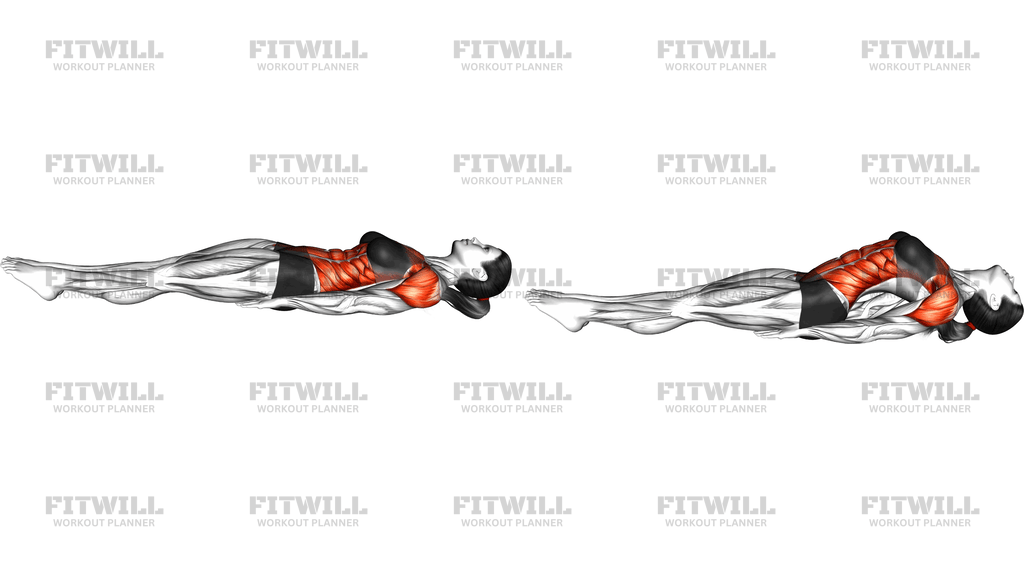
Instructions
- Lie flat on your back with your legs extended and your arms at your sides, then slide your hands under your hips or place them beside your thighs.
- Press your forearms and elbows into the floor, keep your shoulders drawn away from your ears, and set your head in a neutral line before lifting.
- Inhale and lift your chest toward the ceiling by extending through the upper back, letting the sternum rise without forcing the lower back to jam.
- If you are using the classic variation, lightly place the crown of your head on the floor while keeping the neck long and supported.
- Hold the open position with a calm breath and keep the legs relaxed and straight so the torso stays the focus.
- Exhale as you lower the chest back to the floor with control instead of dropping out of the pose.
- Reset the shoulders, neck, and ribcage before the next hold or repetition.
- Repeat for the planned duration or number of controlled holds.
Tips & Tricks
- Treat the chest lift as a gentle arch, not a deep bridge; the shape should feel open rather than compressed.
- Keep the elbows active against the floor so the upper body does not collapse into the shoulders.
- If the crown of the head feels heavy or pinchy, keep more weight on the forearms and reduce the backbend.
- Let the breath expand the front ribs, but do not flare the lower ribs hard enough to stress the low back.
- Keep the jaw, throat, and face relaxed; tension there usually means the neck is taking over.
- Use a yoga mat or padded surface so the back of the skull and elbows are not digging into hard floor.
- Shorten the hold immediately if the lower back starts to pinch or the breathing becomes shallow.
- Move into and out of the pose slowly so the spine can articulate smoothly instead of hinging sharply.
Frequently Asked Questions
What does Fish Pose Matsyasana work most?
It mainly opens the chest, front shoulders, upper back, and front of the neck while asking the spine to extend.
Where should my hands go in Fish Pose?
Most versions place the hands under the hips or alongside the thighs so the elbows can support the lift from the floor.
Should my head be fully resting on the floor?
Only if that feels comfortable. In the classic version the crown of the head may touch lightly, but the neck should never feel jammed or compressed.
Is Fish Pose supposed to feel in my lower back?
A mild stretch can be normal, but the main sensation should stay in the chest and upper body. If the low back is doing most of the work, reduce the arch.
Can beginners do this pose safely?
Yes, if they keep the range small and stay off any painful neck or back positions. A supported, shallow version is the safest place to start.
What is the most common mistake with Matsyasana?
Forcing the neck back, collapsing into the shoulders, or over-arching the lower back are the biggest problems.
When should I use Fish Pose in a workout?
It works well after seated work, forward folds, or core training as a gentle counter-pose and breathing reset.
How do I make the pose harder without turning it into strain?
Increase the hold time, improve the smoothness of the breath, or open the chest a little more while keeping the neck and lower back comfortable.