Garland Pose Malasana
Garland Pose Malasana is a deep bodyweight squat used in yoga and mobility work to open the hips, ankles, and inner thighs while teaching balance in a compressed position. The pose asks you to settle low, keep the feet rooted, and maintain enough torso length that breathing stays calm instead of turning into a collapse. When it is done well, it feels controlled and grounded rather than forced.
In the image, Garland Pose Malasana is shown as a narrow-to-moderate squat with the toes turned out, the heels staying on the floor, the knees opening wide, and the torso folding forward while the arms reach ahead for balance. That forward reach is not just decorative; it helps counterbalance the hips and lets you keep the spine long enough to avoid rounding hard through the lower back. The main sensations usually come from the ankles, groin, adductors, glutes, and deep core support.
The setup matters more than people expect. Lower into the squat by bending the hips and knees together, then place the hands on the floor in front of you if you need extra stability. Keep pressure spread across the whole foot, especially the heels and the base of the big toe, and let the knees track over the toes instead of collapsing inward. A slightly wider stance, a small heel lift, or a shorter depth can make the position much more usable if your hips or ankles are tight.
Garland Pose Malasana is useful as a warm-up, a hip-opening drill, a recovery posture, or a controlled squat hold for improving comfort in deeper lower-body positions. It also carries over to squats, lunges, and other positions that ask the body to stay organized in deep flexion. The goal is not to force the deepest possible sit; it is to find a stable version you can breathe in and hold without pain, wobbling, or excess tension through the knees and feet.
Treat the pose as a quality check. If your heels lift, the knees cave inward, or the torso has to round aggressively to stay down, reduce the depth and rebuild the position. If the front of the hips pinch or the ankles cramp, adjust the stance or come up slightly. A clean Garland Pose Malasana should feel steady, spacious, and repeatable, with the body folded low but still under clear control.
Fitwill
Log Workouts, Track Progress & Build Strength.
Achieve more with Fitwill: explore over 9600 exercises with images and videos, access built-in and custom workouts, perfect for both gym and home sessions, and see real results.
Start your journey. Download today!




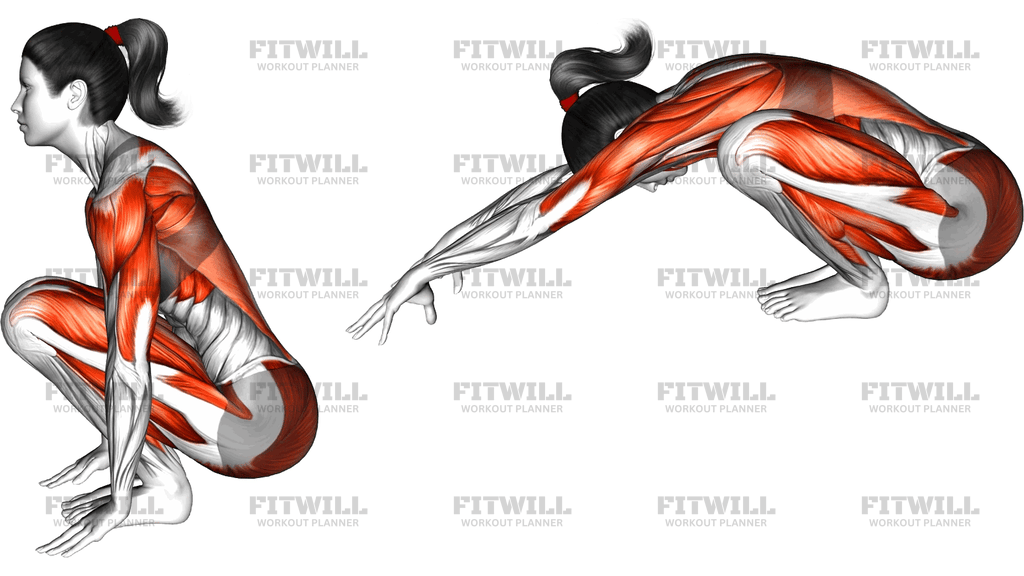
Instructions
- Stand with your feet slightly wider than hip-width and turn your toes out enough that you can squat without your knees twisting.
- Lower your hips toward the floor by bending your knees and hips together, keeping your heels rooted and your weight centered over the whole foot.
- Bring your hands to the floor in front of you for balance, then let your hips sink between your ankles.
- Open your knees wide and keep them tracking over your toes instead of letting them cave inward.
- Lengthen your chest forward and keep your spine long as you settle into the bottom position.
- Reach your arms forward along the floor if that helps you balance and keep your shoulders relaxed away from your ears.
- Breathe slowly into your ribs and belly while you hold the squat, staying calm through the neck and jaw.
- Press through the feet, lift your hips with control, and stand back up smoothly when you finish the hold.
Tips & Tricks
- Turn the toes out only as far as needed for the hips to sit low without the knees feeling pinned.
- If your heels lift, widen the stance a little or place the heels on a folded mat before chasing more depth.
- Keep pressure on the base of the big toe and little toe so the feet do not roll outward as you sink.
- Let the elbows guide the knees open gently; do not pry the knees apart hard enough to irritate the groin.
- If the torso keeps folding forward, slide the hands farther ahead on the floor to create more counterbalance.
- A small forward lean is normal, but avoid collapsing the chest onto the thighs if you want to keep breathing well.
- Shorter holds with steady breathing are better than forcing a long hold while the ankles and hips are cramping.
- Stop the set if the front of the hips pinch or the knees hurt; the position should feel like a stretch, not a jam.
Frequently Asked Questions
What muscles does Garland Pose Malasana work?
It mainly loads the hips, adductors, glutes, ankles, and deep core while also challenging balance and posture.
Is Garland Pose Malasana good for beginners?
Yes, but beginners should keep the stance comfortable, use the hands for balance, and stay at a depth they can breathe in.
Why do my heels come up in Garland Pose Malasana?
Usually the ankles are limiting depth. Widen the stance slightly, turn the toes out a bit more, or raise the heels on a folded mat.
Should my knees be pushed wide in Garland Pose Malasana?
They should open enough to make room for the torso, but they should still track in line with the toes instead of being forced apart.
Can I keep my hands on the floor in Garland Pose Malasana?
Yes. The hands on the floor are a useful support, especially if you are working on ankle mobility or balance.
What should I feel at the bottom of Garland Pose Malasana?
A strong stretch in the inner thighs, hips, and ankles, with the core working to keep the torso organized.
Is Garland Pose Malasana more of a stretch or a strength pose?
It is mostly a mobility and positioning drill, but holding the squat also builds control in the hips, feet, and trunk.
How long should I hold Garland Pose Malasana?
Hold it long enough to breathe and settle the shape, usually for a few calm breaths rather than forcing a long grind.