Lotus Pose Padmasana
Lotus Pose Padmasana is a seated yoga posture built around deep hip external rotation, a tall spine, and calm, steady breathing. It is more about arranging the pelvis, hips, and legs into a quiet, balanced position than about generating force. When it is set up well, the pose feels stable and meditative; when it is forced, the knees and ankles usually complain first.
The full pose asks each foot to rest high on the opposite thigh while both knees settle outward and down. That shape opens the hips and inner thighs while asking the lower back to stay long and upright, so the work is really in control and position tolerance rather than visible motion. The hands usually rest on the knees or in the lap, which helps keep the shoulders soft and the chest open.
Getting into Lotus Pose Padmasana slowly matters more than trying to sit down quickly. The rotation should come from the hips, not by twisting the knees into place, and the pelvis should stay balanced on both sitting bones so the spine does not collapse backward. If the hips are not ready, a half-lotus or cross-legged seat is the safer choice.
Lotus Pose Padmasana is commonly used for meditation, breath work, quiet cooldowns, or any session where stillness and posture are the goal. It can also be a useful check on hip mobility and seated comfort, especially for people who spend a lot of time in desk positions. The best version is the one you can hold without pain, gripping, or a sense that the knees are being pulled into the shape.
Use a folded blanket or block under the hips if it helps the knees settle lower than the pelvis and makes the torso easier to stack upright. Keep the feet active, breathe smoothly through the nose, and come out of the pose at the first sign of sharp knee pressure, ankle strain, or numbness. Lotus Pose Padmasana should feel quiet, organized, and sustainable rather than forced.
[ Workout Log & Planner ]
Put your next workout in Fitwill
Keep your plan and training log ready when you are.


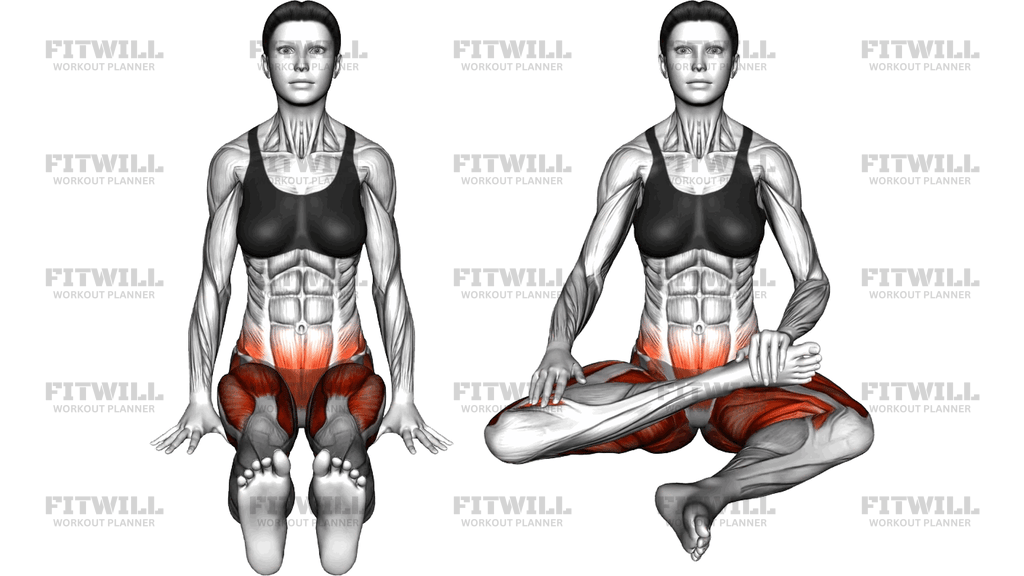
Instructions
- Sit on a mat or folded blanket with both legs extended and your spine tall.
- Bend your right knee and guide the right foot across to the opposite hip crease, using your hands to support the ankle and shin.
- Set the right foot high on the left thigh with the sole facing up and the heel close to the lower abdomen, not across the knee joint.
- Bend the left knee and bring the left foot across the front of the body, placing it high on the right thigh only if the hip opens easily.
- Keep both sitting bones grounded, lengthen through the crown of your head, and lift your chest without leaning back.
- Rest your hands on your knees or in your lap, relax the shoulders, and keep the jaw and face soft.
- Breathe slowly through the nose and let each exhale settle the thighs and knees without pushing them down.
- Hold the pose for the planned breath count, then support each foot with your hands and release one leg at a time to exit safely.
Tips & Tricks
- If the pelvis tips backward, sit on a folded blanket so the hips can stay above the knees.
- Do not press the knees toward the floor; the opening should come from the hips, not from forcing the joints.
- Keep the foot high on the thigh and away from the knee line so the ankle, not the knee, takes the shape.
- Enter the pose slowly and use your hands to guide each leg instead of swinging the foot into position.
- If one side feels dramatically tighter, lead with that leg first and use half lotus on the other side.
- Keep the lifted foot active with the ankle awake rather than letting it go limp and collapse inward.
- A soft upward lift through the sternum is enough; over-arching the low back usually means the hips need more support.
- Exit the pose as carefully as you entered it, especially if the legs feel stuck or the ankle has gone numb.
Frequently Asked Questions
What does Lotus Pose Padmasana work the most?
It mainly challenges hip external rotation, the inner thighs, and the muscles that keep the pelvis and spine upright. It is more of a mobility and posture hold than a strength exercise.
Is Lotus Pose Padmasana appropriate for beginners?
Only if the hips already open comfortably enough to place the feet high without knee strain. Beginners usually do better with a cross-legged seat or half lotus first.
Why do my knees hurt in Lotus Pose Padmasana?
Pain in the knees usually means the rotation is coming from the joint instead of the hip. Back off immediately and use a less aggressive seated position.
Should I sit on a blanket for Lotus Pose Padmasana?
Yes, if your knees sit higher than your hips or your lower back rounds, a folded blanket can make the pose much easier to hold. The extra height helps the pelvis stay balanced.
How long should I hold Lotus Pose Padmasana?
Start with a few slow breaths and build up only if the position stays comfortable. For meditation or breathing work, longer holds are fine as long as there is no knee or ankle discomfort.
What is the safest way to come out of Lotus Pose Padmasana?
Support each foot with your hands, release one leg at a time, and straighten both legs before changing sides or standing up. Do not yank the ankle out of position.
What is the difference between Lotus Pose Padmasana and half lotus?
Half lotus keeps one foot lower and is much easier on the hips and knees. It is the better progression if full Lotus Pose Padmasana feels cramped or unstable.
Can I use Lotus Pose Padmasana for meditation or breath work?
Yes, that is one of its main uses. The goal is a quiet, upright seat that lets you breathe smoothly without fidgeting.