Revolved Side Angle Pose Parivrtta Parsvakonasana
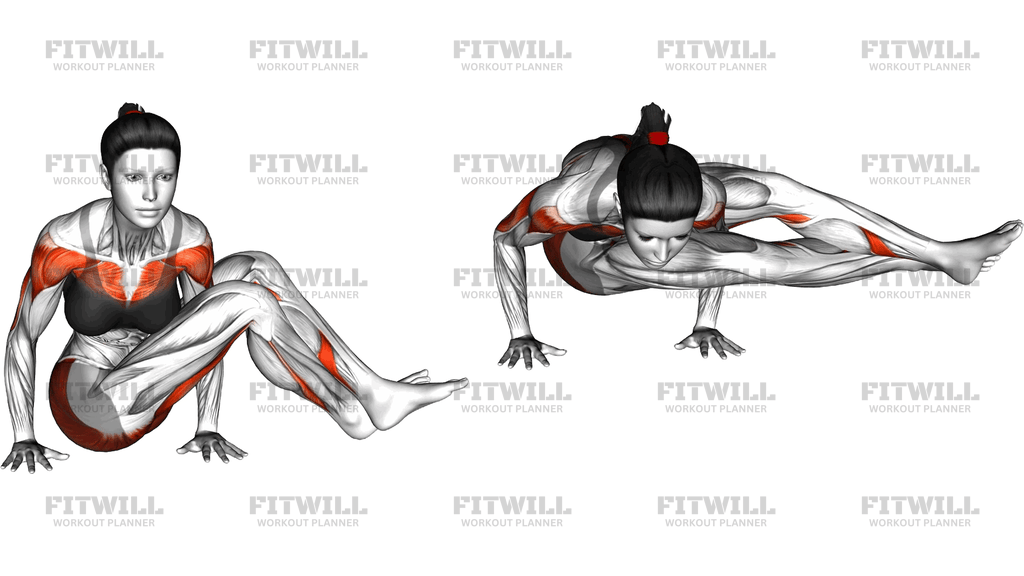
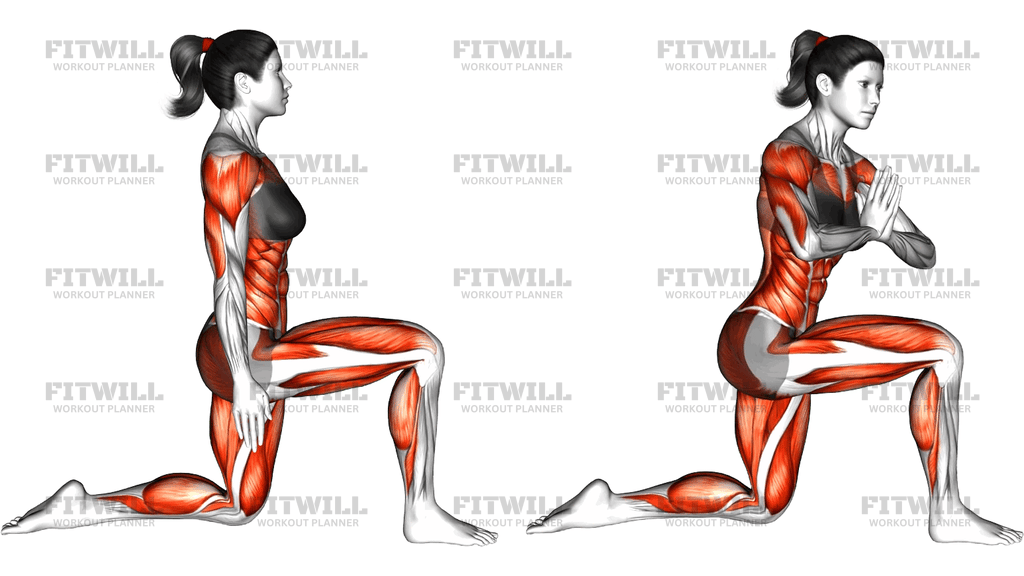
Revolved Side Angle Pose Parivrtta Parsvakonasana is a twisting yoga lunge that combines hip opening, thoracic rotation, balance, and long-line body control. The image shows a kneeling variation of the pose: the back knee stays down, the front foot is planted, the torso rotates over the front thigh, and the top arm reaches away from the body while the lower hand supports the twist near the floor.
The movement is most useful as a bodyweight mobility and control drill rather than a power exercise. It asks the front hip, the ankle, the obliques, the upper back, and the supporting shoulder to work together so the twist feels organized instead of collapsed. Because the pose is asymmetrical, the setup matters: if the front foot is too short, the pelvis cannot rotate cleanly; if the stance is too narrow, the chest tends to fold and the balance gets shaky.
A good repetition begins by creating length first and rotation second. Keep the front knee stacked over the ankle, press the back shin and top of the foot into the floor, and lift through the crown of the head before you turn. That order helps the ribcage spiral over the pelvis without dumping stress into the low back. If the floor is far away, a block under the lower hand is a better choice than forcing the shoulder and spine into a cramped position.
Breathing is part of the exercise. Inhale to create space through the ribs, then exhale to deepen the twist without losing the length you built in the spine. The pose should feel steady, open, and controlled, with the front leg and back leg both helping you stay grounded. Use it in yoga flows, warm-ups, cool-downs, or any session where you want to train rotational control and hip-to-spine coordination.
If the pose pinches the low back, compresses the front knee, or makes the shoulders round forward, shorten the stance and reduce the twist. The best result is not the deepest rotation; it is the cleanest shape you can hold while breathing smoothly and keeping both sides of the body active.
[ Workout Log & Planner ]
Put your next workout in Fitwill
Keep your plan and training log ready when you are.


Instructions
- Start in a half-kneeling lunge with the front foot flat, the front knee stacked over the ankle, and the back knee resting on the floor or mat.
- Square the pelvis as much as you can, then lengthen your spine before you begin the twist.
- Place the lower hand beside the front foot or on a block and keep the opposite arm free to reach overhead.
- Press the front heel down and the back shin into the floor so the base feels steady before you rotate.
- Exhale and spiral the chest over the front thigh, letting the ribcage turn without collapsing the low back.
- Reach the top arm long and keep both shoulders broad instead of cranking the neck.
- Hold the end position for a breath or two while keeping the front knee and standing hip under control.
- Inhale to unwind slowly back to the starting lunge, then repeat on the other side.
Tips & Tricks
- A block under the lower hand is normal in this pose; use it whenever the floor forces you to round the chest or shrug the shoulder.
- Keep the front knee tracking roughly over the second or third toe so the twist does not torque the knee inward.
- Think about rotating the ribcage over the pelvis, not wrenching the lower back to chase a bigger range.
- Press the back shin or top of the back foot into the mat to keep the rear hip active instead of hanging in the hip capsule.
- If the torso keeps collapsing forward, shorten the stance slightly so you can stay tall through the spine.
- Let the exhale deepen the twist, but do not force the breath to the point that the abdomen braces so hard you lose length.
- Keep the top arm active all the way from shoulder to fingertips so the pose feels long, not compressed.
- Stop before the front knee or low back starts to pinch; this pose should feel open and organized, not jammed.
Frequently Asked Questions
What does Revolved Side Angle Pose Parivrtta Parsvakonasana train?
It mainly trains rotational control, hip mobility, balance, and the stabilizers that keep the pelvis and ribcage organized in a twist.
Why does the image show a kneeling version of the pose?
The back-knee-down variation reduces balance demands and makes it easier to learn the twist, the reach, and the front-leg alignment.
Where should my lower hand go in this pose?
Place it beside the front foot or on a block so the chest can stay open and the shoulder does not have to force the floor away.
Should my back knee stay on the floor the whole time?
In this variation, yes. Keeping the back knee down makes the position more stable and lets you focus on the twist and the spine length.
What is the biggest form mistake to avoid?
Do not collapse into the low back to get more rotation. Keep length through the spine and rotate from the ribs instead.
Can I use a yoga block for support?
Yes. A block is one of the best modifications if the floor is too far or if reaching down causes the chest to cave in.
What should I feel in the front leg?
You should feel the front foot grounding, the front hip staying active, and the knee tracking cleanly without wobbling inward.
Is this more of a stretch or a strength exercise?
It is both, but most people use it as a controlled mobility and stability drill rather than a high-effort strength movement.