Stand Spread Leg Forward Fold
Stand Spread Leg Forward Fold is a standing wide-stance forward fold from yoga and mobility work. It is used to lengthen the hamstrings, inner thighs, adductors, and lower back while teaching you to hinge cleanly from the hips instead of collapsing straight down. The wide stance matters because it creates room for the torso to fold between the legs while keeping the feet planted and the legs active.
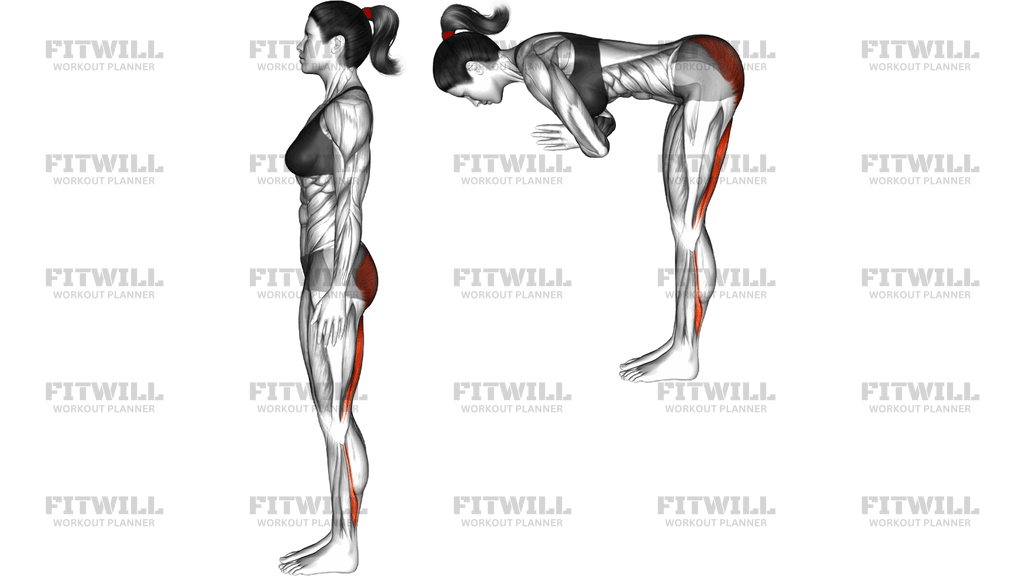
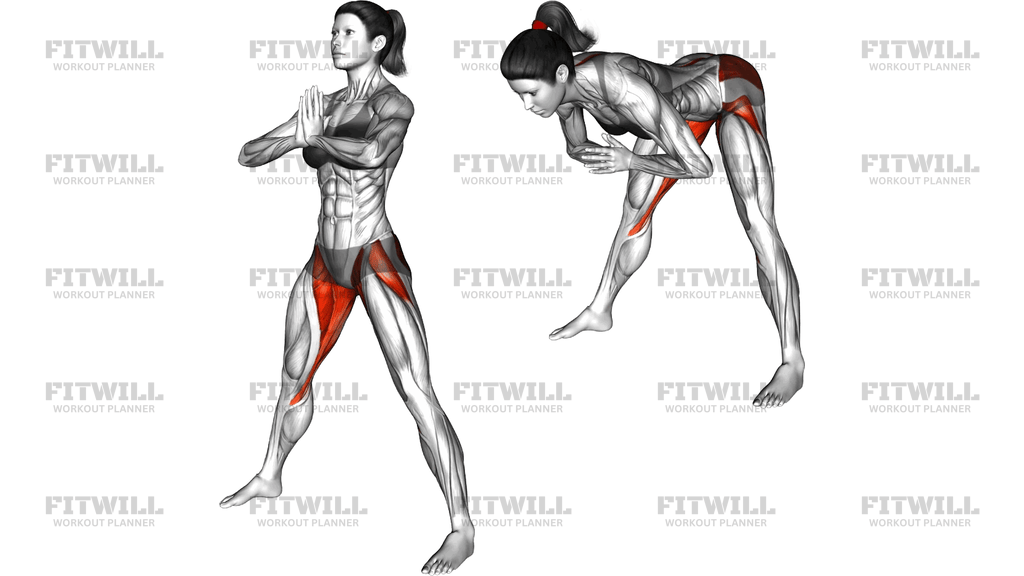
The image shows a progression from an upright wide stance into a deeper fold with the torso moving between the thighs. That setup is the point of the exercise: you are not trying to drop your chest by rounding the spine. You are first creating a long spine, then folding at the hips, letting the hands travel toward the floor, shins, or ankles only as far as control allows. The stretch should feel strong along the back of the legs and inner thighs, with the neck staying relaxed.
Because this is a bodyweight mobility exercise, quality comes from alignment and breathing rather than load. The knees can stay softly unlocked, the weight should stay balanced through both feet, and the pelvis should tip forward as the torso descends. If the hamstrings are tight, a smaller hinge with hands on the thighs or blocks is better than forcing the fold. If the low back starts to round aggressively, reduce the range and re-lengthen the spine before going deeper.
This movement is useful as a warm-up, cool-down, or dedicated flexibility drill, especially when you want to open the back of the legs before squats, lunges, deadlifts, or running. It can also be held for longer breathing-based stretches when the goal is relaxation and range of motion. The safest version is the one you can hold without gripping the neck, locking the knees, or losing the tripod pressure through the feet.
Done well, Stand Spread Leg Forward Fold teaches you to stay connected through the feet and hips while the torso folds forward in a controlled line. The stretch should feel deliberate, not forceful. Match the depth to your current hamstring and groin mobility, breathe steadily, and come out with the same control you used to go in.
[ Workout Log & Planner ]
Put your next workout in Fitwill
Keep your plan and training log ready when you are.


Instructions
- Stand tall and take a wide stance with your toes pointed slightly out and your weight evenly spread across both feet.
- Keep both legs active, soften the knees just enough to free the hips, and lengthen through the crown of your head before you fold.
- Inhale to prepare, then hinge at the hips so your torso starts to travel forward between your thighs.
- Let your hands slide down your legs as far as you can control, or place them on the floor, blocks, or shins if that is your current range.
- Keep the spine long as long as possible, then allow a natural fold without forcing your chest lower by rounding hard through the low back.
- Relax the neck and let the head follow the torso instead of reaching it forward.
- Hold the deepest comfortable position for steady breaths while keeping pressure through both feet.
- To come out, press through the feet, engage the legs, and roll the torso back up with control.
- Return to standing tall before repeating or moving to the next stretch.
Tips & Tricks
- Keep your feet wide enough that your torso can drop between your legs without your knees collapsing inward.
- A slight bend in the knees is better than locked knees if your hamstrings pull hard at the bottom.
- Think about tipping the pelvis forward first; do not just round the spine to reach the floor.
- If your hands do not reach the ground, use blocks, the floor on fingertips, or your shins instead of forcing depth.
- Press through the outer edges and heels of both feet so the pose stays balanced instead of drifting into one hip.
- Let the neck hang heavy and keep the jaw unclenched; tension there usually means you are pushing the fold too hard.
- Exhale into the stretch and use the breath to soften the hamstrings and adductors rather than bouncing.
- Come out slowly if you feel lightheaded, especially after a long hold or a deep yoga sequence.
Frequently Asked Questions
What does Stand Spread Leg Forward Fold stretch most?
It mainly stretches the hamstrings and inner thighs, with additional work through the lower back and calves depending on how deep you fold.
Can beginners perform this exercise?
Yes. Beginners can keep a smaller stance, bend the knees slightly, and rest the hands on the thighs, shins, or blocks.
Should my knees stay straight in the wide-stance fold?
They should stay active, not locked. A soft bend is fine if it helps you hinge from the hips and keep the low back from rounding aggressively.
Where should my hands go in the bottom position?
Hands can rest on the floor, blocks, shins, or ankles. The right support is the one that lets you keep control and a long spine.
Why do I feel this in my adductors as well as my hamstrings?
The wide stance loads the inner thighs along with the back of the legs, so that is a normal part of the stretch.
What is the biggest mistake in this stretch?
Forcing the torso down by rounding the lower back and dumping the weight into the neck instead of hinging at the hips.
Is this better before or after training?
It works well both ways: use it as a light warm-up to open the hips, or after training when you want a longer hamstring and groin stretch.
How deep should I fold if my hamstrings are tight?
Only as deep as you can keep the feet grounded, the spine controlled, and the breathing calm. Depth is secondary to alignment.