Warrior Pose II Virabhadrasana II
Warrior Pose II Virabhadrasana II is a standing yoga posture built around a wide, grounded stance, an open pelvis, and strong arm extension. It uses body weight and clean alignment to train leg endurance, hip opening, and postural control without needing external load. The pose should feel stable and deliberate, not rushed, with the front knee tracking over the toes and the back leg staying long and active.
This variation is most useful when you want to teach or practice lower-body alignment under tension. The front leg works hard to support the bend at the knee and hip, while the back leg anchors the posture through the outer edge of the foot. The arms stay extended at shoulder height to create a long line through the torso, shoulders, and fingertips. That long reach matters because it keeps the chest open and prevents the upper body from collapsing into the front thigh.
The setup defines the quality of the pose. Start with a wide stance, turn the front foot out, angle the back foot slightly in, and line the front heel up with the arch of the back foot. From there, bend the front knee, stack the pelvis between the feet, and spread the arms so the shoulders stay relaxed. The goal is an even, steady shape with the torso upright, the ribs controlled, and the gaze calm over the front hand.
During the hold, keep pressing through both feet and resist the urge to let the front knee cave inward or let the back arch. The back leg should stay active, the front knee should open toward the little-toe side of the foot, and the hips should stay level enough that the pose feels balanced rather than twisted. Breathe slowly and maintain the shape for time, then switch sides and repeat with the same stance width and arm position.
Warrior Pose II is commonly used in yoga classes, mobility work, warm-ups, and bodyweight conditioning circuits because it combines strength, balance, and mobility in one posture. It can be scaled by shortening the stance, reducing the depth of the front knee bend, or holding the arms in a lower position if the shoulders fatigue first. The most important safety cue is to keep the front knee and foot aligned so the pose loads the hips and thighs instead of dumping stress into the knee.
[ Workout Log & Planner ]
Put your next workout in Fitwill
Keep your plan and training log ready when you are.


Instructions
- Stand in a wide stance on a flat surface, then turn the front foot out and angle the back foot slightly in so the heel of the front foot lines up with the arch of the back foot.
- Spread both arms straight out at shoulder height with the palms down and keep the shoulders soft instead of shrugged.
- Bend the front knee until it tracks over the second and third toes, while keeping the back leg straight and active.
- Set the pelvis between the feet and stack the torso upright so the chest stays open rather than tipping forward.
- Press firmly through the outer edge of the back foot and the heel of the front foot to keep the stance grounded.
- Reach long through both fingertips to create length from shoulder to shoulder without letting the ribs flare.
- Look over the front hand or straight ahead and keep the neck relaxed while holding the position.
- Breathe slowly for the planned hold time, then straighten the front knee, step back to neutral, and repeat on the other side.
Tips & Tricks
- Set the stance wide enough that the front knee can bend without the pelvis collapsing or the back heel lifting.
- If the front knee drifts inward, widen the knee toward the little-toe side of the foot before deepening the hold.
- Keep the back leg energized as if you are pressing the floor apart, which helps the hips stay open and steady.
- Do not overarch the lower back to force a taller chest; keep the ribs stacked over the pelvis instead.
- If the shoulders fatigue before the legs, lower the arms slightly while preserving the same leg position and foot angle.
- Use the front heel as an anchor so the knee feels supported and the pressure does not shift entirely into the toes.
- A shorter stance makes the pose easier for beginners and usually reduces strain in the groin and front knee.
- Move in and out of the pose slowly so the transition does not twist the knee or throw the torso off balance.
Frequently Asked Questions
What does Warrior Pose II work most?
It mainly challenges the thighs, glutes, hips, and shoulder stabilizers while also training balance and posture.
How should my front knee line up in Warrior II?
The front knee should track over the second and third toes, not cave inward toward the big toe.
How wide should my stance be?
Wide enough to bend the front knee comfortably while keeping the back leg long and the torso upright.
Do I need to keep the back leg straight?
Yes, the back leg stays long and active, but the knee should not be locked hard into hyperextension.
Where should my arms be in this pose?
Both arms reach straight out at shoulder height, with the shoulders relaxed and the fingertips actively reaching away from the torso.
Can beginners practice Warrior Pose II?
Yes. Beginners usually do best with a shorter stance, a smaller knee bend, and a shorter hold time.
What is the most common mistake in Warrior Pose II?
The most common mistake is letting the front knee collapse inward or leaning the torso too far forward to fake more depth.
How is Warrior Pose II different from Warrior III?
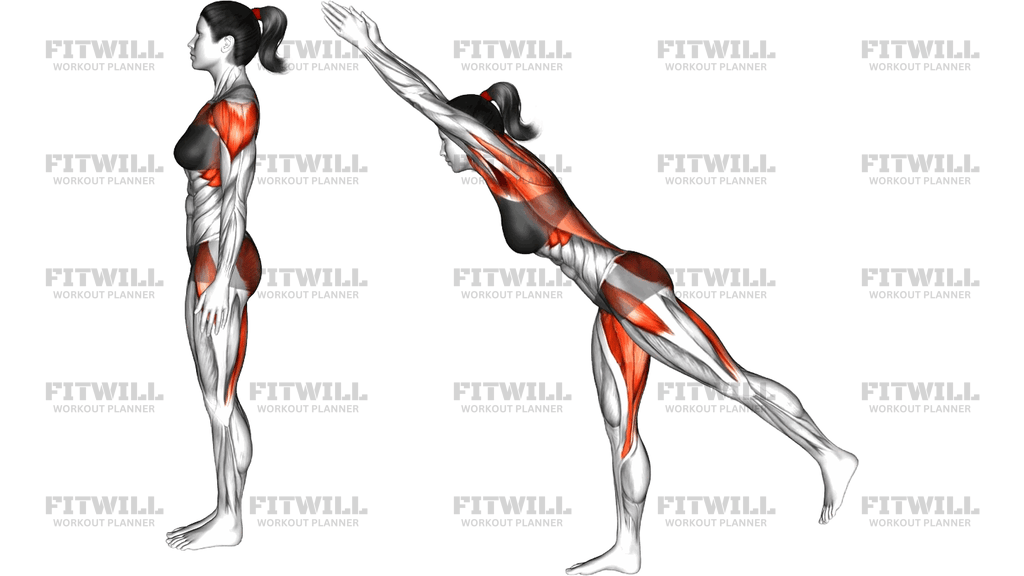
Warrior II is an upright open-hip stance with arms reaching side to side, while Warrior III is a forward-leaning balance pose with one leg lifted behind you.