Warrior Pose I Virabhadrasana I
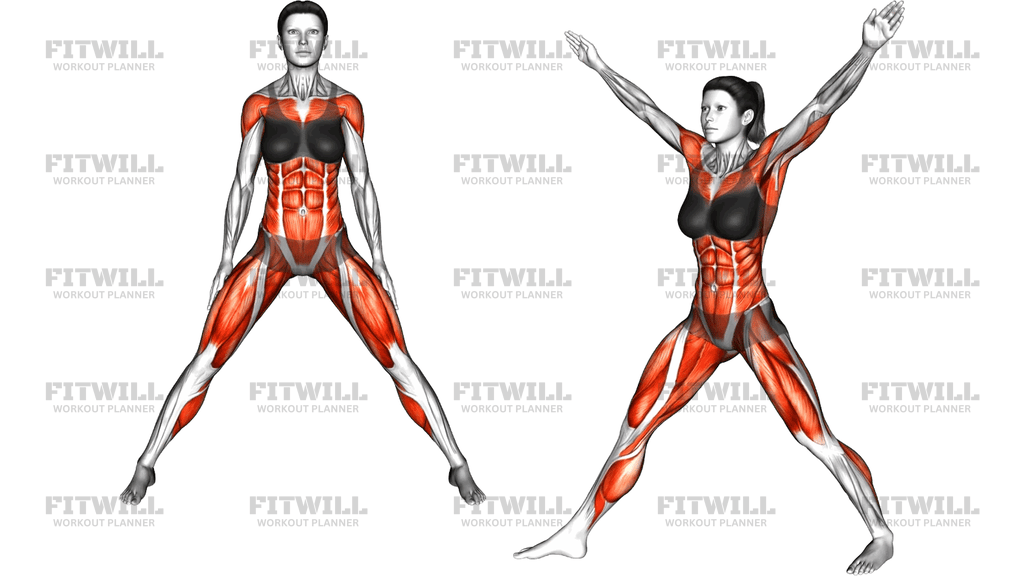
Warrior Pose I Virabhadrasana I is a classic standing yoga posture that uses body weight to build lower-body control, trunk stability, and shoulder reach. The image shows the familiar split stance: one knee bent, the back leg long, the rear heel grounded, the torso lifted, and the arms reaching overhead. It is less about moving a load and more about holding a clean, organized shape while breathing steadily.
This pose trains the front leg to support body weight while the back leg stays active and long. The front thigh works isometrically, the glutes help keep the pelvis steady, and the calf and foot muscles help balance the stance. At the same time, the hips, rib cage, and shoulders have to stay stacked so the lower back does not take over when the arms go up.
The setup matters more than depth. A stance that is too short usually forces the front knee too far forward and makes the pelvis twist, while a stance that is too long can pull the back heel up and flatten the front hip. A good Warrior I finds the middle ground: front knee tracks over the toes, back foot is angled out enough to ground the heel, and the chest rises without losing control of the ribs.
Warrior Pose I is commonly used in yoga flows, warm-ups, and mobility sessions because it links leg strength with balance and breathing. It is also useful for exposing left-right differences in hip rotation, ankle mobility, and torso control. If one side feels much tighter, do not force the position by arching the low back or turning the hips wildly open; shorten the stance, soften the bend, and build the shape gradually.
The best version feels firm, tall, and calm. Keep pressure even through both feet, reach upward without shrugging, and come out of the pose slowly if the front knee caves inward or the back heel starts to peel away. Practiced well, Warrior Pose I teaches stable alignment under stretch and load, which carries over to other standing yoga poses and split-stance movements.
[ Workout Log & Planner ]
Put your next workout in Fitwill
Keep your plan and training log ready when you are.


Instructions
- Stand tall, then step one foot back into a split stance so you have room to bend the front knee.
- Turn the back foot out about 45 degrees and press the outer edge of that heel into the floor.
- Bend the front knee so it tracks over the second or third toe while the back leg stays straight and active.
- Square the hips and chest toward the front as much as your mobility allows without twisting the low back.
- Stack the ribs over the pelvis and gently brace the abdomen so the torso stays lifted.
- Reach both arms overhead with the shoulders relaxed and the neck long.
- Breathe steadily and hold the shape for the planned count or breaths.
- Press through both feet to rise out of the pose with control, then repeat on the other side.
Tips & Tricks
- Shorten the stance if the front knee dives inward or the pelvis keeps turning open.
- Keep the rear heel heavy; if it lifts, reduce the depth of the lunge or bring the back foot a little closer.
- Let the front knee travel in line with the toes instead of collapsing toward the big toe.
- Lift through the crown of the head without letting the lower ribs flare forward.
- If the shoulders are tight, keep the arms a little wider instead of forcing the palms together overhead.
- Press evenly through the front heel and the base of the big toe so the front foot does not roll to the inside.
- Use the exhale to settle into the pose and the inhale to create length through the spine and arms.
- If balance feels unstable, practice next to a wall or make the stance wider until the shape is steady.
Frequently Asked Questions
What does Warrior Pose I Virabhadrasana I work most?
It mainly challenges the quads, glutes, hamstrings, calves, hip stabilizers, and core while the arms and shoulders stay active overhead.
Is Warrior Pose I a strength or mobility exercise?
It is both. The legs and trunk work isometrically while the hips, ankles, and shoulders are held in a lengthened position.
Why does my back heel keep lifting in Warrior I?
The stance is often too long or the back hip is too tight. Bring the feet a little closer and reduce the depth until the heel can stay grounded.
How far should my front knee bend?
Bend only as far as you can while keeping the knee tracking with the toes and the front foot fully planted. The exact angle matters less than clean alignment.
Do my hips need to face perfectly forward?
No. Square them as much as your mobility allows, but do not force the rotation if it pulls the low back or front knee out of line.
Can beginners do Warrior Pose I?
Yes. Start with a shorter stance, a lighter front knee bend, and hands on the hips or a wall if balance is shaky.
Where should I feel Warrior Pose I the most?
You should feel the front leg working, the back leg lengthening, and a mild opening through the front of the rear hip. You should not feel pinching in the lower back.
What are the most common mistakes in this pose?
The biggest issues are over-arching the low back, letting the front knee collapse inward, lifting the back heel, and shrugging the shoulders toward the ears.