Wide Legged Forward Bend Prasarita Padottanasana
Wide Legged Forward Bend Prasarita Padottanasana is a standing yoga fold that opens the hamstrings, inner thighs, calves, and hips while asking the spine and shoulders to stay long and relaxed. The wide stance creates room to hinge from the hips instead of collapsing straight down, which makes the pose feel more controlled and easier to hold with steady breathing.
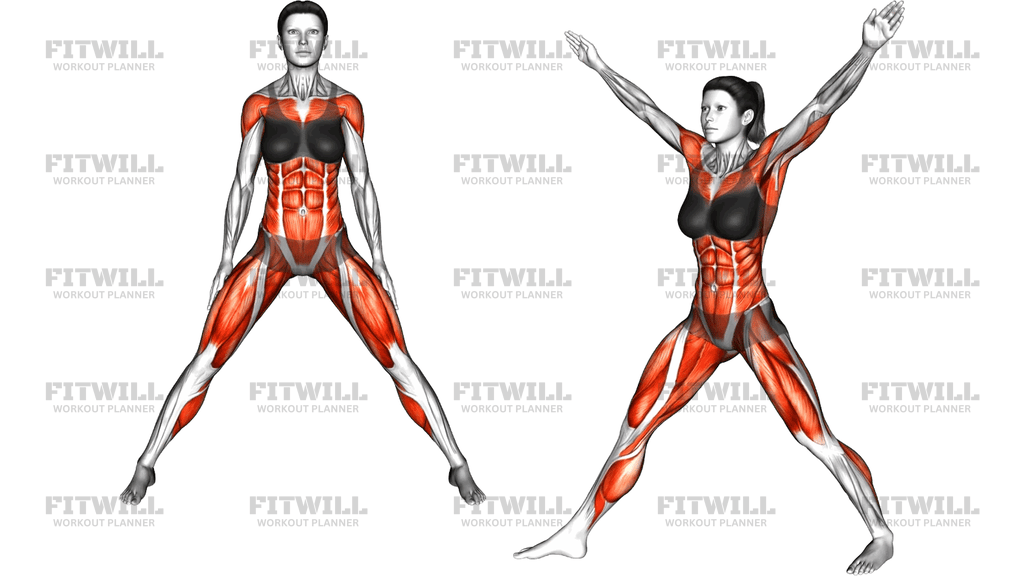
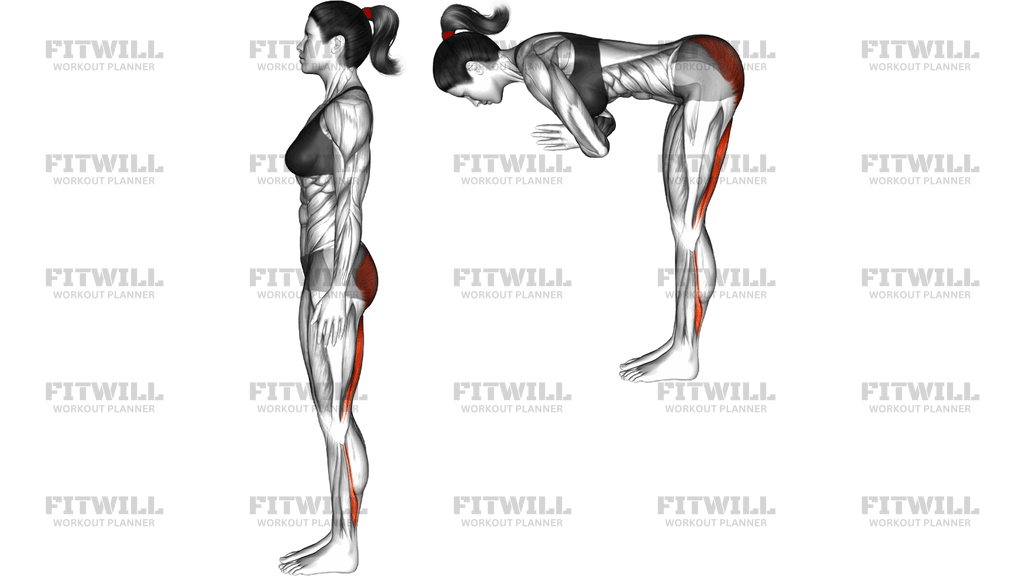
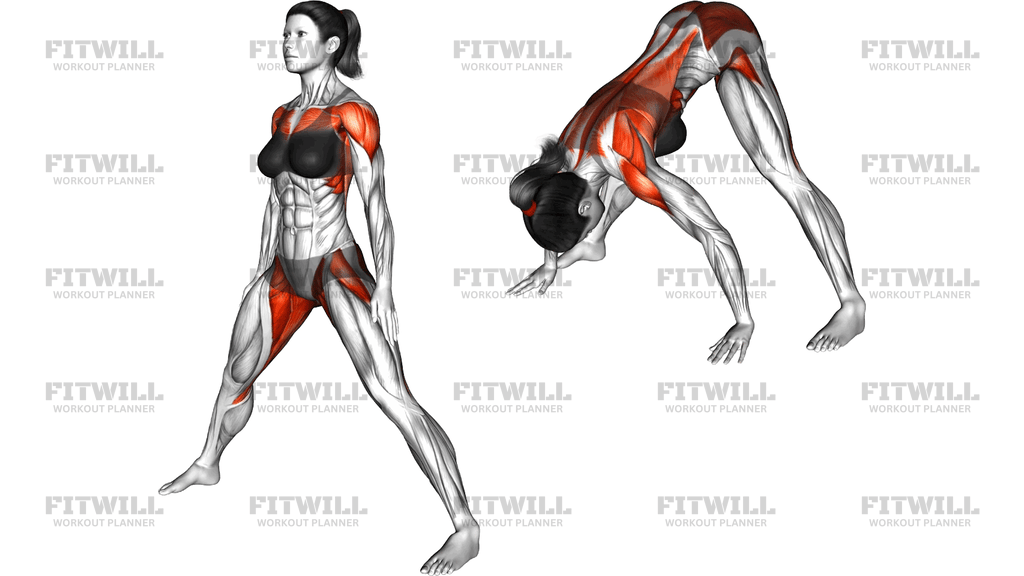
The image shows a classic Prasarita Padottanasana shape: feet set far apart, toes angled slightly inward, torso folded between the legs, and the hands reaching toward the floor. That setup matters because the pose should feel like a clean hip hinge and long forward fold, not a dump into the lower back or a forced reach for the ground.
In Wide Legged Forward Bend Prasarita Padottanasana, the main work comes from lengthening the back of the legs while the core, glutes, and upper back help you stay balanced. A strong version keeps the weight spread through the feet, the knees softly unlocked if needed, and the neck loose so the head can hang without strain.
This exercise is useful as a standing mobility drill, a cool-down stretch, or a yoga sequence that prepares the body for deeper forward bends and wide-stance work. It can be scaled by bending the knees, placing the hands on blocks, or shortening the stance so the spine stays long and the fold remains comfortable.
Good execution is less about touching the floor and more about maintaining shape while you breathe into the stretch. Wide Legged Forward Bend Prasarita Padottanasana should feel calm, symmetrical, and controlled from the first breath to the last, with no sharp pull behind the knees and no twisting through the hips.
[ Workout Log & Planner ]
Put your next workout in Fitwill
Keep your plan and training log ready when you are.


Instructions
- Stand with your feet wide, toes turned slightly inward, and your weight spread evenly across both feet.
- Place your hands on your hips first, then hinge forward from the hip joints while keeping your legs active.
- Fold between your thighs until your torso points toward the floor, letting your spine stay long as you descend.
- Set your fingertips or palms on the floor beneath your shoulders, or on blocks if the floor is too low.
- Soften your knees just enough to keep the hamstrings and inner thighs from pulling your pelvis under.
- Let the crown of your head drop toward the floor and relax your neck without letting the upper back round aggressively.
- Hold the position for your planned breath count while breathing slowly into the back of the legs and hips.
- Press through your feet, lift your chest, and return to standing with the same wide stance when you finish.
Tips & Tricks
- Turn the toes in only slightly; if they point too far inward, the knees can feel pinched when you fold.
- If your hands cannot reach the floor without rounding hard, use yoga blocks and keep the spine long.
- Think about tipping the pelvis forward before lowering the chest so the fold comes from the hips, not the low back.
- Keep the kneecaps tracking over the middle toes so the stance stays stable as you breathe deeper.
- A small bend in the knees is better than locking out the legs and forcing the hamstrings to do all the work.
- Let the head hang naturally; reaching the chin forward often creates neck tension and shortens the fold.
- On each exhale, try to soften the inner thighs and settle a little deeper instead of forcing the stretch.
- If the inner thighs cramp, narrow the stance slightly and reduce the depth of the fold.
Frequently Asked Questions
What does Wide Legged Forward Bend Prasarita Padottanasana stretch the most?
It most strongly stretches the hamstrings, inner thighs, calves, and hips while the back and shoulders help support the fold.
Is Wide Legged Forward Bend Prasarita Padottanasana beginner friendly?
Yes. Beginners can keep a shorter stance, bend the knees, and use blocks so the spine stays long instead of forcing the hands to the floor.
Should my hands touch the floor in Wide Legged Forward Bend Prasarita Padottanasana?
Not necessarily. Touching the floor is optional; blocks, shins, or the ankles are fine if they let you keep a long spine and relaxed neck.
What is the most common mistake in Wide Legged Forward Bend Prasarita Padottanasana?
The biggest mistake is collapsing through the lower back to chase depth. Hinge from the hips and keep the fold symmetrical instead.
Why are my hamstrings limiting the fold in Wide Legged Forward Bend Prasarita Padottanasana?
Tight hamstrings often tilt the pelvis backward and round the spine. Bend the knees slightly or shorten the stance until you can fold without strain.
Can I use Wide Legged Forward Bend Prasarita Padottanasana as a warm-up?
Yes, especially in a yoga or mobility session. Keep the hold short and the knees soft so it opens the legs without becoming an intense static stretch.
What should my feet do in Wide Legged Forward Bend Prasarita Padottanasana?
The feet should stay rooted with the arches active and the toes only slightly turned in. That gives you a stable base for the forward hinge.
How long should I hold Wide Legged Forward Bend Prasarita Padottanasana?
Hold it for several slow breaths or longer if you are using it for mobility work. Stop before the stretch turns into numbness, pinching, or knee pain.