Band Bent-Over Hip Extension
Band Bent-Over Hip Extension is a standing, band-resisted glute exercise built around a hip hinge and a controlled backward leg drive. The band is anchored under the support foot and attached to the working ankle, so the resistance increases as the leg extends behind you. That makes the setup important: if your stance is unstable or your torso drifts, the band will pull you out of position before the glutes get a clean workload.
The movement mainly trains the glutes, with the hamstrings helping to extend the hip and the core and lower back working to keep the torso fixed. In technical terms, the main driver is the Gluteus Maximus, with support from the Biceps Femoris, Rectus Abdominis, and Erector Spinae. Because the load is attached to the leg rather than a machine, the exercise rewards a steady hinge, level hips, and a calm upper body more than a big swing.
A good rep begins with a soft bend in the standing knee, a slight forward hinge, and the torso held long rather than rounded. From there, the working leg drives back and up in a straight line while the pelvis stays square to the floor. The goal is to extend the hip without arching the low back or twisting the trunk to cheat the band higher.
At the top of each rep, the glute on the moving side should feel like it finishes the lift, not the lumbar spine. Lower the leg under control until the band tension eases, then repeat with the same body angle and foot pressure on the support leg. If balance is the limiting factor, this exercise is still useful, but a light hand on a wall or rack can keep the focus on hip extension instead of wobbling.
Band Bent-Over Hip Extension fits well in warmups, glute accessory work, lower-body circuits, or rehab-style training when you want direct hip extension without a machine or heavy external load. It is especially useful for lifters who need better glute engagement during hinging patterns, sprint work, or single-leg training. Keep the range clean, the tempo deliberate, and the torso quiet so each repetition trains the hip rather than momentum.
Fitwill
Log Workouts, Track Progress & Build Strength.
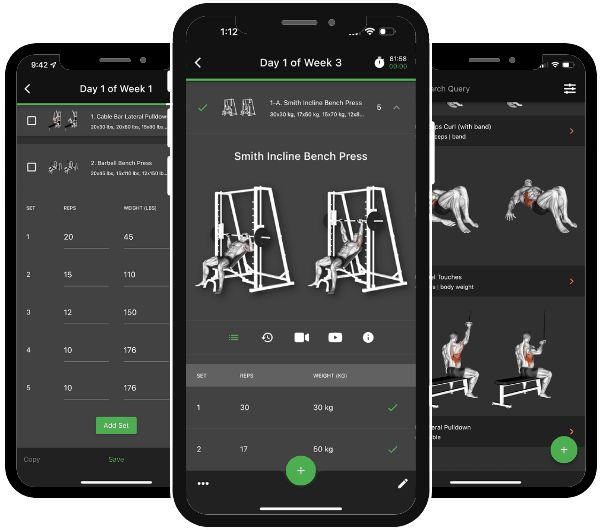
Achieve more with Fitwill: explore over 5000 exercises with images and videos, access built-in and custom workouts, perfect for both gym and home sessions, and see real results.
Start your journey. Download today!


Instructions
- Stand on one end of the band with your support foot and loop the other end around the ankle of your working leg.
- Hinge forward from the hips until your torso is angled down and your back stays long, with a soft bend in the standing knee.
- Reach your arms forward or hold a light support in front of you so your torso stays steady.
- Square both hip bones toward the floor and keep most of your weight over the support foot.
- Brace your core, then start with the working leg slightly behind your body.
- Drive the working heel back and slightly up by squeezing the glute, keeping the thigh in line with your torso.
- Pause briefly at the top without arching your lower back or opening the hip outward.
- Lower the leg slowly until the band tension eases and the hip returns to the start position.
- Reset your hinge and foot pressure before the next rep, then repeat for the planned set.
- Step out carefully and release the band when you finish the set.
Tips & Tricks
- Treat the movement as a hip extension, not a back extension; your torso should stay quiet while the leg moves.
- Keep the standing knee softly bent so the support leg helps balance without locking out.
- Hold both hip points toward the floor; if one side opens, the glute is losing tension to rotation.
- Do not kick the leg so high that your lower back arches to finish the rep.
- A slower lowering phase keeps the band under tension and makes the set feel more precise.
- If you feel the band in your hamstrings first, shorten the range and think about squeezing the glute at the top.
- Use a lighter band if you start swaying side to side or shifting most of your weight off the support foot.
- Keep your neck in line with your spine instead of looking up, which can pull the ribcage and pelvis out of position.
- Light fingertip support on a wall or post is better than rushing a shaky rep.
- Stop the set when the standing hip collapses inward or the working leg starts swinging instead of extending.
Frequently Asked Questions
What does Band Bent-Over Hip Extension work most?
It mainly targets the glutes, especially the gluteus maximus, with the hamstrings and core helping stabilize the movement.
How do I set up the band for Band Bent-Over Hip Extension?
Stand on the band with your support foot and attach the other end around the ankle of the leg that will extend backward.
Should my torso stay still during Band Bent-Over Hip Extension?
Yes. Your torso should hold a steady hip hinge while the working leg moves; if your back is swinging, the glutes are losing the load.
How high should I lift the working leg?
Lift only until the hip is fully extended and the glute is doing the work. If you have to arch your lower back higher, the range is too large.
Can beginners do Band Bent-Over Hip Extension?
Yes. Start with a light band, a shallow hinge, and light fingertip support on a wall or rack until your balance is stable.
Why do I feel Band Bent-Over Hip Extension in my hamstrings?
A little hamstring work is normal, but if they dominate, shorten the range and focus on driving the heel back from the glute instead of swinging the leg.
Is Band Bent-Over Hip Extension good for glute activation?
Yes. It is useful when you want direct glute work before squats, deadlifts, lunges, or sprint sessions.
What is the most common mistake in Band Bent-Over Hip Extension?
The biggest mistake is twisting the pelvis or arching the lower back to lift the leg higher than the band allows.