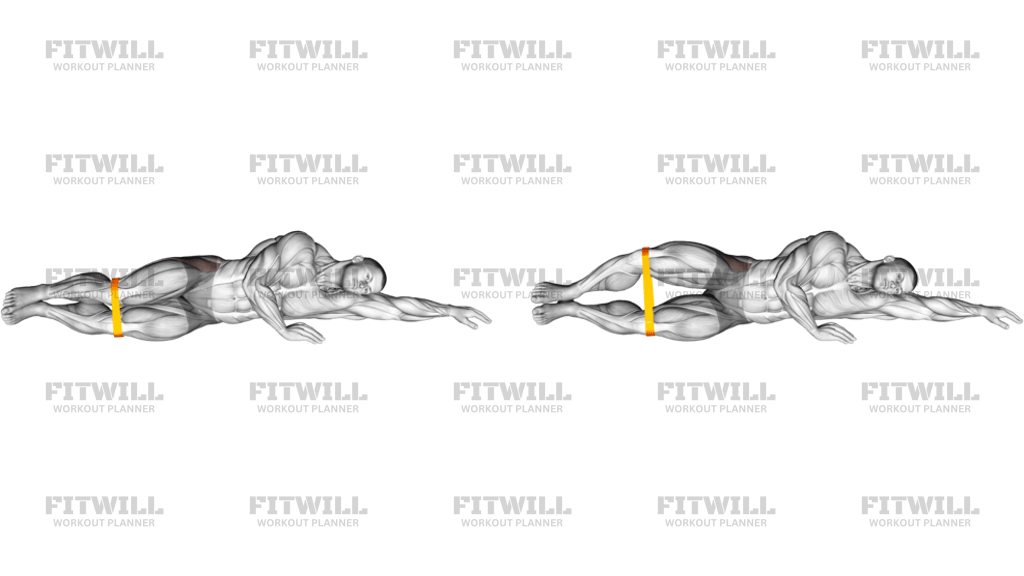
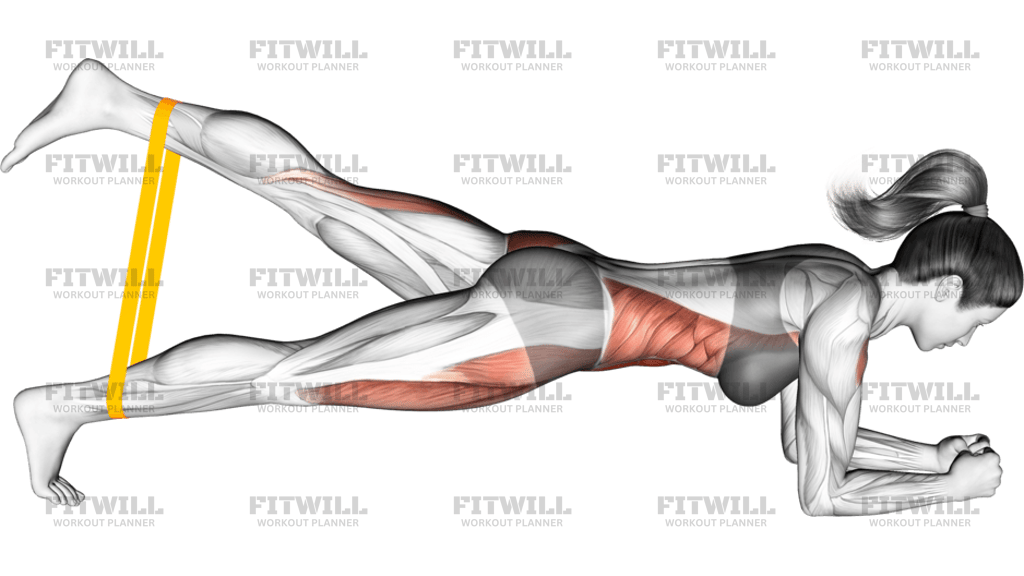
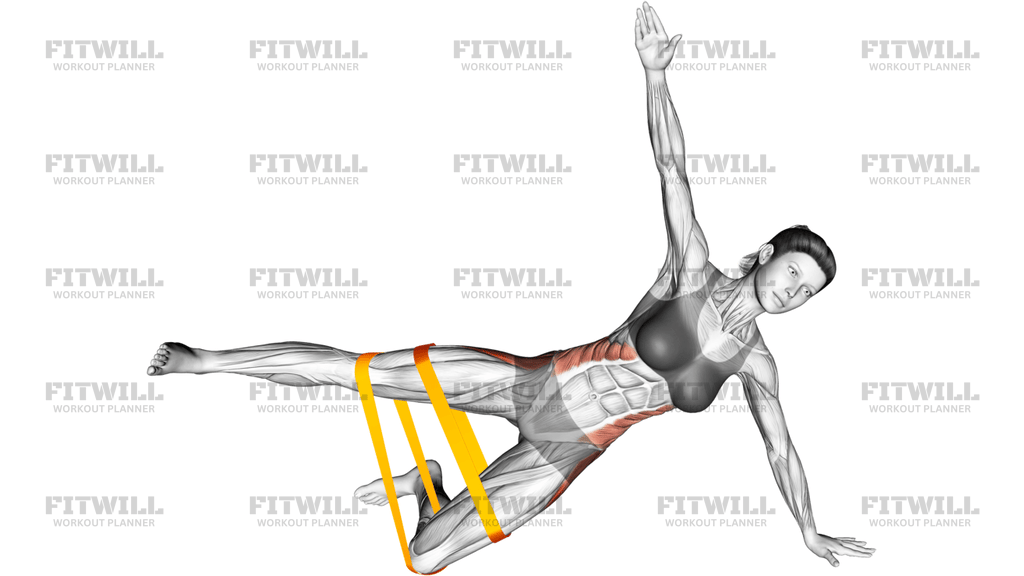
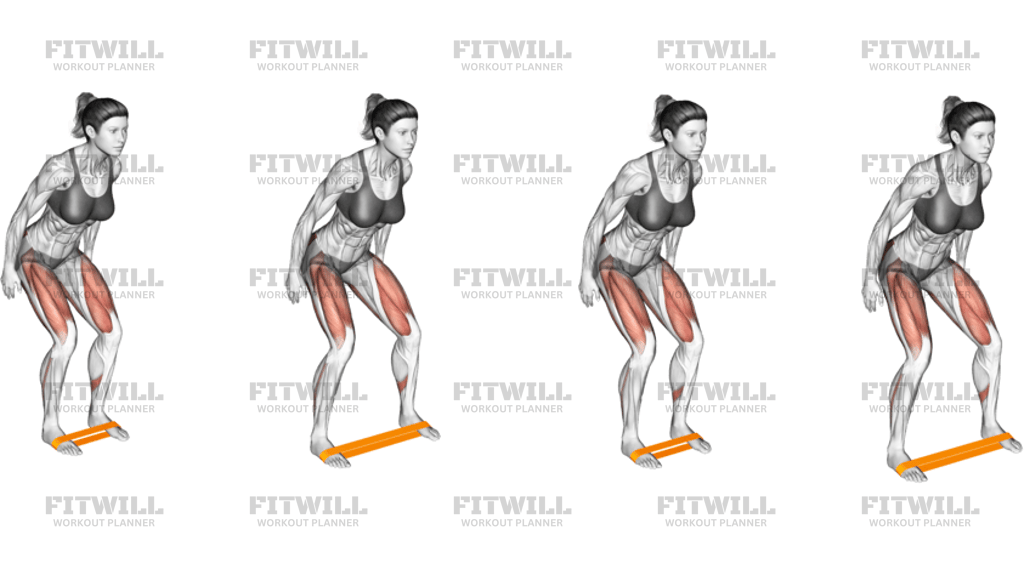
Band Lying Hip Internal Rotation
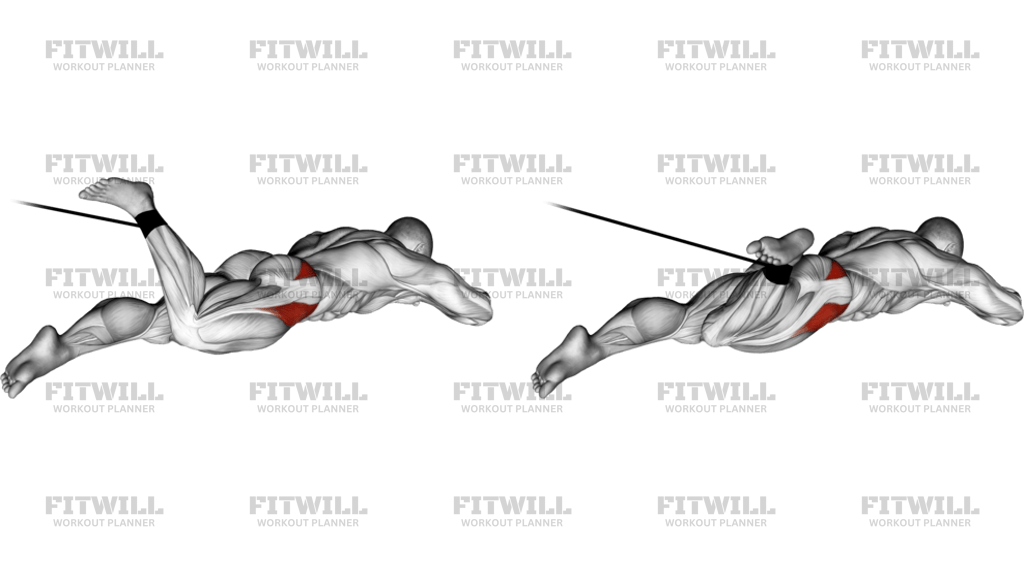
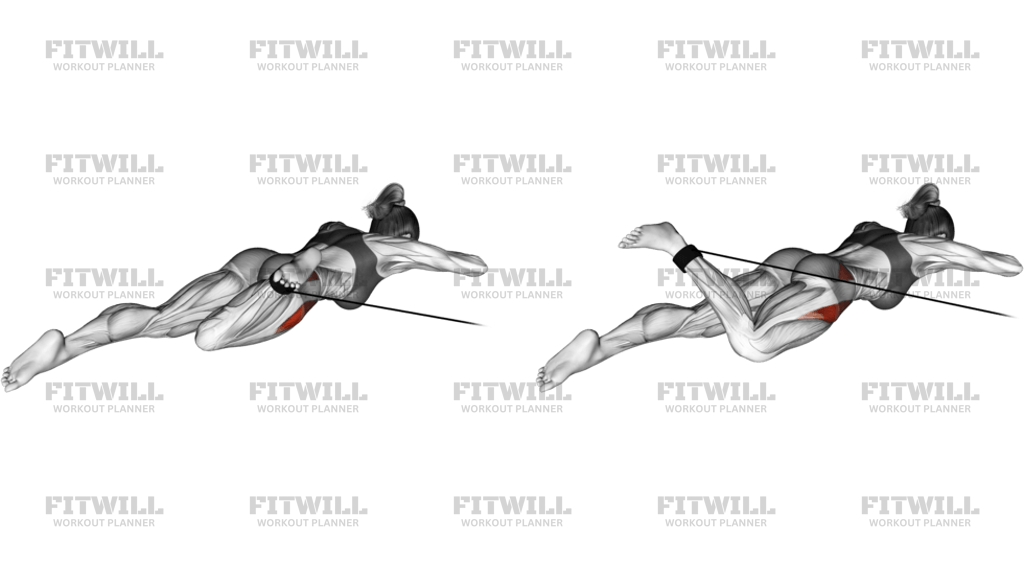
Band Lying Hip Internal Rotation is a prone hip-control drill that uses band resistance to train rotation at the hip while the pelvis stays quiet. The main goal is not to swing the lower leg for a big range, but to create a small, precise movement that asks the hip rotators and glute complex to do the work.
This exercise is especially useful when you want to improve hip awareness, rotational control, or warm up before squats, lunges, running, or other lower-body work. Lying face down makes it easier to feel whether the motion is coming from the hip or leaking into the low back and pelvis. The band adds a clear line of resistance so every rep has to be controlled from the start.
Set the leg up so the knee can stay bent while the working foot or ankle stays connected to the band. Keep both hip bones heavy on the floor, brace lightly through the trunk, and let the thigh rotate through the available range without rolling onto one side. The movement should feel smooth, deliberate, and repeatable rather than forced.
Because the range is short, load choice and body position matter more than effort. If the band pulls you into twisting, arching, or using momentum, the resistance is too high or the setup is off. Use this movement as a technical accessory drill and stop the set when you can no longer keep the pelvis still and the rep path clean.
Fitwill
Log Workouts, Track Progress & Build Strength.
Achieve more with Fitwill: explore over 9600 exercises with images and videos, access built-in and custom workouts, perfect for both gym and home sessions, and see real results.
Start your journey. Download today!




Instructions
- Lie face down on a mat and bend one knee so the lower leg can move freely behind you.
- Loop the band around the working foot or ankle and anchor it so there is tension before the rep starts.
- Keep both hip bones heavy on the floor and square your pelvis before you move.
- Lightly brace your abs so the low back stays quiet while the hip rotates.
- Rotate the thigh inward at the hip to move the lower leg through the band-resisted arc.
- Keep the knee bent at about 90 degrees and let the motion stay smooth instead of jerky.
- Pause briefly at the end of the range without letting the pelvis roll or the ribs flare.
- Return to the start slowly and keep tension on the band all the way back.
- Reset your breathing, then repeat for the planned number of reps.
Tips & Tricks
- Keep the pelvis heavy on the floor; if one side starts to lift, shorten the range.
- Use a lighter band than you would for larger hip drills because the lever is small and the rotators fatigue quickly.
- Let the thigh rotate, not the whole torso; the goal is hip rotation, not rolling across the mat.
- Keep the knee angle consistent so the band tension does not change because of knee drift.
- Move slowly on the return so the glutes and deep rotators control the eccentric phase.
- If you feel the front of the hip pinch, reduce the range and check that the pelvis is not tipping forward.
- Keep the foot relaxed; gripping hard through the ankle often turns the drill into an ankle exercise.
- Exhale as you rotate and inhale as you come back to the start so the trunk stays calm.
Frequently Asked Questions
What muscle does Band Lying Hip Internal Rotation target most?
The glutes are the main target, especially the hip rotators that help control the thigh. The hamstrings and core help keep the pelvis stable.
How do I set up the band for this movement?
Lie face down, bend one knee, and loop the band around the working foot or ankle. Anchor it so there is tension before the first rep.
Should my hips stay flat on the floor?
Yes. Both hip bones should stay heavy on the mat so the rotation comes from the hip instead of a pelvic roll.
How far should the leg rotate?
Only as far as you can go without twisting the low back, lifting the hip, or losing the 90-degree knee bend.
Can beginners do Band Lying Hip Internal Rotation?
Yes. A light band and a short, controlled range make it a good beginner-friendly hip control drill.
What if I feel this more in my hamstrings than my glutes?
Reduce the band tension and slow the rep down. The effort should stay centered on the back and side of the working hip.
What is a good use for this exercise?
It works well as a warmup drill, accessory movement, or low-load corrective exercise before lower-body training.
What should I do if the band pulls me out of position?
Use less resistance or adjust the anchor so the line of pull stays clean. If the pelvis starts to twist, the setup is too aggressive.