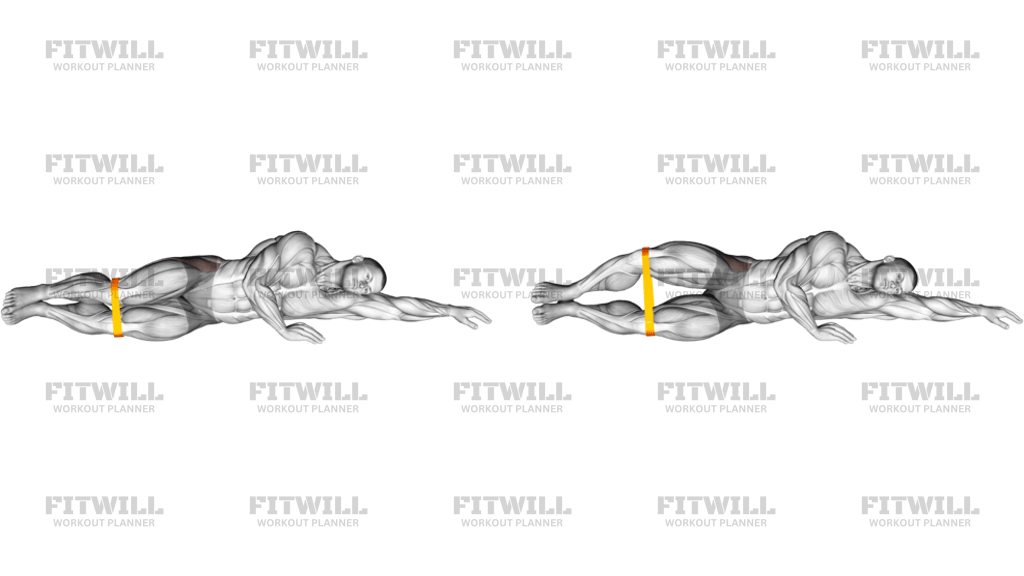
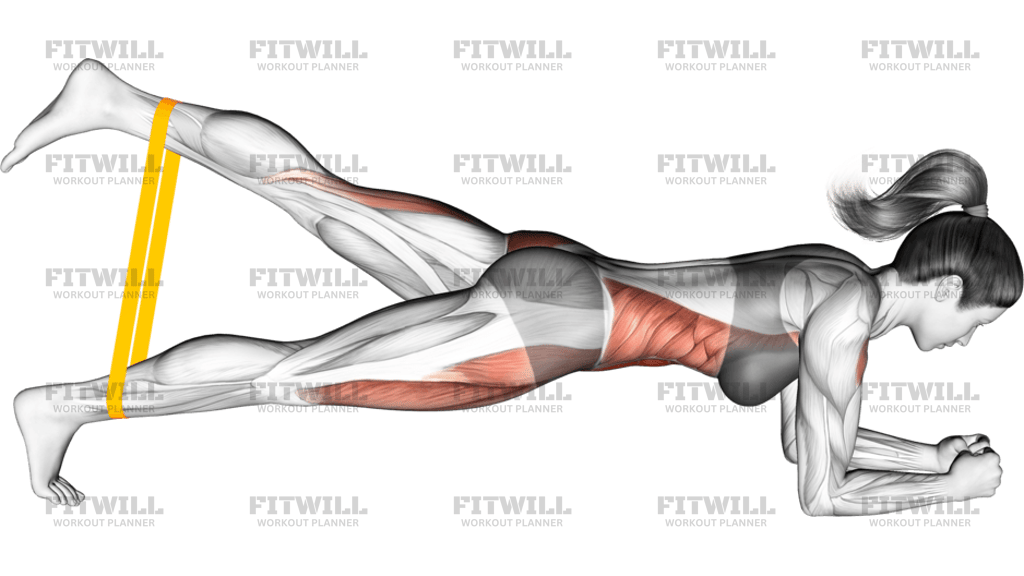
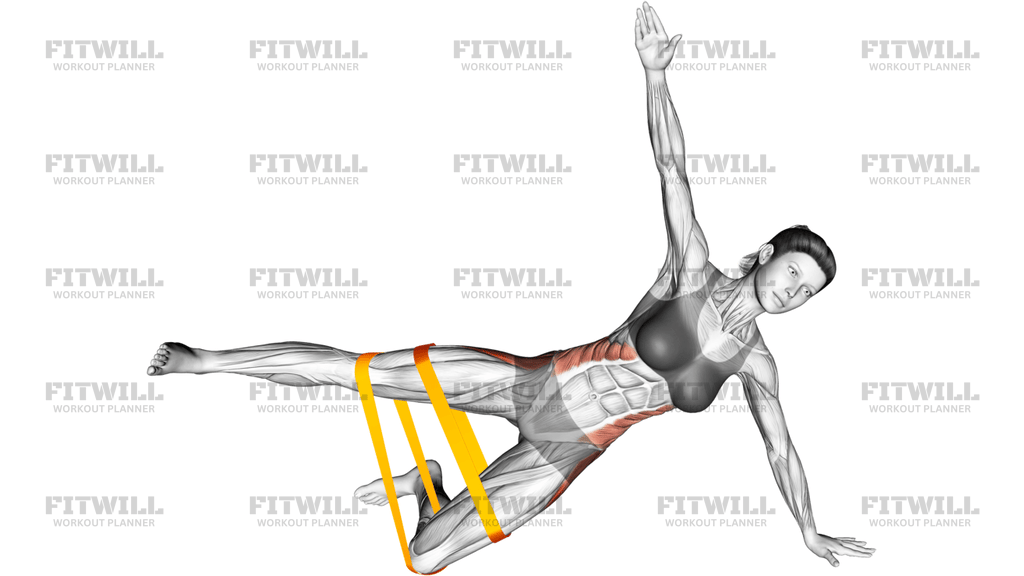
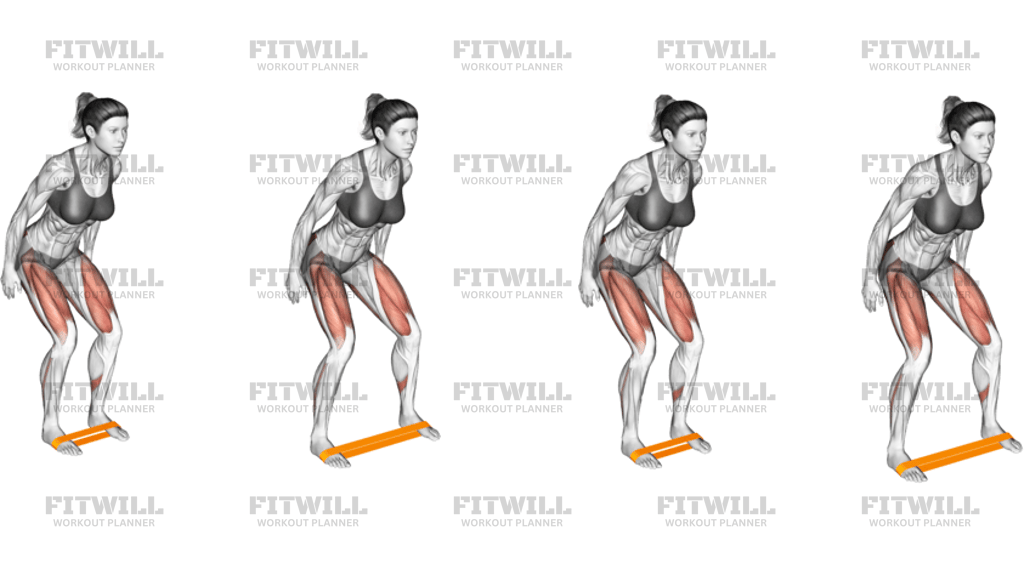
Band Seated Hip Internal Rotation
Band Seated Hip Internal Rotation is a small, targeted hip drill that trains the hip to rotate inward while the pelvis stays quiet. It is useful as a warm-up, accessory, or control exercise when you want to improve how the hips move without adding much spinal or knee stress. The seated setup makes the motion easier to feel because the torso has less room to cheat.
This movement is especially helpful when the hips feel stiff, one side rotates differently than the other, or you want a low-load drill before squats, lunges, running, or change-of-direction work. The main training goal is clean hip rotation and steady control, with the glutes doing the work and the core helping keep the torso stacked. It should feel like a precise joint action, not a big swing of the lower leg.
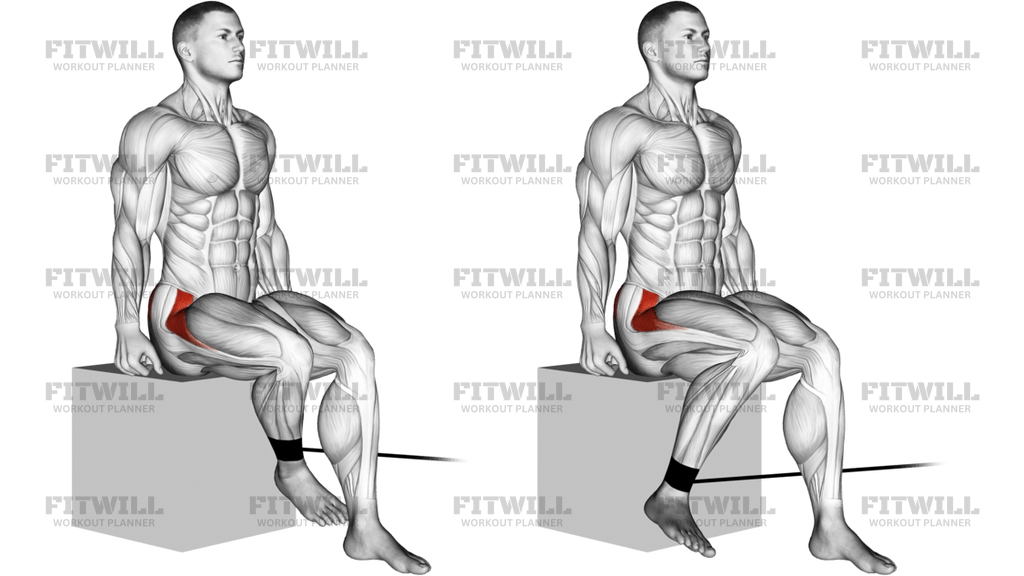
To set it up well, sit on the edge of a bench or box with a light loop band around the ankles and the legs hanging freely. Keep the knees bent, the feet relaxed, and the hands on the bench for balance while you square the hips forward. A tall torso and quiet pelvis matter more than range, because the exercise stops working when you start twisting through the low back to finish the rep.
Each rep should come from the hip joint. Rotate the working thigh inward against the band until you hit a smooth, comfortable end range, then return slowly and let the band tension pull you back under control. The motion is usually small, but it should feel deliberate and repeatable from the first rep to the last. If the knees drift, the pelvis rocks, or the feet start swinging, the load is too heavy or the range is too large.
Band Seated Hip Internal Rotation fits best in higher-rep accessory work, prehab-style sessions, or movement prep where control matters more than load. It is usually a good option for beginners because the resistance is easy to scale, but the value comes from precision, not effort alone. Keep the repetitions smooth, stay inside a pain-free range, and treat the band as feedback for hip control rather than a test of strength.
[ Workout Log & Planner ]
Put your next workout in Fitwill
Keep your plan and training log ready when you are.


Instructions
- Sit on the edge of a bench or box with a light loop band around your ankles and your legs hanging freely.
- Keep your knees bent, your feet relaxed, and your hands beside your hips on the bench for balance.
- Square your pelvis forward and sit tall so your ribs stay stacked over your hips.
- Let the band take up a little tension before you start the first rep.
- Rotate one thigh inward from the hip so that foot travels outward and slightly away from the midline.
- Keep the knee mostly in place and avoid turning the torso or rocking the pelvis to help the motion.
- Pause for a moment at the end of the rotation, then return slowly until the band tension is reset.
- Complete the planned reps on one side, then switch sides or alternate as your program calls for it.
Tips & Tricks
- Use the lightest band that still makes the hip work without pulling your pelvis off center.
- If the motion turns into a foot swing, shorten the range and think about rotating the thigh, not moving the ankle.
- Keep the sit bones heavy on the bench; losing contact usually means the low back has started helping.
- A small forward lean from the hips can help you feel the rotation, but do not round your spine to get more range.
- Let the working foot travel smoothly rather than snapping outward against the band.
- Place the band just above the ankle bones if it slides or pinches during the set.
- If one side feels much tighter, start with that side and match the same controlled range on the stronger side.
- Higher reps work well here because the goal is quality hip control, not maximal resistance.
Frequently Asked Questions
What does Band Seated Hip Internal Rotation train most?
It trains hip internal rotation control, with the glutes and other hip stabilizers doing most of the work while the torso stays quiet.
How should I sit for Band Seated Hip Internal Rotation?
Sit on the edge of a bench or box with the band around your ankles, knees bent, and your hands on the bench for balance. Keep your torso tall and your pelvis square.
Should the knee or the foot move during Band Seated Hip Internal Rotation?
The hip should drive the motion, so the foot changes position while the knee stays mostly quiet. If the knee is swinging a lot, the band is probably too heavy.
Why do I feel Band Seated Hip Internal Rotation in my low back?
That usually means the pelvis is rocking or the range is too large. Reduce the band tension and keep the sit bones rooted on the bench.
Is Band Seated Hip Internal Rotation good for beginners?
Yes, it is a good beginner drill because the resistance is easy to scale and the seated position makes the movement easy to control.
How heavy should the band be for Band Seated Hip Internal Rotation?
Use a light band that lets you rotate smoothly without jerking or twisting your torso. The set should feel precise, not strained.
What is a common mistake in Band Seated Hip Internal Rotation?
The most common mistake is turning it into a big leg swing instead of a controlled hip rotation. Keep the motion small and deliberate.
Where does Band Seated Hip Internal Rotation fit in a workout?
It works well in a warm-up, accessory block, or movement-prep section, especially before lower-body training or running.