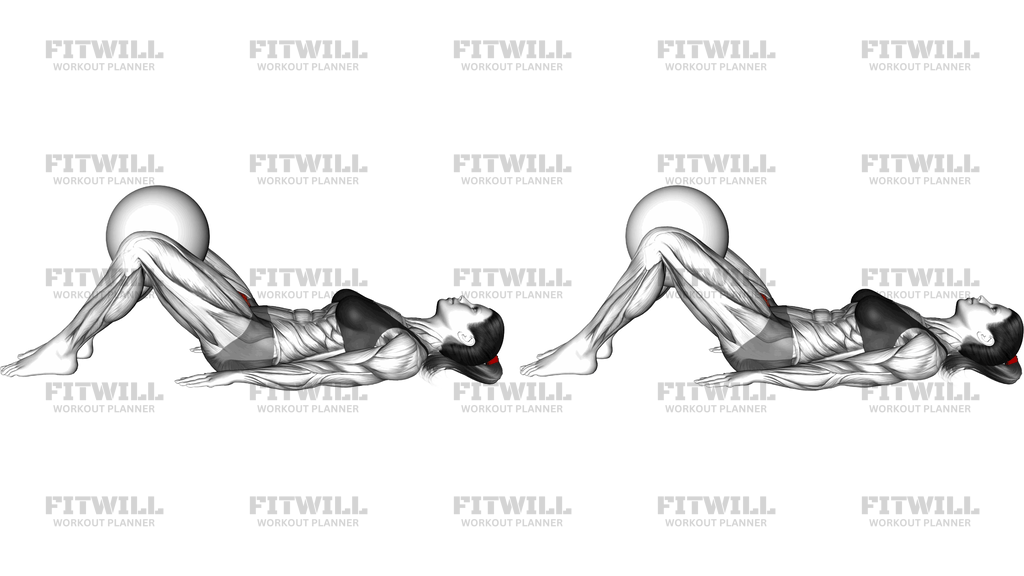
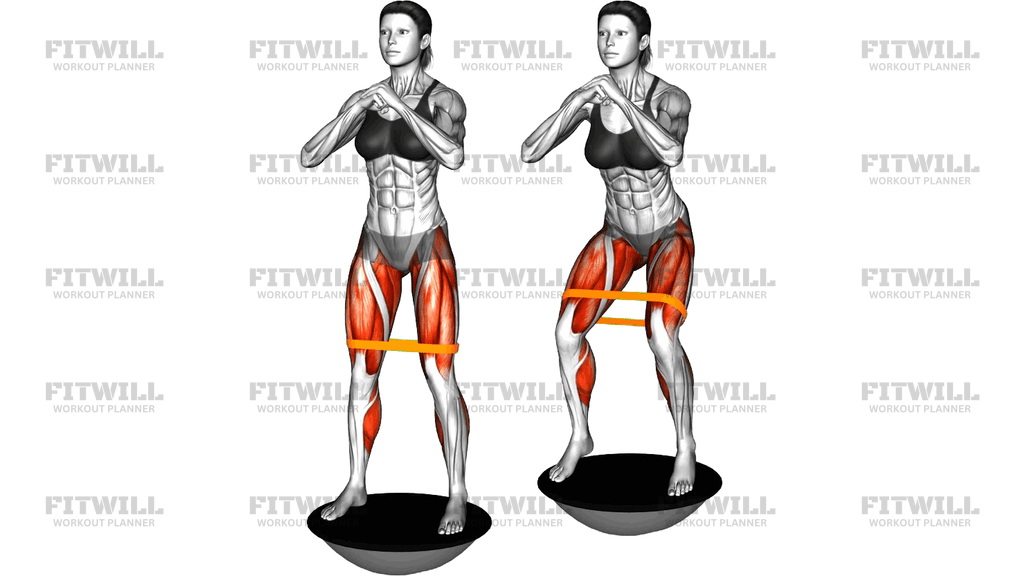
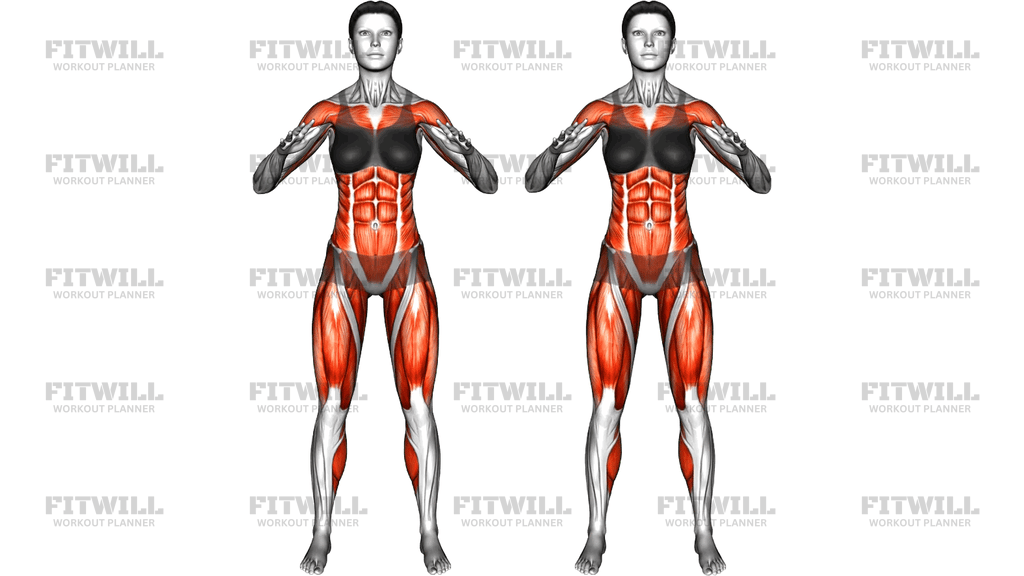
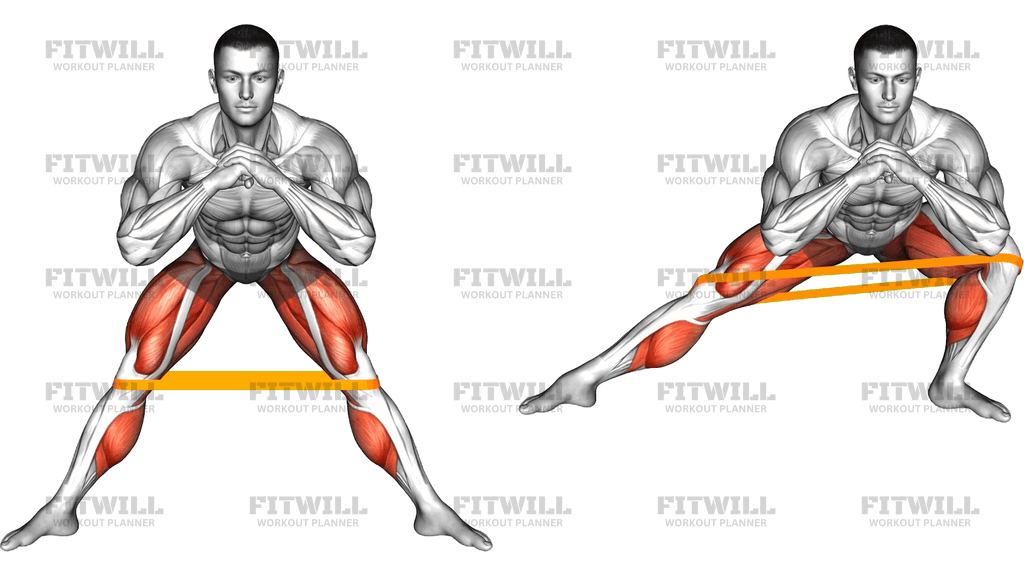
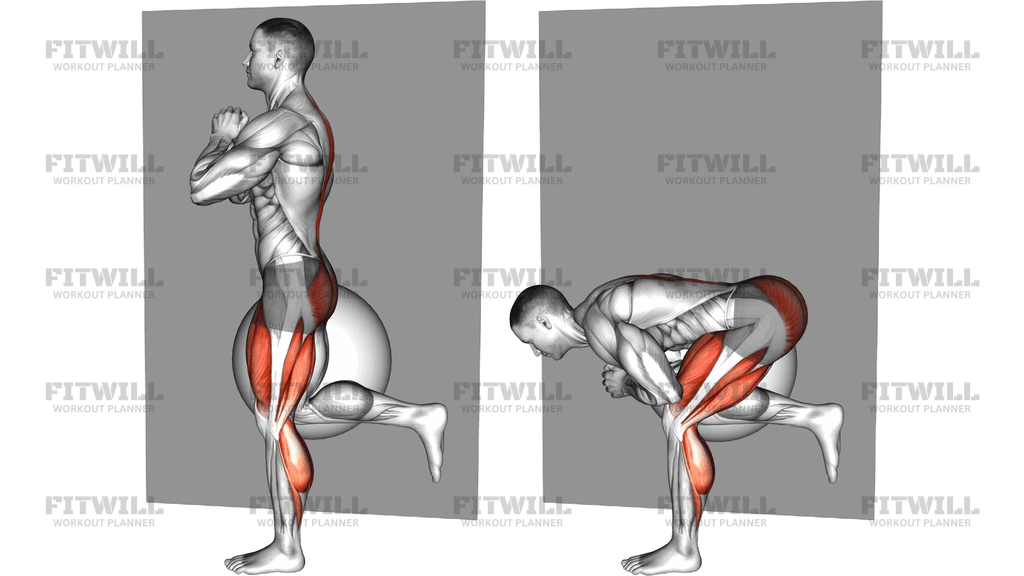
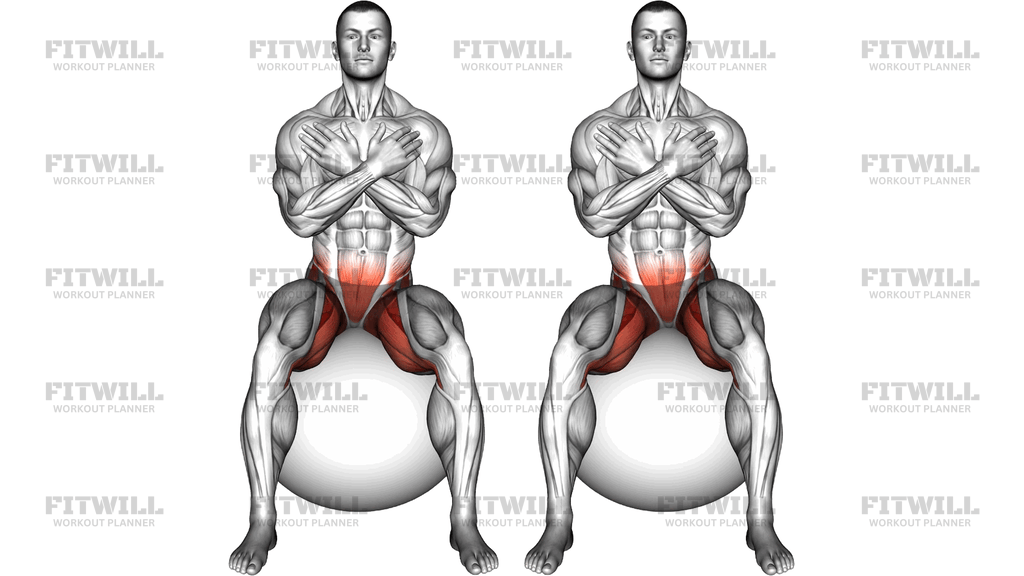
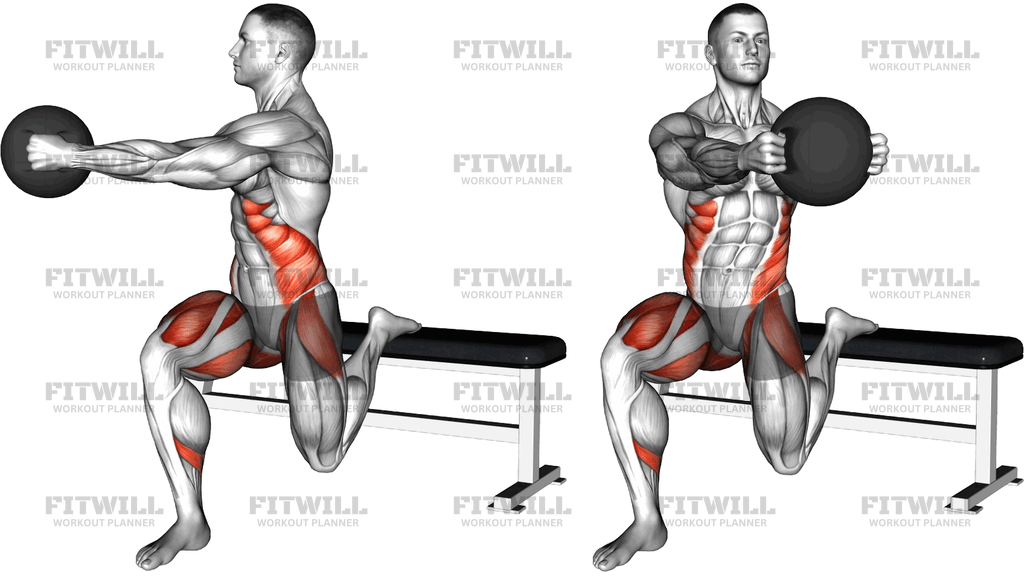
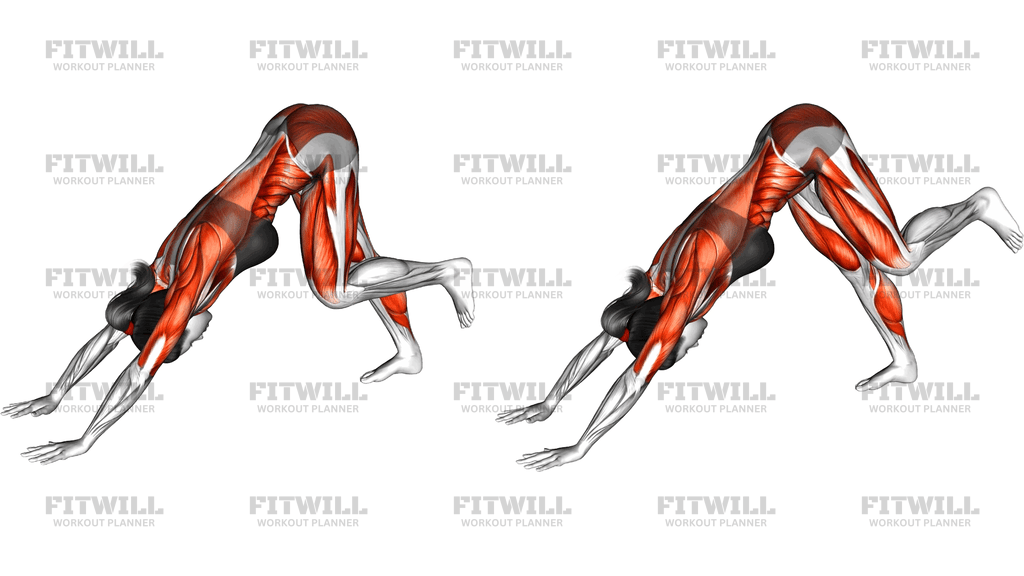
Standing Gluteus Medius Press Against Ball
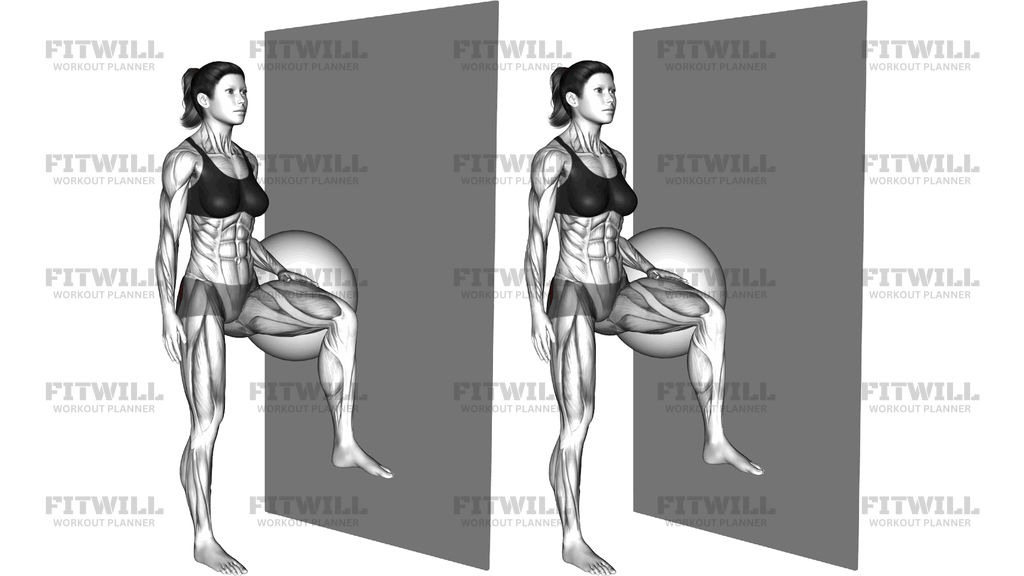
Standing Gluteus Medius Press Against Ball is an isometric hip exercise in which you stand beside a wall, trap a stability ball between the wall and the outside of one bent leg, and press outward into the ball while balancing on the other leg. Instead of moving through a large range of motion, the working hip holds a steady push against the ball's resistance, which forces the gluteus medius on the outer hip to stay switched on for the entire set.
This movement targets the gluteus medius and the surrounding lateral hip muscles, with supporting work from the core and the standing leg's stabilizers. The gluteus medius is responsible for pulling the thigh away from the body and, just as importantly, keeping the pelvis level every time you stand, walk, or step. Because you press with the hip flexed and the knee lifted, the ball sits comfortably against the thigh and the effort stays focused on the outer hip rather than spreading into the lower back.
The standing position is what makes this exercise valuable. Hip abduction machines and side-lying leg raises train the same muscle, but they remove the balance demand. Here, the stabilizing leg, the foot and ankle, and the trunk all have to hold you upright while the working hip pushes into an unstable ball. That combination is useful for runners, hikers, anyone rebuilding strength after time off, and people who feel their knees drift inward during squats or stair climbing.
Setup matters more than effort in this drill. Your standing foot should be directly under your body, the ball positioned against the wall at roughly the height of your bent knee, and your torso tall rather than leaning toward or away from the wall. If the ball is too low you will press more with the side of the thigh near the knee; too high and the position becomes awkward. A properly placed ball lets the shin hang relaxed while the outer hip does the pushing.
To perform it well, lift one knee so the thigh is close to parallel with the floor, place the outside of that thigh or knee against the ball, and press outward with steady, moderate force. Keep breathing, keep the pelvis square, and avoid letting the standing knee buckle inward as the press intensifies. Hold each press for several seconds, release the pressure without dropping the leg completely, then press again. Because it is low-load and self-limiting, this exercise works well as a warm-up before lower body training, as an accessory movement on hip-focused days, or as a standalone routine for building lateral hip endurance.
Stay within a pressure level you can sustain without gripping the floor, hitching the hip, or leaning into the wall for support. Mild muscular effort on the outer hip is the goal; any sharp discomfort in the hip joint or knee is a signal to reduce the pressure, lower the leg, or reassess your ball placement before continuing.
[ Workout Log & Planner ]
Put your next workout in Fitwill
Keep your plan and training log ready when you are.


Instructions
- Stand sideways next to a wall with your feet hip-width apart and place a stability ball between your hip and the wall, at about the height of your thigh.
- Shift your weight onto the leg farther from the wall so the ball rests against your body on the side closest to the wall, and place one hand lightly on the wall or your hip for balance if needed.
- Bend the knee closest to the wall and lift it until your thigh is roughly parallel to the floor, with the outside of the thigh or knee pressed into the ball and your lower leg hanging relaxed.
- Brace your core lightly and stand tall, keeping your shoulders and hips square to the side rather than rotated toward the wall.
- Press the outside of your raised thigh firmly into the ball, pushing toward the wall with steady pressure from the outer hip.
- Hold the press for five to ten seconds, keeping the knee lifted and the pressure constant while you breathe normally.
- Slowly release the pressure without letting the leg drop, keeping the thigh in contact with the ball.
- Exhale as you press into the ball and inhale as you ease off, repeating the press and release for your target number of repetitions.
- When the set is complete, lower the leg with control, move the ball away from the wall, and switch sides so the opposite hip works against the ball.
Tips & Tricks
- If your standing knee caves toward the inside during the press, that leg's hip is the weak link—lighten the pressure and consciously press that knee slightly outward to keep it tracking over your foot.
- A ball placed too low turns this into a knee-dominant push; adjust it so contact happens against the outer thigh and upper knee, where the gluteus medius can actually drive the press.
- Avoid leaning your torso into the wall to generate force—the pressure must come from the hip, so keep your ribs stacked over your pelvis throughout.
- Do not let the pelvis tilt or the hip on the working side hitch upward; imagine both hip bones staying at the same height while only the thigh moves.
- Press at around seventy to eighty percent of your maximum effort rather than all-out; a smooth, sustainable push keeps the target muscle engaged longer than a tense, breath-holding squeeze.
- Keep the raised foot relaxed and the lower leg loose—if your foot and calf are working hard, you are stabilizing with the leg instead of isolating the outer hip.
- If balancing is difficult at first, hold the wall with two fingertips instead of a full hand grip so the hip still has to do the stabilizing work.
- A soft or under-inflated ball makes the press feel vague; inflate it enough that it pushes back noticeably the moment you apply pressure.
Frequently Asked Questions
What muscles does the Standing Gluteus Medius Press Against Ball work?
The primary target is the gluteus medius on the outer hip, supported by the tensor fasciae latae and other lateral hip muscles. The standing leg's hip stabilizers and your core also work to keep you upright during the press.
Is this exercise good for beginners?
Yes, it is a gentle introduction to hip strengthening because the load is your own pressing effort rather than an external weight. Beginners can start with lighter pressure, shorter holds, and a fingertip on the wall for balance.
Why is the ball pressed against a wall instead of just holding the leg up?
The wall gives the ball a fixed surface to push against, which turns the movement into a controlled isometric hold. This lets you load the outer hip at exactly the angle and intensity you choose without any equipment other than the ball.
How high should I lift my knee during the Standing Gluteus Medius Press Against Ball?
Aim for a thigh roughly parallel to the floor, so the ball contacts the outside of the thigh near the upper knee. If you cannot reach that height comfortably, a slightly lower lift still works as long as the hip, not the knee, is doing the pressing.
How long should I hold each press?
Five to ten seconds per press works well for building endurance in the gluteus medius. You can also hold one continuous press for twenty to thirty seconds if you prefer fewer, longer holds.
Why does my standing leg shake or feel more fatigued than the pressing leg?
The supporting leg is stabilizing your whole body on one foot, so its hip and ankle muscles tire quickly if they are undertrained. Reduce the pressing force or rest a hand on the wall until single-leg balance improves.
Can I do this exercise without a stability ball?
You can press the outside of your raised knee directly against a wall, though the ball is more comfortable and lets you fine-tune the pressure. A small medicine ball or a rolled towel wedge against the wall can serve as an alternative.
How many sets and repetitions should I do?
Two to three sets of eight to twelve press-and-release repetitions per side is a solid starting point. Since the goal is muscular endurance in the outer hips, err on the side of more reps at moderate pressure rather than maximal effort.
Is it safe to do this exercise if my hip clicks or feels pinched?
Mild clicking without pain is common and usually harmless, but any sharp pinch in the hip or knee means you should lower the leg, reduce the pressure, or adjust the ball height. Stop the exercise and consult a professional if discomfort persists.