Sitting Side To Side Hip Mobilization On Exercise
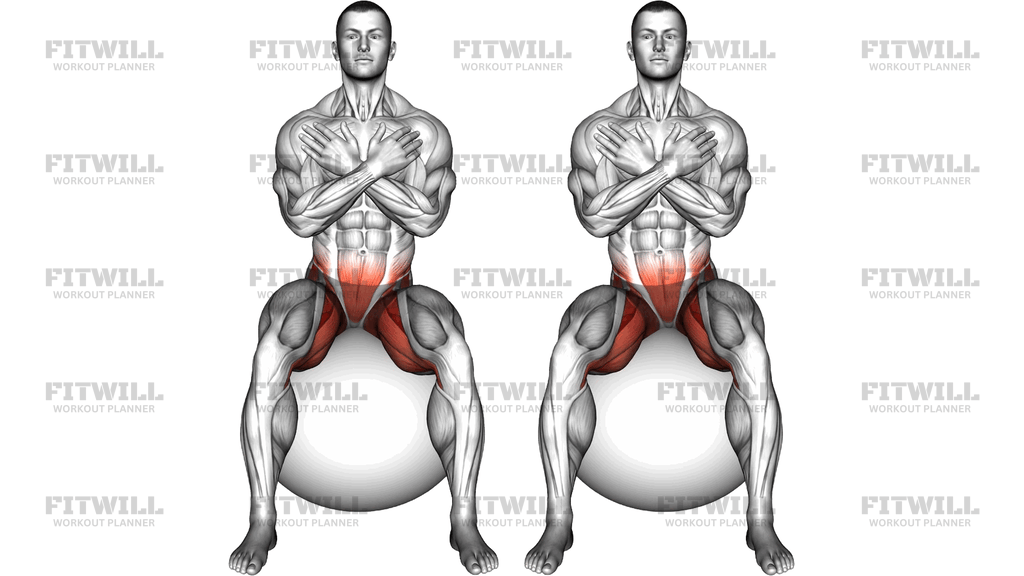
Sitting Side To Side Hip Mobilization On Exercise Ball is a seated mobility drill performed on a stability ball with the arms crossed over the chest and the feet planted wide apart on the floor. From this position, you let the ball roll gently beneath you as the hips shift from one side to the other, guiding the weight over one hip at a time while the torso stays tall. It is a low-load, self-paced movement designed to loosen the hip complex before or after training, or simply to break up long periods of sitting.
The area this drill targets is the ring of tissue around the hip joint itself. As you shift left and right, the adductors and inner thighs lengthen on the side you are moving away from, while the outer hip muscles — including the gluteus medius and the deeper hip stabilizers — take charge on the loaded side. Because the ball gives you a rounded, unstable base, the trunk muscles also work quietly the whole time to keep you centered, which is why many people feel it through the waist and lower abdominals as well.
The setup is what separates this from just swaying around on a ball. A wide foot placement with the whole foot flat on the floor gives you a stable tripod so the ball can move under the hips without the whole body tipping over. Crossing the arms over the chest removes the option of pushing off the floor or the knees with the hands, which forces the hips to do the moving and makes the feedback through the pelvis much clearer. If you have never sat on a stability ball before, spend a minute just bouncing lightly and getting a feel for the balance before adding the side-to-side motion.
To execute it well, move with intent rather than speed. Shift the hips toward one side, let the ball roll with you, pause briefly when you feel the stretch through the opposite inner thigh, then drift back through center and over to the other side. The torso should stay stacked over the pelvis — resist the temptation to lean the shoulders sideways instead of moving from the hips. Small, controlled arcs beat big, sloppy ones every time with this drill.
This movement fits well into warm-ups for squats, deadlifts, or any leg session, and it works equally well as a desk-break exercise for people who spend the day in a chair. Office workers, lifters with stiff hips, and anyone rehabbing general hip stiffness under the guidance of a professional can all get value from a couple of unhurried minutes on the ball. Keep the motion pain-free, stay within a comfortable range, and let consistency rather than intensity do the work.
[ Workout Log & Planner ]
Put your next workout in Fitwill
Keep your plan and training log ready when you are.


Instructions
- Place a stability ball on a non-slip floor and sit on top of it with your sit bones centered on the highest point of the ball.
- Set your feet flat on the floor, wider than shoulder width, with toes turned slightly outward and your weight spread evenly through both feet.
- Cross your arms over your chest and rest each hand on the opposite shoulder so you cannot use your hands for support.
- Sit tall, lengthen your spine, and take a relaxed breath to settle your balance on the ball before moving.
- Shift your hips slowly to the right, letting the ball roll beneath you until you feel a gentle stretch through the left inner thigh and hip.
- Pause for a second or two at the end of the arc, keeping your shoulders stacked over your pelvis rather than leaning sideways.
- Drift back through center without stopping, then continue into the same-sized arc toward the left side.
- Exhale as you shift into each side and inhale as you return through the middle, keeping the breathing smooth and unhurried.
- Complete 8 to 12 controlled passes side to side, then recenter your hips over the ball, plant both feet, and stand up carefully.
- Reset your foot position between sets if your feet have crept inward, since a narrow stance makes the ball much harder to control.
Tips & Tricks
- Start with a smaller arc than you think you need — the ball amplifies movement, and a modest hip shift already produces a real stretch.
- If the ball shoots out from under you, your feet are too close together; widen the stance until the ball only rolls as far as you allow.
- Keep the chest proud and the shoulders level — most people cheat by tipping the upper body sideways instead of moving from the hips, which takes the work away from the hip area.
- The pause at each side is where the value is; passing through the stretched position without stopping turns the drill into nothing more than rocking.
- If the ball rolls forward or backward instead of sideways, your weight is drifting toward your toes or heels — press evenly through the whole foot.
- Use a ball sized so your knees sit at or slightly below hip height when seated; a ball that is too tall forces you to slide forward to reach the floor.
- Avoid doing this on a slick or uneven surface, and make sure nothing with sharp corners sits behind you in case you lose balance.
- Feel the stretch in the inner thigh of the side you are moving away from — if you only feel squeezing on the loaded side, your range is likely too large.
- Breathe out as you sink into each side; holding your breath stiffens the trunk and cuts the range of motion noticeably.
Frequently Asked Questions
What muscles and areas does Sitting Side To Side Hip Mobilization On Exercise Ball work on?
It primarily mobilizes the hip joint and stretches the adductors and inner thighs, while the outer hip muscles such as the gluteus medius control the movement on the loaded side. The trunk muscles also work continuously to keep you balanced on the ball.
Is this exercise suitable for beginners?
Yes, as long as the ball is properly sized and the movement stays small and controlled. New users should practice simply sitting and balancing on the ball with the feet wide before adding the side-to-side shifts.
Why are the arms crossed over the chest during this drill?
Crossing the arms prevents you from pushing off the floor or your thighs with your hands, which forces the hips to generate the movement. It also makes any cheating through the upper body immediately obvious.
How wide should my feet be during the Sitting Side To Side Hip Mobilization On Exercise Ball?
Set the feet clearly wider than shoulder width with the whole foot flat on the floor. A wider base limits how far the ball can travel and gives you a reliable way to stop the roll.
Should I feel this on one side or both sides at the same time?
You should feel a stretch through the inner thigh of the side you are moving away from, while the opposite hip does the stabilizing. The sensation alternates sides as you pass through the middle of the ball.
What is the most common mistake with this movement?
Leaning the shoulders sideways instead of shifting from the hips. If your head and shoulders are doing the moving, the torso tips and the hips barely travel — think about pushing the sit bone on the loaded side down into the ball.
What can I use if I do not have a stability ball?
A seated version on a sturdy chair or bench works in a pinch: keep the wide foot position and cross the arms, then shift side to side over the seat edge. The ball adds a rolling base and more balance demand, but the hip action is the same.
Is it better to do this drill before or after a workout?
It works well before leg training as part of a warm-up, since it raises hip mobility without fatigue. It is also a useful standalone break during long periods of sitting.
Is it safe to do if my hips click or feel pinchy?
Reduce the range of motion until the movement is smooth and pain-free, and slow the tempo down. If a position consistently produces sharp pain rather than a stretch sensation, stop the drill and get the hip assessed by a qualified professional.
How far should I shift side to side on the ball?
Only as far as you can control with a brief pause at each end and your shoulders staying over your pelvis. A short, deliberate arc done repeatedly is more productive than a large arc you have to catch at the bottom.