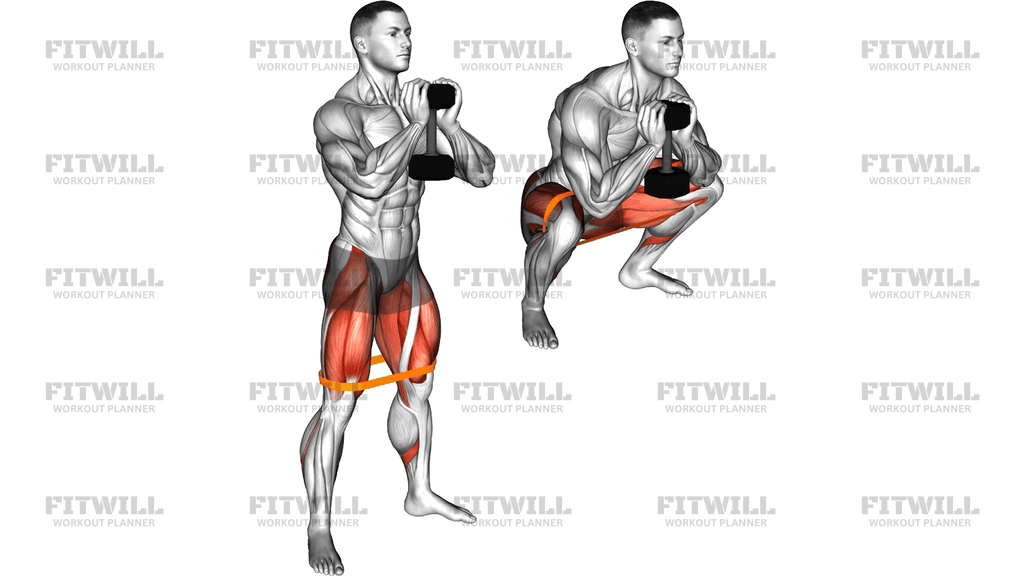
Resistance Band Side Lunge Stretch (Version 2)
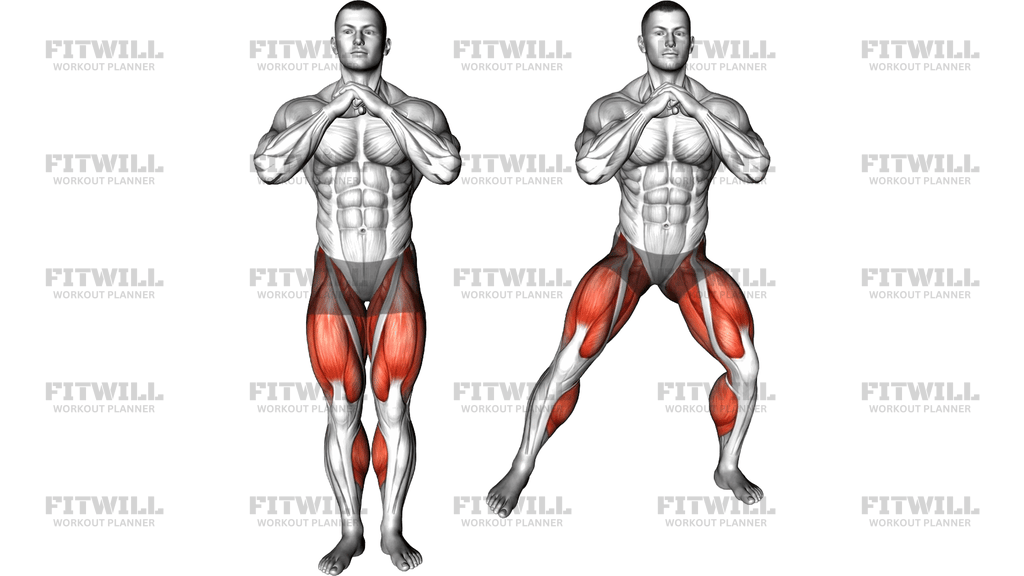
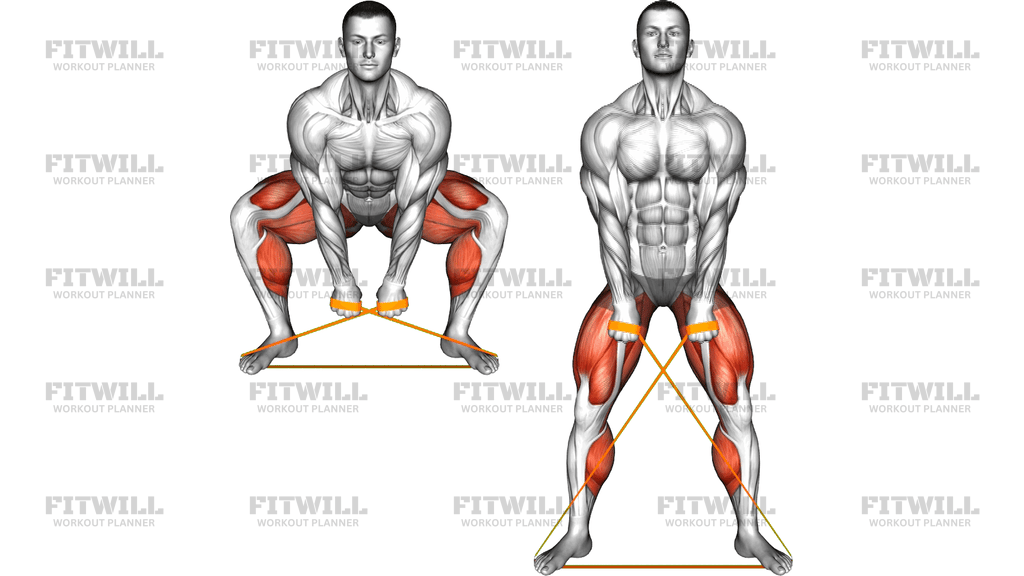
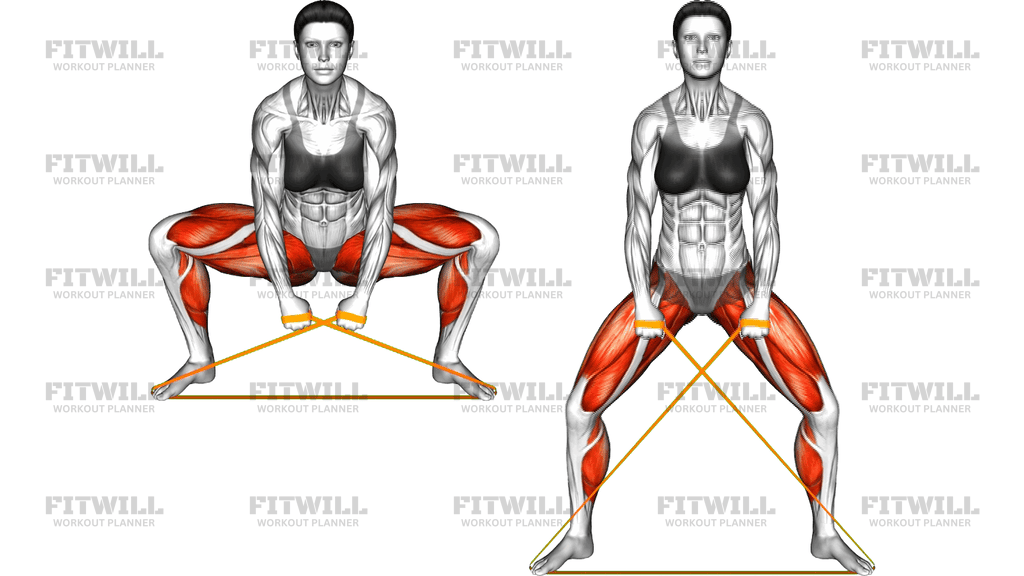
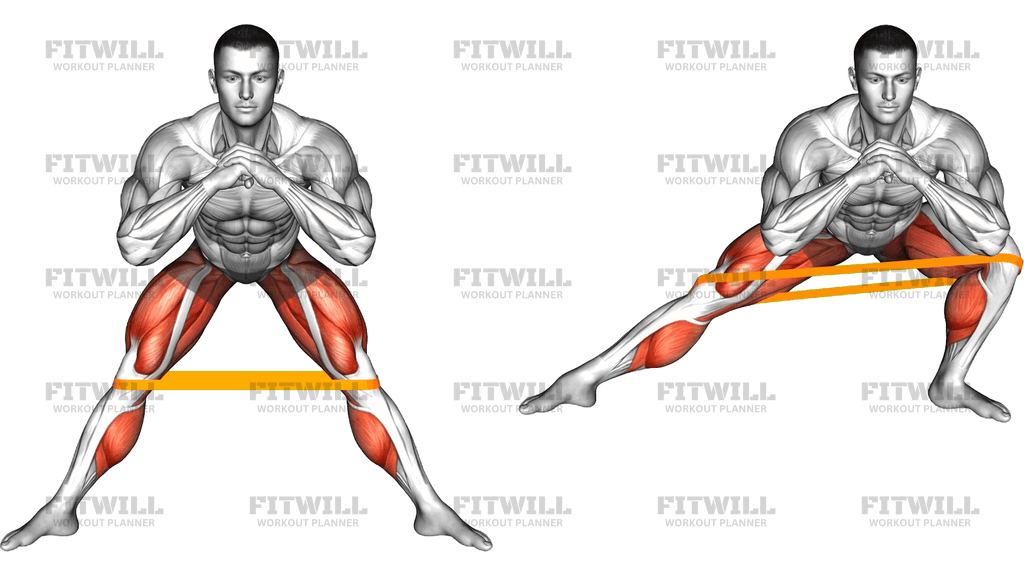
The Resistance Band Side Lunge Stretch (Version 2) is a wide-stance, weight-shifting stretch that uses a looped resistance band around both legs to pull the knees toward each other while you sink from side to side. You start in a deep, wide-legged position with the band sitting just above the knees and your hands clasped in front of your chest, then shift your hips laterally over one foot so the opposite leg straightens and the inner thigh along that straight leg lengthens under load. Because the band is constantly dragging your knees inward, your outer hips and glutes have to work to hold your leg alignment while the adductors on the extended side get a progressively deeper stretch.
This movement is especially useful for anyone who feels chronically tight through the groin and inner thighs: lifters who squat wide, runners and field-sport athletes whose adductors absorb repeated change-of-direction forces, and people who sit for long hours and lose hip mobility. It also doubles as an activation drill, since holding a band-tensioned wide stance wakes up the gluteus medius and outer hip stabilizers before squats, lunges, or lateral agility work.
The setup is what separates this from a plain side lunge. With the band looped around both legs above the knees, every degree of lateral shift stretches the band further, which means the pull toward the center grows exactly when you are trying to lengthen the inner thigh. That combination of active resistance and passive lengthening gives you a controlled, adjustable stretch: a lighter band keeps the emphasis on mobility, while a firmer band adds a strength and stability component.
To execute it well, keep your chest tall and your weight distributed through the whole foot rather than dumping into the ball of the working leg. As you shift over one side, let the opposite leg extend fully with the foot flexed or flat, and only go as deep as you can while keeping the bent knee stacked over or behind the toes. Avoid letting the band win by collapsing your knees inward; actively press them out against the band throughout.
A practical approach is to move slowly from one side to the other, pausing two to three seconds on the stretched side for several repetitions before switching emphasis. Do this drill as part of a warm-up on leg days, or hold the end positions longer as a standalone mobility session. Stop or reduce depth if you feel sharp discomfort in the groin, knee, or inner thigh; a mild pulling sensation along the inner thigh is the intended feeling, pain is not.
[ Workout Log & Planner ]
Put your next workout in Fitwill
Keep your plan and training log ready when you are.


Instructions
- Loop a resistance band around both legs and position it just above your knees, then stand with your feet much wider than shoulder width and toes turned slightly out.
- Clasp your hands together in front of your chest and sit your hips down into a wide, half-squat stance so there is already tension on the band.
- Brace your core lightly and actively press both knees outward against the band so it cannot pull them toward each other.
- Shift your hips sideways over your left foot, bending the left knee while letting your right leg straighten out to the side.
- Sink until you feel a firm but comfortable stretch along the inner thigh of the straightened leg, keeping the bent knee tracking over or behind the toes.
- Pause in the end position for two to three seconds, continuing to press the bent knee out against the band.
- Drive through the bent leg's heel to shift your hips back to center, then repeat the shift over the opposite side.
- Breathe steadily throughout: inhale as you shift into the stretch, exhale slowly as you hold or return to center.
- Alternate sides for equal reps or time, then step the feet in and remove the band to reset.
Tips & Tricks
- If your knees keep diving inward, the band tension is too high relative to your hip strength; switch to a lighter band and master the outward knee press first.
- Keep the heel of your bent leg flat on the floor. Rising onto the ball of the foot is a sign you are shifting too far or too fast for your current ankle and hip mobility.
- Do not let the straight leg's foot roll so the inner edge lifts; keep the whole foot or at least the outer edge grounded to protect the knee and keep the adductor stretch honest.
- Keep your chest up and hands clasped at chest height instead of letting your torso round forward, which turns a hip stretch into a lower back slump.
- A wider initial stance gives you more room to shift before the band tension spikes; a narrower stance limits the stretch and loads the knees more.
- If the band slides down your legs during the set, it is positioned too low or is too loose; reposition it directly above the knees where the wider thigh circumference holds it.
- Use a longer pause on the tighter side rather than more reps; holding the stretched position two to three extra seconds does more for the adductors than rushing side to side.
- Warm up briefly before this drill, since stretching cold adductors under band tension feels far less comfortable and may cause you to guard and shorten the range.
Frequently Asked Questions
What does the Resistance Band Side Lunge Stretch (Version 2) primarily target?
It primarily targets the adductors along the inner thigh, with the straightened leg receiving the main stretch. The glutes and outer hips work isometrically to press the knees out against the band.
Why is the band looped around both legs above the knees in this exercise?
The band pulls the knees toward each other, so your outer hip muscles must actively resist while the inner thighs lengthen during the lateral shift. This combines a stretch with a stability challenge that a bodyweight side lunge does not provide.
Is the Resistance Band Side Lunge Stretch suitable for beginners?
Yes, provided a light band is used and the range is kept modest. Beginners should focus on keeping the heels down and knees pressed outward before trying to deepen the shift.
How deep should I sink into the side lunge position?
Sink only until you feel a firm pulling sensation along the inner thigh of the straightened leg. If your hips tuck under, your heel lifts, or you feel strain in the groin or knee, you have gone past a useful range.
What is the most common mistake in this drill?
Letting the band collapse the knees inward while shifting side to side. This removes the outer hip work and can strain the knee; continuously press the knees out against the band for the entire set.
Can I do this stretch without a resistance band?
You can perform an unloaded side-to-side lunge shift, but you lose the inward knee pull that makes the outer hips work and the adductor stretch more pronounced. A short loop band is the simplest substitute for the exact setup.
When is the best time to use the Resistance Band Side Lunge Stretch?
It works well as a warm-up drill before squats, deadlifts, or lateral sports drills, using shorter holds. It can also be used after training with longer holds as a dedicated inner-thigh mobility session.
How many repetitions should I perform?
Six to ten controlled shifts per side with a two to three second pause on the stretched side is a solid starting dose. Increase holds rather than speed when you want more stretch.
Is it normal to feel this in the groin?
A gentle pull along the inner thigh or groin is the intended sensation. Sharp, pinching, or lingering pain in the groin or knee is not; reduce band tension, narrow your stance, and shorten the range.