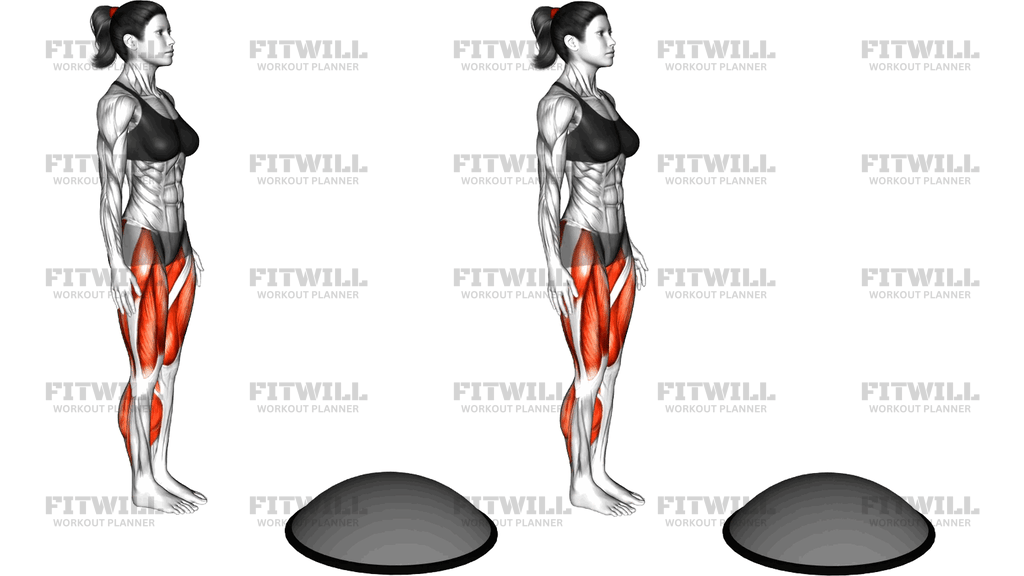
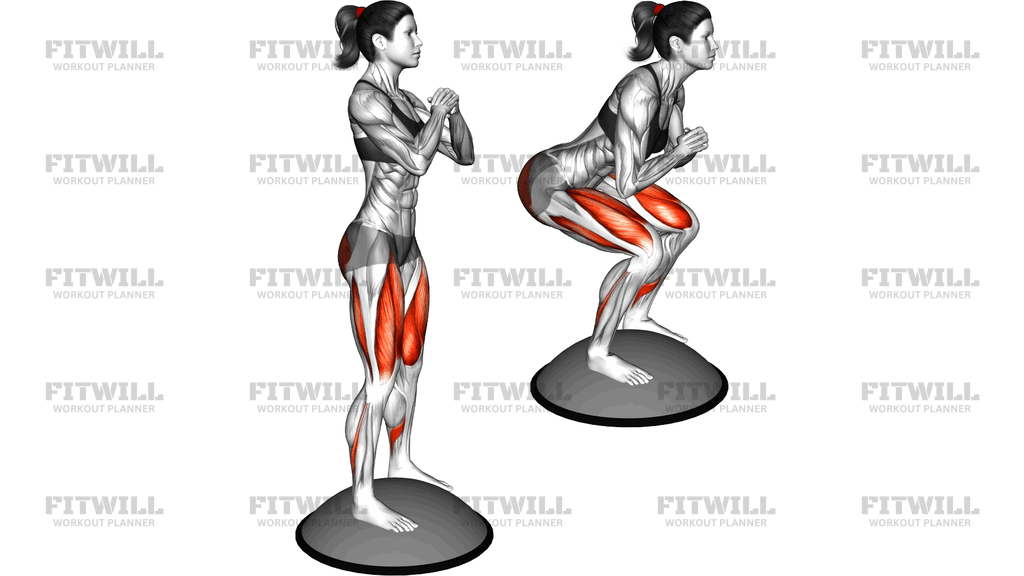
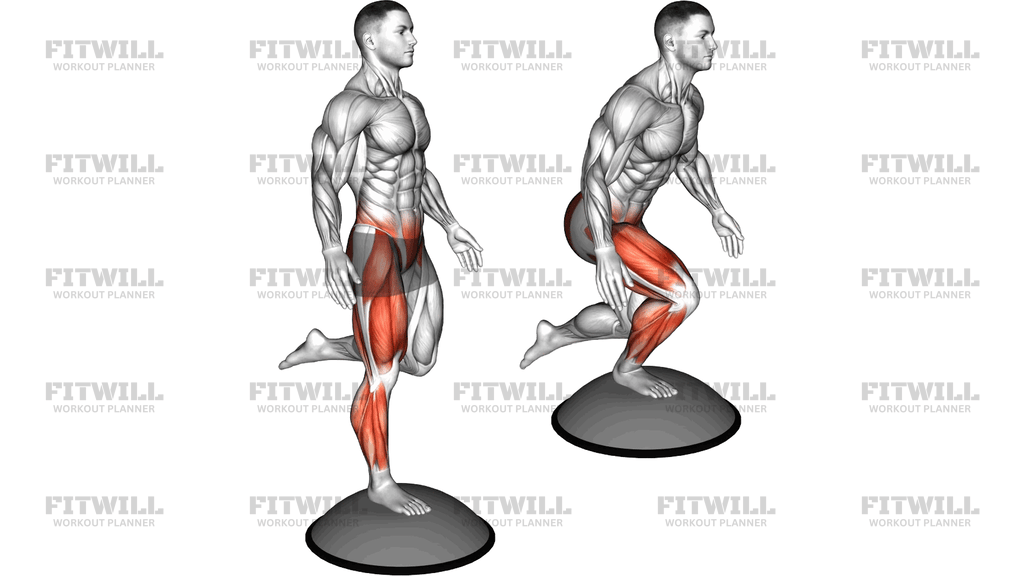
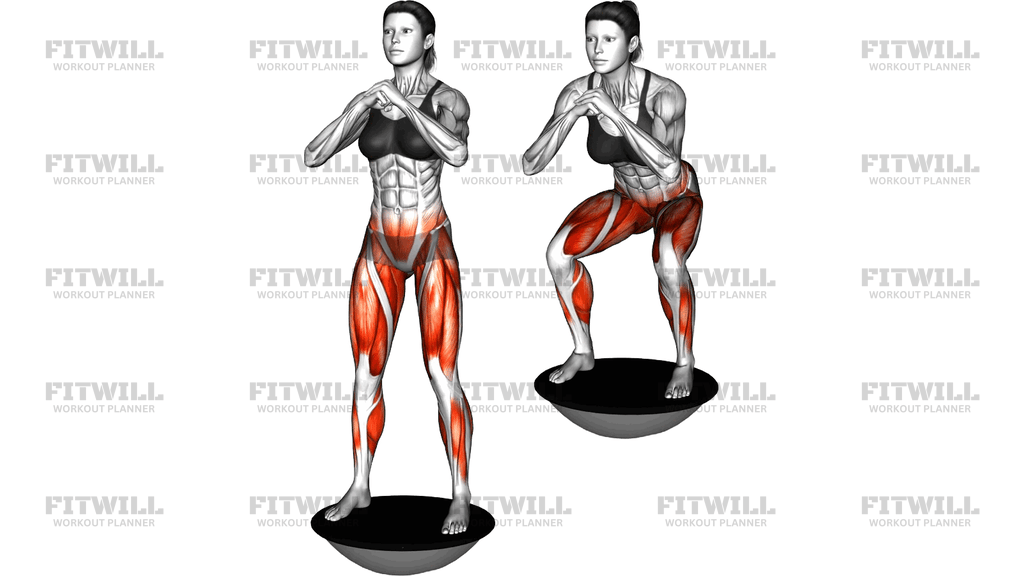
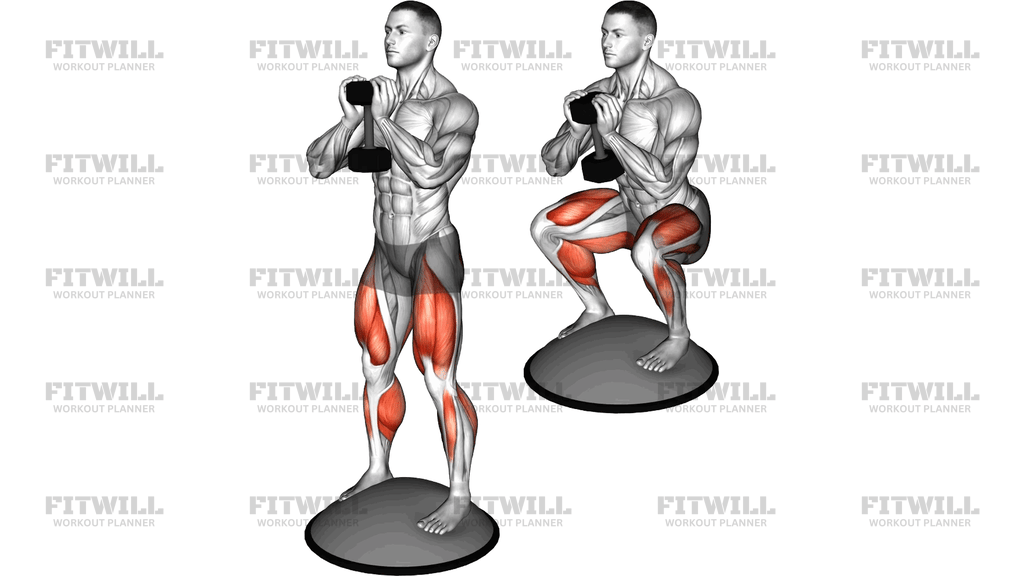
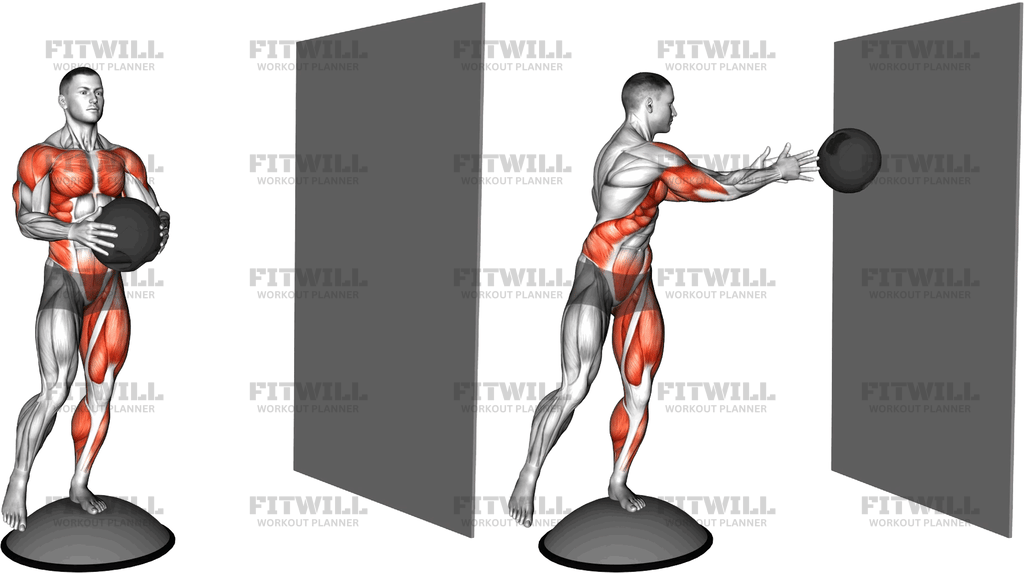
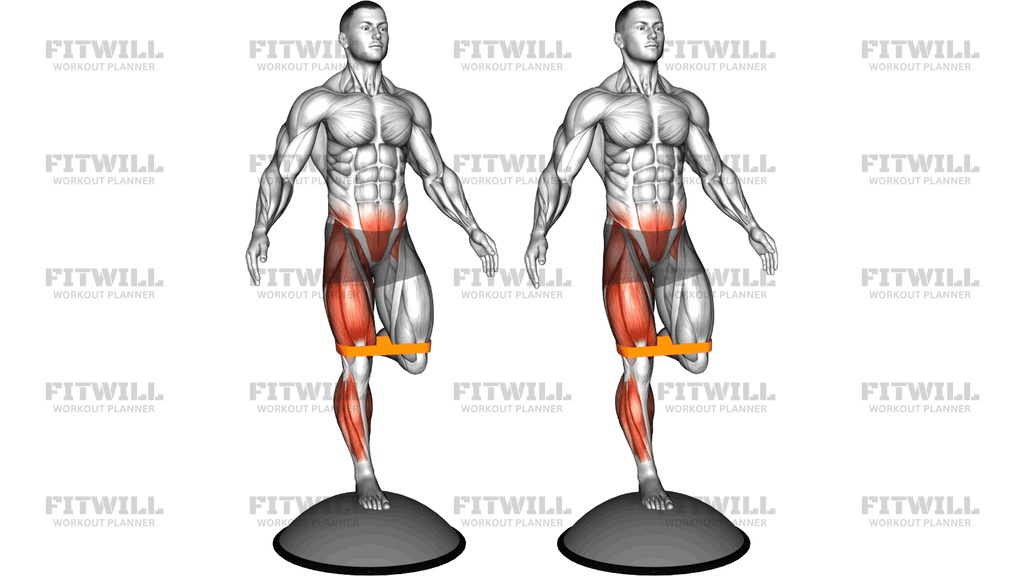
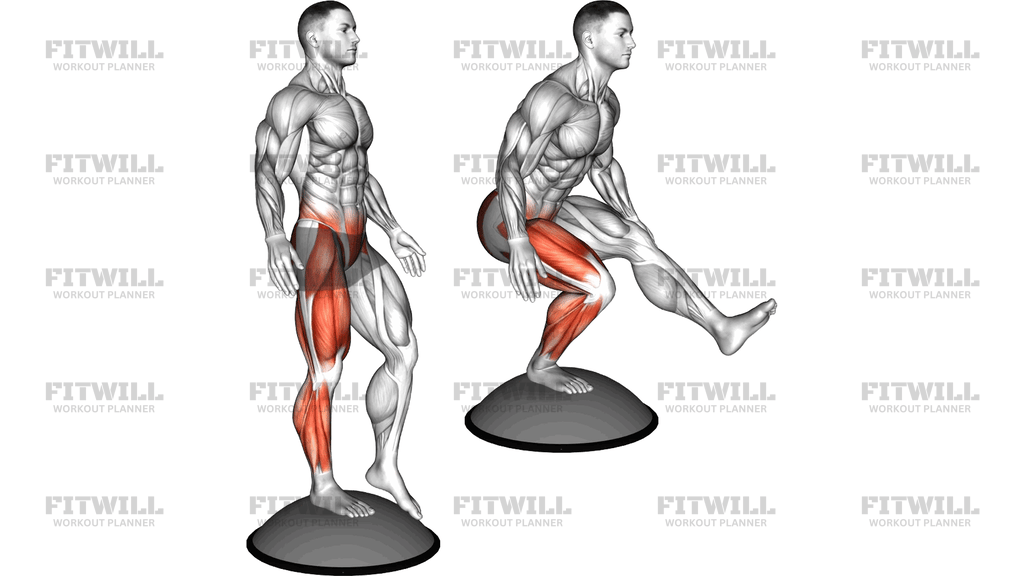
Resistance Band Normal To Wide Squat Jump On Bosu
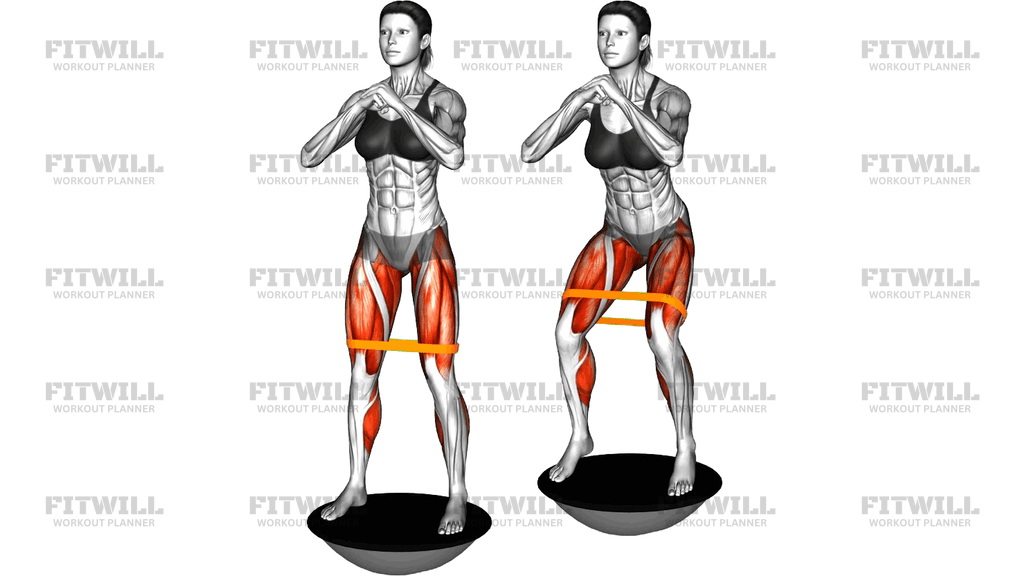
Resistance Band Normal To Wide Squat Jump is a plyometric squat variation that combines three challenges at once: explosive jumping, a changing foot position, and an unstable surface under your feet. You stand on the dome of a Bosu ball with a loop band pulled tight around your thighs just above the knees, then jump your feet out from a narrow stance into a wide squat and back in again, repeating for reps. The band constantly pulls your knees inward, so your outer hips and glutes have to fight to keep your knees stacked over your toes on every landing.
This exercise is best suited to intermediate and advanced trainees who already own a solid bodyweight squat and can control a basic jump landing on flat ground. It shows up frequently in athletic conditioning circuits, leg-day finishers, and lower-body stability work for sports that demand quick changes of direction. Because you are absorbing force on a moving surface, it doubles as serious training for the ankle stabilizers and the small muscles around the knee that rarely get challenged in standard barbell squats.
The main drivers are the quadriceps and glutes, which power both the jump and the squat portion of each rep. The wide-stance landing shifts extra work onto the inner thighs and outer hips, the calves handle the push-off and the landing, and your core works isometrically to keep your torso upright while your feet move. Do not expect this to build maximal strength like a loaded squat; its value is in reactive control, knee tracking under fatigue, and balance under dynamic load.
Setup details matter more here than in most squat variations. The band should sit just above the knees with real tension, not slack, because a loose band removes the outward-knee cue entirely. Your feet should start near the center of the Bosu dome, close enough that the whole foot is in contact with the dome surface, and your hands can be clasped in front of your chest to counterbalance. If the dome is sliding on the floor or your feet are hanging off the edges, fix that before you add any jumping.
Execution comes down to landing quality. Push through the whole foot to jump out into the wide position, land with knees bent and thighs turned out against the band, sink into a shallow squat, then jump back to the narrow stance. Each landing should be quiet and soft, with hips pushed back and chest tall. If your landings are loud, your knees are caving toward each other, or the Bosu is wobbling wildly, drop back to the floor version or slow the tempo down until the pattern is clean.
A practical progression path looks like this: bodyweight squats on the floor, squats on the Bosu, band-resisted squats on the Bosu, then finally the jump version. Keep sets short, around eight to fifteen reps, because the balance demand causes form to deteriorate quickly once you are fatigued. Place the Bosu on a non-slip surface and give yourself clear space around it before every set.
[ Workout Log & Planner ]
Put your next workout in Fitwill
Keep your plan and training log ready when you are.


Instructions
- Place a Bosu ball dome-side up on a non-slip floor and lay a loop resistance band around both thighs, positioned just above your knees.
- Step onto the center of the dome with your feet about hip-width apart, spread your feet until the band is lightly tensioned, and clasp your hands together in front of your chest for counterbalance.
- Set your gaze on a fixed point at eye level ahead of you and brace your core as if preparing to absorb a push.
- Bend your knees slightly, push through the whole foot, and jump your feet out wide, landing in a squat position with toes turned slightly out.
- As you land, press your knees outward against the band, sink into a shallow wide squat, and keep your chest up and weight through your midfoot and heels.
- Without pausing at the bottom, drive out of the squat and jump your feet back in to the narrow starting stance, landing softly with a slight knee bend.
- Exhale on each jump out and back in, and inhale briefly during the short reset between reps.
- Continue alternating between the narrow stance and the wide squat for the target number of reps, keeping each landing quiet and controlled.
- To finish, stop on a narrow stance, stand fully upright, step one foot off the dome carefully, then step the other foot off, and remove the band.
- Reset your foot position at the center of the dome whenever you feel it drift toward the edges before continuing.
Tips & Tricks
- The most common failure point is the knees caving inward on the wide landing because the band wins the fight. Cue yourself to spread the floor with your feet and push both knees out against the band the moment your feet touch down.
- If the Bosu tips forward or backward, your weight is drifting onto your toes or heels. Keep your weight over the middle of the dome and let your hips move, not your upper body.
- Keep the jump height low. This drill rewards quick, precise footwork, not altitude, and a small hop makes it far easier to keep the band tension and knee position intact.
- Land through the whole foot with bent knees instead of stiff-legged. A hard, straight-legged landing on the dome transfers the impact straight into the knee joint.
- Do not let your hands drop or swing during the jumps. Keeping them clasped at chest height gives you a consistent counterweight and helps the torso stay tall.
- If you keep missing the center of the dome, your stance is probably drifting too wide. Limit the wide landing to a stance you can hit identically every rep.
- Fatigue shows up as wobble before it shows up as missed reps. End the set as soon as the dome starts rocking noticeably, even if reps remain.
- Progress by slowing the tempo first: hold the wide squat for two counts before jumping back in, then speed up once that feels stable.
- Train this barefoot or in flat shoes. Thick, cushioned running shoes reduce your feel for the dome surface and make balance harder.
Frequently Asked Questions
What muscles does the Resistance Band Normal To Wide Squat Jump work?
The quadriceps and glutes do most of the work during the jumps and squatting, while the inner thighs contribute strongly on the wide-stance landing. The calves, core, and ankle stabilizers work continuously to control landings on the unstable dome.
Is this exercise safe for beginners?
It is not a good starting point. Beginners should first master bodyweight squats and jump landings on the floor, then band-resisted squats on the Bosu without jumping, before adding the plyometric element.
Why is the resistance band placed above the knees?
At that position the band pulls the knees toward each other, forcing the outer hips and glutes to actively keep the knees tracking over the toes during every squat and landing. This reinforces good knee position under a realistic sideways load.
Can I do the Resistance Band Normal To Wide Squat Jump without the Bosu ball?
Yes. Perform the same normal-to-wide squat jump with the band on a flat floor to learn the pattern, then move to the dome once your landings are consistently quiet and controlled.
How wide should the wide-stance landing be?
Wide enough that the band is clearly tensioned and your knees can press outward, but narrow enough that both feet fit fully on the dome with your weight centered. Repeatable and controlled beats as wide as possible.
What is the most common mistake in this exercise?
Letting the knees cave inward on the wide landing while rushing the reps. Slow the movement down, actively push the knees out against the band, and make each landing soft before increasing speed.
How many reps should I do?
Eight to fifteen alternating jumps per set works well, because balance and landing quality fade quickly. Two to four sets is plenty, and quality should always decide when the set ends.
Can I hold a weight while doing this exercise?
Adding load is not recommended. The band plus the unstable dome already provide plenty of challenge, and holding a weight makes it harder to counterbalance and catch yourself if the Bosu shifts.
What should I put under the Bosu ball for safety?
Place it on a non-slip surface such as a rubber gym floor or a sticky mat, with clear space around you. A dome that slides while you jump is the biggest avoidable hazard in this setup.
Does the Resistance Band Normal To Wide Squat Jump burn calories or build muscle?
It is primarily a power, stability, and conditioning drill rather than a muscle-building movement. It raises the heart rate in short bursts and strengthens the stabilizing muscles around the hips, knees, and ankles.