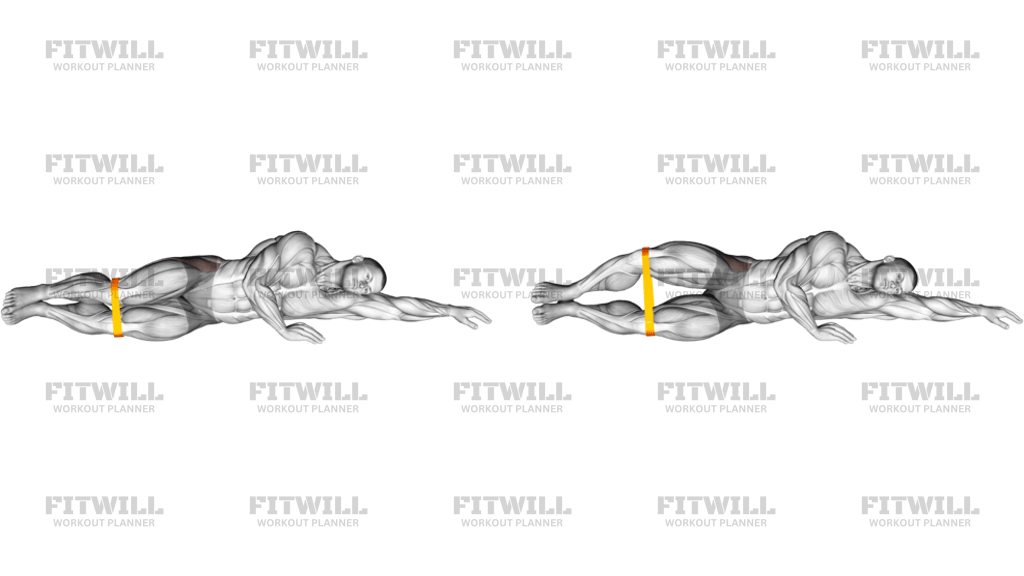
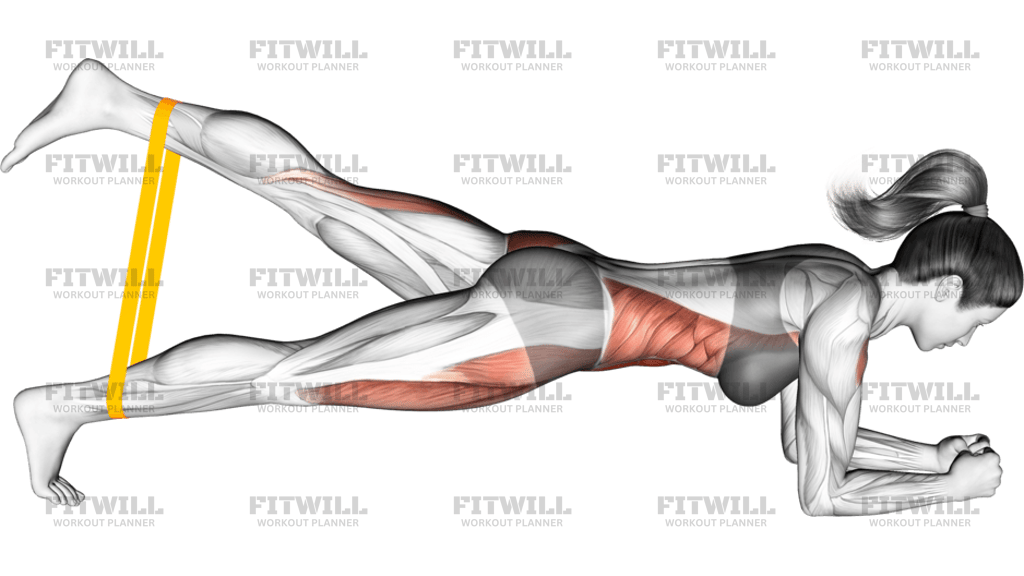
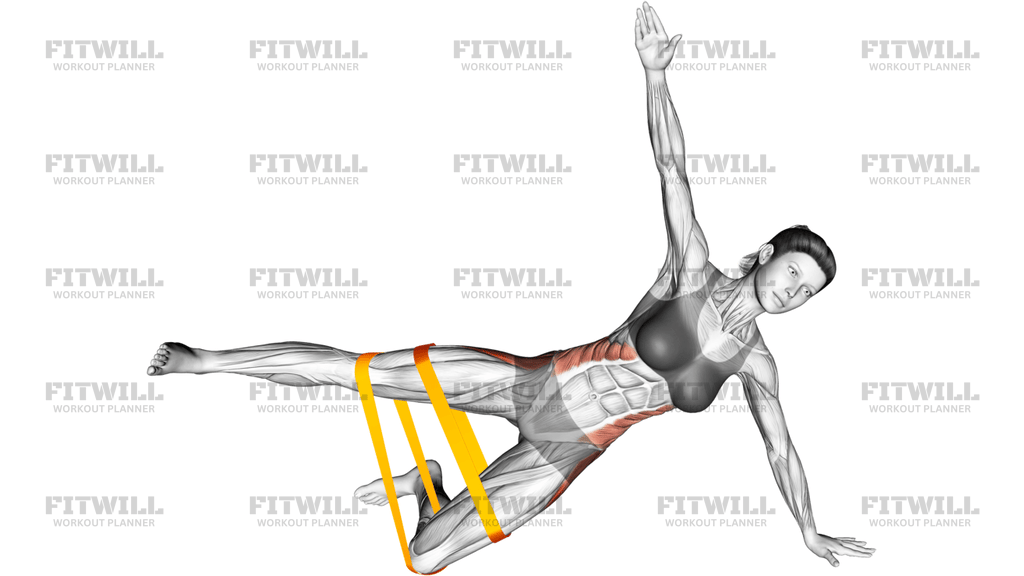
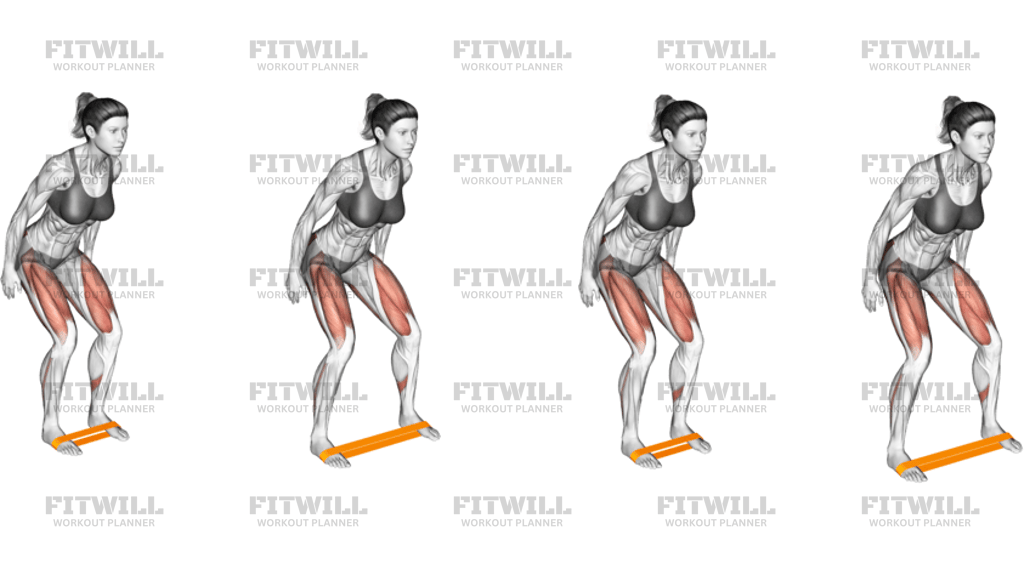
Band Single Leg Split Squat
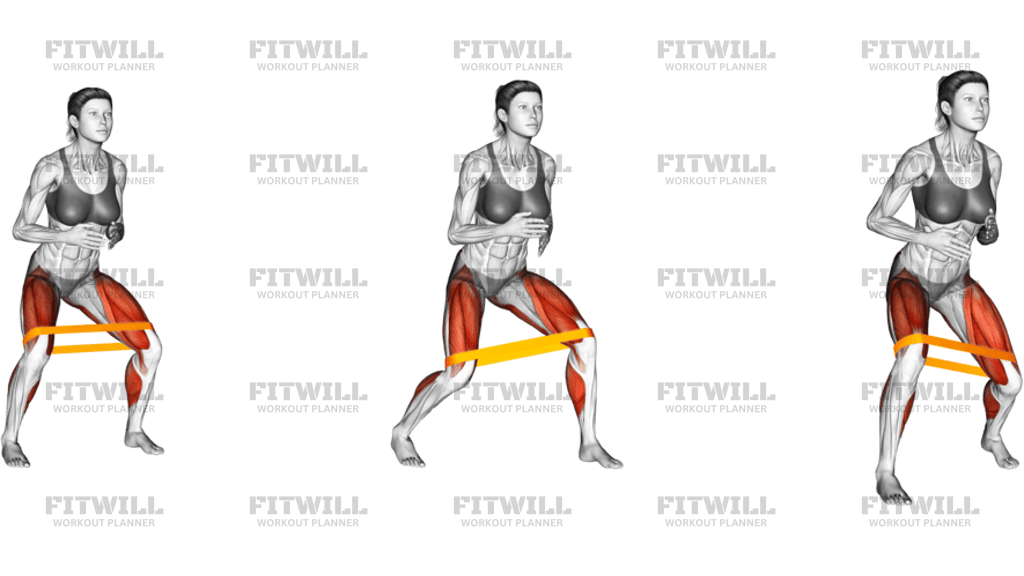
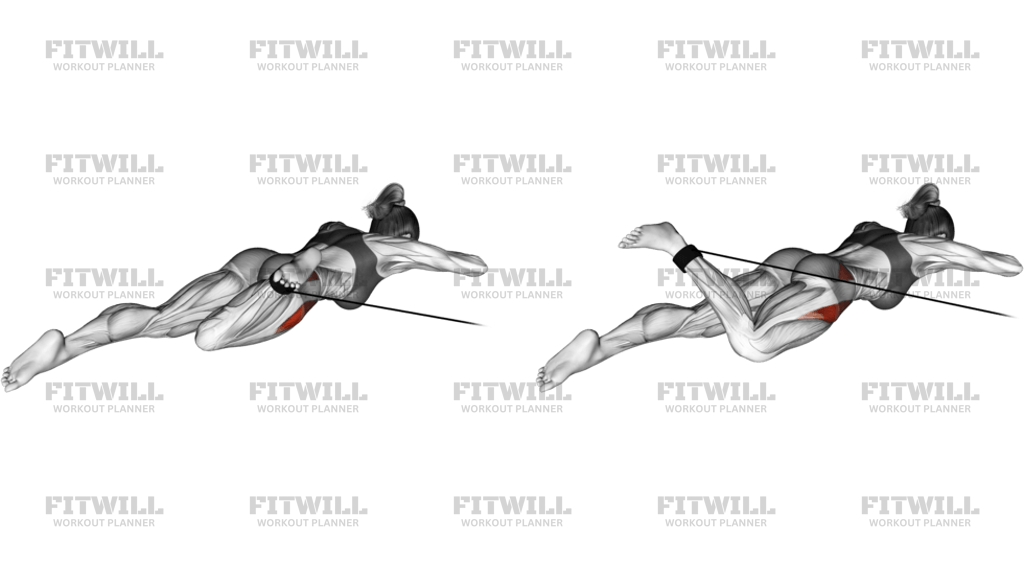
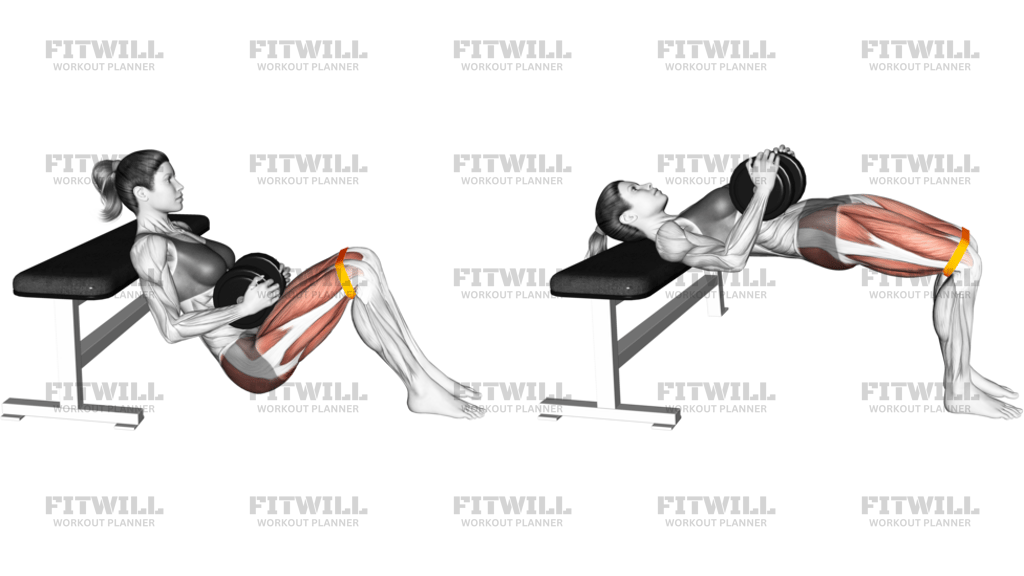
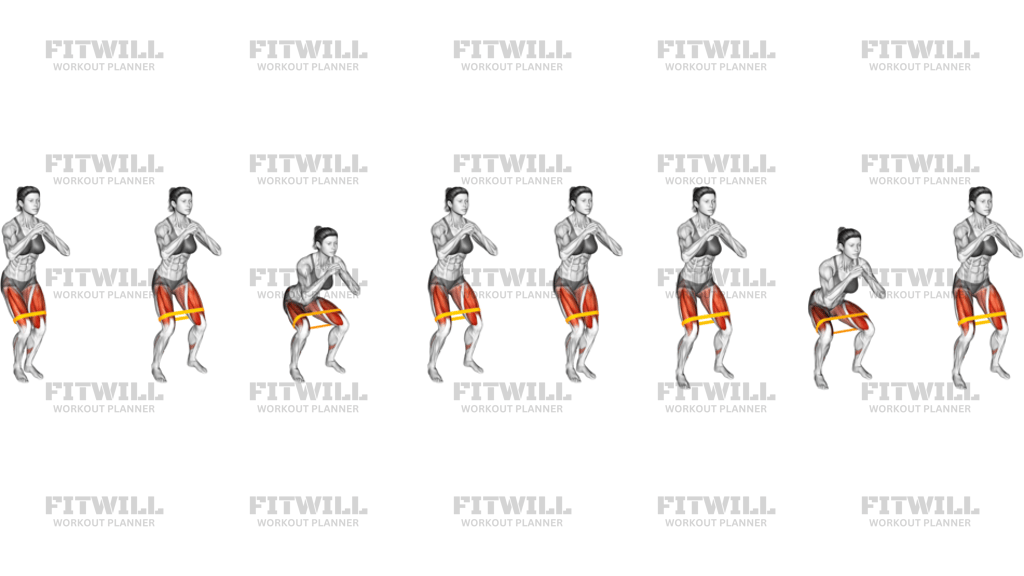
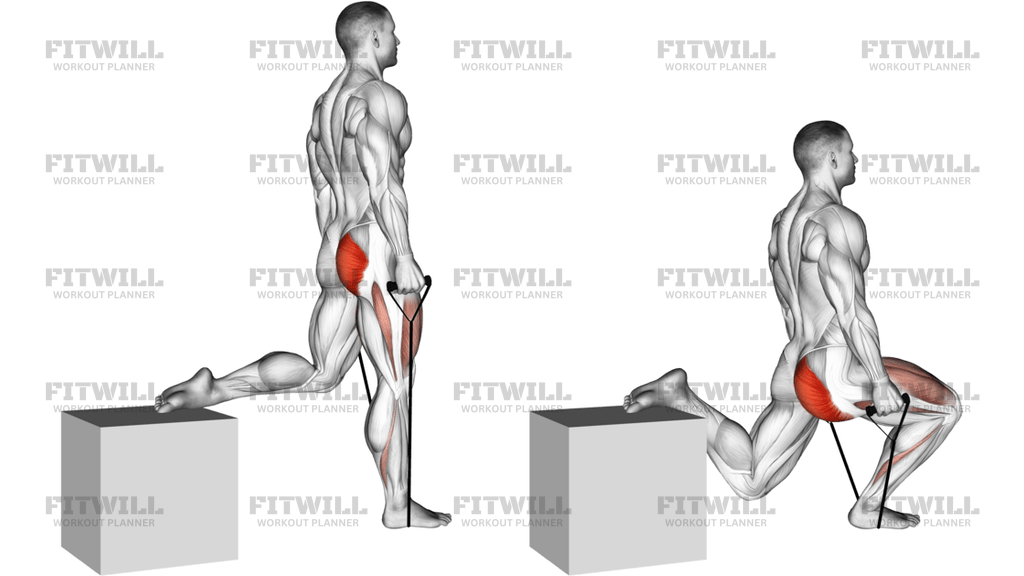
Band Single Leg Split Squat is a rear-foot-elevated split squat performed with a resistance band anchored under the front foot and held in the hands. The setup in the image places the back foot on a bench or box so the front leg does most of the work while the band adds load through the standing phase. That combination makes the exercise useful for unilateral leg strength, hip stability, and glute-focused conditioning.
Because the stance is staggered and one foot is elevated, the exercise demands more than basic leg strength. The front hip and knee have to track smoothly while the pelvis stays level, and the torso has to stay stacked over the front leg instead of tipping forward or twisting. In practical terms, that means the glutes, hamstrings, quads, and core all contribute, with the gluteus maximus taking the main share of the effort and the rectus abdominis and spinal erectors helping you stay organized.
The band changes the feel of the rep. As you stand up, tension increases, so the top half of the movement often feels harder than a bodyweight split squat. That makes load selection important: you want enough resistance to challenge the front leg without pulling you off balance or forcing you to shorten the descent. A clean rep should look smooth from the first inch of the lowering phase to the last inch of the drive back to standing.
Use this exercise for unilateral lower-body strength work, glute accessory work, or a controlled conditioning block when you want one leg to work independently. It is also a useful option for lifters who need more stability than a walking lunge but still want a demanding single-leg pattern. Keep the front foot flat, control the knee path, and stop the set if the rear foot starts to push you, the pelvis shifts, or the band turns the rep into a wobbling balance drill.
Fitwill
Log Workouts, Track Progress & Build Strength.
Achieve more with Fitwill: explore over 9600 exercises with images and videos, access built-in and custom workouts, perfect for both gym and home sessions, and see real results.
Start your journey. Download today!




Instructions
- Loop the band under the front foot and hold the ends or handles at your sides with your arms long.
- Stand in a split stance with the rear foot resting on a bench or box behind you and the front foot planted far enough forward to keep balance.
- Square your hips and torso toward the front leg, then keep your front heel grounded and your chest tall.
- Brace your core before you start the descent so your ribs stay stacked over your pelvis.
- Lower straight down by bending the front knee and hip until the rear knee approaches the floor.
- Keep the front knee tracking in line with the toes as you descend instead of collapsing inward.
- Drive through the whole front foot to stand back up until the front leg is nearly straight and the hips finish tall.
- Squeeze the glute at the top, then lower into the next rep under control without bouncing off the back leg.
Tips & Tricks
- Set the front foot far enough forward that the bottom position feels like a deep split squat, not a cramped lunge.
- Keep the back foot relaxed on the bench; the rear leg should support balance, not push you out of the hole.
- Let the front knee travel forward as long as the heel stays down and the knee tracks over the toes.
- Keep the band centered under the front foot so both handles rise evenly and the resistance does not twist your torso.
- Use a controlled 2-3 second lowering phase if you want more glute and quad tension without adding load.
- If your torso folds over the front thigh, reduce the range or move the front foot slightly farther forward.
- Stop the set when the front knee caves inward or the pelvis starts rotating toward the bench side.
- Exhale as you drive up so the top of the rep does not turn into a back-extension finish.
Frequently Asked Questions
What muscles does Band Single Leg Split Squat work most?
It primarily hits the glutes, with the quads, hamstrings, and core working hard to keep the front leg stable.
Can beginners perform this exercise?
Yes, but beginners should start with a low bench, a light band, and a shorter range until the split stance feels stable.
Where should the band go for this split squat?
Place the band under the front foot and hold the ends at your sides so the resistance loads the standing leg instead of the back leg.
How high should the back foot support be?
A bench or box that lets the back foot rest comfortably without forcing the hip to crank open is ideal; if it feels too high, lower the support.
What should I feel in the bottom of the rep?
You should feel a strong stretch and load in the front glute and quad, not pressure in the lower back or a pinch in the front hip.
Should the rear leg help me stand up?
No. The rear leg is only there for balance, while the front foot should do almost all of the driving.
Why does the band make the top of the rep feel harder?
Band tension increases as you stand, so the last part of the ascent usually feels tougher than the bottom.
What is the biggest mistake with this exercise?
Letting the front knee cave inward or letting the torso twist away from the front leg is the most common breakdown.