Resistance Band Supinated Grip Pull Apart
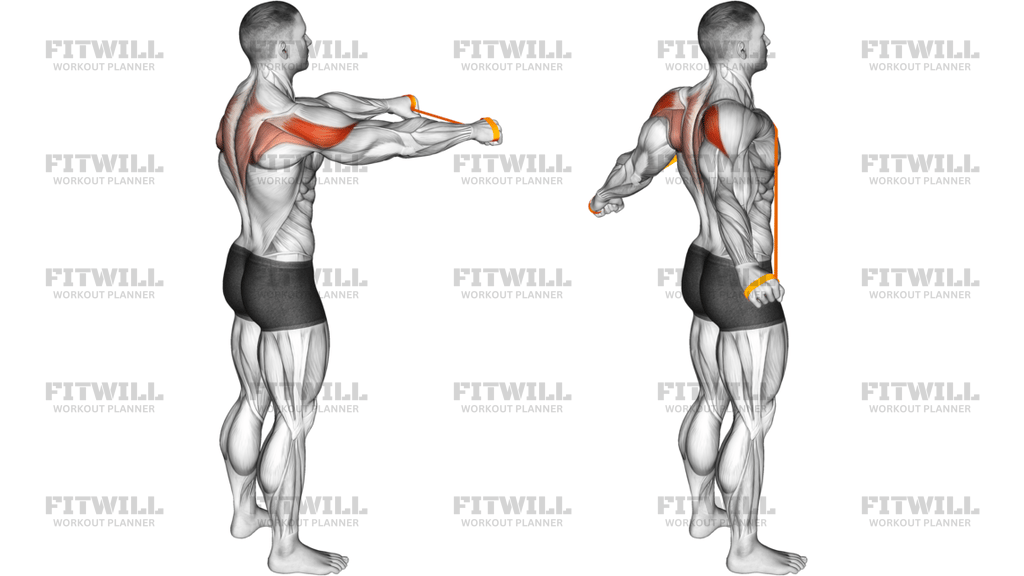
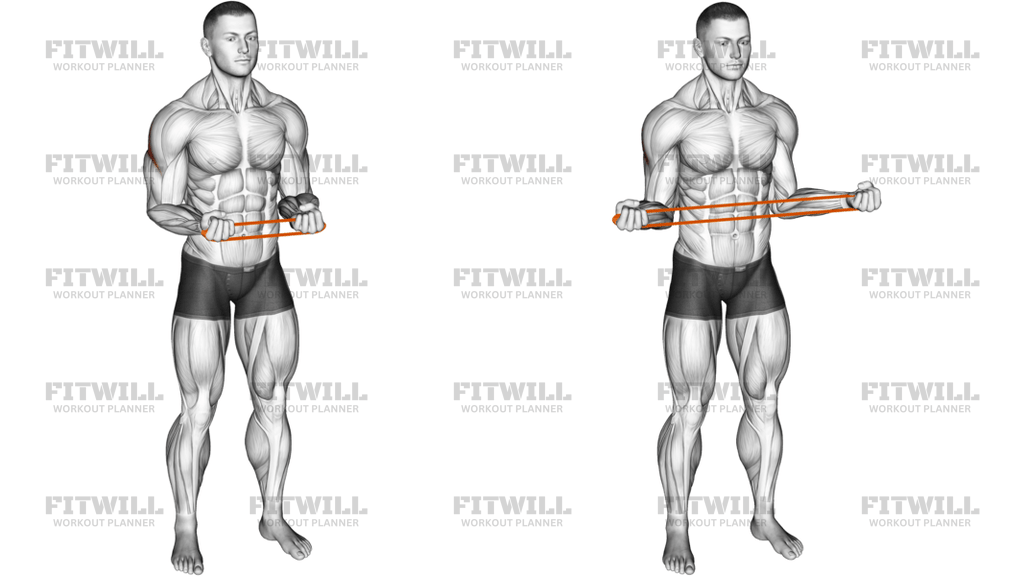
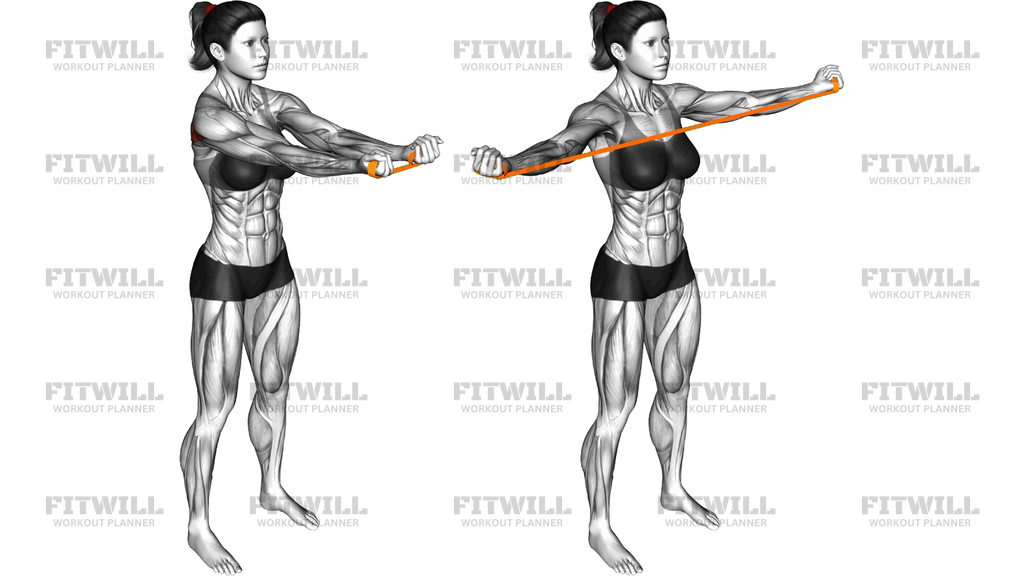
The Resistance Band Supinated Grip Pull Apart is a standing band exercise performed at chest height with the palms turned upward, so the band is stretched apart in front of the body rather than behind it. You hold a continuous loop band in both hands, extend your arms straight ahead at shoulder height, and pull your hands away from each other until the band reaches your chest and the arms spread wide. Because the hands stay in front of the torso and the palms face up, the shoulder blades are drawn together and slightly down as the arms open, which trains the rear shoulders and the muscles that retract the scapula.
This movement is most useful for people whose training and daily habits push everything forward: pressing exercises, desk work, and driving all encourage rounded shoulders. A supinated grip pull apart works in the opposite direction, strengthening the rear deltoids, rhomboids, and mid and lower trapezius while encouraging the shoulder blades to sit back on the ribcage. It is a common accessory movement on upper body days, a warm-up primer before pressing or pulling, and a low-load option for building shoulder health.
Setup matters more here than it looks. The band tension at the start should be light, with only mild pull when the arms are extended forward, because the resistance increases sharply as the hands separate. Standing tall with the feet about hip-width apart, ribs stacked over the pelvis, and shoulders relaxed away from the ears keeps the work in the upper back instead of letting the torso lean or the neck take over.
To execute it well, keep the arms nearly straight with a soft elbow, pull the hands apart on a level line at chest height, and finish with the band touching the sternum while the shoulder blades squeeze together. The tempo should be smooth in both directions; the return under tension is where a lot of the control benefit lives. Breathe out as the band pulls apart and in as the hands come back together.
Because it needs only a light loop band and about a metre of space, this exercise fits easily into home workouts, gym warm-ups, and desk-break routines. Start with higher-rep sets in the 12 to 20 range, since the target muscles are small and respond better to controlled volume than to heavy, jerky efforts. If the front of the shoulders or neck grips hard during the pull, reduce the band tension before adding reps.
[ Workout Log & Planner ]
Put your next workout in Fitwill
Keep your plan and training log ready when you are.


Instructions
- Stand with your feet about hip-width apart and hold a continuous resistance band so it sits in both palms at the middle of your chest.
- Rotate your forearms so your palms face upward in a supinated grip, then extend both arms straight forward at shoulder height until the band has light tension and your hands are roughly shoulder-width apart.
- Roll your shoulders back and down, stand tall, and brace your core lightly so your ribs stay stacked over your hips.
- Keeping the arms nearly straight with a soft bend in the elbows, pull both hands away from each other on a level line at chest height.
- Continue until the band touches your chest and your arms spread wide to the sides, with your shoulder blades squeezed together and slightly down.
- Pause for a beat in the open position without shrugging your shoulders toward your ears.
- Slowly bring your hands back together in front of your chest, resisting the band's pull the whole way rather than letting it snap your arms in.
- Exhale as you pull the band apart and inhale as your hands return to the start.
- Complete your reps, then step out of the band carefully and shake out the shoulders before the next set.
Tips & Tricks
- If the band is already tight before you start pulling, switch to a lighter band; a pull apart that starts too tense forces you to heave with the torso instead of moving the arms.
- Keep the band travelling on one horizontal line at chest height. If one hand drifts higher than the other, check that both shoulders are relaxed and pull each hand an equal distance to its side.
- Resist the urge to bend the elbows heavily to gain range. Straighter arms with a supinated grip place the work on the rear shoulders and upper back; bent elbows turn it into a partial row.
- Squeeze the shoulder blades toward the spine at the open position instead of simply stretching the band wide with the arms. The retraction is the point of the exercise.
- Avoid thrusting the chest forward or leaning back as the band reaches your sternum. Stay tall and let the upper back do the moving.
- The band should pull apart over about two seconds and return over two to three seconds. Fast, bouncy reps lose most of the benefit and stress the shoulder joint.
- If you feel it more in the neck than between the shoulder blades, you are likely shrugging. Drop the shoulders down before each rep and use slightly less tension.
- Warm shoulders handle this better. Do a few very easy reps with a slack band before your working sets if your shoulders feel cold or stiff.
Frequently Asked Questions
Which muscles does the Resistance Band Supinated Grip Pull Apart work?
The main muscles are the rear deltoids, with strong support from the rhomboids and the mid and lower trapezius as they pull the shoulder blades together. The rotator cuff also assists to keep the upper arm stable during the pull.
How is the supinated grip different from a regular band pull apart?
With the palms facing up, the arms pull apart in front of the chest and the shoulder blades retract with a slightly different rotation than in the palms-down or behind-the-back versions. Many people find this version friendlier to the front of the shoulder and feel it clearly between the shoulder blades.
Is the Resistance Band Supinated Grip Pull Apart good for beginners?
Yes. It uses light resistance, a simple standing position, and a short range, so it is easy to learn. Beginners should start with a thin band and focus on moving the hands evenly apart at chest height without shrugging.
What band tension and rep range should I use?
Choose a band that feels only lightly taut with your arms extended forward, since tension rises quickly as your hands separate. Sets of 12 to 20 controlled reps work well, either as a warm-up or as an accessory finisher.
Why does the band touch my chest at the end of the pull?
When your arms are fully spread and the band contacts the sternum, you have pulled the band to its shortest working length, which usually means the shoulder blades are fully retracted. It is a useful finish cue, but the squeeze between the shoulder blades matters more than the contact itself.
Should my arms stay perfectly straight?
Keep them nearly straight with a soft elbow so the tension stays on the rear shoulders and upper back. Locking the elbows hard or bending them a lot both shift the work away from the intended muscles.
Can I do this exercise every day?
Because the load is light and the reps are easy to recover from, many people perform it daily as a posture and shoulder warm-up. If the muscles between your shoulder blades feel sore the next day, give them a rest day before repeating.
What can I use if I do not have a loop band?
A long flat resistance band held in both hands works the same way, or you can use two handles connected to a single band. The key is that the band resists your hands moving apart at chest height with your palms turned up.
Is it safe if my shoulders click or feel pinched during the pull?
Mild, pain-free clicking is common and usually harmless, but if you feel pinching, reduce the band tension, lower your hands slightly, and make sure you are not shrugging. Any sharp or lasting discomfort is a reason to stop and have the shoulder assessed before continuing.