Band One Arm Seated Delt Row
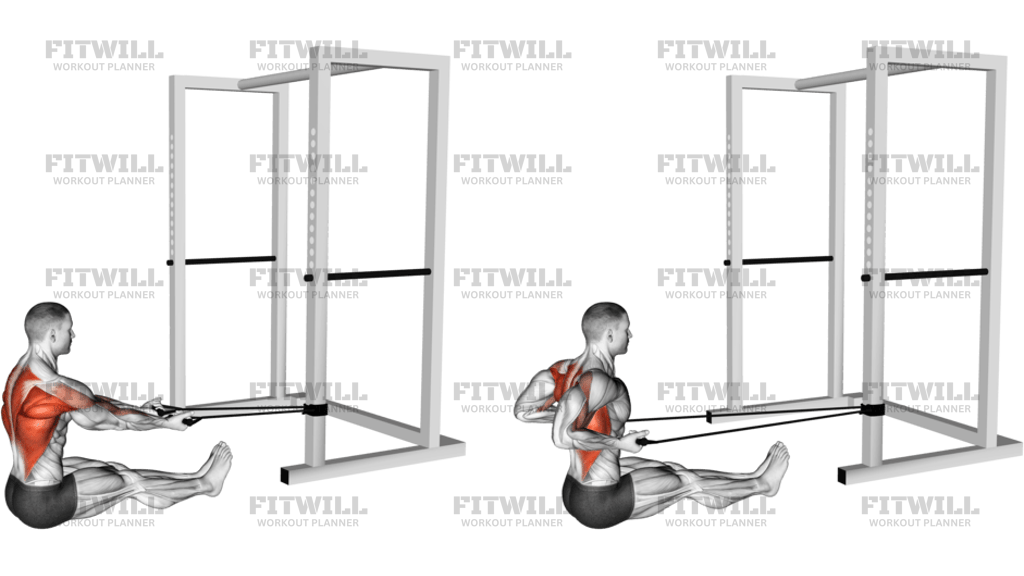
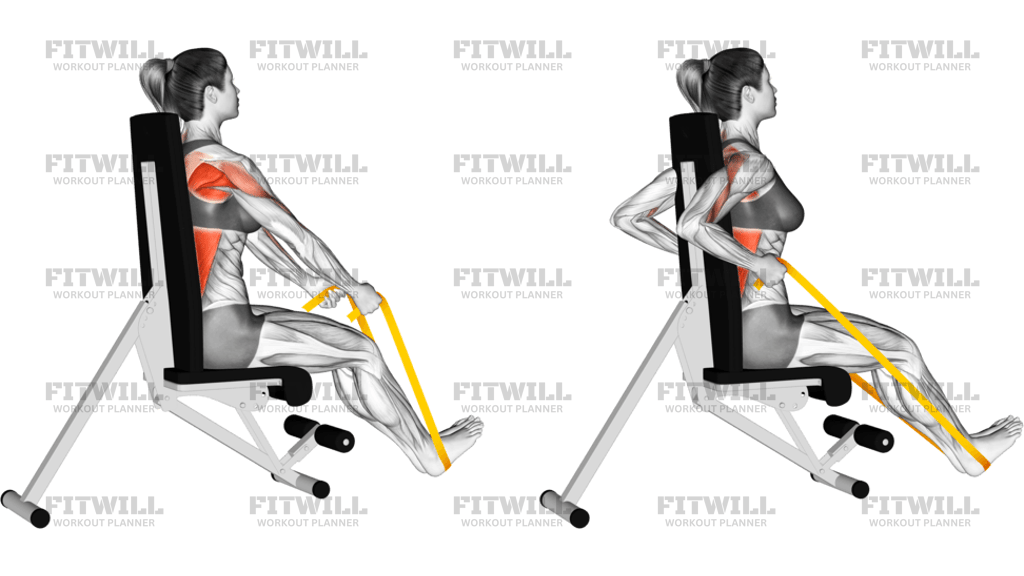
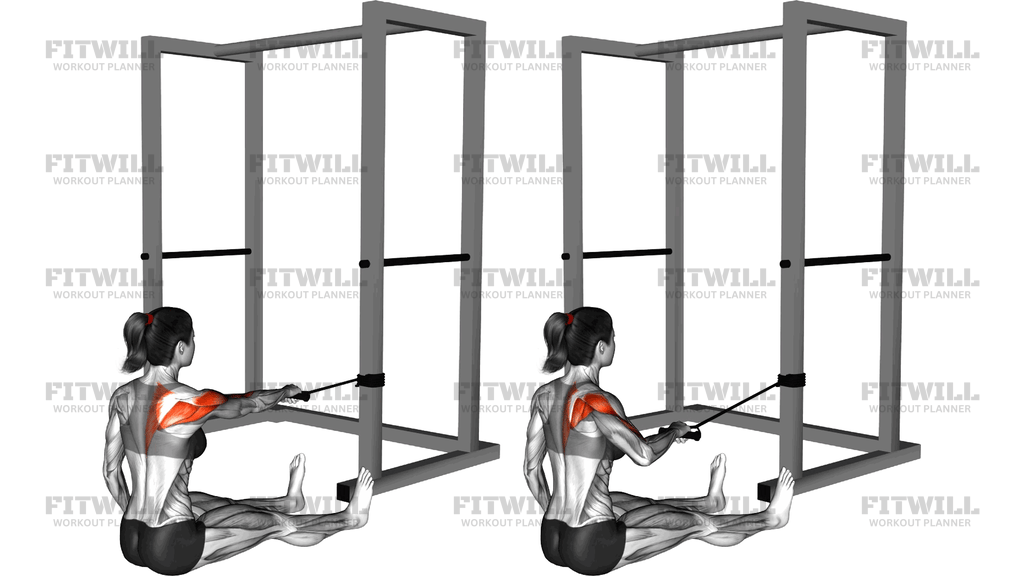
The Band One Arm Seated Delt Row is a single-arm pulling exercise performed sitting on the floor with a resistance band anchored at roughly shoulder height to a sturdy upright, such as a power rack. Unlike a classic seated row where the elbow stays close to the ribs, this version lets the elbow travel out to the side, which shifts the emphasis from the lats toward the rear deltoid and the muscles between the shoulder blades. The image of the movement shows the arm opening wide as the handle is drawn back toward the torso, which is the key detail that makes this a delt row rather than a lat-focused row.
This exercise is especially useful for lifters whose rear shoulders get outworked by the front and side delts, which is common in anyone who benches or presses a lot but pulls less. It also suits people training at home with minimal equipment, since one band looped around a rack, squat stand, or similar anchor is all that is required. Working one arm at a time doubles the number of sets but lets you notice and correct left-right differences in strength and control that a two-handed row can hide.
Setup matters here more than with most band rows because the anchor height determines the pull path. With the band fixed around chest to shoulder height and you sitting facing it with legs spread comfortably on the floor, the line of pull runs slightly upward and outward, which naturally encourages the high-elbow rowing angle you want. If the anchor is too low, the movement drifts into a standard low row and the rear delts stop leading the pull.
To execute it well, sit tall with a long spine rather than slumped, grip the handle with one hand, and start with the arm extended toward the anchor. Pull the handle back until the hand arrives near the lower chest or upper abdomen while the elbow flares out level with or slightly above the shoulder, then squeeze the shoulder blade toward the spine before letting the arm travel back out under control. The return should be slow enough that the band keeps tension the whole time instead of snapping the arm forward.
In practice, this movement works well as a shoulder-day accessory after presses, as a second pulling angle on back days, or as a high-rep finisher when the rear shoulders need extra volume. Because the band's resistance increases as it stretches, the hardest part of the rep is the contracted position, where the rear delts and rhomboids do their best work. Keep the torso quiet throughout: if you find yourself leaning back or twisting to finish each rep, the band is too heavy or fatigue has set in.
[ Workout Log & Planner ]
Put your next workout in Fitwill
Keep your plan and training log ready when you are.


Instructions
- Anchor the resistance band at chest to shoulder height around a secure upright of a power rack or similar frame, and attach or hold a single handle on the free end.
- Sit on the floor facing the anchor with your legs spread comfortably in front of you and your feet flexed, sitting tall on your sit bones so your torso is upright.
- Grip the handle with one hand using a neutral or slightly overhand grip, and slide your seat back until the band has light tension with your arm fully extended toward the anchor.
- Brace your core and lengthen your spine so your shoulders sit over your hips instead of rounding forward.
- Pull the handle back toward your lower chest while letting your elbow travel out to the side, keeping the elbow roughly in line with or slightly above the shoulder.
- Squeeze the working shoulder blade back and toward your spine at the end of the pull, pausing briefly with the hand near your torso.
- Slowly extend your arm back toward the anchor over two to three seconds, resisting the band rather than letting it snap your arm forward.
- Exhale as you pull the handle back and inhale as you return to the extended position.
- Complete all repetitions on one arm, then reposition the band or your seat and work the other side with the same posture and range.
Tips & Tricks
- If your torso starts twisting backward on each pull, move your seat a little closer to the anchor to shorten the band rather than grabbing a heavier band later.
- The most common mistake is turning this into a low row: if the elbow drifts down toward your ribs, consciously lead the pull with the elbow staying wide so the rear shoulder does the work.
- Keep the wrist in line with the forearm; letting the hand fold back under the band's tension at full stretch is a frequent and avoidable wrist strain point.
- Sit on your sit bones rather than rolling onto your tailbone — a slumped seated posture shortens the pull and shifts tension away from the upper back.
- Stop each rep just before the arm locks out fully forward so the band keeps pulling on the shoulder; a fully relaxed arm at stretch invites the band to yank the shoulder joint.
- Choose a band that lets you pause for a beat at the contracted position; if the band is so strong that the squeeze is impossible, the rear delts get skipped entirely.
- Compare reps between arms and match the weaker side's range and tempo instead of letting the stronger arm set the standard.
- Flex the front foot gently against the band's pull line if you feel yourself being dragged forward at full extension.
- Chalk or a towel on the handle helps when the band grip gets sweaty, since grip failure usually ends sets before the rear shoulders are tired.
Frequently Asked Questions
What muscles does the Band One Arm Seated Delt Row work?
The rear deltoid is the primary mover, supported by the rhomboids and mid and lower traps, which pull the shoulder blade back. The biceps assist on the bend, and the lats contribute less than in a standard row because the elbow travels wide.
Why is the elbow supposed to flare out instead of staying tucked like a normal seated row?
An elbow that rises out to the side changes the shoulder's rotation and puts the rear deltoid in the strongest line of pull. Tucking the elbow close to the ribs shifts most of the work down to the lats.
Is the Band One Arm Seated Delt Row suitable for beginners?
Yes, provided a light band is used so the seated posture and elbow path can be learned first. The floor seat gives more stability than standing, which makes it an approachable way to practice single-arm pulling.
How high should I anchor the band for this exercise?
Chest to shoulder height works best, matching the setup shown with the band looped around a rack upright. A low anchor turns the movement into a conventional low row and reduces the rear delt emphasis.
How is this different from a regular one-arm seated band row?
In a regular row the hand finishes near the waist with the elbow close to the body and the lats dominate. In this delt row the hand finishes near the lower chest with the elbow wide, so the rear shoulder and upper-back muscles between the shoulder blades lead the movement.
Why do one arm at a time instead of pulling with both hands?
The single-arm setup lets you spot and fix side-to-side strength differences, and it allows a slightly wider range because the free side of the torso is not in the way. It also doubles the rear delt volume on each side.
What can I use if I don't have a rack to anchor the band?
Any immovable object at chest height works, such as a squat stand, sturdy railing, or door anchor designed for bands. Just make sure the anchor cannot slip or release mid-pull, since the band will be under significant stretch.
Should my legs be straight out in front or spread apart?
A comfortable straddle with knees slightly bent, as shown in the seated position, gives you the widest, most stable base. Fully straight legs are fine too, but choose the position that lets you sit tall without rounding your lower back.
Is it a problem if my shoulder rolls forward at the stretched position?
Yes — letting the shoulder blade drift forward and collapse at full extension is the most common fault with this exercise and can pinch the front of the shoulder. Keep light tension in the upper back even at the start of each rep, and shorten the band if you cannot hold it.
How many sets and reps should I do?
Two to three sets of 12 to 20 reps per arm works well as an accessory, since the band's resistance ramps up in the strongest part of the range. Rest briefly between arms so the second side gets an equally fresh effort.