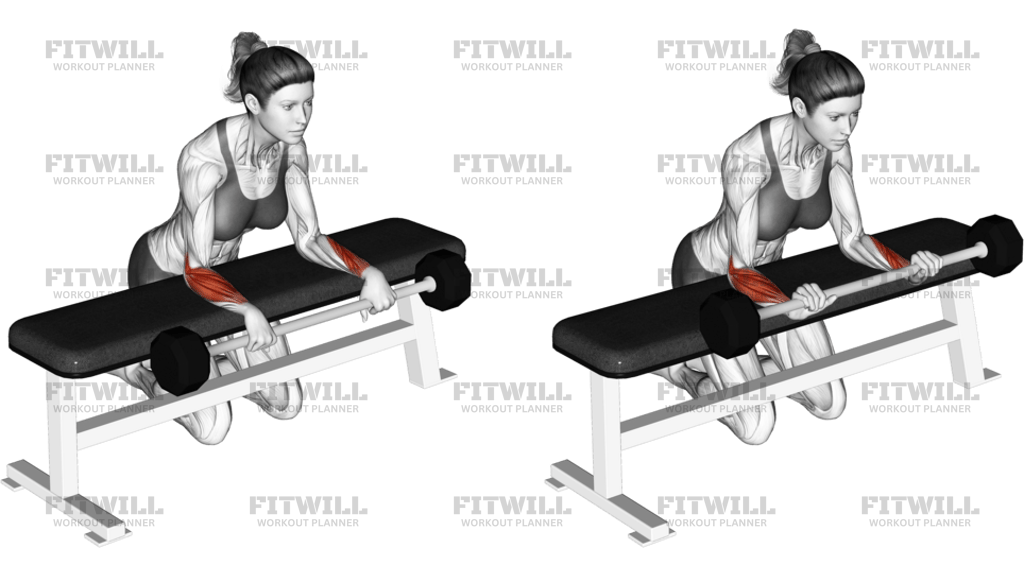
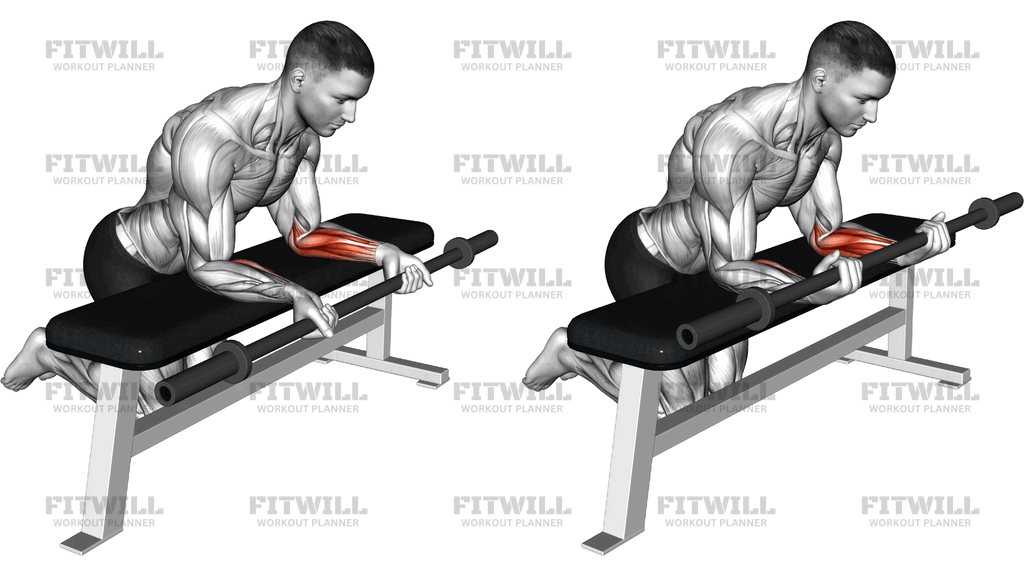
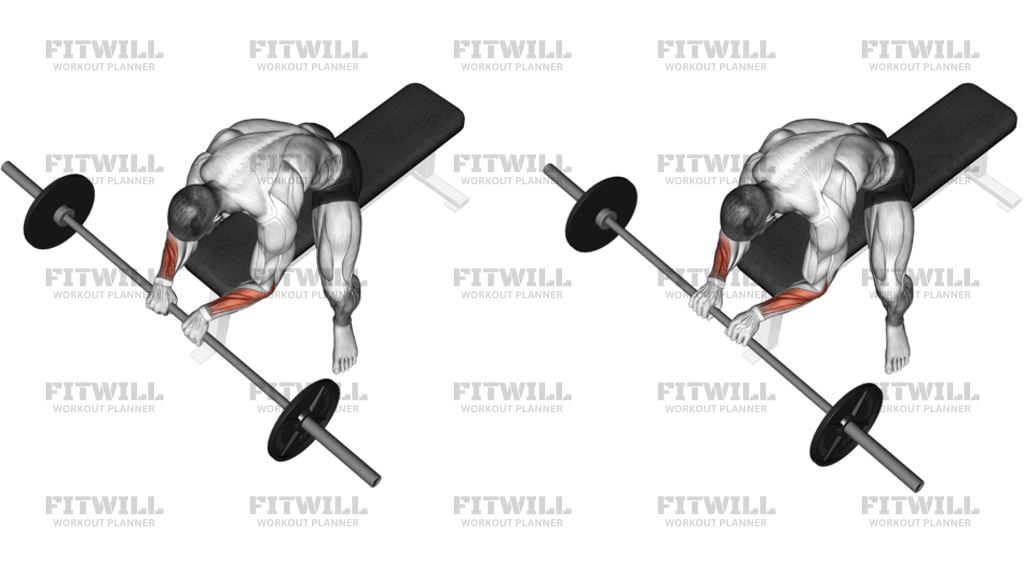
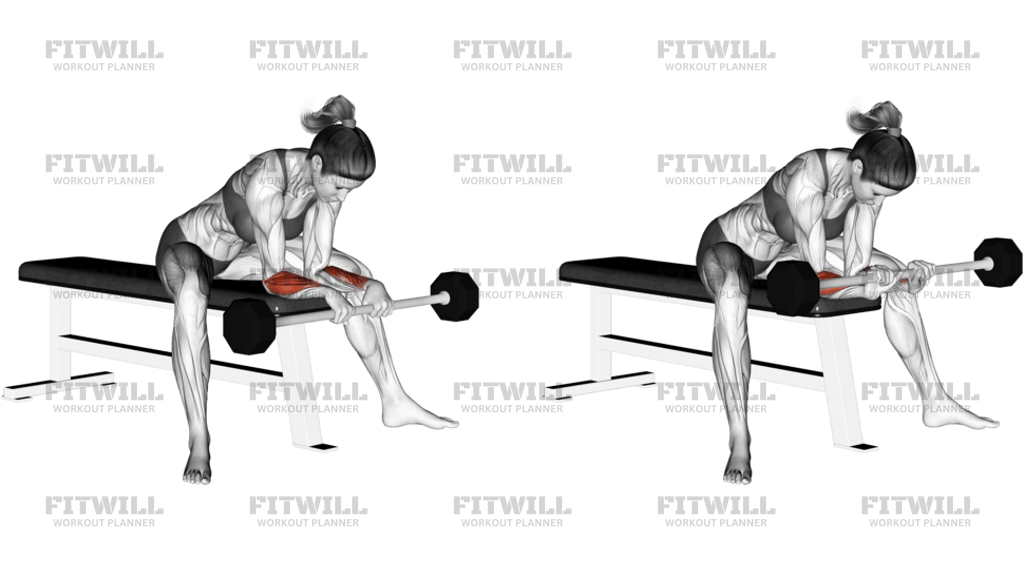
Finger Flexion While Extending Thumb
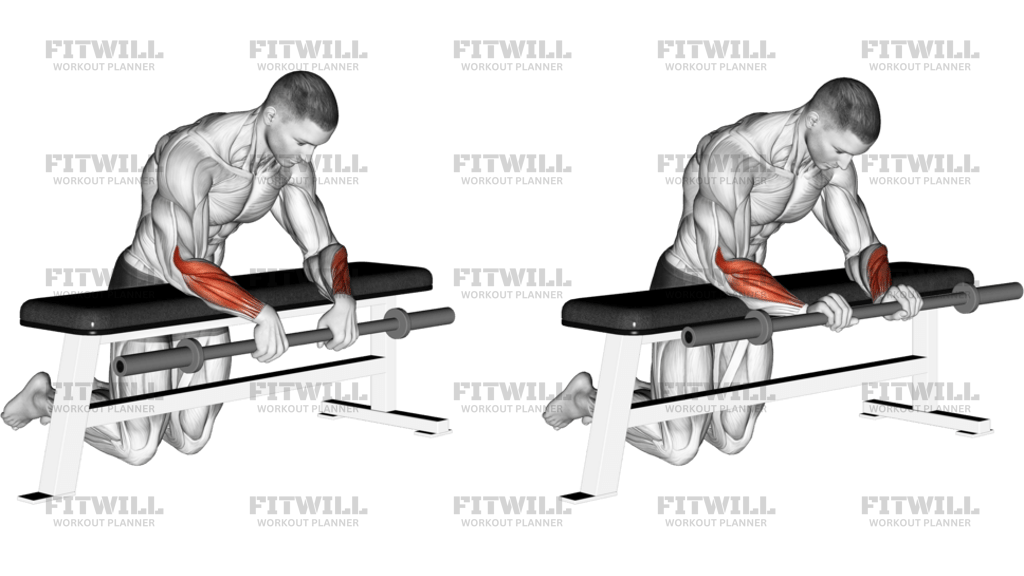
Finger Flexion While Extending Thumb is a small, focused forearm exercise performed kneeling with both forearms resting on a padded bench or box. From a flat, open-handed position on the surface, you curl your fingers down into a tight fist while actively holding the thumb out and away from the palm, then slowly uncurl the fingers back to flat. The forearm flexors on the inside of the forearm do most of the work, and keeping the thumb extended adds a distinct demand on the thumb and hand muscles that ordinary wrist curls never touch.
This movement is especially useful for anyone whose hands take a daily beating: climbers, golfers, tennis players, martial artists, musicians, office workers who type all day, and lifters who want stronger grip without heavy loading. Because the forearm stays supported on the bench, the wrist is held in a neutral, stable position, so all the motion happens at the fingers and thumb rather than at the wrist joint. That makes it a low-stress way to train finger flexion even when the wrists or elbows are irritated by heavier gripping work.
The setup matters more than it looks. Kneel beside the bench and lay both forearms along the padded top with your hands hanging just past the edge, palms down. Your forearms should be fully supported so the shoulders and elbows stay relaxed, and the slight forward lean over the bench keeps your torso quiet throughout the set. If the surface is too high or too low, you will lose that neutral wrist position and the fingers will not move cleanly.
Execution is deliberately slow. Press the palm lightly into the pad, then sweep the fingertips down and in until they curl into the palm, holding the thumb pointed out to the side the entire time. Squeeze the fist gently at the bottom, then reverse the motion, letting the fingers extend one segment at a time until the hand is flat again. The eccentric, or uncurling, phase is where a lot of the tendon and grip benefit lives, so resist the urge to let the hand spring open.
Use higher repetitions than you would for a typical strength lift, somewhere in the range of ten to twenty controlled reps per set. The muscles involved are small and respond better to moderate effort and clean technique than to maximal squeezing. Two to three sets at the end of an upper-body session, a climbing session, or as part of a hand and wrist maintenance routine works well for most people.
The main safety point is to keep the movement pain-free at the thumb base and along the inside of the elbow. A mild working sensation in the forearm is expected; sharp pain, clicking, or tingling means you are curling too hard, extending the thumb too aggressively, or moving faster than the tendons can handle. Scale back the range and the squeeze before scaling back the reps.
[ Workout Log & Planner ]
Put your next workout in Fitwill
Keep your plan and training log ready when you are.


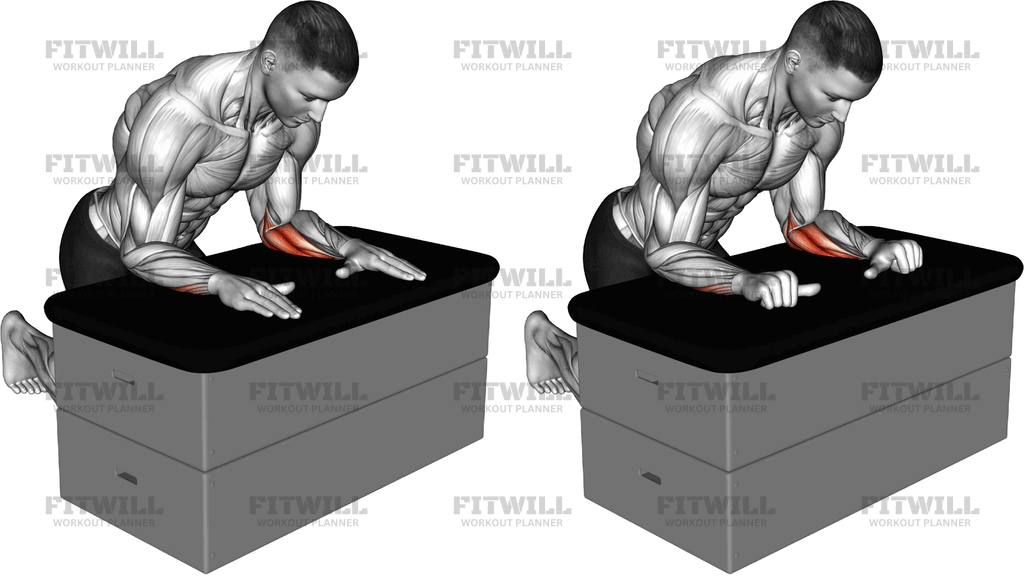
Instructions
- Kneel beside a padded bench or box so you can lay both forearms flat along the top surface with your hands past the front edge.
- Place your hands palms down with the fingers fully open and relaxed, wrists in line with the forearms and not bent to either side.
- Let your torso lean slightly forward over the bench and keep your shoulders and neck relaxed so the arms stay passive and supported.
- Take a breath in, and as you exhale, begin curling your fingertips down toward your palm, starting from the little finger side.
- Continue curling until the fingers form a loose fist, and hold the thumb extended out to the side, away from the palm, for the entire rep.
- Squeeze the fist gently at the fully curled position for a one-count, feeling the underside of the forearm work.
- Slowly uncurl the fingers, letting them extend back to the flat, open-handed start while you keep the thumb pointed outward.
- Breathe steadily throughout, inhaling as the hand opens and exhaling as the fingers curl in.
- Complete your reps, then shake out the hands and wrists before the next set to reset the forearm muscles.
Tips & Tricks
- The most common mistake is letting the thumb collapse into the fist, which turns this into a generic hand squeeze. Keep the thumb actively pressed out to the side so the thumb muscles share the work.
- Do not roll the wrists or lift the forearms off the pad as you curl. If the arms move, the hands are compensating because the fingers are curling too forcefully.
- Curl the fingers in a smooth wave from the pinky side toward the thumb side instead of clamping the whole hand at once. This gives you better control over each finger segment.
- Keep the squeeze at the bottom moderate. white-knuckling the fist fatigues the small muscles quickly and often aggravates the thumb base.
- If your fingertips cannot reach the pad comfortably at the start, slide the hands slightly further over the edge so the fingers hang free before curling.
- Slow down the opening phase. Letting the fingers spring back flat removes most of the tendon and eccentric benefit this exercise offers.
- Watch for the elbow side of the forearm pinching or aching. That usually means the wrist has drifted out of neutral, so re-set the forearm flat before continuing.
- Do this drill after heavy gripping or climbing rather than before, so fatigue in the finger flexors does not compromise your main lifts.
- Work both hands with the same rep count even if one side feels weaker, and let the stronger side set the standard rather than chasing extra reps with your dominant hand.
Frequently Asked Questions
Which muscles does Finger Flexion While Extending Thumb work?
The primary workers are the finger and wrist flexors on the inside of the forearm, supported by the small intrinsic muscles of the hand and thumb. Because the thumb stays extended, the thumb-side muscles stay active throughout instead of going slack.
Why does the thumb have to stay extended during the exercise?
Holding the thumb away from the palm keeps the thumb musculature under tension and prevents the hand from simply clamping shut. It also makes the finger curl more deliberate, since you cannot rely on the thumb to lock the fist closed.
Is Finger Flexion While Extending Thumb suitable for beginners?
Yes. The forearms are fully supported on the bench, the load is only the resistance of your own hand, and the range is easy to scale. Beginners should start with slow, moderate squeezes rather than hard maximal contractions.
What surface works best for this exercise?
A padded bench, plyo box, or sturdy low table around knee-to-hip height works well. The key is that the pad lets your forearms rest flat so the wrists stay neutral while the hands hang past the edge.
How many reps and sets should I do?
Ten to twenty controlled repetitions per set for two to three sets is a sensible range. Because the involved muscles are small, clean tempo matters more than volume or force.
What is the most common mistake with this movement?
Letting the thumb tuck into the palm and squeezing the hand shut like a stress ball. That removes the thumb work and shortens the finger curl. Another frequent error is rolling the wrists or lifting the forearms off the pad mid-rep.
Can I do Finger Flexion While Extending Thumb if my wrists are sore from lifting?
Often yes, because the wrists stay supported and static while only the fingers and thumb move. If bending the fingers or extending the thumb itself causes pain, stop and let the hand settle before training it again.
What can I use instead if I do not have a bench or box?
Rest your forearms across your thighs while seated, or on the edge of a table with a folded towel underneath for padding. Any stable surface that supports the forearms with the hands free at the edge will do.
Who benefits most from adding this exercise to a routine?
Climbers, racket-sport players, golfers, and anyone doing heavy gripping work get the most out of it, since finger flexion strength and thumb control directly carry over to their grip demands. Typists and musicians also use it for hand maintenance.
Should I feel this along the inside of the elbow?
A light working sensation in the forearm near the elbow is normal because that is where the flexors originate. Sharp or pinching pain at the elbow or thumb base is not, so reduce the squeeze intensity and range before continuing.