Lying Straight Leg Marches
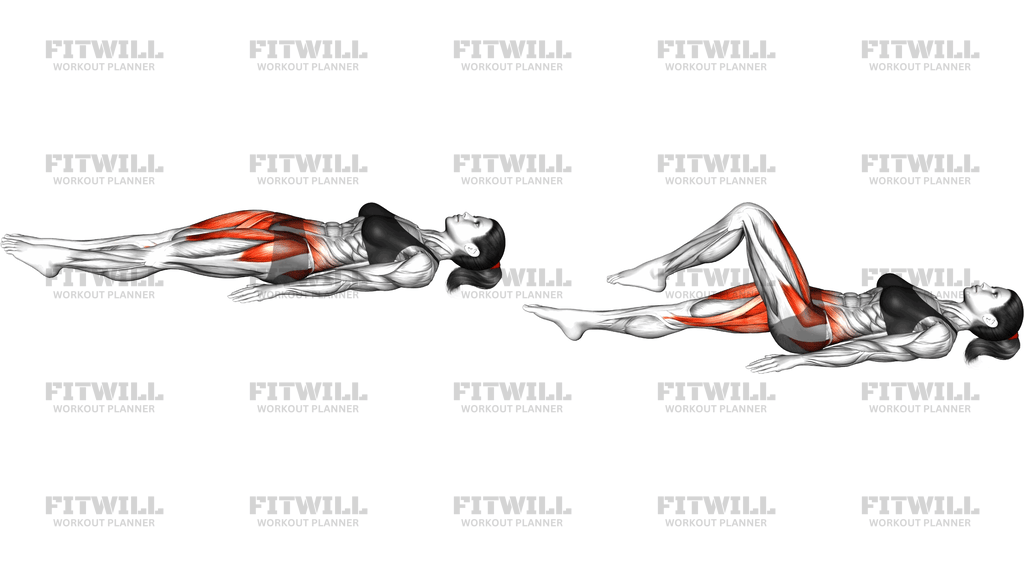
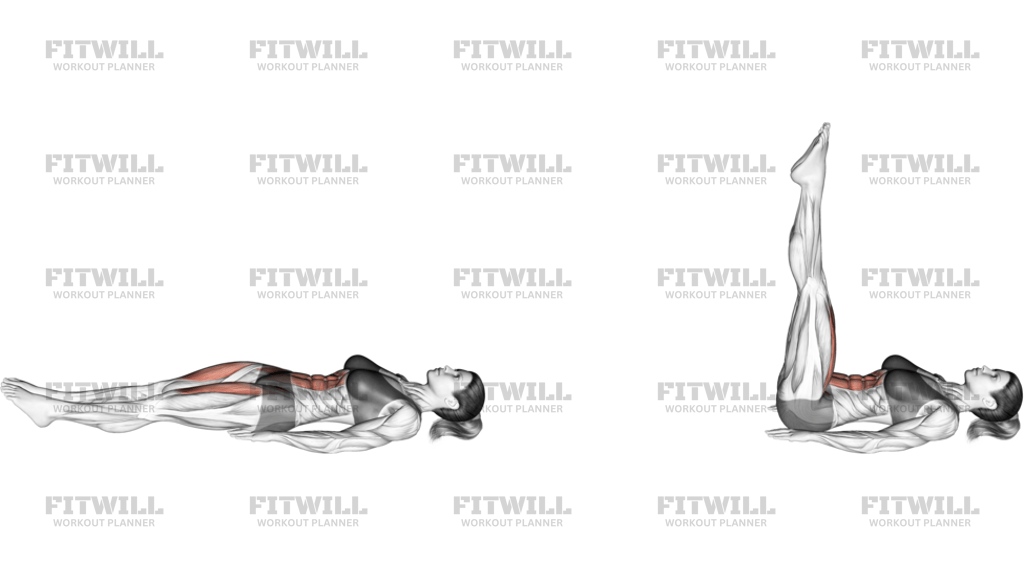
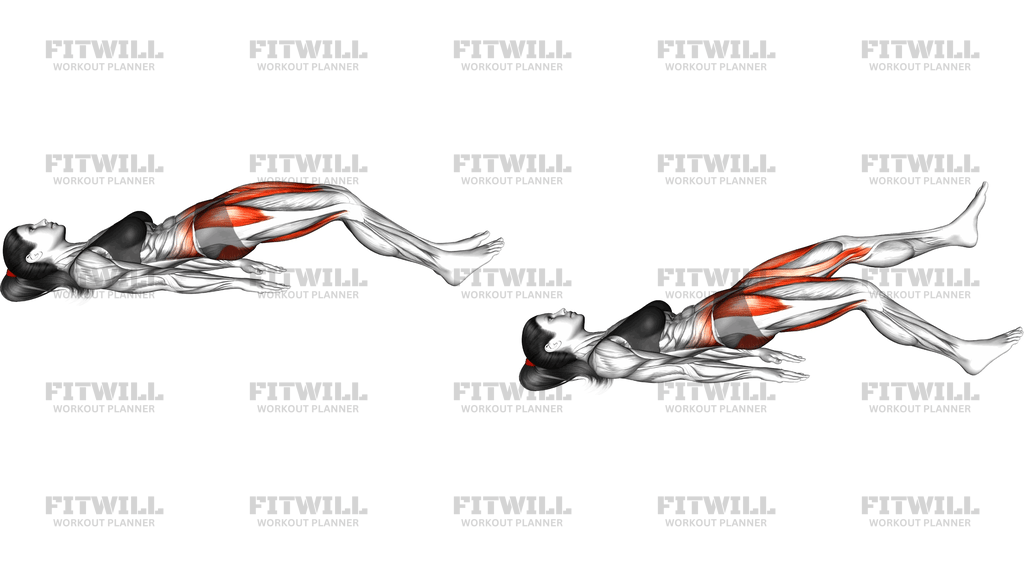
Lying Straight Leg Marches are a supine core and hip flexor drill where you lie flat on your back and alternately lift each straight leg off the floor, as if marching in place while lying down. Because the knee stays extended the whole time, the leg acts as a long lever, and the hip flexors have to work much harder than they would in a bent-knee march. The real challenge, though, is keeping your pelvis still and your lower back pressed into the floor while that lever moves.
This exercise is especially useful for people whose hip flexors are weak or underactive, including desk workers who sit for long hours, runners and cyclists who need strong hip drivers, and anyone progressing toward more demanding hanging leg raises or lying leg raises. It also teaches a skill many people are missing: controlling the position of the pelvis with the deep abdominals while the legs move independently.
The main muscles at work are the hip flexors, particularly the iliopsoas and the rectus femoris at the front of the thigh. The lower abs and deep core work isometrically to stop your ribcage from flaring and your lower back from arching off the floor. The quads help keep the knee straight, and the glutes on the working side contribute to stabilizing the hip throughout the lift.
Setup matters more than it looks. With both legs straight and heavy, even a small loss of abdominal tension lets the lumbar spine arch, which shifts work away from the core and can leave your back feeling strained rather than worked. Lying on a mat with your arms alongside your body gives you feedback: if you can feel your lower back pressing down and stay connected to the floor through every rep, you are doing it right.
To execute the movement well, brace before the leg ever moves, lift one straight leg only as high as you can without the pelvis tilting, pause briefly at the top, and lower it slowly under control before the other leg starts. The March comes from the alternation, not from speed. Most people rush it and turn a precise core exercise into a sloppy leg swing.
You will see Lying Straight Leg Marches used in warm-ups, in early-stage core rehabilitation progressions, and as a stepping stone toward full straight-leg raises. If the floor version with both legs heavy becomes easy, slowing the tempo or pausing longer at the bottom of each rep will extend its usefulness for a long time.
[ Workout Log & Planner ]
Put your next workout in Fitwill
Keep your plan and training log ready when you are.


Instructions
- Lie flat on your back on an exercise mat with both legs fully extended, your arms resting at your sides, and your head in a neutral position looking straight up.
- Point your knees toward the ceiling and gently flex your ankles back so your toes pull toward your shins, keeping both knees straight.
- Exhale and brace your abdominals, pressing your lower back firmly into the mat so there is no gap between your lumbar spine and the floor.
- Keeping one leg planted and the knee locked straight, lift the other straight leg up toward the ceiling, hinging only at the hip.
- Stop the lift at the height where your pelvis stays completely still — this is usually somewhere between 45 degrees and vertical, depending on your flexibility.
- Hold the top position for a beat, feeling the front of the hip and thigh working while your ribs stay down.
- Lower the leg slowly back toward the mat, resisting gravity all the way down, and stop just before the heel touches.
- Begin lifting the opposite leg immediately, keeping the first leg hovering rather than fully resting, so your core stays under constant tension.
- Continue alternating legs for the desired number of reps, inhaling as one leg lowers and exhaling as the other rises.
- After your final rep, lower the last leg fully to the mat, release the brace, and let your hips and lower back relax before standing up.
Tips & Tricks
- The most common failure point is the lower back lifting off the mat as the leg descends. If you feel your lumbar spine peel away, do not lower the leg as far — shorten the range and work just above that point.
- If your knee bends during the lift, the quads are tiring or the hip flexors are being bypassed. Imagine your knee is in a cast; a soft bend dramatically reduces the demand on the hip flexors.
- Slowing the descent is the fastest way to make this harder without adding equipment. Count three seconds down on each rep and notice how much sooner your core fatigues.
- Do not let the pelvis rock from side to side as you alternate legs. Your hip bones should stay level, as if balancing a glass of water on your lower stomach.
- Keep your neck relaxed and your gaze straight up. Craning the chin to watch your legs usually comes with rib flare and lost abdominal tension.
- Pressing your palms lightly into the mat can help stabilize beginners, but avoid pushing so hard that your shoulders and arms do the bracing for you.
- If the straight-leg version is too hard at first, keep the non-working knee bent with the foot flat on the mat. This shortens the lever on the resting side and makes the brace easier to hold.
- Pointing or flexing the foot changes the feel slightly — a flexed ankle with toes pulled back tends to make it easier to keep the knee locked out.
- Stop the set when your leg speed changes. Once the lowering phase gets fast or bouncy, your core has stopped controlling the movement and you are just swinging your legs.
Frequently Asked Questions
What muscles do Lying Straight Leg Marches work?
The primary movers are the hip flexors, especially the iliopsoas and rectus femoris. Your lower abs and deep core work isometrically to keep the pelvis stable and the lower back pressed into the floor, with the quads assisting by holding the knee straight.
Why does my lower back arch during Lying Straight Leg Marches?
An arching lower back means your abdominals are losing the fight against the pull of the straight leg. Do not lower the leg as far, keep the opposite leg closer to your chest if needed, and rebuild the range only once you can keep the lumbar spine flat throughout.
Are Lying Straight Leg Marches good for beginners?
Yes, they are one of the safest entry points into straight-leg core training because your back is supported by the floor. Beginners can bend the non-working knee or limit the lifting height to keep the movement manageable.
How high should I lift my leg in Lying Straight Leg Marches?
Lift only as high as you can while keeping your pelvis motionless and your lower back on the mat. For most people that is somewhere between 45 degrees and vertical — the exact height matters less than the stable pelvis.
What is the difference between Lying Straight Leg Marches and regular lying leg raises?
Leg raises move both legs together, while the march alternates one leg at a time. The alternation forces your core to resist rotation and tilting constantly, and it lets one leg hover while the other works, which keeps tension on the abs for the whole set.
Can I do Lying Straight Leg Marches if I have tight hamstrings?
Tight hamstrings can limit how high the leg travels, but the exercise still works within your available range. Lift to the point of mild hamstring tension, not strain, and let your range improve gradually over time.
How many reps of Lying Straight Leg Marches should I do?
Two to three sets of 8 to 12 slow alternations per side is a solid starting point. Because the goal is control, quality reps with a three-second lowering phase beat high-rep, fast-paced sets.
What can I use instead of Lying Straight Leg Marches?
Dead bugs, bent-knee lying marches, or single straight-leg raises all train similar hip flexor and core control. Choose the dead bug if you cannot yet keep your lower back flat against the floor with a straight leg.
Should my heel touch the floor between reps?
For the standard version, no — stopping just above the floor keeps continuous tension on the hip flexors and core. If you need a regression, letting the heel lightly tap down between reps is a fine way to build up.