Plank Jump
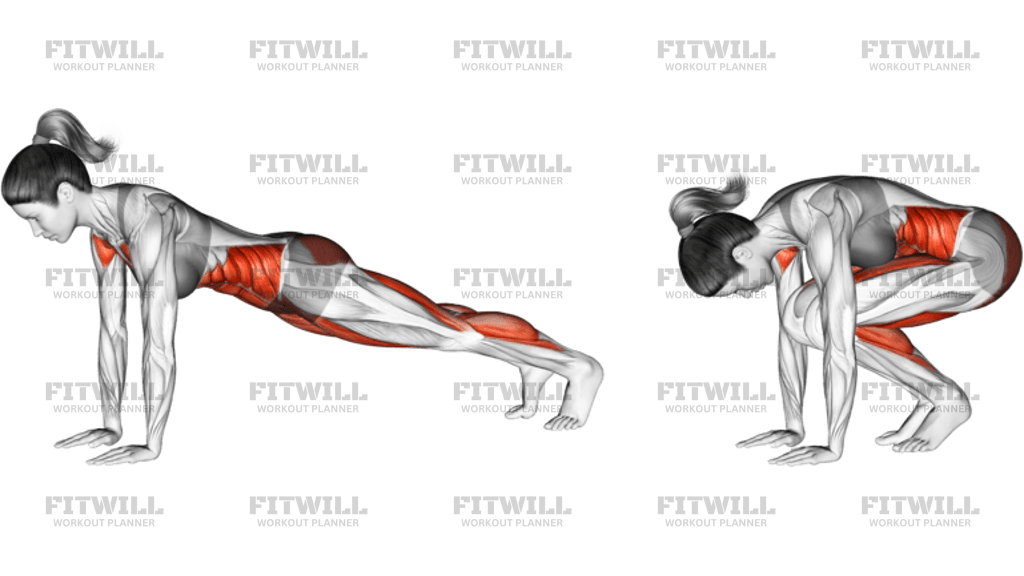
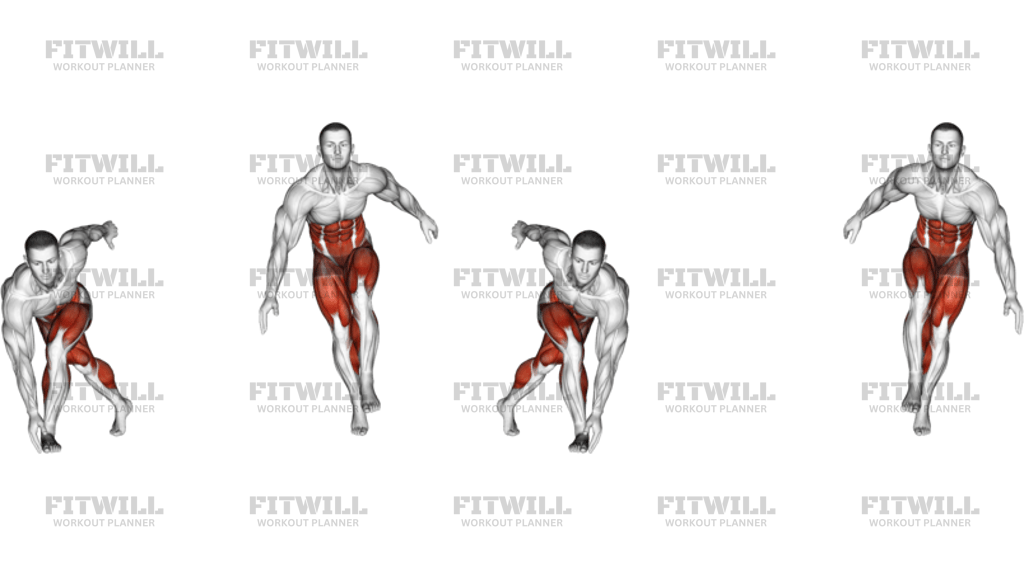
Plank Jump is a bodyweight conditioning drill that starts in a strong high plank and uses a quick two-foot hop to bring the legs in toward the hands before jumping them back out again. It is a simple-looking movement, but the training effect comes from keeping the shoulders, trunk, and hips organized while the feet move fast underneath you. That combination makes it useful for conditioning, warmups, athletic circuits, and core-focused work where you want speed without losing posture.
The exercise challenges the shoulders, chest, core, hip flexors, quads, calves, and glutes at the same time. The plank position builds isometric stability through the midsection and shoulder girdle, while the jump-in and jump-back phases add a cardio demand and force you to control landing mechanics. When it is done well, the torso stays braced and relatively quiet while the lower body does the quick work.
Setup matters because the quality of every rep is determined by the first plank position. Hands should be planted firmly under or slightly in front of the shoulders, fingers spread, and the body held in a straight line from head to heels. If the hips sag or the shoulders collapse before the jump even starts, the movement turns into a loose hop instead of a controlled core-and-conditioning drill.
The goal on each rep is to spring both feet forward toward the hands, land softly in a compact crouch, then drive them back to the plank without letting the lower back arch or the shoulders drift away from the floor. The transition should feel rhythmic rather than chaotic. A clean rep usually looks quiet and compact, with the chest staying strong, the ribs down, and the feet landing under control instead of slamming into the floor.
Plank Jump is best used when you want a fast, repeatable movement that raises heart rate while still demanding trunk stiffness and upper-body support. It is also easy to scale: beginners can step one foot at a time instead of jumping, while more advanced lifters can increase speed only as long as the plank shape and landings stay sharp. If your wrists, shoulders, or low back start losing position, shorten the set and reset before the next rep.
Fitwill
Log Workouts, Track Progress & Build Strength.
Achieve more with Fitwill: explore over 9600 exercises with images and videos, access built-in and custom workouts, perfect for both gym and home sessions, and see real results.
Start your journey. Download today!




Instructions
- Place your hands under your shoulders and step both feet back into a high plank, with your body in one straight line from head to heels.
- Spread your fingers, press the floor away, and keep your shoulders active instead of sinking between them.
- Brace your ribs and glutes so the plank stays rigid before the first jump.
- Hop both feet forward toward your hands and land in a low crouch with your chest still facing down.
- Keep your hands planted while your knees bend and your feet land softly under your hips or just outside your hands.
- Reverse the motion by jumping both feet back to the plank without letting your hips swing high.
- Absorb the landing quietly through your ankles, knees, and hips, then re-establish the plank line immediately.
- Repeat for the planned number of reps or seconds at a steady rhythm you can control.
Tips & Tricks
- Keep your shoulders stacked strongly over the hands before every jump so the plank does not fold at the front of the body.
- Think of the feet moving fast and the torso staying quiet; if your hips bounce all over the place, the set is too aggressive.
- Land the feet softly and under control instead of letting them slap the floor, especially on the jump back to plank.
- Exhale as the feet move in, then take a quick breath before driving them back out if you need a rhythm cue.
- Keep the head in line with the spine and look slightly ahead of your hands rather than cranking your neck up.
- Shorten the hop and step one foot at a time if your wrists, shoulders, or low back lose position.
- Use a mat, turf, or other forgiving surface if repeated landings make the movement feel harsh.
- Stop the set when the crouch becomes too high and you can no longer return to a straight plank without arching.
Frequently Asked Questions
What does Plank Jump train the most?
It is mainly a conditioning drill for the core and shoulders, with strong work from the chest, hip flexors, quads, calves, and glutes.
Should my hands stay in place during the jump?
Yes. Keep both hands planted on the floor while the feet jump in and back so the upper body stays stable.
Where should my feet land when they jump forward?
Land near your hands or just outside them, in a compact crouch that still lets you keep your chest down and your weight balanced.
Can I do Plank Jump if I am a beginner?
Yes, but step one foot at a time instead of hopping if you cannot keep a strong plank or quiet landings.
What is the most common form mistake?
The biggest mistake is piking the hips up or letting the low back sag, which turns the drill into a sloppy hop instead of a controlled plank transition.
How do I keep my wrists and shoulders comfortable?
Set the hands firmly under the shoulders, keep the shoulder blades active, and reduce speed or switch to step-ins if the position starts to feel unstable.
Is Plank Jump more cardio or strength?
It is mostly a cardio and conditioning movement, but it still demands enough trunk and shoulder strength to hold a good plank.
How can I make the movement harder?
Increase the pace only if the feet still land quietly and the plank shape stays clean; otherwise, add reps or time before trying to move faster.