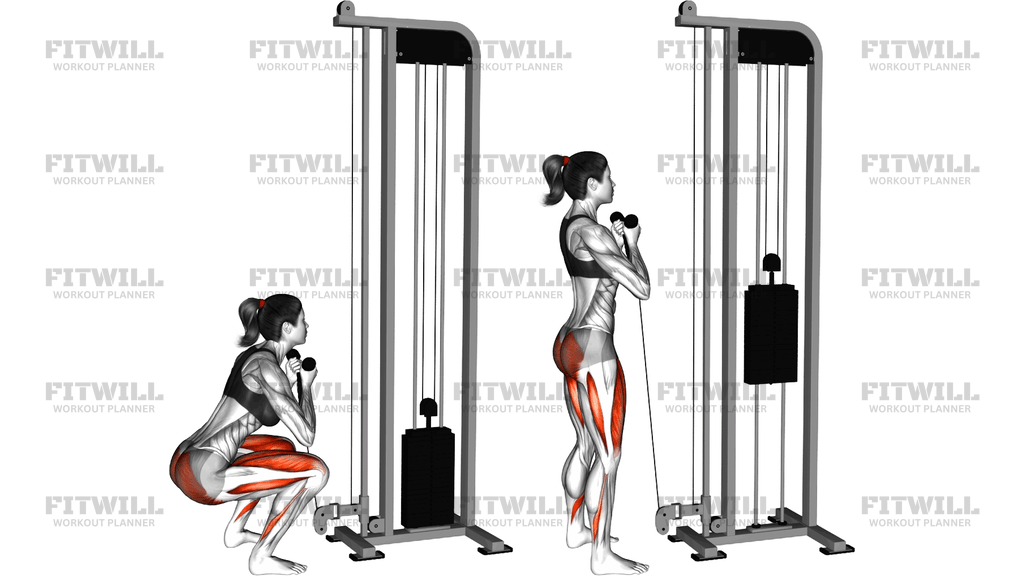
Cable Standing Calf Raise
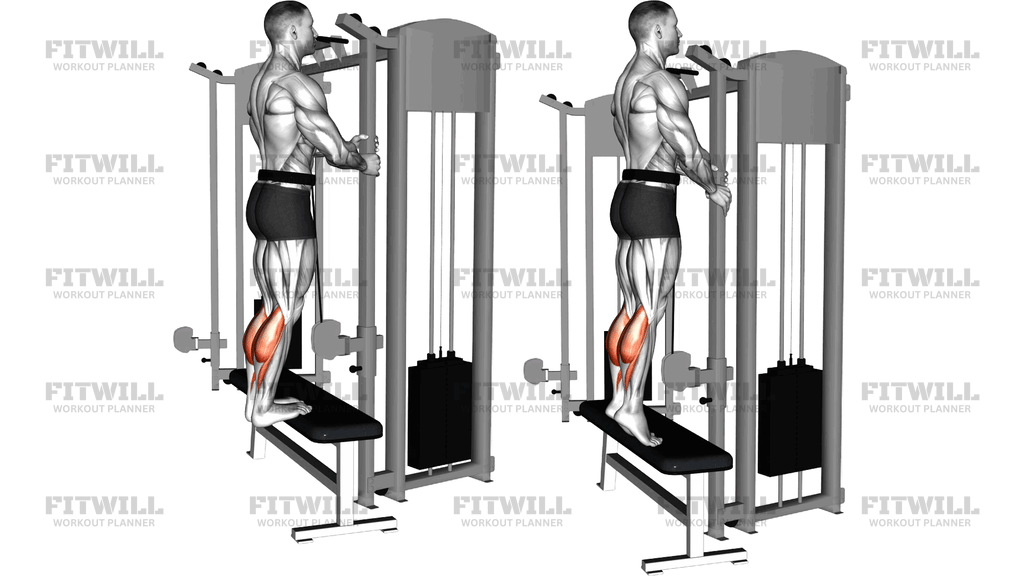
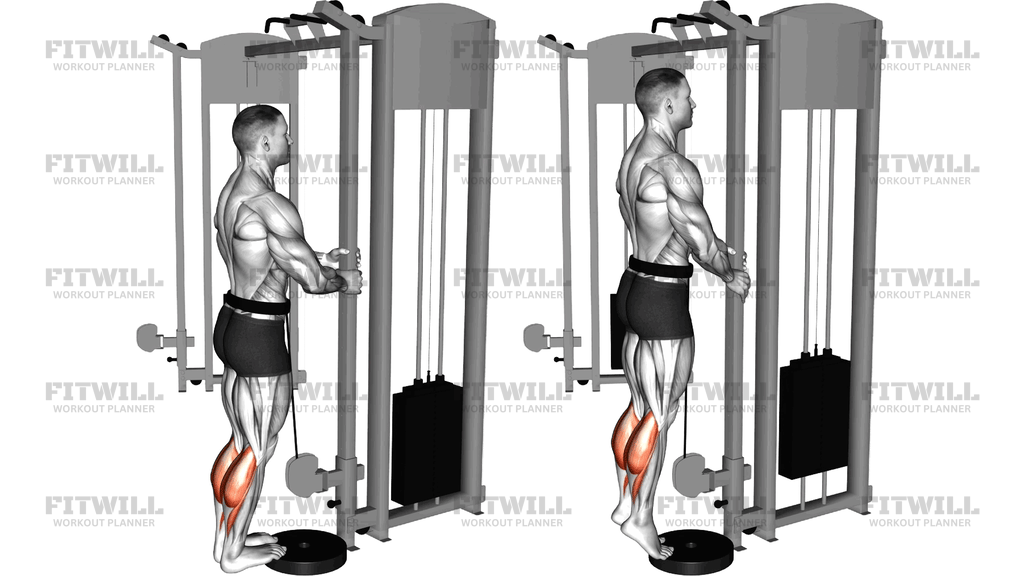
The Cable Standing Calf Raise is a straightforward but highly effective isolation exercise for the calves, performed at a cable stack while standing on an elevated surface such as a flat weight plate. In the setup shown here, the lifter grips the handle attachment from a low pulley at thigh level and stands with the balls of the feet on the plate, letting the heels hang off the edge. Raising the heels as high as possible and lowering them below the level of the plate drives the gastrocnemius and soleus through a long, continuous range of motion.
This exercise suits almost anyone training the lower legs: lifters whose calves lag behind the rest of their physique, runners and jump athletes who want stronger, more resilient ankles, and beginners who find the balance demands of heavy barbell calf work intimidating. Because the cable provides constant tension through the entire rep, the muscles stay loaded both at the bottom stretch and at the top contraction, which is hard to achieve with free weights.
The setup matters more than most people realize. Standing on a smooth, slightly rounded plate gives you room to drop the heels well below the forefoot, and holding the handle or frame keeps you stable without pulling you onto your toes. Your stance width and foot position determine which portion of the calf takes the brunt of the work: a straight-ahead stance hits the overall calf, while turning the toes slightly outward or inward shifts emphasis between the inner and outer heads of the gastrocnemius.
To execute it well, keep the knees essentially straight but not locked, brace the trunk, and let the ankle do all the work. Push through the big toe and ball of the foot to rise as high as the ankle allows, pause briefly at the top, then lower with control until you feel a solid stretch in the calf before starting the next rep. Bouncing out of the bottom is the most common fault and quietly removes most of the benefit.
Practically, this movement fits well as a primary calf builder on lower-body days, or as a higher-rep finisher after heavier machine or barbell calf work. The cable stack makes progressing load simple and precise, and the low equipment requirement means you can perform it at almost any gym that has a low pulley and a spare plate.
[ Workout Log & Planner ]
Put your next workout in Fitwill
Keep your plan and training log ready when you are.


Instructions
- Clip a single handle to the low pulley of a cable machine and set the stack to a manageable starting weight.
- Place a flat weight plate on the floor in front of the pulley and stand on it with the balls of both feet, heels hanging off the back edge.
- Take the handle in your hands and let your arms hang down by your sides at thigh level, standing tall with your hips directly over your ankles.
- Allow your heels to sink slowly below the level of the plate until you feel a firm stretch through both calves.
- Brace your core and keep your knees almost straight but never locked, so the ankle joint drives the entire movement.
- Press down through the balls of the feet and big toes to lift your heels as high as possible, squeezing the calves at the top for a one-second pause.
- Lower your heels under control back to the deep stretch position without letting the weight stack slam down between reps.
- Exhale as you rise and inhale as you lower, keeping the breathing steady and the torso upright throughout.
- Complete all reps with the same tempo, then step off the plate carefully and adjust the weight for the next set if needed.
Tips & Tricks
- Bouncing the heels off the bottom of each rep is the number-one mistake here; it turns the exercise into an elastic rebound that your tendons, not your calves, absorb. Pause briefly in the stretch instead.
- If you feel the work shifting into your thighs, your knees are bending as you fatigue. Straighten them back out or lower the weight, because a bent knee shortens the gastrocnemius and steals tension from it.
- Rolling onto the outside edge of the foot at the top is common when the weight is too heavy. Think about driving through the big toe and the first two toes to keep pressure even across the forefoot.
- Standing too far forward or back on the plate changes everything. Aim for the ball of the foot on the plate with roughly two to three inches of heel hanging off, enough to get a full stretch without losing balance.
- Leaning back against the cable's pull takes tension off the calves. Keep your shoulders stacked over your hips and your torso vertical, using the handle only for balance rather than support.
- Full ankle range matters more than load on this movement. A lighter weight taken from a deep stretch to a full, high contraction beats a heavy weight pumped through half reps.
- Try rotating your toes slightly outward on some sets and slightly inward on others to shift emphasis between the inner and outer portions of the gastrocnemius.
- Because the cable offers no fixed rep path like a machine, control the tempo deliberately, around one second up, a pause at the top, and two seconds down.
- If balance feels shaky at first, stand closer to the cable tower so any correction you make with the handle is a small one.
Frequently Asked Questions
Which muscles does the Cable Standing Calf Raise work?
It primarily targets the gastrocnemius, the visible two-headed muscle of the calf, with the soleus underneath assisting throughout. Ankle stabilizers also work to keep you balanced on the plate.
Why stand on a weight plate instead of the floor?
The plate elevates your forefoot so the heels can drop below it, giving you a full stretch at the bottom that is impossible when standing flat on the floor. A greater range of motion means more usable stimulus per rep.
Can beginners do the Cable Standing Calf Raise?
Yes, it is actually one of the more beginner-friendly calf exercises because the cable lets you select very light loads and the handle provides a balance reference. Start light and prioritize the full range before adding weight.
Why do my calves cramp during this exercise?
Cramping is common because the calf works in a fully stretched position, which it rarely experiences in daily life. Reduce the weight slightly, warm up with a few easy reps, and the cramping usually fades as you adapt.
How does the Cable Standing Calf Raise differ from a seated calf raise?
The standing version is done with nearly straight knees, which puts the gastrocnemius under maximum stretch, while the seated version bends the knees and shifts most of the work to the soleus. They complement each other rather than replace one another.
What is the most common mistake with this setup?
Bouncing the heels off the bottom position and using the stretch reflex to fling the weight up. Slow the lowering phase, pause in the stretch, and drive up deliberately to keep the calves doing the work.
How many reps and sets should I use?
Calves respond well to a mix of loads, so somewhere around three to four sets of ten to fifteen controlled reps is a solid starting point. Higher rep sets in the fifteen to twenty range also work well as a finisher since the movement is easy to recover from.
What can I substitute if my gym has no low pulley free?
A standing machine calf raise, a Smith machine calf raise with a plate under the forefoot, or a single-leg bodyweight calf raise on a step all train the same pattern. The key feature to preserve is the elevated forefoot so the heels can travel below the toes.
Is it safe for the ankles and Achilles?
When progressed gradually, yes, and the deep stretch actually builds tolerance in the lower leg tissues. Keep the load moderate at first, avoid sudden jerky reps, and step off the plate rather than stepping down onto your heels mid-set.