Medicine Ball Oblique Crunch
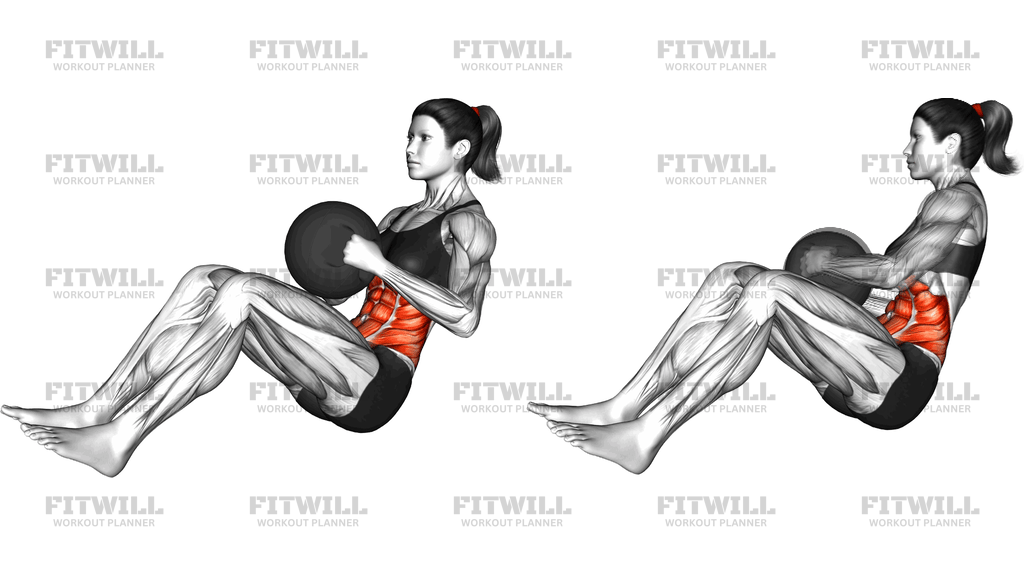
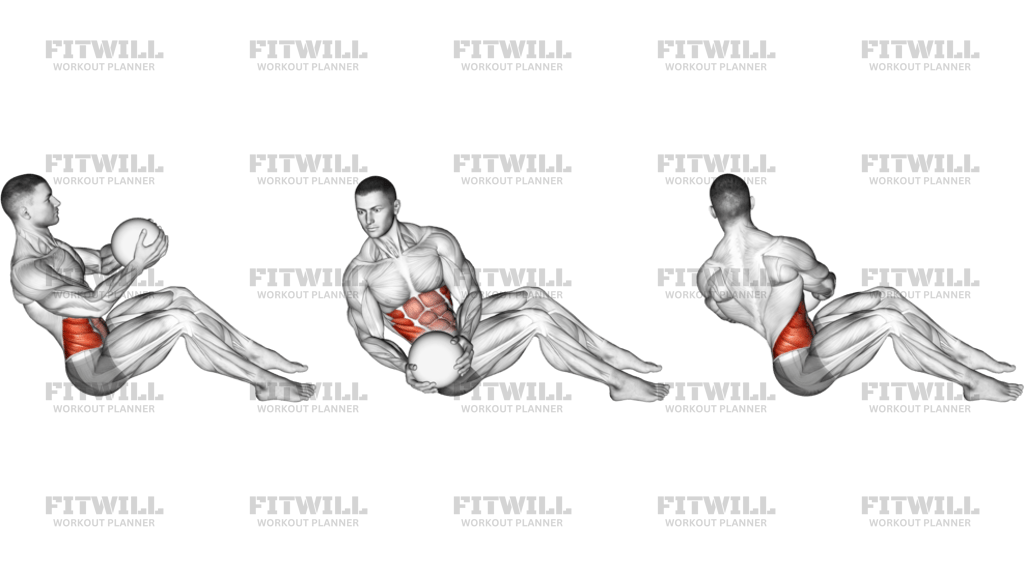
The Medicine Ball Oblique Crunch is a rotational core exercise performed lying on your back with your knees bent and a medicine ball held against your chest. Instead of crunching straight up, you curl and twist your upper body so that one shoulder rotates toward the opposite hip while the ball stays anchored at your sternum. This twisting action puts the emphasis on the obliques, the muscles running along the sides of your waist, while the rectus abdominis and deep core stabilizers work to keep the movement controlled.
This exercise is useful for almost anyone who trains their core, but it is especially valuable for people who want rotational strength that carries over to real activities. Swinging a bat, throwing a ball, swinging a racket, or simply turning your torso under load all rely on the obliques to rotate and stabilize the trunk. Because the medicine ball adds modest, fixed resistance without needing a cable or machine, the movement works well in home workouts, bootcamp settings, and as an accessory exercise in a larger strength program.
The setup matters more than most people realize. Lying supine with knees bent and feet flat keeps your lower back in a neutral, supported position, which lets you flex and rotate the spine deliberately instead of by accident. Holding the ball tight against your chest with both hands keeps the load close to your center of mass, so the effort comes from your trunk rather than your arms or shoulders. If the ball drifts forward or the elbows flare wide, the obliques lose tension and the exercise becomes a shoulder exercise with a twist.
To execute the movement well, think of it as a diagonal crunch rather than a sit-up. Exhale as you pull your ribs down and toward the opposite hip, lifting just the upper back and shoulder blade off the floor while your eyes track the ball. The lumbar spine stays anchored; the rotation happens through the upper torso. Pause briefly at the top so you can feel the side of your waist contract, then lower slowly under control rather than dropping back down. Complete all repetitions on one side before switching, or alternate sides rep by rep, depending on your program.
A few practical points will keep the exercise productive and safe. Start with a light ball, somewhere in the 4 to 10 pound range, and only progress once you can complete your sets without the hips lifting or the neck straining. Keep the chin softly tucked as if holding an apple under your jaw, and let the ball travel with your torso instead of pulling it. If you feel the work shifting into your hip flexors or lower back, reduce the height of the crunch and slow the tempo. Done consistently with clean form, the Medicine Ball Oblique Crunch builds rotational strength and definition across the sides of the core in a way straight crunches alone cannot.
[ Workout Log & Planner ]
Put your next workout in Fitwill
Keep your plan and training log ready when you are.


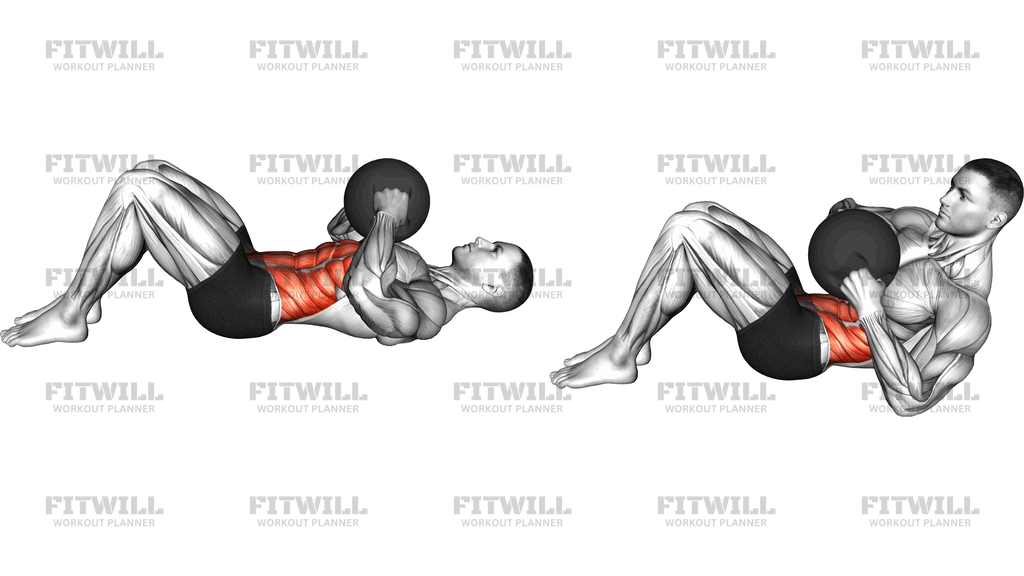
Instructions
- Lie on your back on an exercise mat with your knees bent and both feet flat on the floor, about hip-width apart.
- Hold the medicine ball with both hands against your chest, wrapping your fingers around the sides of the ball and keeping your elbows tucked close to your ribs.
- Gently draw your belly button in to brace your core and press your lower back toward the mat before you begin moving.
- Exhale and crunch up and across, rotating your upper body so that one shoulder lifts toward the opposite knee while the ball stays pressed to your chest.
- Keep the rotation in your upper back and shoulders; your hips, lower back, and feet should remain planted on the floor the entire time.
- Pause for a beat at the top, when your shoulder blade is clearly off the floor and the side of your waist is fully contracted.
- Inhale and lower your torso back down slowly, rolling one vertebra at a time until your shoulder blades touch the mat again.
- Complete all reps on one side, then reposition the ball and repeat on the other side, or alternate sides each rep if your program calls for it.
- Between sets, reset your brace and check that the ball stays in contact with your chest at the start of every repetition.
Tips & Tricks
- If your shoulder will not rotate far toward the opposite knee, the ball is probably too heavy; drop to a lighter weight and master the twist before adding load.
- Do not let the ball pull away from your chest at the bottom of the rep, as this turns the exercise into an arm press and strains the shoulder.
- Common mistake: yanking yourself up with the neck. Keep the chin tucked and imagine the ball leading the diagonal path, not your head.
- If your hips rock side to side, narrow the rotation to a smaller arc or place your feet slightly wider to give yourself a more stable base.
- Aim to lift the shoulder blade, not the whole back; if your lower back leaves the mat, you are doing a sit-up and the obliques are no longer the main driver.
- Slow the lowering phase to two or three seconds. The twisting-down portion is where the obliques do a lot of their work, and dropping fast wastes it.
- Breathe out sharply through the twist, which naturally helps the ribs rotate down and increases the contraction through the waist.
- If your feet lift or your legs help you swing up, slide your feet closer to your hips or hook them under a stable object until your trunk can do the work alone.
- Pair this with a straight crunch or plank in the same session so you train the front of the core as well as the sides.
Frequently Asked Questions
Which muscles does the Medicine Ball Oblique Crunch work?
The external and internal obliques along the sides of your waist do most of the work, since they rotate and flex the torso. The rectus abdominis assists with the crunch, and the hip flexors help hold the bent-knee position.
How heavy should the medicine ball be for this exercise?
Start with a light ball, roughly 4 to 10 pounds, and only go heavier when you can twist fully to the opposite knee without your hips rocking or the ball drifting off your chest. This is a control exercise first and a load exercise second.
Should I do all reps on one side or alternate sides?
Either works. Finishing one side before switching makes it easier to feel and compare the contraction through each waist, while alternating keeps the work symmetrical rep to rep. Match the style to your program and stay consistent.
Why do my hips lift off the floor when I twist?
Your hips are compensating because the rotation is coming from the lower body instead of the upper torso. Slow the tempo, reduce the range, and keep the movement focused on lifting the shoulder blade toward the opposite knee.
Can beginners do the Medicine Ball Oblique Crunch?
Yes, and a very light ball or even no ball at all is a good starting point. Beginners should focus on the diagonal curl with arms crossed or empty hands before adding resistance to the rotation.
What can I use if I do not have a medicine ball?
A dumbbell held vertically with both hands at your chest, a small weighted plate, or a kettlebell held close to the sternum all work. The key is a compact weight you can hold snug against your chest throughout the twist.
How is this different from a regular crunch?
A regular crunch flexes the spine straight up, which mainly trains the rectus abdominis. The Medicine Ball Oblique Crunch adds trunk rotation, so the obliques on the side of your waist become the primary movers.
Is it safe for my lower back?
With your lower back pressed toward the mat, knees bent, and the load held at the chest, the exercise is generally well tolerated. If you have a history of back issues or feel any pain during the twist, reduce the range or check with a qualified professional before continuing.
How many reps and sets should I do?
Two to four sets of 10 to 15 reps per side works well for most lifters. Because the obliques respond to controlled, quality reps, prioritize a full twist and a slow lowering phase over chasing higher numbers.