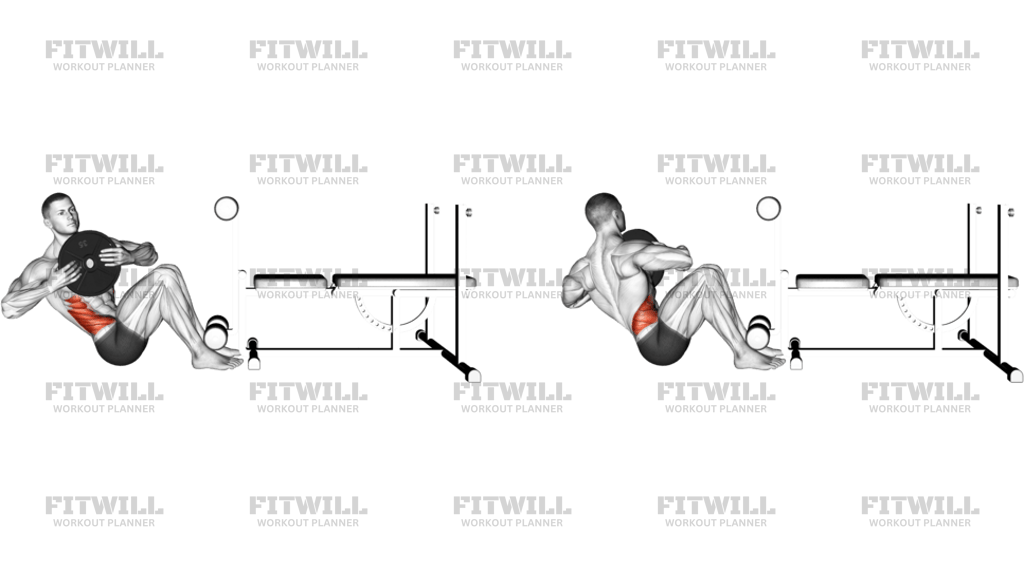
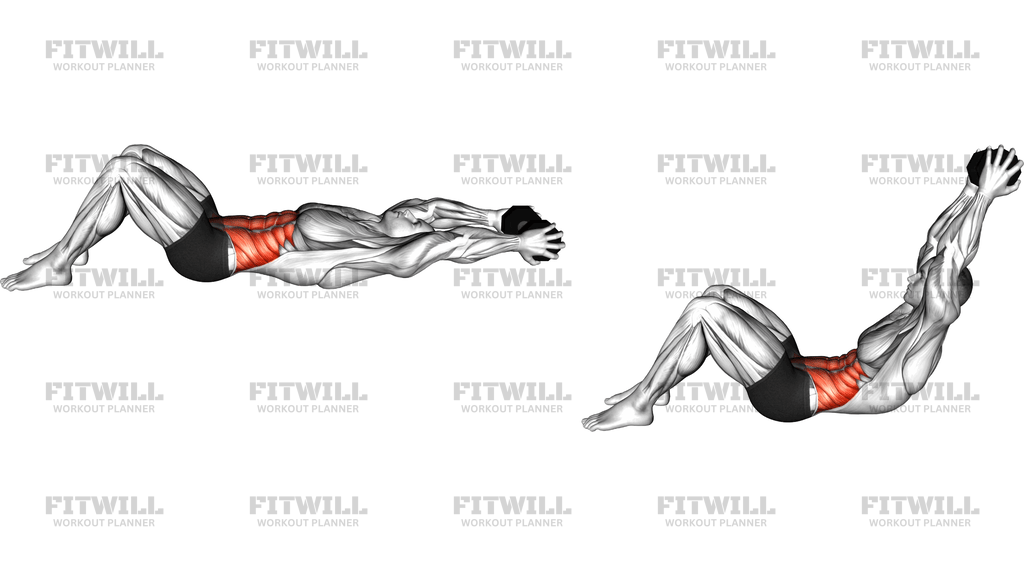
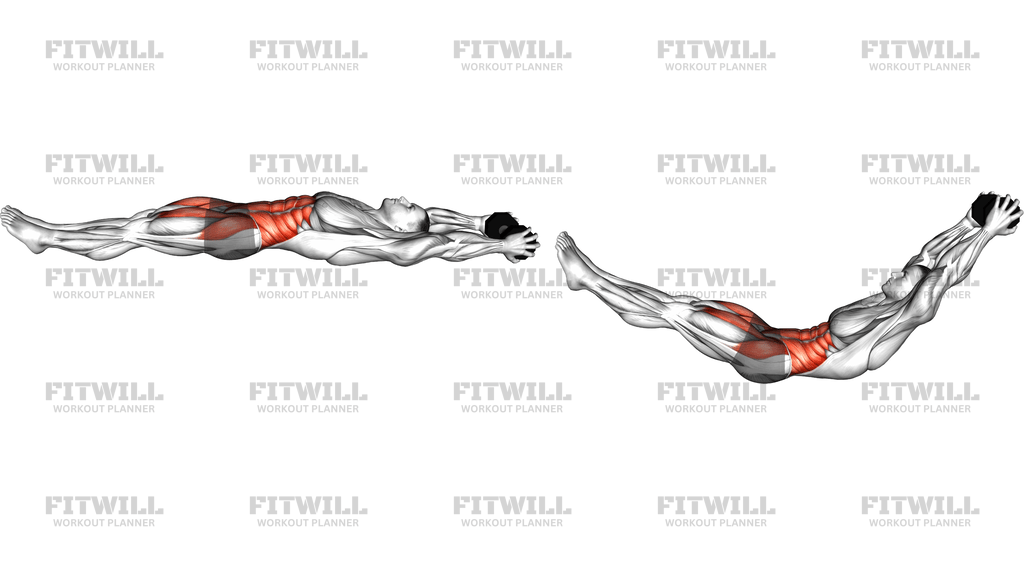
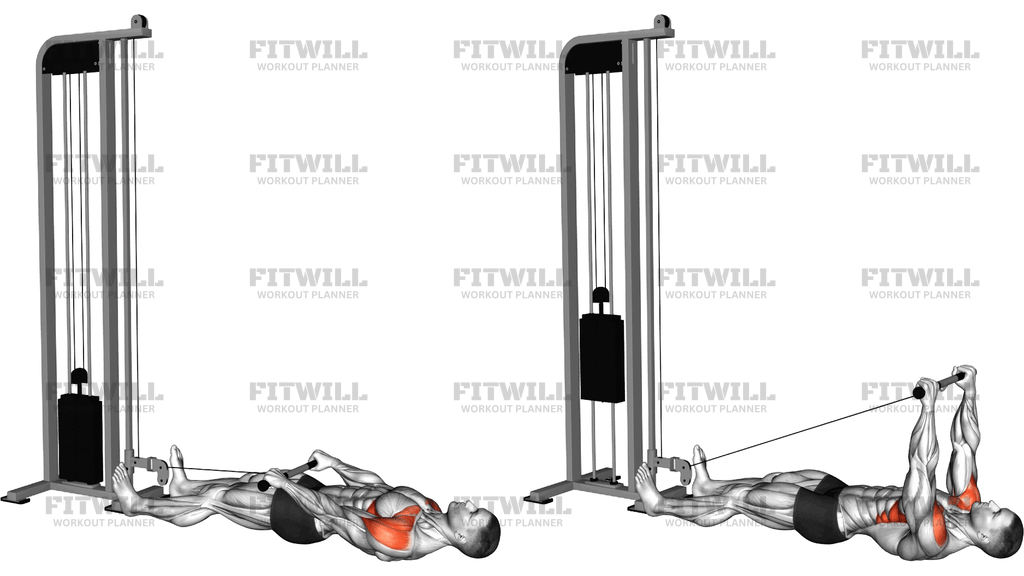
Dumbbell Twisting Crunch
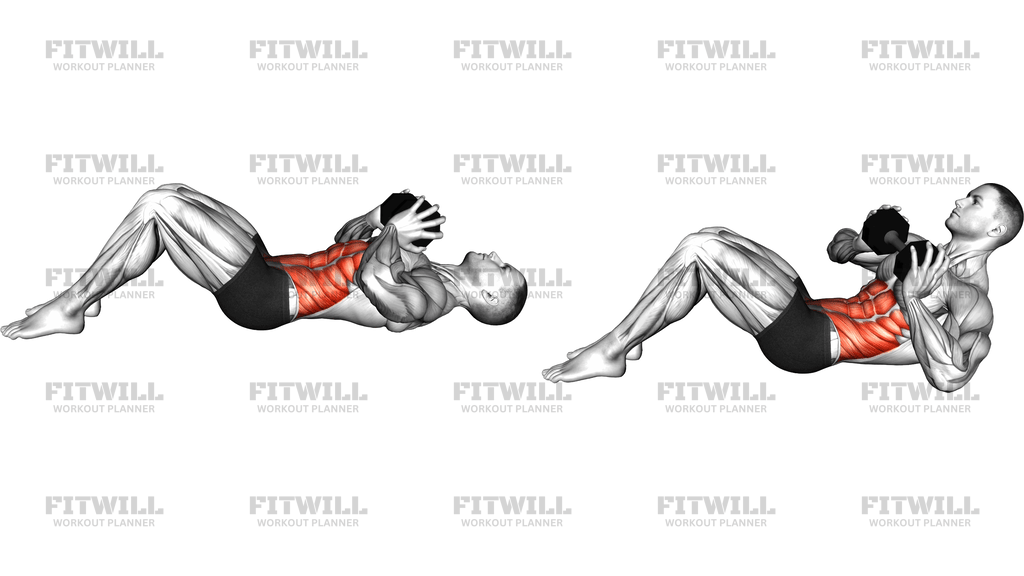
The Dumbbell Twisting Crunch is a floor-based abdominal exercise where you lie on your back with your knees bent, hold a single dumbbell with both hands at your chest, and crunch upward while rotating your torso toward one side. It combines two actions your abs already know — spinal flexion and trunk rotation — and adds a small external load to make both harder. Because the weight travels with your hands, the resistance follows your torso through the entire curl and twist instead of staying fixed.
This movement is useful for anyone who has outgrown bodyweight crunches but does not want to move to hanging leg raises or heavy cable work yet. It suits general lifters who want denser ab work, people training at home with minimal equipment, and anyone whose sport or daily life involves rotating under load — think swinging a bat or racket, throwing, or simply carrying bags on one side. Adding rotation to a crunch also shifts a meaningful share of the work to the obliques, the muscles running along the sides of your waist that a straight crunch barely touches.
The setup matters more than it looks. Lying on the floor with knees bent gives your lower back a stable, supported base, which is one reason this version is friendlier than standing twisting movements that can encourage hip cheating. Holding the dumbbell with both hands at your chest keeps the load close to your trunk; if you let the weight drift forward or swing it, you turn an ab exercise into a momentum exercise. Feet flat on the floor and knees bent also anchor your hips so the rotation actually comes from your spine rather than from rolling side to side.
To execute it well, think of the movement in two layers: first curl your shoulder blades off the floor, then rotate so your ribs and elbow travel toward the opposite knee or hip. Alternate sides rep by rep, or complete all reps on one side before switching. The dumbbell should ride gently against your chest throughout — your arms are just the delivery system for the weight, not the movers. Lower yourself back down under control, reset your torso to face the ceiling, and only then start the next rep.
Keep the load modest at first. A weight that forces you to yank your head forward, hold your breath, or roll your whole body sideways is telling you the crunch-and-twist pattern is not ready for that load. If your neck fatigues before your abs, support your head lightly with your fingertips instead of pulling on it. Done with attention to the rotation coming from your trunk, the Dumbbell Twisting Crunch is a simple, scalable way to train both the front of your abs and the sides of your waist in one floor exercise.
[ Workout Log & Planner ]
Put your next workout in Fitwill
Keep your plan and training log ready when you are.


Instructions
- Lie on your back on an exercise mat with your knees bent and both feet flat on the floor, about hip-width apart.
- Hold one dumbbell vertically or horizontally with both hands, cupping the top end, and bring it in against your upper chest.
- Tuck your chin slightly and brace your abdominal muscles as if preparing for a light poke to the belly.
- Exhale and curl your shoulder blades off the floor, leading with your ribs rather than your head.
- As you rise, rotate your torso and drive your right elbow and shoulder toward your left knee, keeping the dumbbell pressed to your chest.
- Pause briefly at the top, feeling the contraction across the front and side of your waist.
- Lower your torso back down slowly, untwisting first so your chest faces the ceiling before your shoulders touch the mat.
- Repeat the crunch and twist toward your right knee on the next rep, or finish all reps on one side before switching.
- Breathe out on the way up and in on the way down, never holding your breath mid-rep.
- At the end of the set, keep holding the dumbbell at your chest as you sit up, or set it safely beside you before standing.
Tips & Tricks
- A common mistake is pulling the dumbbell forward away from the chest to generate momentum — pin the weight to your upper chest so your abs, not your arms, do the lifting.
- If your elbow chases the knee but your chest stays flat, the twist is coming from the shoulder joint; think about turning your ribcage toward the knee instead.
- Do not let your hips rock side to side with each rep — press both feet down evenly so the rotation happens in your trunk, not at the pelvis.
- Choose a dumbbell you could hold comfortably for a full set of straight crunches; the twisting version fails fast if the weight is too heavy to control on the way down.
- Keep your chin about a fist's distance from your chest; craning the neck forward is the usual reason this exercise causes neck discomfort rather than ab fatigue.
- Untwist before you lower, not after — descending while still rotated loads your spine in a flexed, twisted position you do not need.
- If your tailbone digs into the floor, slide your feet slightly farther from your hips or place a thin pad under your hips.
- Slowing the lowering phase to two or three seconds makes a light dumbbell feel far heavier and reduces the urge to bounce off the mat.
- Alternating sides rep by rep keeps the tension even, but if one side feels weaker, lead your sets with that side.
Frequently Asked Questions
What muscles does the Dumbbell Twisting Crunch work?
The rectus abdominis, the front sheet of abs, does most of the curling work, while the internal and external obliques on the sides of your waist drive the rotation. The deep core stabilizes your trunk throughout the movement.
How heavy should the dumbbell be for the Dumbbell Twisting Crunch?
Start light — often 2 to 5 kg — because the twisting position makes even a small weight feel substantial. If you cannot keep the dumbbell pressed to your chest or you need to swing it, drop the load.
Should I hold the dumbbell with one hand or both hands?
Hold it with both hands so the load stays centered on your chest and the rotation stays symmetrical. Holding it in one hand turns the exercise into a different, more side-dominant movement.
Is the Dumbbell Twisting Crunch good for beginners?
Yes, as long as the weight is light and the range is built up gradually. Beginners may prefer to master the bodyweight twisting crunch first, then add the dumbbell once form is consistent.
Why do my hips roll from side to side during the twist?
That usually means the rotation is originating at the pelvis instead of the spine. Anchor yourself by pressing both feet firmly into the floor and think of turning from the ribs up.
Should I twist toward the same knee or the opposite knee?
Rotating the elbow toward the opposite knee is the standard version because it shortens the obliques on that side more fully. Both variations work, but stay consistent within a set so you can compare sides.
My neck hurts when I do the Dumbbell Twisting Crunch — what am I doing wrong?
You are likely pulling your head forward with your hands or leading the crunch with your chin. Support your head lightly with your fingertips and initiate the movement by curling your ribs toward your hips.
What can I use instead of a dumbbell for this exercise?
A medicine ball or a single kettlebell held by the horns works well with the same hand position. A weighted plate is also fine, though it offers less to grip against your chest.
Can I do the Dumbbell Twisting Crunch every day?
Your abs recover quickly, but adding load means treating them like any other muscle — two to four sessions per week with a day between weighted sessions is a sensible rhythm.
Is it safe to twist the spine while crunching?
For most healthy people, controlled trunk rotation under a light load is a normal, useful movement pattern. Keep the weight modest, move slowly, and untwist before lowering to avoid loading the spine in a flexed, rotated position at speed.