Weighted Dumbbell Crunch (Hands Overhead)
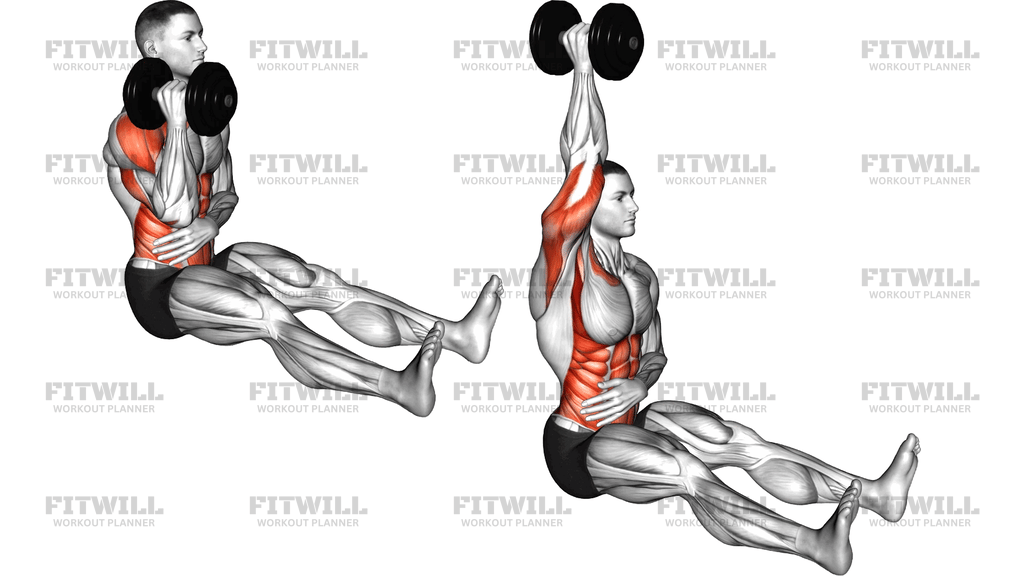
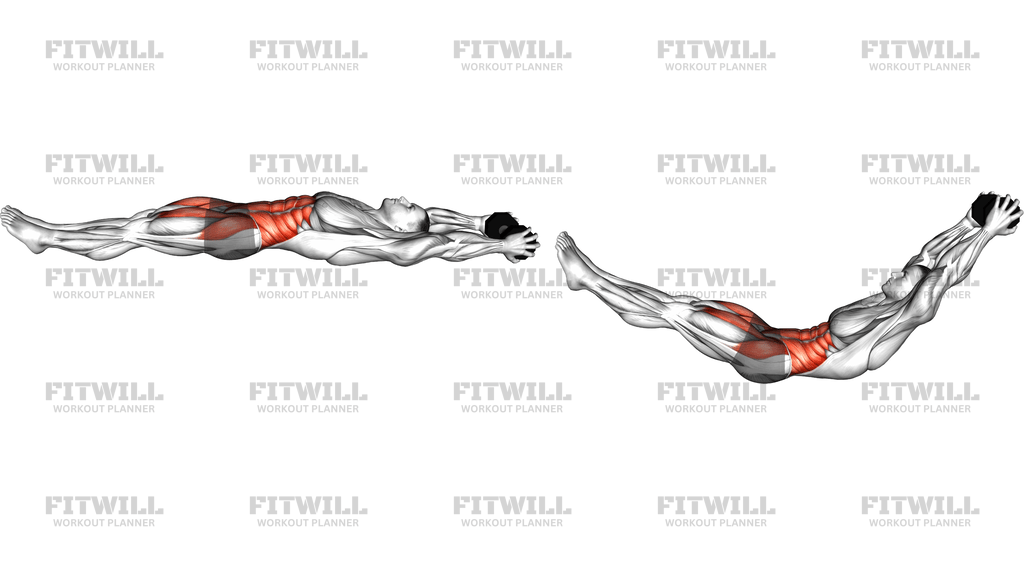
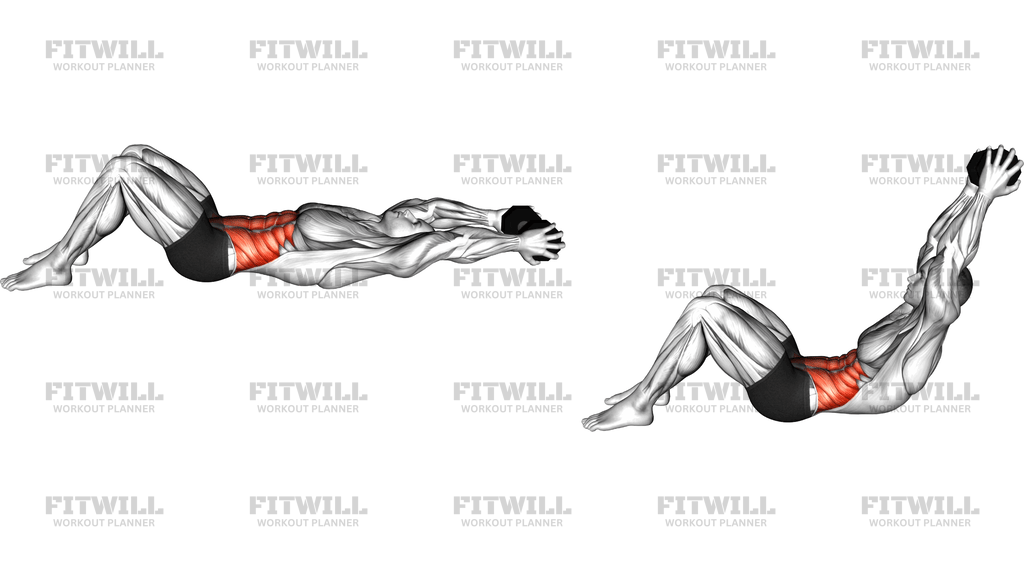
The Weighted Dumbbell Crunch (Hands Overhead) is a floor-based abdominal exercise where you lie on your back with knees bent and hold a single dumbbell in both hands, arms extended straight above or behind your head. From there, you curl your upper body toward your knees while keeping the arms locked out overhead, so the weight travels through a long arc as your torso rises. Because the load sits far from your hips, the leverage is demanding even with a light dumbbell.
This movement suits lifters who have outgrown bodyweight crunches and want progressive overload for the rectus abdominis without turning the exercise into a full sit-up. The extended-arm position lengthens the lever arm, which increases the torque the abs must overcome on every rep. It also challenges the shoulders and lats to some degree as they hold the dumbbell stable overhead throughout the curl.
The setup matters more here than in a standard crunch. Your lower back should stay flat against the floor at the start, knees bent with feet flat, and the dumbbell held securely with both hands cupping one end or the handle. If you start with the arms drifting behind your head and the back arching, you shift stress to the lumbar spine and turn the lift into a hip-flexor-dominated pull. Keeping the weight stacked over the chest as you begin the curl keeps tension on the abs where it belongs.
Execution should be a rolling curl, not a yank. Exhale as you peel your shoulder blades off the floor, leading with the ribcage while the arms stay extended and move in the same plane. Rise only as high as your abs can lift you without the feet popping up or the hips shifting, pause briefly at the top, then lower the torso and the dumbbell back overhead under control.
You will see this exercise in ab finishers, home dumbbell workouts, and core blocks for combat sports or climbing, where strong trunk flexion under load transfers well. Treat it as a higher-skill variation: start with a dumbbell light enough that you can complete twelve to fifteen smooth reps, and only add weight when your lower back stays quiet and your feet stay planted through the whole set.
[ Workout Log & Planner ]
Put your next workout in Fitwill
Keep your plan and training log ready when you are.


Instructions
- Lie on your back on the floor or an exercise mat with your knees bent about 90 degrees and your feet flat on the floor, hip-width apart.
- Hold one dumbbell with both hands, gripping the handle or cupping one head of the dumbbell, and extend your arms straight so the dumbbell rests on or just behind the top of your head.
- Flatten your lower back against the floor and gently brace your abdominal wall before you start the rep.
- Inhale, then begin exhaling as you curl your shoulder blades off the floor, keeping the arms locked out and the dumbbell traveling in an arc overhead toward your knees.
- Lead with your ribcage rather than your chin, and stop at the highest point where your upper back is off the floor and your abs are fully squeezed.
- Hold the top position for a brief pause, making sure the dumbbell stays stable overhead and your feet stay planted.
- Lower slowly, reversing the arc so the dumbbell returns behind your head as your upper back and then your head touch back down.
- Reset your brace with the dumbbell resting behind your head, take a breath, and start the next rep from the same position.
- Complete your set, then sit up carefully and set the dumbbell down beside you rather than dropping it while lying down.
Tips & Tricks
- Choose a lighter dumbbell than you expect. With the arms extended overhead, the long lever arm makes even a 10-15 lb dumbbell feel heavy by the eighth rep.
- If your lower back arches off the floor when the weight goes behind your head, your hip flexors are tight or the load is too heavy; bend the elbows slightly and bring the dumbbell a little closer to your head until your back stays flat.
- Do not pull the dumbbell toward your knees with your arms. The arms act as a rigid lever, and the curl should come from your ribcage rolling toward your hips.
- If your feet lift off the floor at the top of each crunch, your hips are being yanked by the hip flexors; slow the ascent and reduce the range before adding weight.
- Grip the dumbbell with both hands over the same end or handle rather than one hand on each head, so the weight cannot tilt or slip as you fatigue.
- Keep your chin about a fist's distance from your chest; tucking too hard turns the rep into a neck exercise and hiding your chin too little strains the front of the neck.
- Curl to roughly the shoulder-blade level rather than trying to sit all the way up. Past that point, hip flexors take over and the abdominal contraction fades.
- Pause one full second at the top and move the lowering phase twice as slow as the ascent; the eccentric is where most of the abdominal tension in this variation is earned.
- If you cannot keep the arms straight, that is a shoulder mobility signal, not a reason to force the range. Work with a slightly bent-elbow version and improve overhead flexibility separately.
Frequently Asked Questions
Which muscles does the Weighted Dumbbell Crunch (Hands Overhead) work?
The rectus abdominis across the front of the trunk does most of the work, with the obliques stabilizing and the hip flexors assisting as the torso rises. The shoulders and lats work isometrically to keep the dumbbell locked out overhead.
Why hold the dumbbell overhead instead of on the chest?
Extending the arms overhead lengthens the distance between the load and your hips, which increases the torque your abs must produce every rep. It is an efficient way to make a crunch harder without jumping to a very heavy dumbbell held at the chest.
Is the Weighted Dumbbell Crunch (Hands Overhead) suitable for beginners?
Beginners can do it, but only with a very light dumbbell and a shorter range. If you cannot keep your lower back flat when the weight is behind your head, build up with bodyweight crunches or a chest-held dumbbell first.
Should I do a full sit-up or just a crunch in this variation?
A crunch is the intent: lift until your shoulder blades clear the floor and squeeze, then lower. Rising into a full sit-up shifts the workload to the hip flexors and tends to pull your form apart once the weight is overhead.
My feet keep lifting off the floor during the Weighted Dumbbell Crunch (Hands Overhead). What is wrong?
That usually means the load is too heavy or you are yanking upward, so the hip flexors dominate and tug on the pelvis. Slow the rep down, use a lighter dumbbell, and focus on curling from the ribcage rather than pulling the weight forward.
How heavy should the dumbbell be?
Pick a weight you can control for twelve to fifteen reps with your lower back flat and your feet planted the whole time. Because of the long lever arm, most people need far less weight here than they would for a chest-held crunch.
What can I use instead of a dumbbell for this exercise?
A small medicine ball, a weight plate held with both hands, or even a full water bottle works with the same overhead-arm setup. The key is a secure two-handed grip on a single object you can control safely above your head.
Is it safe for the lower back?
It is generally well tolerated when your lower back stays in contact with the floor at the start and you avoid jerking the weight upward. If you feel strain in the lumbar area as the dumbbell goes behind your head, reduce the weight, shorten the range, or place the arms slightly lower until your control improves.
How should I breathe during the Weighted Dumbbell Crunch (Hands Overhead)?
Inhale with the weight resting behind your head, exhale as you curl up, and keep exhaling through the squeeze at the top. Inhale again as you lower under control so each rep starts from a braced, reset position.
How many sets and reps should I do?
Two to four sets of ten to fifteen controlled reps works well as a core finisher. Prioritize smooth tempo and a full reset between reps over chasing a heavier dumbbell.