Band Stiff Leg Deadlift
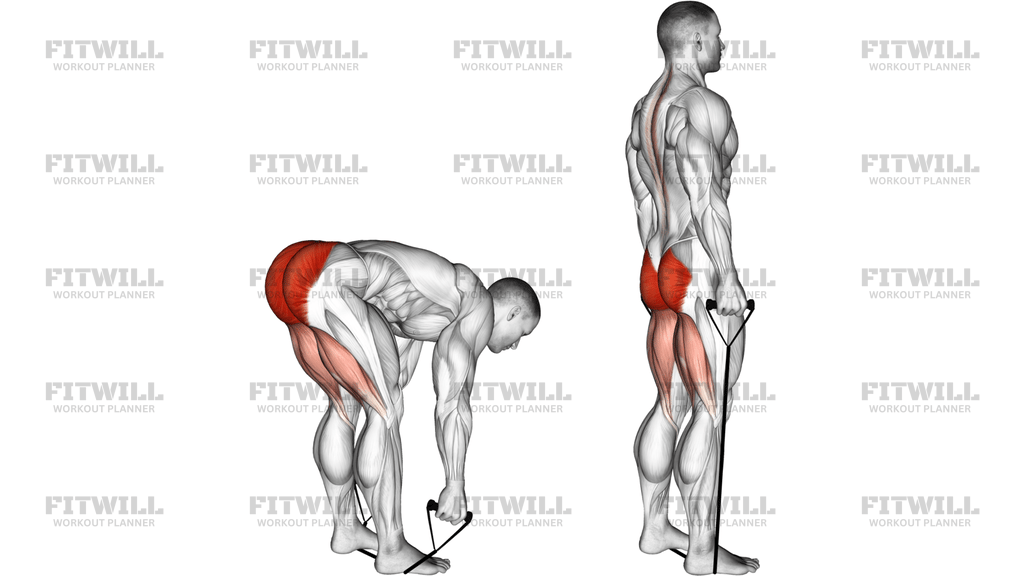
Band Stiff Leg Deadlift is a band-resisted hip hinge built to load the glutes and hamstrings while teaching you to keep the torso stable under tension. The band sits under both feet and the handles travel straight up your legs, so the exercise rewards a clean hinge more than a fast pull. It is especially useful when you want posterior-chain work without a barbell, rack, or bench setup.
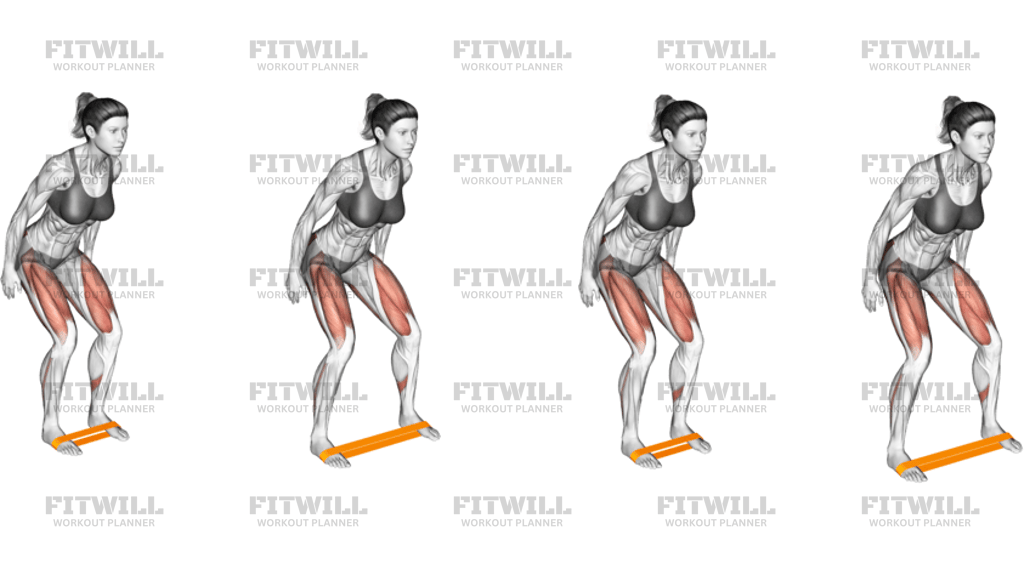
The image shows a forward hinge with a soft knee bend, flat feet, and the hips pushed back until the trunk is nearly parallel to the floor. That setup matters because the band tension increases as you stand up, which makes the top half of the rep feel harder. A controlled start position lets you keep the shoulders packed, the neck long, and the load centered instead of letting the band pull you off balance.
This movement primarily targets the gluteus maximus, with the hamstrings, erector spinae, and core working to hold position and finish the hinge. You should feel the stretch through the back of the thighs on the way down and strong hip extension as you stand. The exercise is not about locking the knees hard or rounding forward to chase range; it is about keeping the spine organized while the hips do the work.
Use a smooth tempo and let the handles slide close to the legs on every rep. Lower by sending the hips back, then drive the floor away to stand tall while squeezing the glutes at the top without leaning backward. This pattern fits warm-ups, accessory blocks, home workouts, and lighter strength or conditioning sessions where you want repeated tension on the posterior chain.
Keep the movement pain-free and strict. If the band is too light, the top may feel loose and unchallenging; if it is too heavy, you will usually lose the hinge and start tugging with the arms or rounding the back. The best rep looks controlled from the first inch to the last, with the band tension, hip position, and breathing staying consistent across the set.
[ Workout Log & Planner ]
Put your next workout in Fitwill
Keep your plan and training log ready when you are.


Instructions
- Stand on the band with both feet about hip-width apart and hold a handle in each hand at your sides.
- Soften your knees slightly, lift your chest, and hinge your hips back until your torso tips forward with a long spine.
- Keep the handles close to your thighs and let your weight stay in the midfoot and heel.
- Brace your core and begin standing by driving your hips forward instead of pulling with your arms.
- Finish tall with the glutes tight, but do not lean back or snap the knees straight.
- Lower the handles along the front of your legs while pushing the hips back and keeping the band under tension.
- Stop when your hamstrings are stretched and your back stays flat, then repeat with the same path.
- Keep a steady breath pattern and complete the planned repetitions without losing your hinge.
Tips & Tricks
- Keep the handles brushing the thighs and shins; if they drift forward, the band will pull you into a sloppy hinge.
- A slight knee bend is ideal here. Locking the knees hard shifts the tension away from the hips and makes the stretch feel harsher than it needs to be.
- Think about pushing the floor away and bringing the hips forward, not about lifting with the hands.
- Do not chase the floor if your back starts rounding. Stop the descent when the hamstrings are the limiting factor, not your lumbar spine.
- Squeeze the glutes at the top for a moment, but avoid leaning backward to fake a bigger lockout.
- Use a band that gives noticeable tension at the top of the rep. If the top feels easy, the set will not challenge the hinge.
- Keep your neck in line with your torso by looking a few feet ahead on the floor instead of cranking your head up.
- Exhale as you stand and inhale on the way down so your brace stays organized through the changing band tension.
Frequently Asked Questions
What muscle does Band Stiff Leg Deadlift target most?
The glutes are the primary target, with the hamstrings doing a lot of the lengthened-position work.
Can beginners perform this exercise?
Yes. Beginners usually do well with a light band and a small range of motion until the hinge pattern feels natural.
Where should the band and handles sit during the rep?
The band stays under both feet, and the handles should travel close to the front of your thighs and shins so the tension stays on the hinge.
Should my knees stay straight the whole time?
No. Keep a soft knee bend and hold that angle fairly steady so the movement comes from the hips instead of turning into a squat.
How low should I hinge before coming back up?
Lower until you feel a strong hamstring stretch and can still keep a flat back and stable shoulders.
Why does the top of the rep feel harder with bands?
Band tension increases as you stand taller, so the glutes have to finish the lockout against the greatest resistance.
What is the biggest form mistake to avoid?
Do not round the lower back or yank the handles up with your arms. The hips should drive the motion.
Is this a good substitute for a barbell stiff-leg deadlift?
Yes, especially when you want a home-friendly posterior-chain exercise with smoother resistance and less spinal loading.