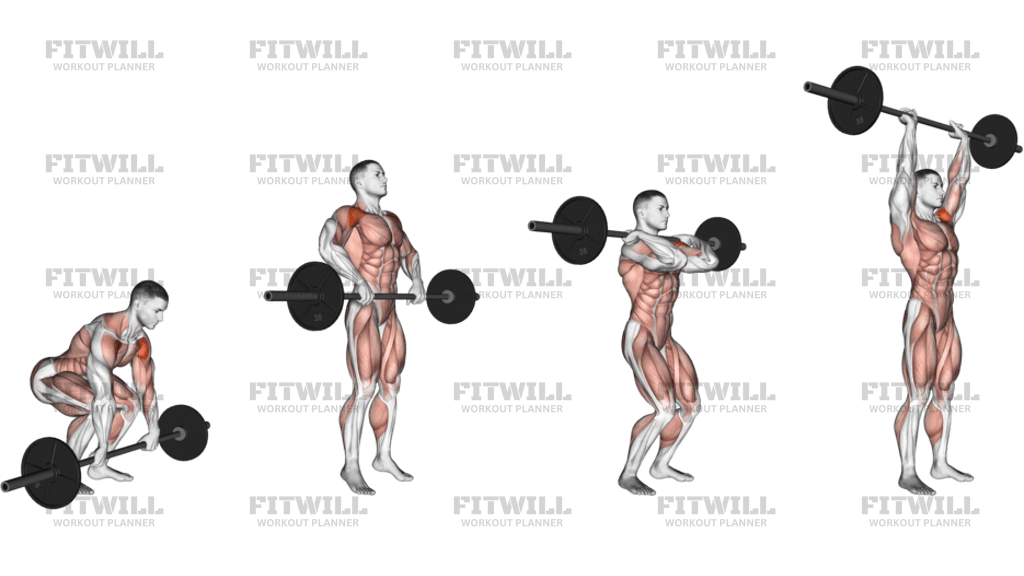
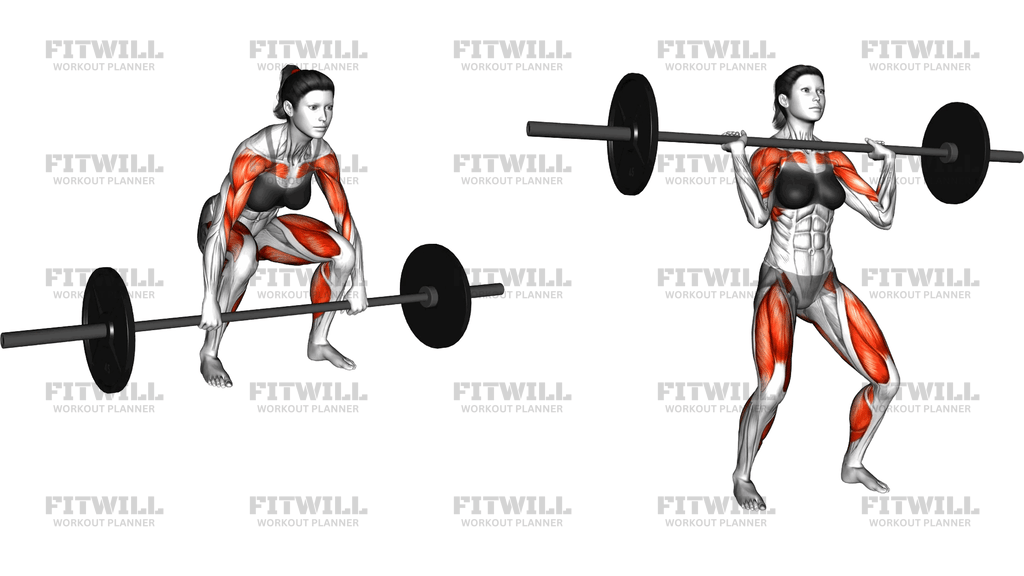
Barbell Hang Clean High Pull
The Barbell Hang Clean High Pull is an Olympic lifting variation that starts with the bar hanging at mid-thigh or just above the knee instead of on the floor. From that hang position, you perform an aggressive jump-and-shrug motion and pull the bar up along the body until it reaches roughly chest height, keeping the elbows high and outside the hands. Because the pull is finished rather than caught in a front rack, the lift emphasizes explosive power output and upper-back strength without requiring the wrist mobility of a full clean.
This movement is a strong choice for athletes in sports that demand triple extension—sprinting, jumping, tackling, or throwing—since it trains the quads, glutes, and calves to drive through the floor in one coordinated burst. It is also popular with general lifters who want the training effect of an Olympic lift without the technical demands of receiving the bar on the shoulders. Coaches often program it in the 3 to 6 rep range at moderate loads to build power, or lighter and faster for speed work.
The hang position is what makes this lift worth learning properly. Starting at mid-thigh means you cannot hide behind a heavy pull off the floor; you have to be in a braced, balanced stance with the bar close to the body before you initiate the drive. If your hang setup is sloppy—torso too vertical, weight on the toes, or the bar drifting forward—every rep after that gets worse. Take a moment at each rep to reset the hang position rather than cycling mindlessly.
Execution is a sequence, not a single motion. Dip slightly by bending the knees, drive the floor away through the legs, and only then let that momentum carry into a tall shrug and a high elbow pull. The traps, shoulders, and upper back finish what the legs and hips started. If you feel the arms doing most of the work, the load is too heavy or the leg drive is too soft—the bar should be accelerated by the body, not yanked up by the elbows.
Because the movement is fast and finishes with the bar at chest height, control on the way down matters just as much as the pull itself. Let the bar lower along the same path it traveled up, stay braced, and re-establish the hang position before the next rep. Start conservatively with an empty bar or light plates to groove the timing, and progress the load only when your bar path stays vertical and close to the body on every rep.
[ Workout Log & Planner ]
Put your next workout in Fitwill
Keep your plan and training log ready when you are.


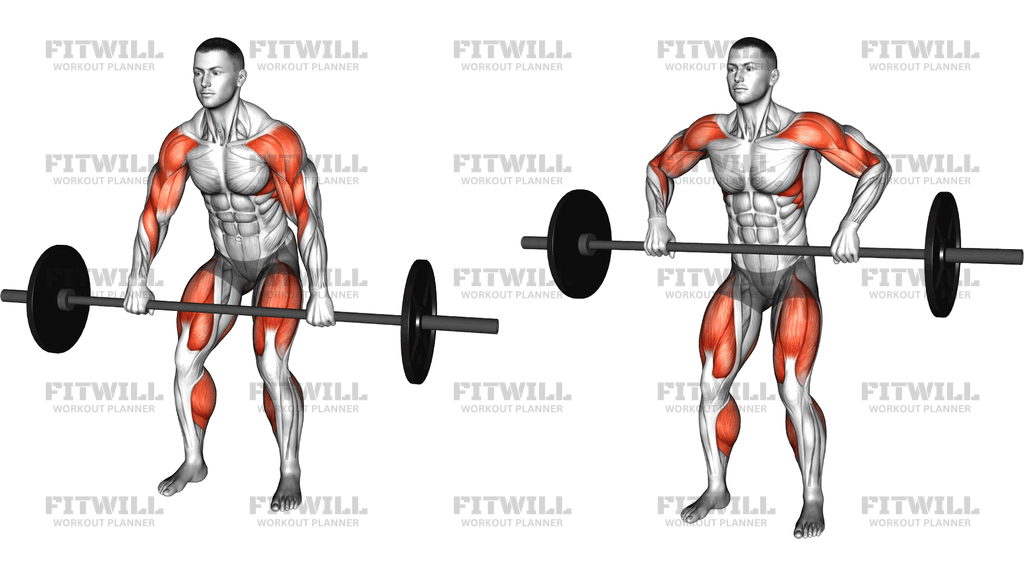
Instructions
- Stand with feet about hip-width apart under the barbell, then take an overhand grip just outside your thighs with the bar resting against the crease of your hips.
- Push the hips back and bend the knees slightly so the bar hangs at mid-thigh, keeping your back flat, chest up, and shoulders slightly ahead of the bar.
- Brace your core and set your weight over the middle of your feet, with the bar touching or nearly touching the legs.
- Take a breath, then dip a few inches by bending the knees, keeping the bar tight against your thighs.
- Explosively extend the hips, knees, and ankles, driving the floor away as if jumping, and keep the bar close to the body.
- As the legs finish extending, shrug the shoulders up hard and pull the elbows high and out to the sides, letting the bar rise to around chest or collarbone height.
- Pause briefly at the top with the bar high and your upper back fully engaged.
- Lower the bar under control along the same path back to the hang position at mid-thigh, absorbing the descent with a slight knee bend.
- Exhale as the bar returns to the hang, reset your brace and stance, and breathe in again before starting the next rep.
- Complete the set, then return the bar to the floor with a flat back rather than rounding over to set it down.
Tips & Tricks
- If the bar swings away from your body at the top, you are likely pulling with the arms before the hips finish extending—cue yourself to jump first, then shrug.
- Keep the elbows above the wrists during the pull, but do not try to lift the bar with the arms; the arms only transmit the power created by the legs and hips.
- A common fault is dipping too deep, which turns the lift into a slow squat and bleeds off the stretch reflex—keep the dip short and snappy.
- Watch for the heels lifting too early; drive through the whole foot, and let the calves extend naturally at the end rather than rising onto the toes first.
- If your lower back rounds in the hang position, hinge further back with the hips and reduce the weight until you can hold a flat, braced spine.
- Use a hook grip or straps on heavier sets if your grip fatigues before your power does, but release to a normal overhand grip if you plan to catch or drop reps.
- Perform the lift with your head in a neutral position—throwing the chin back aggressively during the pull can throw the bar path forward.
- Keep the bar dragging lightly against the thighs through the entire drive; a visible gap between bar and body almost always means forward weight shift.
- Reset the hang position on every rep instead of bouncing the bar at the thigh—consistent starting positions build consistent bar paths.
Frequently Asked Questions
Which muscles does the Barbell Hang Clean High Pull work hardest?
The traps, shoulders, and upper back do the finishing work of the pull, while the quads, glutes, hamstrings, and calves generate the explosive drive from the hang position. The lower back and forearms work to keep the spine braced and the bar secured throughout.
Is the Barbell Hang Clean High Pull suitable for beginners?
Yes, as long as the load is kept light and the pattern is learned with an empty bar first. Because there is no front rack catch, it is one of the more beginner-friendly Olympic lifting variations, but the explosive triple extension still needs to be grooved before adding weight.
How high should the bar travel during the Barbell Hang Clean High Pull?
Aim for the bar to reach roughly chest or collarbone height with the elbows high and out to the sides. Pulling higher than that usually means the arms are taking over the movement instead of the legs driving it.
Where exactly should the bar hang before each rep?
The bar should rest against the mid-thigh to just above the knee, with a slight knee bend and the shoulders slightly ahead of the bar. Starting the hang too low turns it into a deadlift-style pull, and too high removes the dip-and-drive element.
Why does my bar swing forward on the Barbell Hang Clean High Pull?
A forward swing usually comes from letting the weight shift to the toes, or from pulling with the arms before the hips and knees finish extending. Keep the weight over mid-foot, keep the bar touching the thighs during the drive, and cue jump-then-shrug in sequence.
What can I substitute if I do not have a barbell?
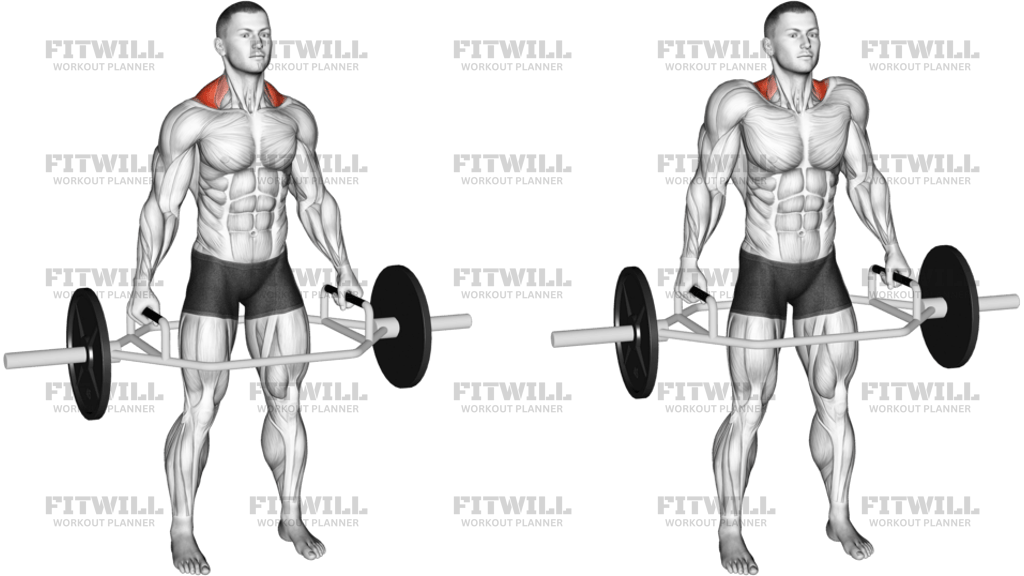
A kettlebell or dumbbell single-arm high pull works the same pattern, and a trap bar high pull is a good barbell alternative that is easier on the wrists. A medicine ball scoop throw also trains the same explosive triple extension with no load on the spine.
How many reps should I perform per set?
Because this is a power movement, quality matters more than volume—3 to 6 reps per set with full rest between sets keeps each rep fast and sharp. If your bar speed slows noticeably or the bar path drifts, end the set.
Is it safe to drop the bar after each rep?
On this lift the bar returns to the hang rather than the floor each rep, so lowering it under control is part of the exercise. Only release the bar from a hang position if you are on a lifting platform with bumper plates and enough clearance around you.
Should I wear lifting straps for the Barbell Hang Clean High Pull?
Straps are reasonable on heavier sets when grip is the limiting factor, since the goal is power output rather than grip training. Use a normal overhand or hook grip on lighter speed work so your hands still get challenged.
How is the Barbell Hang Clean High Pull different from a full power clean?
A power clean finishes with the lifter catching the bar on the shoulders in a partial squat, while the high pull finishes with the bar at chest height and the feet staying put. The high pull is easier on the wrists and elbows, making it a good option for lifters with limited front rack mobility.