Trap Bar Standing Shrug
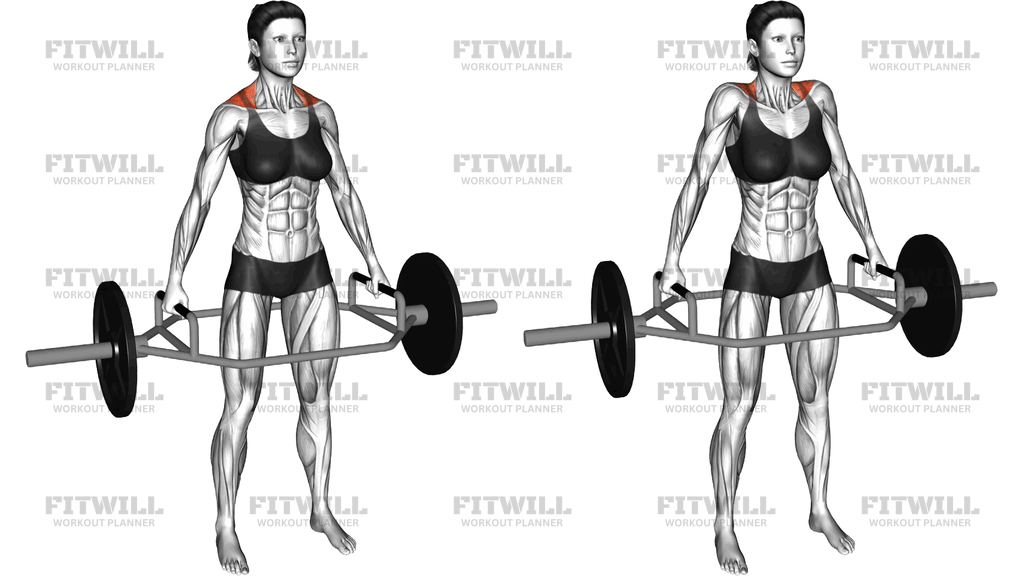
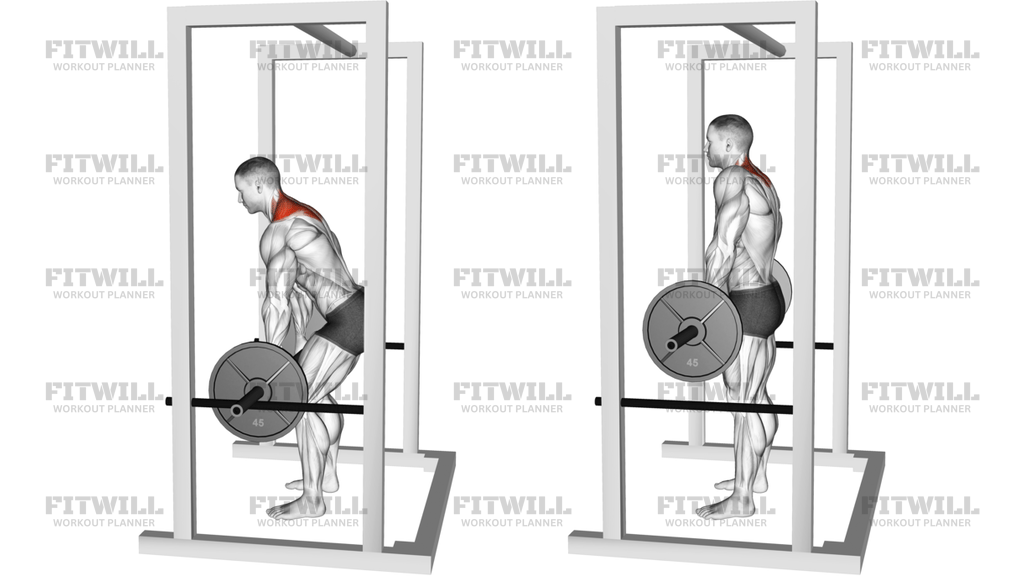
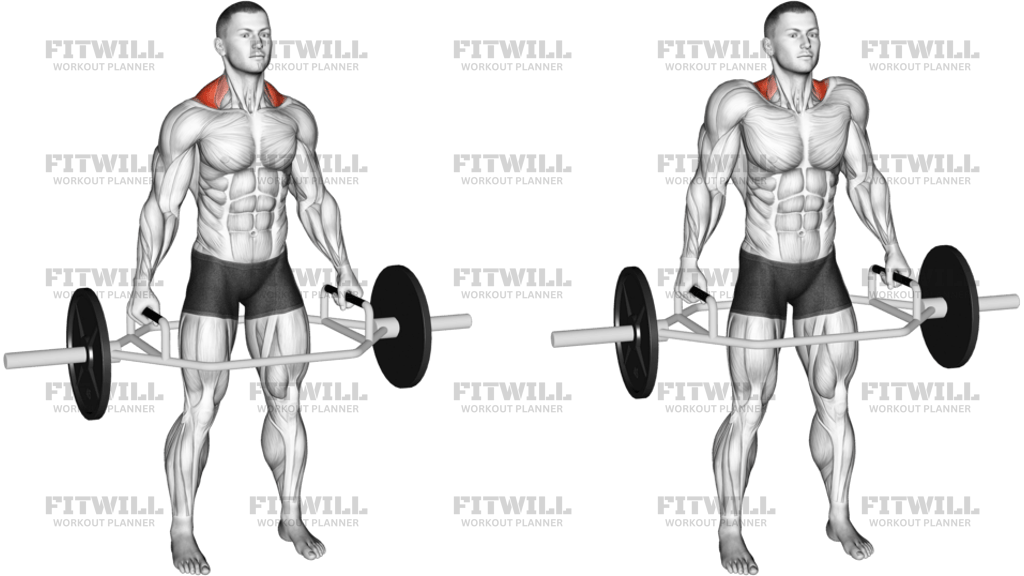
Trap Bar Standing Shrug is a standing upper-back exercise built around a simple but demanding motion: lifting the shoulders straight up against a centered load and lowering them back down with control. It is especially useful when you want to train the upper traps hard without turning the set into a full-body heave. The movement looks small, but the quality of each rep depends on how still you can keep the torso while the shoulders travel vertically.
The trap bar keeps the load by your sides, which makes the setup feel more natural than a barbell shrug and usually easier on the wrists than a straight bar. Stand inside the frame with your feet about hip-width apart, let your arms hang long, and keep the chest tall without leaning back. That starting position matters because the shrug should come from the shoulders, not from the hips, elbows, or lower back.
On each rep, drive both shoulders up toward your ears, pause briefly at the top, then lower them until the scapulae settle back down under control. The bar should rise and fall in a clean vertical line while your neck stays long and relaxed. If you have to roll the shoulders, bounce the knees, or sway the torso to create more height, the load is too heavy or the setup is off.
Trap Bar Standing Shrug fits well on pull days, upper-body strength sessions, or accessory work after rows and pull-ups. It can also be used to build grip-limited trap work if your hands give out before your upper back does, although straps can help once the load gets heavy. Because the range is short, the exercise rewards patience, clean pauses, and repeatable position more than speed or momentum.
Keep the rep smooth from the first shrug to the last. The best sets finish with the same upright posture you started with, not with a yanked torso or a stiff neck. Treat Trap Bar Standing Shrug as a controlled strength drill for the upper traps: stand tall, shrug straight up, lower slowly, and stop the set when the shoulders stop moving cleanly.
[ Workout Log & Planner ]
Put your next workout in Fitwill
Keep your plan and training log ready when you are.


Instructions
- Stand in the middle of the trap bar with your feet about hip-width apart and the handles lined up beside your thighs.
- Grip the handles firmly, let your arms hang straight, and keep your shoulders down, chest tall, and neck neutral.
- Unlock your knees slightly and brace your torso so your body stays stacked over the middle of your feet.
- Raise both shoulders straight up toward your ears without bending your elbows or leaning back.
- Keep the bar traveling vertically and avoid turning the shrug into a row or a hip drive.
- Pause for a brief squeeze at the top when your shoulders are as high as they can rise cleanly.
- Lower your shoulders slowly until the bar settles back into the start position and your traps are fully lengthened.
- Reset your posture and breathing before the next rep, then repeat for the planned set.
- Stop the set if you have to roll your shoulders, bounce your knees, or swing the bar to get the weight moving.
Tips & Tricks
- Think of lifting the shoulders straight up, not back or forward; the bar should rise in a clean vertical line.
- A slight knee bend is fine, but if the movement turns into a mini deadlift, lighten the load and re-anchor your stance.
- Keep the elbows locked long so the upper traps do the work instead of the arms.
- Pause at the top for a full second if you tend to rush the shrug and miss the peak contraction.
- Use straps when grip becomes the limiting factor and the traps still have work left to do.
- Do not roll the shoulders in circles at the top; that usually adds noise, not better trap work.
- If one shoulder rises first, reduce the load and make both sides finish together.
- A controlled lowering phase matters because the traps are loaded in the stretch at the bottom of each rep.
Frequently Asked Questions
What muscles does Trap Bar Standing Shrug work?
It mainly targets the upper traps, with help from the levator scapulae, forearms, and core stabilizers. The load is centered, but the real work should stay in the shoulder girdle.
Why use a trap bar for shrugs instead of a barbell?
The trap bar keeps the load by your sides, which usually feels more natural and makes it easier to stay upright. That setup also tends to be friendlier on the wrists than a straight bar.
How high should I shrug in Trap Bar Standing Shrug?
Raise the shoulders as high as they can go without bending the elbows or leaning back. The goal is a straight-up shoulder elevation, not a whole-body heave.
Should I roll my shoulders during the set?
No. Roll-free reps are safer and keep the tension where it belongs, on the upper traps. Shrug up, pause, and lower straight down.
Can beginners do Trap Bar Standing Shrug?
Yes. Start light enough to keep your torso stacked and your neck relaxed, then add load only when every rep still looks identical.
What if my grip fails before my traps do?
That is common with heavier shrugs. Use straps or reduce the load so the set is limited by the upper traps instead of your hands.
How many reps should I use for Trap Bar Standing Shrug?
Moderate to higher reps usually work well because the range is short and the muscle responds well to controlled time under tension. Pick a range that lets you keep the pause at the top and the slow lowering phase.
What is the biggest mistake in Trap Bar Standing Shrug?
Turning it into a partial deadlift or swinging the torso to make the bar move. If your hips or knees are driving the load, the weight is too heavy.