Cable Dead Bug
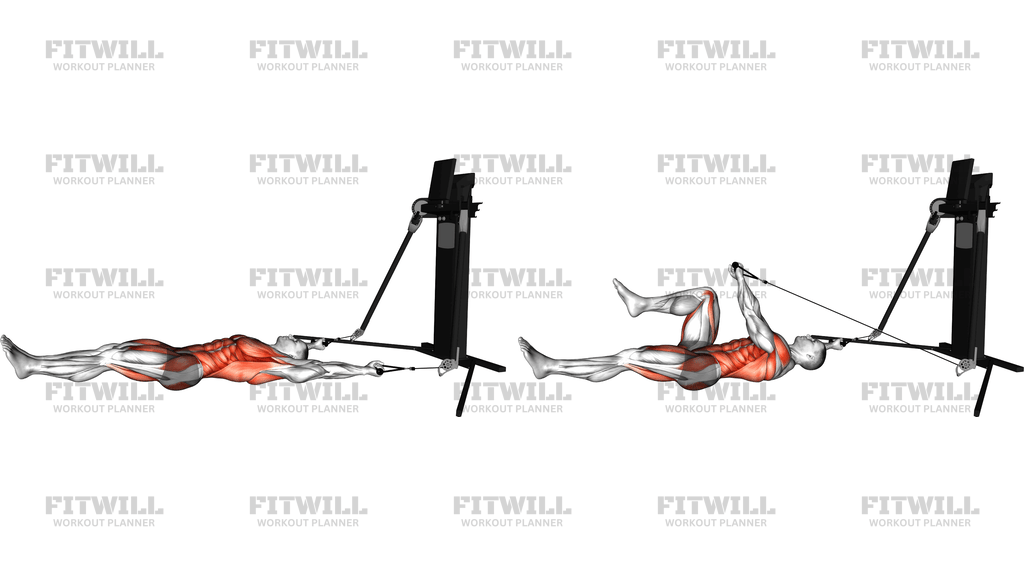
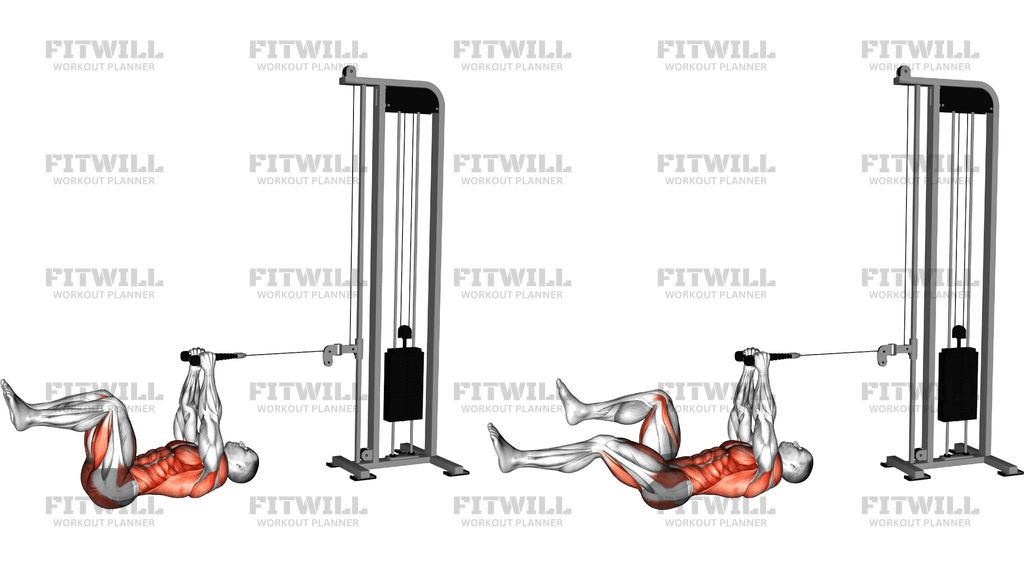
The Cable Dead Bug is a floor-based core exercise that adds constant cable tension to the classic dead bug pattern. You lie on your back next to a cable machine with your head toward a low pulley, hold the attachment with both hands, and press your arms straight up over your chest so the cable is taut. From there, your legs alternate lowering heel-first toward the floor while your trunk fights two things at once: the pull of the cable dragging your arms back over your head, and the instability of a moving leg.
What makes this setup interesting is that the cable never rests. Even before your legs move, your midsection is already working to keep your arms stacked over your chest and your ribs from flaring upward. When one leg extends away from your body, the leverage against your trunk changes, and your abdominals have to stiffen further to keep your lower back from arching off the floor. It trains anti-extension control, hip flexor strength on the moving leg, and the ability to hold a braced, neutral spine while a limb moves.
Setup matters more here than in the bodyweight version. Lie far enough from the machine that the cable is fully taut with your arms vertical, but not so far that you get dragged or lifted. If the cable has slack, the exercise loses its main challenge; if the weight is too heavy or you sit too close, it pulls you out of position before the set even starts.
To perform it well, keep your arms locked out and still for the entire set. Brace your abdominals, press your lower back gently toward the floor, and exhale slowly as you extend one leg, reaching the heel toward the floor a short distance in front of you. The non-working knee stays stacked over the hip with the shin parallel to the ground. Return with the same control, switch legs, and keep the tempo slow enough that the cable line barely trembles.
This version suits people who find the bodyweight dead bug too easy, lifters who want a stronger brace for squats and pulls, and anyone who benefits from a guided line of tension that instantly exposes when their trunk position breaks down. It is also a common choice in general core training blocks because it is demanding without heavy loading.
Keep the weight modest and treat it as a control exercise, not a strength record. If your lower back arches, your ribs lift, or your shoulders get pulled toward the machine, reduce the load or shorten the range until every rep stays clean.
[ Workout Log & Planner ]
Put your next workout in Fitwill
Keep your plan and training log ready when you are.


Instructions
- Set the pulley of a cable machine to its lowest position and attach a single handle or rope grip.
- Lie on your back on the floor with your head toward the machine, far enough away that the cable runs taut when your arms point straight up.
- Grip the handle with both hands and press your arms directly over your chest until the cable line is fully tight, knuckles facing up.
- Lift both legs and bend your knees to 90 degrees over your hips so your shins are parallel to the floor.
- Brace your abdominals and gently press your lower back into the floor, keeping your shoulders relaxed and down.
- Inhale, then exhale slowly as you lower one heel toward the floor, extending that leg fully while the other knee stays stacked over its hip.
- Keep your arms locked out and motionless as the cable pulls toward the machine; do not let your ribs flare or your shoulders lift.
- Tap or hover your heel just above the floor, pause briefly, then return the leg to the starting position with control.
- Repeat the extension on the opposite leg, alternating sides for the desired number of reps while breathing steadily.
- When finished, bring both legs up, sit up carefully while holding the handle, then release it and let the stack settle.
Tips & Tricks
- Start with a very light stack selection. Most people need far less weight than they expect, and even 5-10 pounds of cable pull is enough to make the trunk work.
- If your lower back arches as the leg extends, the range is too long for your current control. Stop the descent where your back stays flat and extend your range gradually over weeks.
- Watch for ribs flaring toward the ceiling, which usually means the cable is winning the tug-of-war. Exhale harder during the leg extension and think about pulling your ribs down toward your hips.
- Do not turn this into a leg exercise. If the heel slams down quickly, your hip flexors are doing all the work and your abdominals are just along for the ride.
- Check your distance from the machine before the first rep. If the cable has visible slack, scoot back; if it yanks your shoulders forward, scoot closer or drop the weight.
- Keep your gaze straight up and your neck relaxed. Craning the chin forward is a common sign the core has stopped doing its job.
- Your grip should feel secure but passive. If your forearms fatigue before your abs, you are squeezing the handle too hard or fighting the cable with bent elbows.
- Aim for a slow, even tempo, around two to three seconds down and two seconds back, so the cable tension stays continuous rather than getting breaks between reps.
Frequently Asked Questions
Which muscles does the Cable Dead Bug work?
It primarily targets the deep abdominals and rectus abdominis, which hold your trunk steady against the cable's pull. The hip flexors of the moving leg work to extend and return it, and the obliques help prevent any twisting or rib flare.
Why use a cable instead of the regular bodyweight dead bug?
The cable adds a continuous pulling force toward the machine, so your trunk must resist a real load instead of only fighting gravity on your limbs. This raises the demand on your brace and gives you instant feedback when your position breaks.
Should my arms move during the Cable Dead Bug?
No. Your arms stay locked out directly over your chest for the whole set; the legs do the moving. If your arms drift toward the machine or bend at the elbows, the weight is too heavy or your brace has loosened.
How far should I lie from the cable machine?
Position yourself so the cable is completely taut the moment your arms point straight up over your chest, with a small amount of tension already on the stack. Too close and it drags your shoulders; too far and the exercise loses resistance.
How much weight should I use on the Cable Dead Bug?
Begin with the lightest workable plate, often 5-15 pounds, and progress only when you can extend both legs fully with a flat lower back. This is a control exercise, and heavy loading usually just pulls you out of position.
Can beginners do this exercise?
Yes, provided they first master the bodyweight dead bug and can keep their lower back on the floor while a leg extends. With a light stack and a shortened range, the cable version is very manageable.
What can I use if my gym has no free low pulley?
A light resistance band anchored low behind you works well: hold it in both hands with tension over your chest and perform the same alternating leg lowering. The feedback is slightly less precise, but the challenge is similar.
Where should the non-working leg stay during the Cable Dead Bug?
The resting knee stays bent to 90 degrees directly over its hip with the shin parallel to the floor. Letting that knee drift toward your chest or out to the side changes the leverage and reduces the core demand.
Is it normal to feel this in my hips rather than my abs?
Some hip flexor work is expected since the moving leg extends against the cable's line, but the main effort should be a braced feeling across your midsection. If your hips dominate and your back arches, slow down and shorten the extension.
How many reps and sets should I do?
Two to three sets of 8-12 slow extensions per side is a solid range. Stop the set as soon as your form slips, since quality reps with a continuous brace matter far more than total volume here.