Cable Half Kneeling Pallof Press
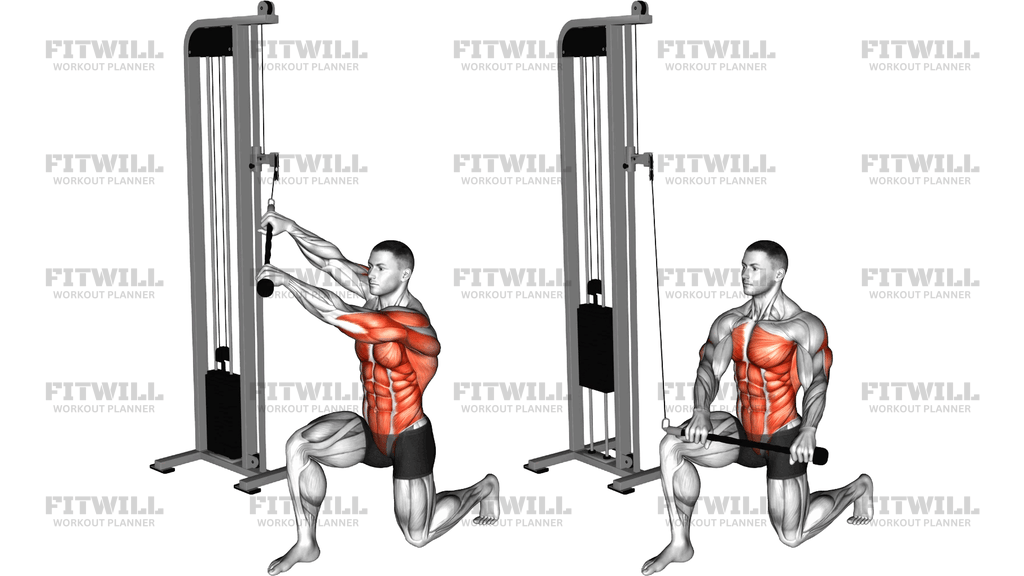
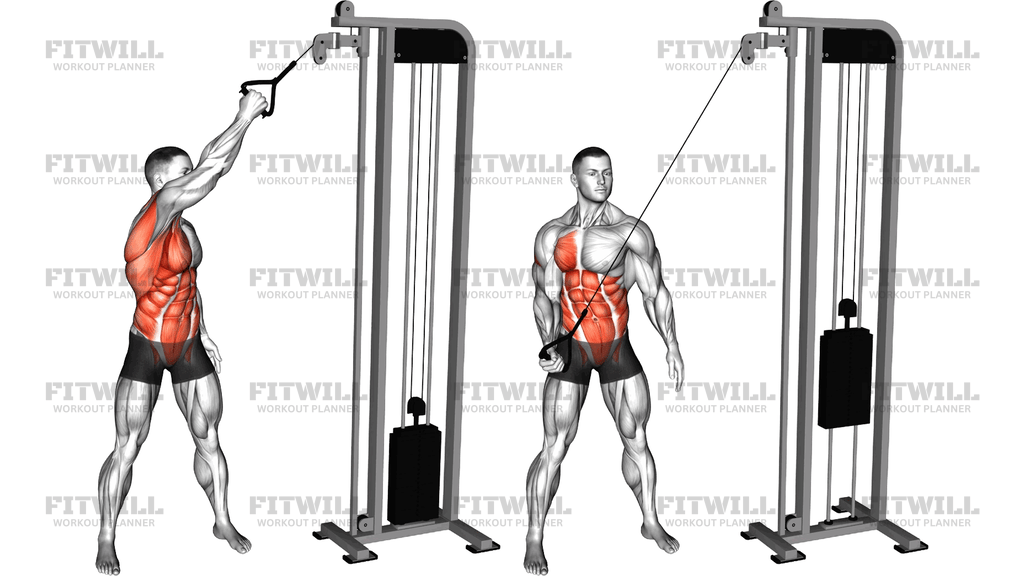
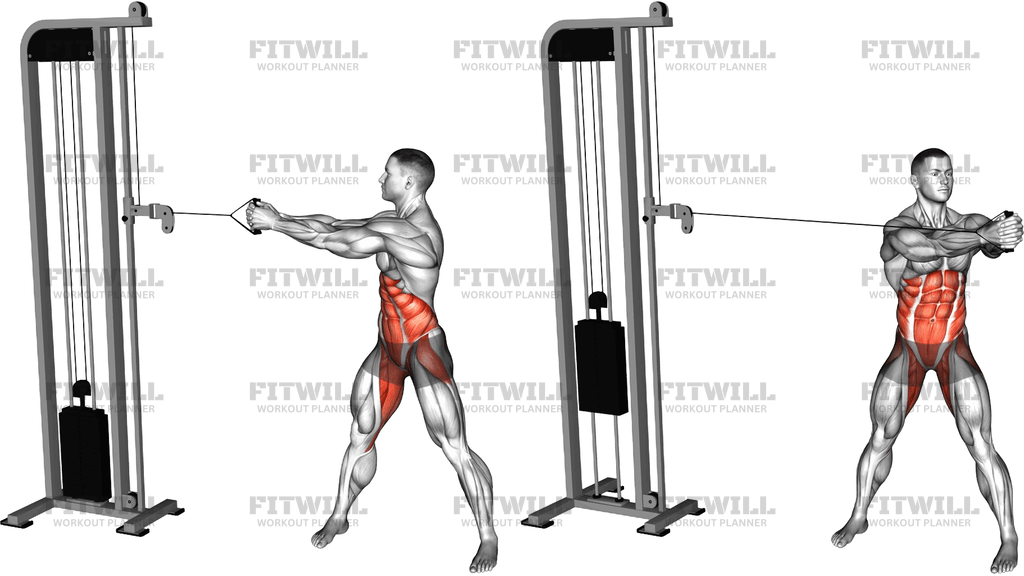
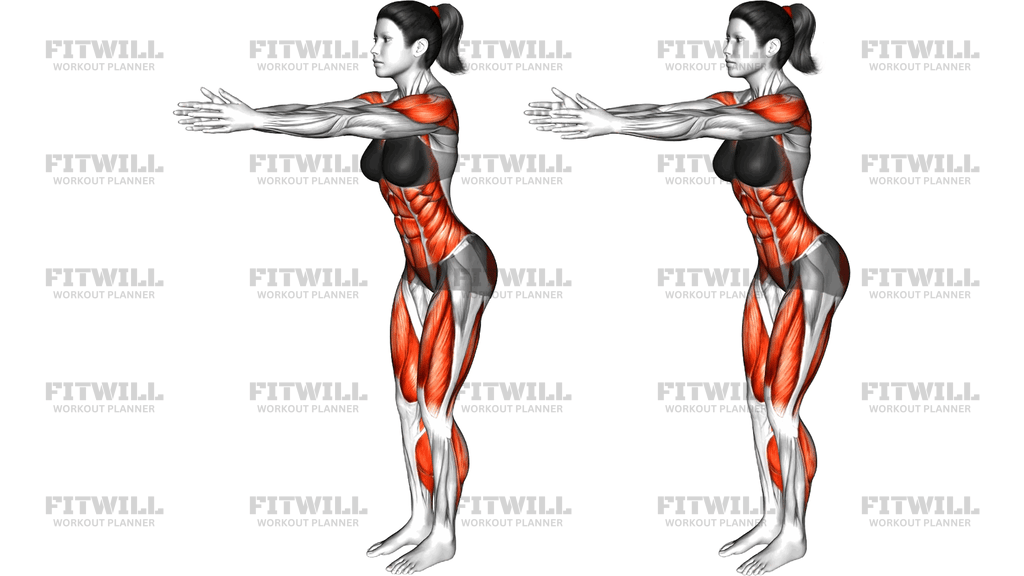
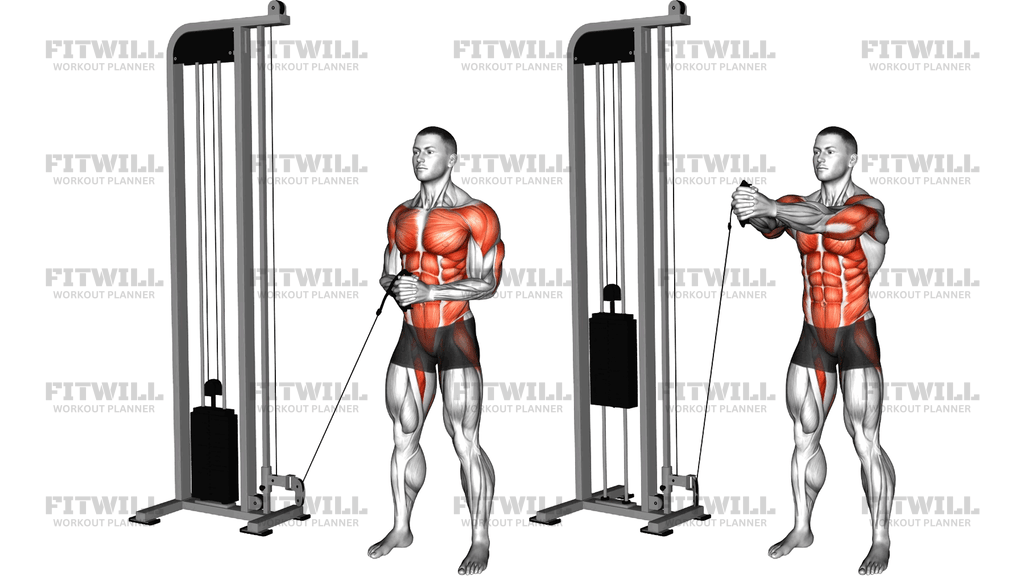
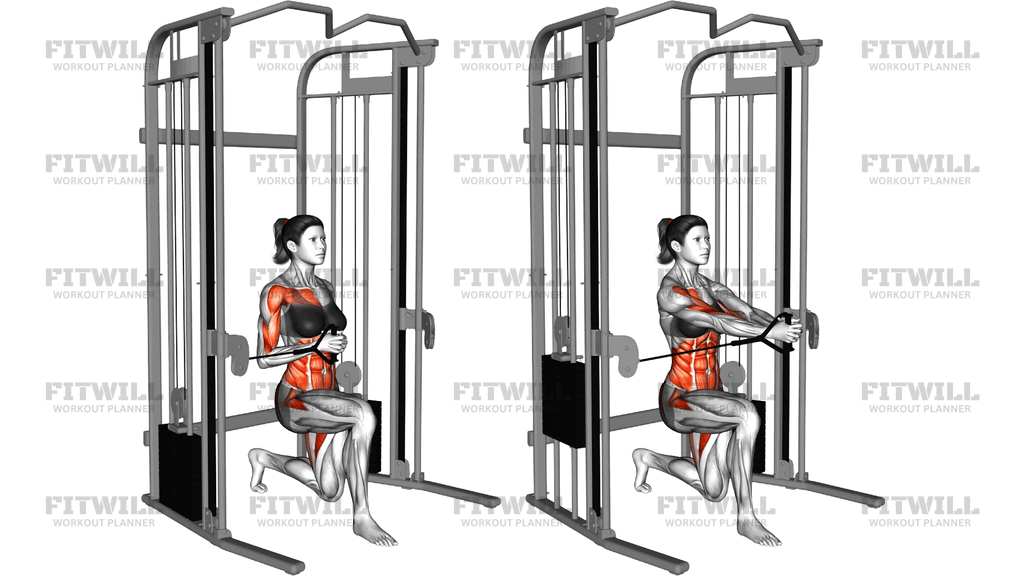
The Cable Half Kneeling Pallof Press is an anti-rotation core exercise performed at a cable machine. You set up in a half-kneeling stance with your side facing the pulley, hold a single handle at your chest, and press it straight out in front of you. As the cable tries to twist your torso back toward the machine, your job is to stay square and refuse to rotate. The training effect comes from that resistance to twisting, not from the press itself.
This exercise is useful for almost anyone. Lifters use it to protect the lower back during heavy squats and deadlifts, runners and field-sport athletes use it to transfer force between the hips and shoulders, and people recovering from back irritation often tolerate it well because the spine stays neutral and under no compressive load. The half-kneeling position adds a challenge for the front hip and glutes, which have to stabilize the pelvis while the core handles the cable.
Setup matters more here than in most core work. The pulley should sit at roughly chest height, and your body should be far enough from the stack that the cable stays taut at your chest. Both the distance from the machine and the half-kneeling stance determine how much leverage the cable has against you, so a sloppy setup turns a precise drill into an unclear one.
Execution is simple but demanding: brace your trunk, press the handle straight out until your arms are extended, pause while your torso stays facing forward, then bring the handle back to your chest under control. Keep your hips stacked, your front shin vertical, and your ribcage down over your pelvis. If your shoulders or hips begin to turn as you press, the weight is too heavy or your brace has faded.
Complete all repetitions on one side before switching so you can feel the difference between sides. Most people find one direction noticeably harder, which is normal and worth addressing with an extra set on the weaker side.
[ Workout Log & Planner ]
Put your next workout in Fitwill
Keep your plan and training log ready when you are.


Instructions
- Set a single handle on the cable pulley at chest height and select a light weight to start.
- Position yourself in a half-kneeling stance with your side facing the machine: front knee bent to about 90 degrees over the ankle, back knee resting on the floor directly under the back hip.
- Grip the handle with both hands and pull it to the center of your chest, stepping away from the machine until the cable is taut and pulling sideways toward the stack.
- Square your shoulders and hips so your torso faces straight ahead, perpendicular to the cable's line of pull.
- Brace your core as if preparing for a light push to the stomach, and keep your ribs stacked over your pelvis.
- Exhale and press the handle straight out from your chest until both arms are fully extended at mid-chest height, in line with the cable.
- Hold the extended position for two to three seconds without letting your torso, hips, or shoulders rotate toward the machine.
- Inhale and slowly draw the handle back to your chest, resisting the cable's pull the entire way in.
- Finish all repetitions on one side, then turn around and repeat with your opposite side toward the machine.
Tips & Tricks
- Start with a surprisingly light weight. The Pallof Press exposes rotation weakness quickly, and pressing with too much load is the most common reason people's torsos swing toward the machine.
- Check your back knee position. It should sit directly under your hip, not sprawled out to the side; a drifting back knee usually means the glutes are not doing their job of stabilizing the pelvis.
- Squeeze the glute of your down-side leg throughout the set. This locks the pelvis in place and makes it much harder for the cable to twist you.
- If your wrists bend backward at full extension, narrow your grip on the handle so both hands work together and the press stays straight.
- Avoid letting the handle drift up toward your face or down toward your lap. The press path is a straight line from your sternum, level with the cable.
- Do not rush the return. The cable yanks most lifters back in the last few reps, which is exactly when the anti-rotation benefit disappears.
- If your front knee caves inward as you press, narrow your stance slightly and consciously push the front knee out over the little toe.
- Match the weight so you can hold a clean two-second pause at full extension on your weaker side before adding load.
Frequently Asked Questions
What muscles does the Cable Half Kneeling Pallof Press work?
It primarily trains the deep core and obliques in their anti-rotation role, along with the transverse abdominis. The front hip's glutes stabilize the half-kneeling pelvis, and the shoulders and triceps press the handle out.
Why half-kneeling instead of standing for the Pallof Press?
The half-kneeling stance removes some balance demand but adds a hip-stability challenge, letting you focus on the trunk while still training the pelvis to stay level. It is a good intermediate step between standing and tall-kneeling or bottom-up variations.
How high should the cable pulley be set?
Set it at chest height so the handle presses straight out from your sternum in line with the cable. A pulley set too low or too high changes the rotation angle and makes the hold harder to control.
How do I know if the weight is too heavy?
If your shoulders or torso rotate toward the cable at full extension, or if the handle pulls you back in quickly on the return, reduce the load. You should be able to pause at arm's length without twisting.
Which knee should be forward?
Either, but most people put the knee farther from the machine forward so the cable crosses the body at the same angle on both sides. Whichever you choose, do equal work on both sides.
Is the Cable Half Kneeling Pallof Press suitable for beginners?
Yes, and it is often a beginner's first anti-rotation exercise. Start with very light weight, focus on keeping the torso square, and master the pause at full extension before progressing.
What can I use instead of a cable machine?
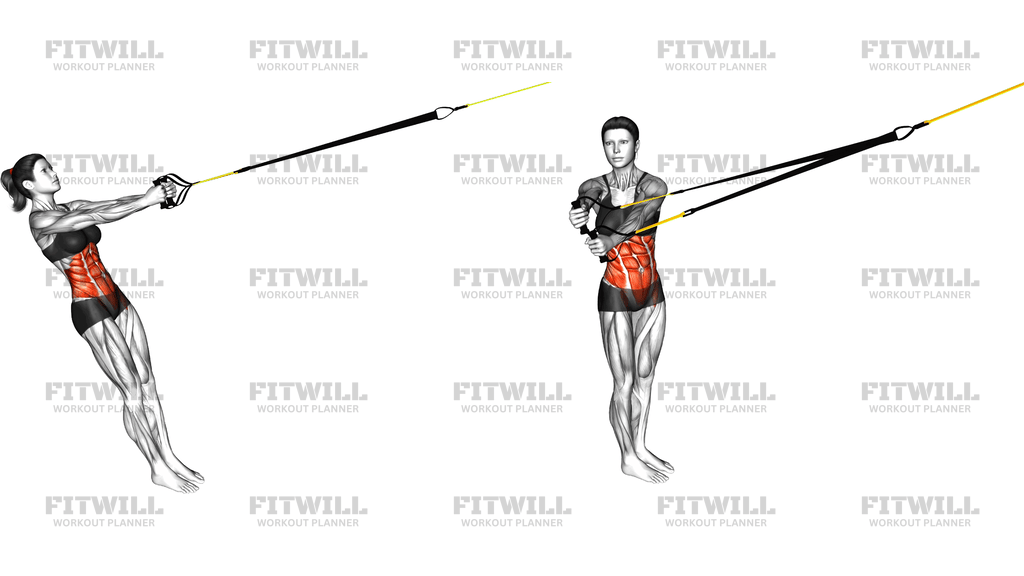
A resistance band anchored at chest height to a rack or sturdy post works well. Band tension increases as you press, so step further away to make it harder.
Why do I feel this in my front leg and hip?
The half-kneeling position requires the front leg and glutes to stabilize the pelvis against the sideways cable pull. Mild hip and quad engagement is expected; sharp knee discomfort means you should check that your front shin stays vertical and your weight is balanced.
How long should I hold the press at full extension?
Two to three seconds works for most people. Longer holds increase the anti-rotation demand, so if you extend the pause, lower the weight accordingly.
How many sets and reps should I do?
Two to three sets of 8 to 12 slow presses per side is a typical dose, either as a warm-up primer before lower-body lifting or as dedicated core work at the end of a session.