Cable Standing Wood Chopper
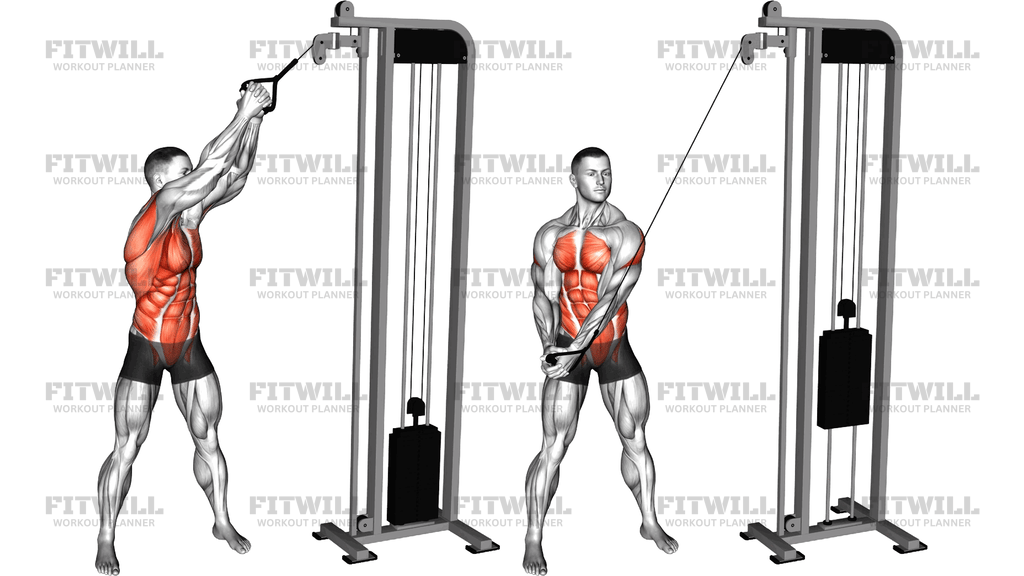
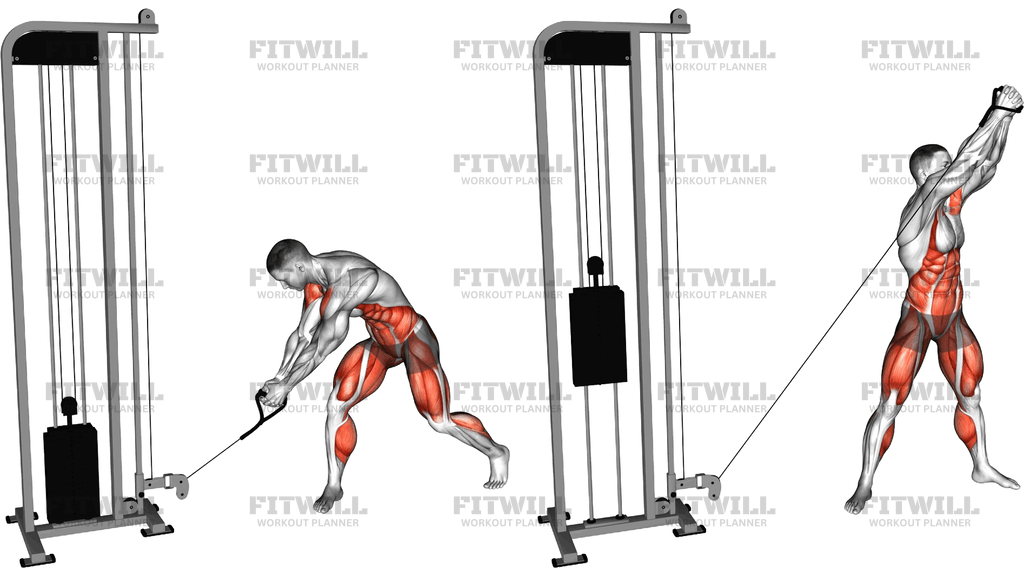
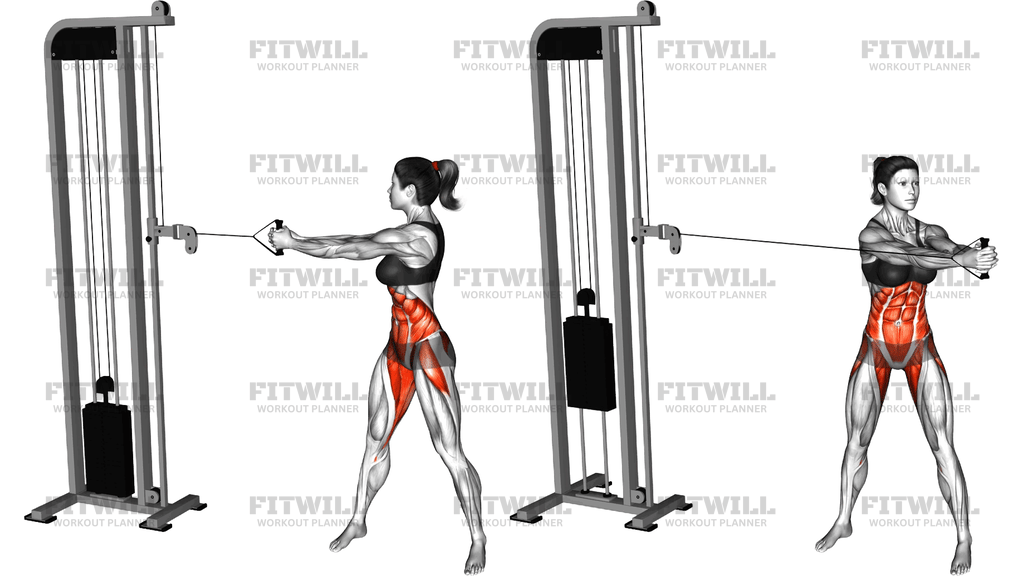
The Cable Standing Wood Chopper is a rotational core exercise performed with a cable machine set at roughly hip or waist height. You stand side-on to the pulley, hold a single handle with both hands, and pull it across your body in a wide, sweeping arc that mimics chopping wood or swinging an axe. Unlike crunches, which flex the spine, this movement trains rotation, which is how your core actually works in most sports and daily tasks.
The main workers are the obliques on the side you're rotating toward, supported by the deep core musculature that stabilizes your spine through the turn. Because you're standing, your legs and hips are involved too — the front leg absorbs the rotation while the glutes and thigh muscles keep your lower body anchored as the cable tries to pull you back toward the machine. That full-body bracing requirement is what makes this exercise far more than an ab move.
Setup matters more here than in most core work. The pulley height determines the arc of the chop, and standing too close or too far from the machine changes the resistance angle mid-rep. Position yourself far enough away that the cable stays taut at both ends of the range, with your feet roughly shoulder-width or slightly wider and your weight balanced so you can pivot rather than grind your knees.
To execute it well, rotate your torso toward the machine to reach the handle, then pull it across your body by turning from the trunk first — the arms stay long and act as levers rather than doing the pulling. Finish with the handle out on the opposite side, your chest facing away from the pulley, then control the cable back through the same path instead of letting it yank your shoulders around. The return is where most people lose the benefit; treat it as a loaded rotation in reverse, not a rest.
This exercise suits athletes in swinging or throwing sports, lifters who want a stronger brace for squats and deadlifts, and anyone whose core training has been stuck in flexion-only territory. It's also easy to progress: move the pulley higher for a high-to-low chop angle, adjust the weight stack in small jumps, or slow the tempo on the return. Start lighter than you think you need, because the cable keeps pulling after the hardest part of the rep is over.
A couple of practical safety points: keep the movement in your hips and mid-back rather than forcing extra range from your lower spine, and never sacrifice torso rotation for a heavier stack by turning the exercise into an arm pull. If your knees collapse inward or your heels lift as you chop, lighten the load and reset your stance before continuing.
[ Workout Log & Planner ]
Put your next workout in Fitwill
Keep your plan and training log ready when you are.


Instructions
- Set the pulley of the cable machine to approximately hip or waist height and attach a single handle.
- Stand side-on to the machine, about an arm's length away, with your feet shoulder-width to slightly wider and your outside shoulder facing the pulley.
- Grip the handle with both hands, interlocking your fingers or stacking one hand over the other, and step away until the cable is taut with your torso rotated toward the machine.
- Soften your knees slightly, brace your abdominals, and keep your chest up with your shoulders pulled down away from your ears.
- Pull the handle across the front of your body in a sweeping arc by rotating from your trunk and hips, keeping your arms nearly straight throughout.
- Finish the rep with the handle out to your far side, chest now facing away from the machine, and squeeze your obliques at the end of the turn.
- Pause briefly, then slowly rotate back toward the machine under control, resisting the cable's pull instead of letting it spin you back.
- Exhale as you chop across your body and inhale as you return to the starting rotation.
- Complete all repetitions on one side, then switch your stance and repeat facing the opposite direction.
- Release the handle only when the weight stack is settled and your torso is turned back toward the machine.
Tips & Tricks
- Most people pull with their arms, which turns the exercise into a cable press. Think of your arms as steel rods and let the rotation of your ribcage move the handle.
- If your lower back aches during the set, you're likely over-rotating at the lumbar spine. Shorten the arc slightly and drive the turn from your hips and mid-back instead.
- Standing too close to the machine slackens the cable at the finish and robs you of tension. Adjust your distance so the line stays taut at both ends of the rep.
- Watch your lead knee: under heavy load it tends to cave inward as you rotate. Keep it tracking over your toes and let your hips pivot rather than your knee twist.
- The eccentric return is where obliques get challenged most. Take two to three seconds coming back instead of letting the stack slam down.
- Keep both feet flat and weight spread across your whole foot; lifting the back heel usually means the weight is too heavy for your trunk to control.
- Raising the pulley to chest or shoulder height changes this into a high-to-low chop angle, a useful variation once you own the horizontal version.
- Grip the handle firmly but don't squeeze so hard that your forearms fatigue before your core does.
- Breathe out forcefully on the chop to reinforce your brace — holding your breath through a full rotation set often leads to a sloppy return.
Frequently Asked Questions
What muscles does the Cable Standing Wood Chopper work?
The obliques are the primary movers, with the deep core stabilizing your spine through the rotation. Your glutes and quadriceps also work hard to keep your lower body anchored against the cable's pull.
How high should I set the pulley for the Cable Standing Wood Chopper?
Set it at roughly hip or waist height for the horizontal version shown in the standard setup. Raising it to chest or shoulder height turns the same exercise into a high-to-low diagonal chop once you've mastered the base movement.
Is the Cable Standing Wood Chopper good for beginners?
Yes, as long as the load is light enough to control the return phase. Beginners should master rotating from the trunk with straight arms before adding significant weight.
Why do my arms fatigue before my abs on this exercise?
Your arms are pulling instead of staying extended as levers. Keep them long and locked out, and initiate each rep by turning your ribcage toward the far side rather than bending your elbows.
Can I substitute the Cable Standing Wood Chopper with a resistance band?
Yes — anchor a band at hip height and perform the same side-on rotation. The band offers less consistent tension at the end of the range, so reduce reps slightly or stand farther out to keep resistance through the whole arc.
Should my feet move during the chop?
Your feet stay planted, but your hips should rotate freely over them. If your heels lift or your knees twist inward, the weight is too heavy or your stance is too narrow.
How many sets and reps should I do?
Two to four sets of 8 to 12 reps per side works well for strength and control. Because the return phase is loaded, prioritize slow tempo over high rep counts.
Is the Cable Standing Wood Chopper safe for my lower back?
When performed with a braced core and rotation coming from the hips and mid-back, it's a well-tolerated core exercise. Stop short of forcing maximum spinal twist, and reduce the load if you feel any strain in your lumbar area.
How is this different from a dumbbell wood chop?
The cable provides constant tension in one fixed direction, including during the return, whereas a dumbbell only loads you against gravity. That makes the cable version better for training rotation under continuous resistance.