Resistance Band Lying Supine Hip Abduction
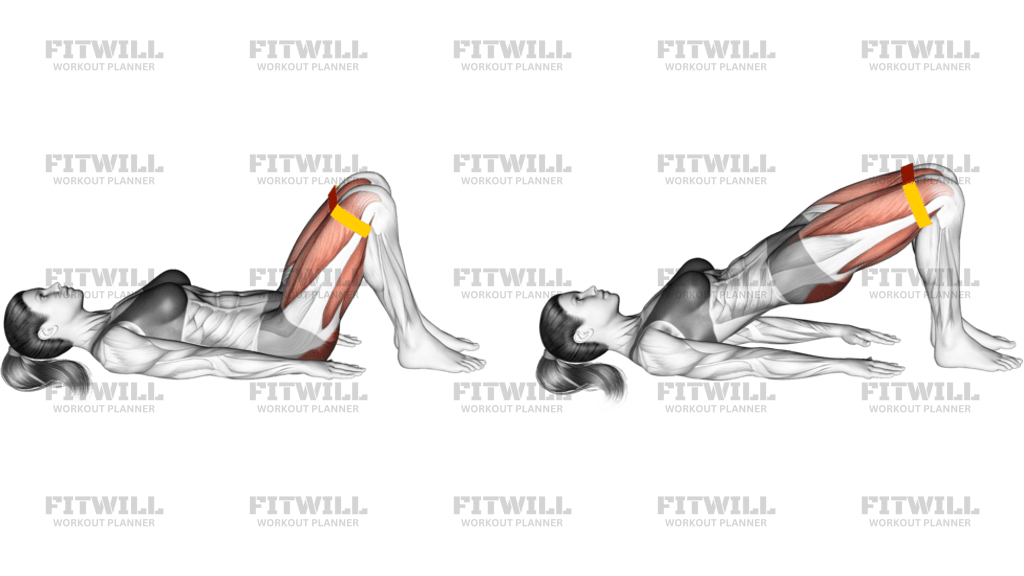
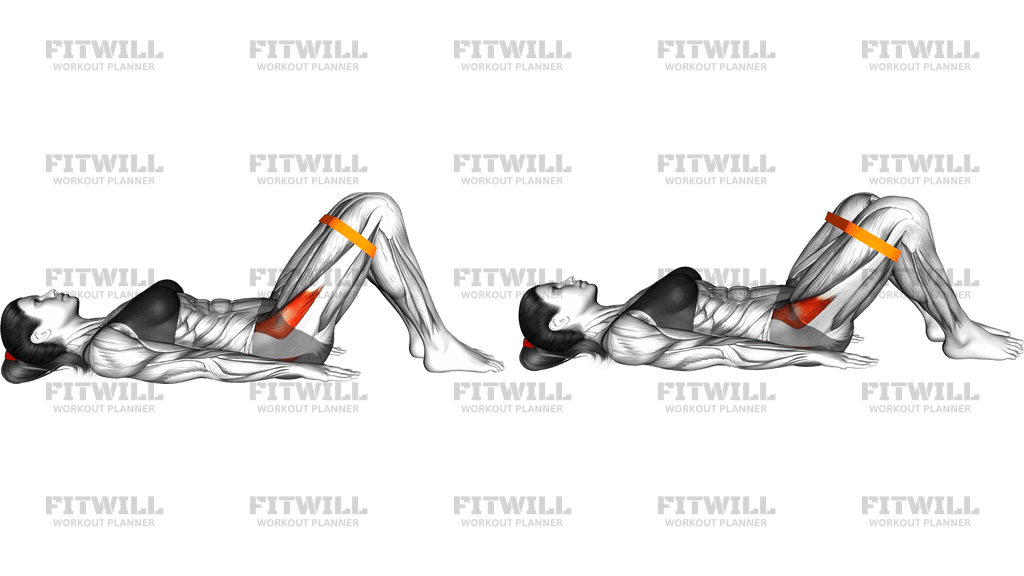
The Resistance Band Lying Supine Hip Abduction is a floor-based exercise that targets the small but important muscles on the outside of your hips. You lie on your back with your knees bent and feet flat on the floor, a looped resistance band placed around both thighs just above the knees. From there, you press your knees outward against the band's pull, then control them back toward each other without letting the band snap them in.
Because you are lying down, your spine and hip flexors get a break, and there is no need to stabilize your whole body upright. That makes this one of the easiest hip abduction variations to learn and one of the safest to load. The main work is done by the gluteus medius and gluteus minimus on the side of each hip, with the upper glutes and tensor fasciae latae assisting. Your core stays quietly engaged to keep your pelvis from tilting as your legs move.
This movement is especially useful for people who sit a lot, since prolonged sitting tends to leave the lateral hip muscles underworked while the front of the hips gets tight. Runners, lifters, and anyone working on knee health also benefit, because stronger hip abductors help keep the knees tracking over the feet during squats, lunges, and single-leg activities. It is a common warm-up drill before lower body training and a popular rehab-style exercise for building hip stability from a non-weight-bearing position.
Setup details matter more than they first appear. The band position just above the knees creates the most comfortable leverage for most people, and keeping your feet flat and close together forces your hips, not your lower back, to do the moving. If your feet drift apart or your lower back arches as you press out, the exercise loses much of its value.
To perform it well, exhale as you press your knees apart against the band, pause briefly at your widest point, then take two to three seconds to bring your knees back together with control. The return is where most people rush, and slowing it down is what turns a simple band drill into real strength work for the outer hips.
You can use this exercise on its own as a hip activation routine, as a warm-up before squats or deadlifts, or as a finisher after glute training. Because the resistance is light and joint stress is low, it suits beginners, older adults, and experienced lifters alike, and it can be done anywhere you have floor space and a loop band.
[ Workout Log & Planner ]
Put your next workout in Fitwill
Keep your plan and training log ready when you are.


Instructions
- Lie on your back on an exercise mat with your knees bent and your feet flat on the floor, about hip-width apart.
- Loop a resistance band around both thighs just above your knees and let the band rest with light tension when your knees are together.
- Rest your arms at your sides with palms down, and relax your shoulders and head against the mat.
- Brace your core gently and press your lower back lightly toward the floor so your pelvis stays level.
- Exhale and press both knees outward against the band, keeping your feet flat and glued to the floor.
- Open your knees until you feel steady tension across the outer hips, stopping before your pelvis starts to roll or your knees twist inward.
- Pause for one to two seconds at the widest point, feeling the contraction on the outside of each hip.
- Inhale and slowly bring your knees back toward each other over two to three seconds, resisting the band's pull instead of letting it collapse your knees in.
- Stop just before the band goes slack, keeping a small amount of tension, then begin the next rep.
- Complete your set, then slide the band down off your thighs before standing up.
Tips & Tricks
- The most common mistake is letting the feet roll outward or lift as the knees press apart. Your feet are the anchor, so keep them flat and firmly planted throughout every rep.
- If your lower back arches at the top of the movement, you are opening your knees too wide. Reduce the range until your pelvis stays neutral and your back stays flat against the mat.
- Do not let the band snap your knees together on the way back. The lowering phase builds just as much strength as the press, so take a deliberate two to three seconds to close.
- A band placed right at the kneecap can irritate the joint. Position it a few centimeters above the knees where it sits comfortably on the lower thigh.
- If the band feels too easy, either use a thicker band or add a small pause of three to five seconds at the widest point instead of jumping straight to a very heavy band.
- Keep the movement coming from the hip joints. If you feel your inner thighs or knees doing the work, narrow your range and focus on driving the knees straight out to the sides.
- Breathe steadily rather than holding your breath, especially at the widest point where the band tension is highest.
- Because this is a small muscle group, higher reps of 15 to 25 with a moderate band usually work better than low reps with maximum tension.
Frequently Asked Questions
Which muscles does the Resistance Band Lying Supine Hip Abduction work?
The primary muscles are the gluteus medius and gluteus minimus on the outside of the hips, with the upper glutes and tensor fasciae latae assisting. Your core also works lightly to keep the pelvis stable.
Why should my feet stay flat on the floor during this exercise?
Flat, planted feet anchor the lower legs so the movement comes purely from the hips. If your feet slide or roll outward, they contribute to the motion and your outer hip muscles get less work.
Is the Resistance Band Lying Supine Hip Abduction good for beginners?
Yes, it is one of the most beginner-friendly hip exercises because the floor supports your spine and the band provides gentle, adjustable resistance. Start with a light band and 12 to 15 reps to learn the feel.
Should I place the band above or below my knees?
Just above the knees is the standard position and gives the best leverage and comfort for most people. Below the knees increases strain on the knee joints and makes it harder to keep your feet planted.
Why do my knees drift inward when I lower them back down?
That happens when you relax on the return and let the band pull your legs together. Slow the closing phase down and actively resist the band so your outer hips stay engaged through the whole rep.
Can I do this exercise before squats or deadlifts?
Absolutely. It is a popular warm-up because it activates the gluteus medius, which helps your knees track properly during lower body lifts. Two sets of 15 reps with a light band work well.
What can I substitute if I do not have a resistance band?
You can perform the same knee-opening motion without a band, though the resistance will be minimal, or do standing or side-lying hip abduction using only your body weight. A mini band is inexpensive and worth having for this movement.
How many reps and sets should I do?
For hip activation and endurance, 2 to 3 sets of 15 to 25 reps with a moderate band is a good target. The lateral hip muscles respond better to higher reps and controlled tempo than to heavy loads.
Is it safe if I have knee or hip sensitivity?
The lying position keeps weight off the joints, which makes this gentler than standing hip work, but you should still use a light band and a comfortable range. Stop if you feel sharp pain in either joint and consult a professional if it persists.