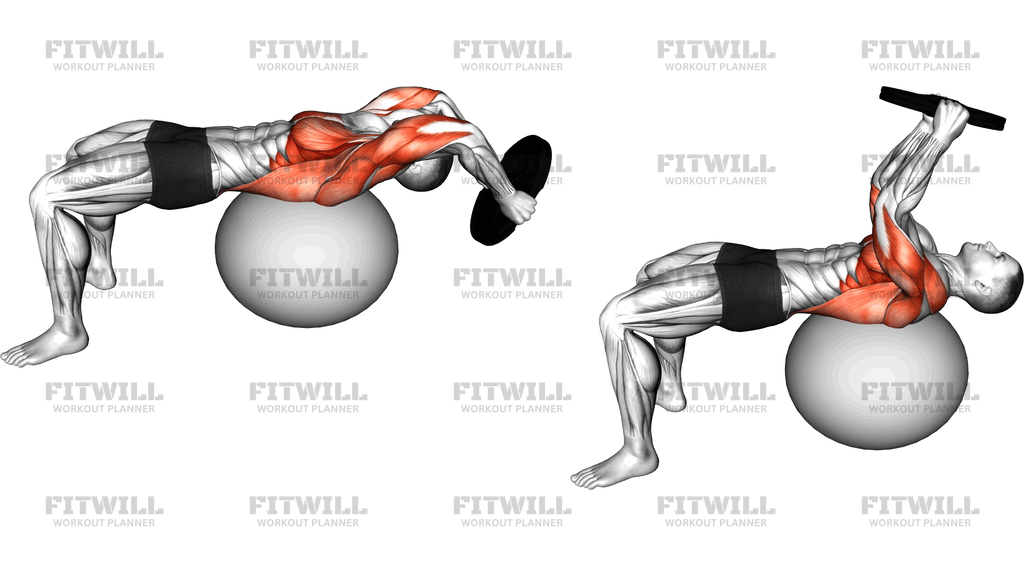
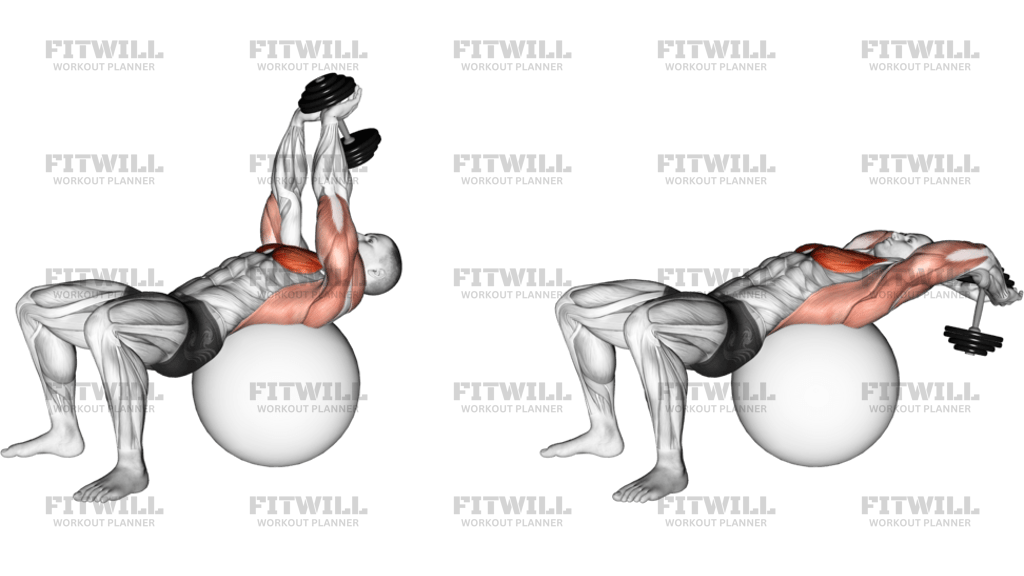
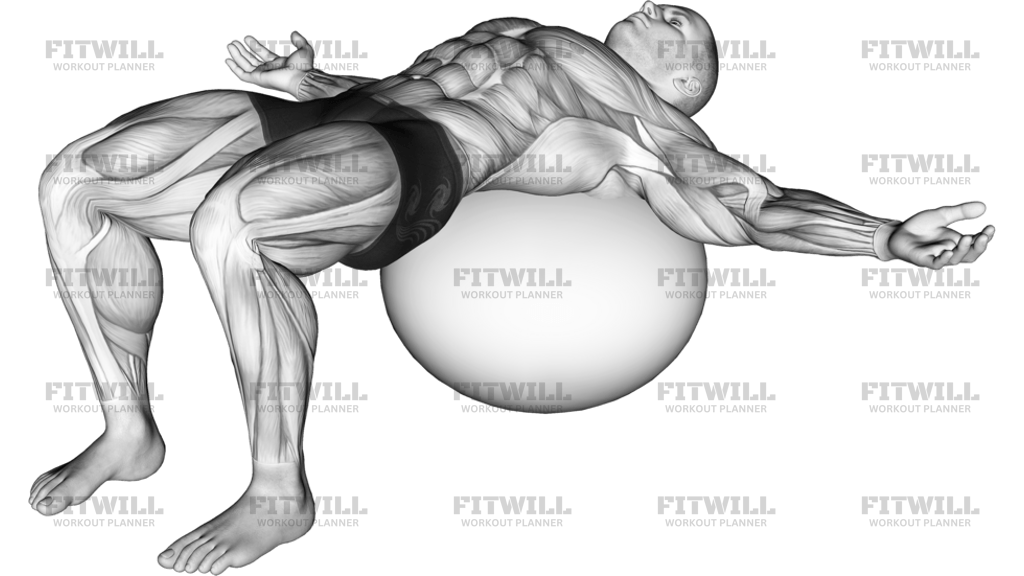
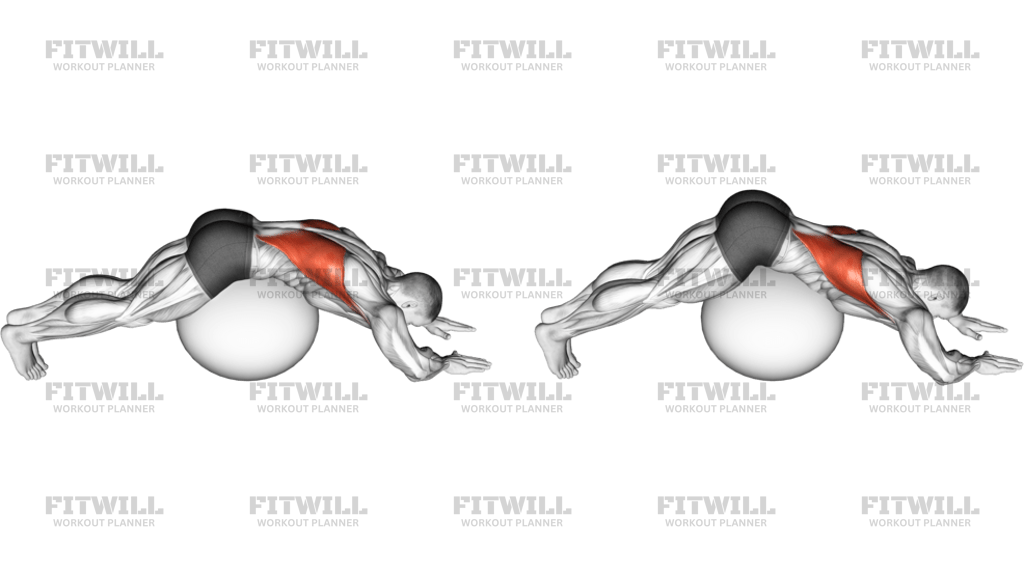
Exercise Ball Kneeling Prayer Lat Stretch
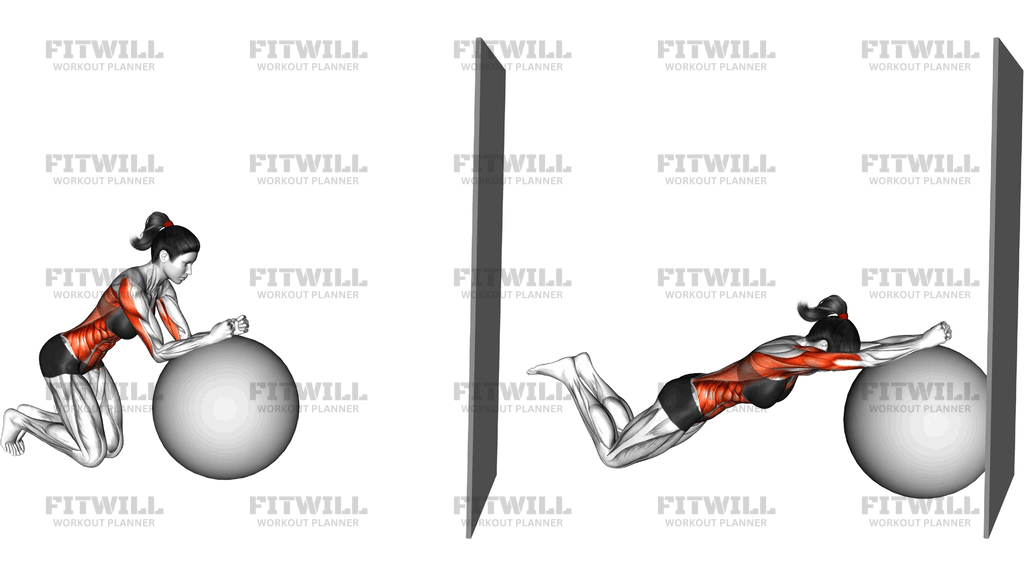
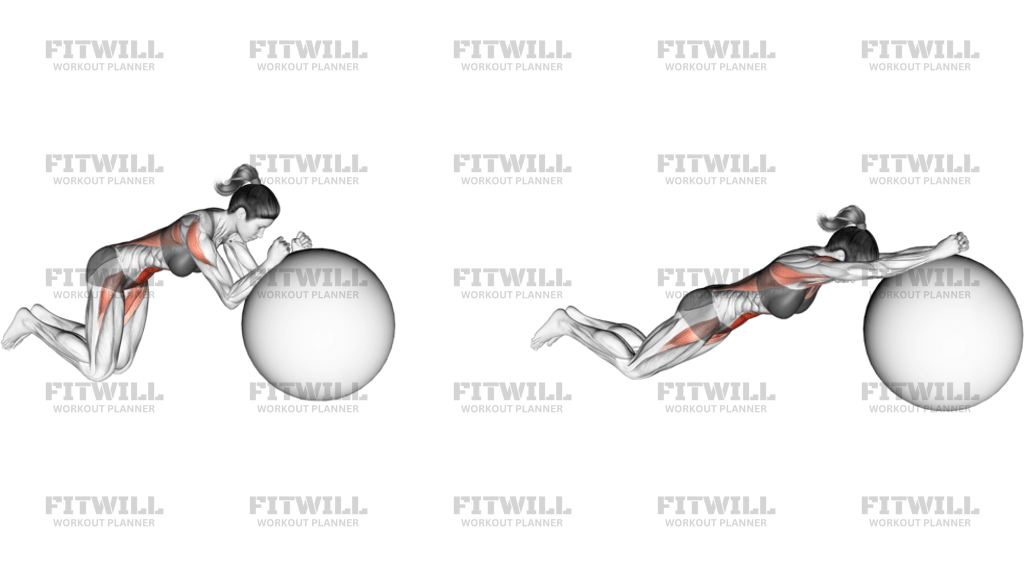
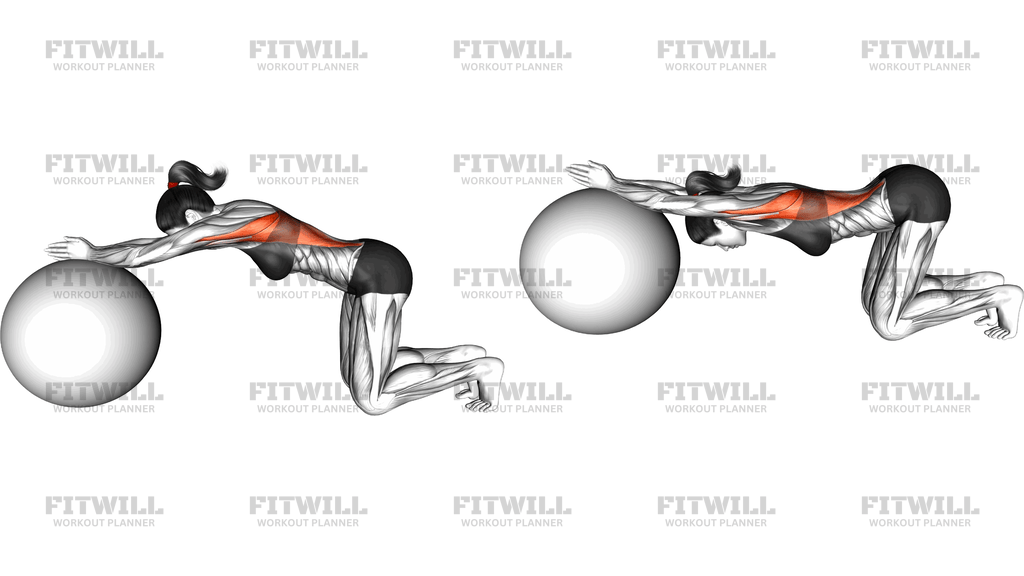
The Exercise Ball Kneeling Prayer Lat Stretch is a kneeling mobility drill that uses a stability ball to lengthen the lats through a long, overhead reach. You kneel on the floor with your forearms and hands resting on top of the ball, then let the ball roll forward as your chest sinks toward the floor and your hips stay back over your heels. The ball supports your upper body weight, so you can relax into the stretch instead of holding yourself up, which is what separates this version from a standard floor-based lat stretch.
This movement is especially useful for anyone whose lats feel chronically tight: lifters who pull frequently with heavy rows and pulldowns, swimmers and climbers, and people who spend long hours at a desk with rounded shoulders. Because the lats attach from the upper arm across the mid and lower back into the pelvis, tightness here limits overhead reach and can pull you into a slouched posture. Releasing them regularly makes overhead pressing, pulling, and even simple reaching feel smoother.
The kneeling position does more than set the angle. Keeping your hips stacked over your heels anchors the back of the chain, so when the ball rolls forward, the length has to come from the lats and mid-back rather than from your pelvis drifting backward. The stability ball also lets you fine-tune intensity in small increments: roll an inch further to deepen the stretch, an inch back to ease off, which is hard to do against a wall or bench.
To get the most from the stretch, think about letting your chest drop while your arms stay relaxed and long, palms resting on the ball rather than gripping it. Your head should hang between your arms rather than craning up to look forward. Breathe slowly and let each exhale soften the ribcage a little closer toward the floor. The stretch should be felt along the sides of the back and into the armpits, never as pinching in the shoulders or lower back.
Use this drill as part of a warm-up before upper body training, between pulling sessions, or in an evening cooldown. Two to four rounds of twenty to thirty seconds is enough for most people. If kneeling is uncomfortable on your knees, fold a mat under them, and if the ball tends to slide, perform the stretch on a non-slip surface.
[ Workout Log & Planner ]
Put your next workout in Fitwill
Keep your plan and training log ready when you are.


Instructions
- Kneel on the floor facing a stability ball, with your knees roughly hip-width apart and your hips sitting back toward your heels. Place a folded mat under your knees if the floor is hard.
- Lean forward and rest both forearms and hands on top of the ball, positioned slightly past the center so the ball is stable and will not roll away from you.
- Let your head drop between your arms so your neck stays long and relaxed, eyes looking down at the floor.
- Keeping your hips pressed back over your heels, slowly allow the ball to roll forward as your chest sinks down between your arms.
- Continue rolling until you feel a solid stretch along the sides of your back and into your armpits, with your arms extended and your upper back fairly flat rather than sagging.
- Hold this end position for twenty to thirty seconds, breathing slowly and letting your chest ease closer to the floor with each exhale.
- To come out, gently walk the ball back toward your knees by pressing lightly through your forearms, or crawl your knees forward until your torso rises upright.
- Reset your kneeling position, then repeat for two to four total holds, adjusting how far the ball rolls to fine-tune the intensity.
Tips & Tricks
- If you feel the stretch only in your shoulders and not along the sides of your back, widen your hands slightly on the ball and turn your palms to face each other a touch; this biases the lat line.
- A common mistake is letting the hips drift backward as the ball rolls forward, which kills the stretch. Pin your hips over your heels and let the mid-body do the lengthening.
- Do not grip the ball hard with your hands. A white-knuckle grip tenses the forearms and front of the shoulders and stops you from relaxing into the stretch.
- Keep the ball inflated firmly. A soft ball collapses under your weight, you sink too far, and the stretch turns into a shoulder compression.
- Avoid letting the lower back arch and the belly drop toward the floor. Brace lightly through the trunk so the stretch targets the lats instead of loading the lumbar spine.
- Ease into the end range over several breaths rather than forcing the ball forward quickly; a fast roll forward often triggers a protective tightening in the lats.
- If your knees complain in the kneeling position, tuck a cushion between your calves and thighs or place a pad under them before you set your forearms on the ball.
- To add gentle rotation for the lats on one side, walk both hands slightly to the left or right on the ball and hold; the side you lean away from will feel a longer stretch.
Frequently Asked Questions
Which muscles does the Exercise Ball Kneeling Prayer Lat Stretch target?
The primary target is the lats, with supporting lengthening through the teres major, rear shoulders, and the muscles of the mid and upper back. You may also feel it slightly through the chest as the arms reach overhead.
Is this stretch suitable for beginners?
Yes. The ball supports your upper body, so you control the depth entirely by how far it rolls forward. Beginners can start with a shallow roll and a shorter hold of ten to fifteen seconds.
How far forward should the stability ball roll?
Far enough that you feel a clear stretch along the sides of your back and into your armpits, but not so far that your shoulders pinch or your lower back sags. For most people the chest ends up just above floor level with arms extended.
Why kneel with hips on the heels instead of standing and leaning on the ball?
Anchoring the hips over your heels fixes the back end of the lat stretch. If your pelvis were free to drift, your body would simply move backward and the lats would never reach a long position.
What should I do if I feel pinching in the front of my shoulders?
Roll the ball back slightly to shorten the range, widen your hands, and make sure your palms rest on the ball rather than pressing hard. If pinching continues, shorten the hold and build range gradually over weeks.
Can I substitute this if I do not have a stability ball?
A similar stretch can be done kneeling with forearms on a bench or sliding your hands along a low-friction floor. The ball version is gentler because it supports your weight and lets you adjust depth in tiny increments.
How long should I hold the Exercise Ball Kneeling Prayer Lat Stretch?
Twenty to thirty seconds per hold works well, repeated two to four times. If you use it as a cooldown, longer holds of forty to sixty seconds with relaxed breathing can help you settle deeper.
Should I do this stretch before or after training?
It works in both slots. Before upper body sessions, keep holds short and shallow to open up overhead range; after pulling-heavy workouts, use longer, relaxed holds as part of your cooldown.
My knees hurt when I kneel. What can I change?
Place a folded mat or cushion under your knees, and consider tucking a small pad between your calves and thighs to reduce knee bend. The stretch itself should come from the back, so discomfort in the knees means the setup needs adjusting.