Weighted Plate Pullover On Stability Ball
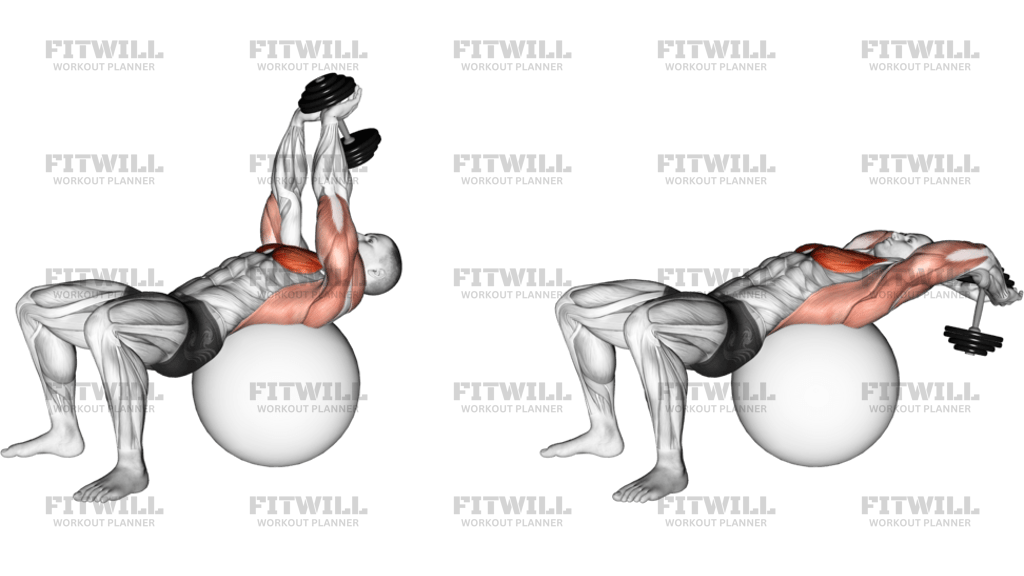
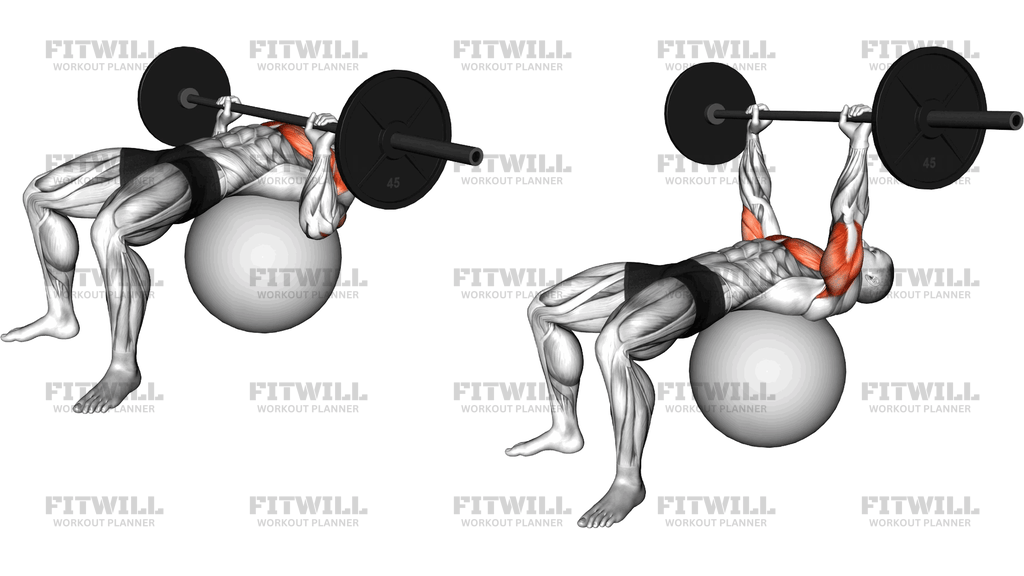
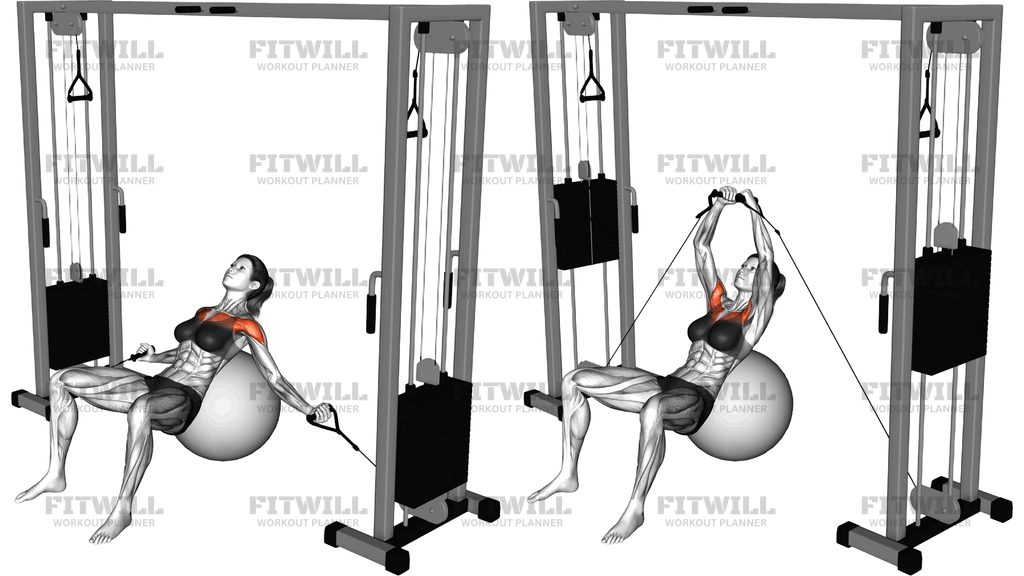
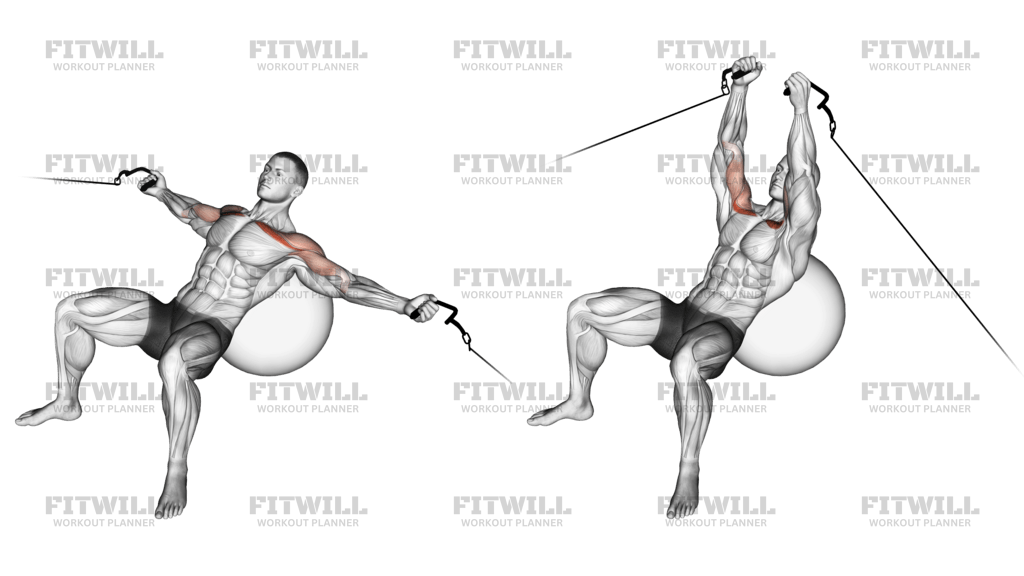
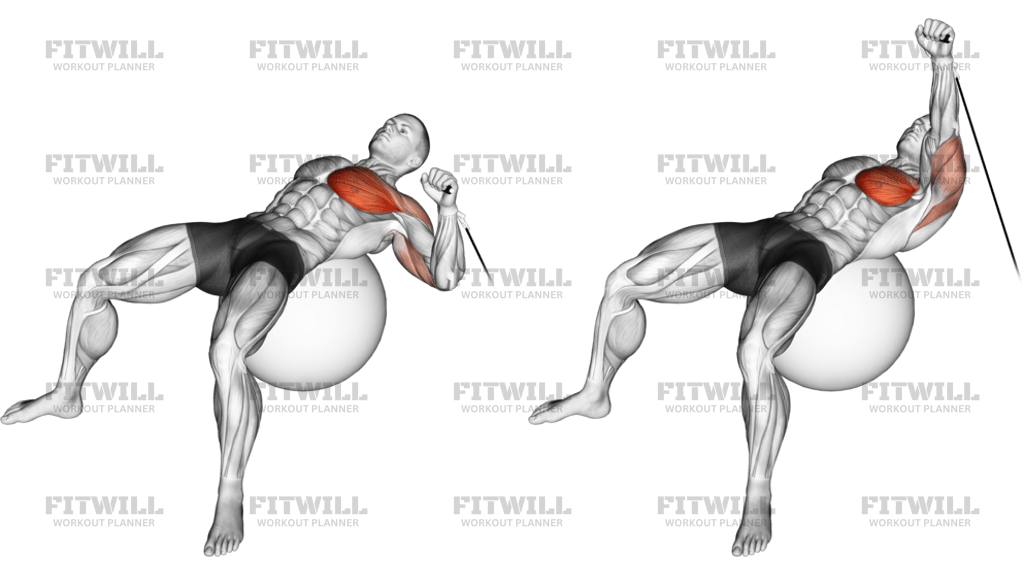
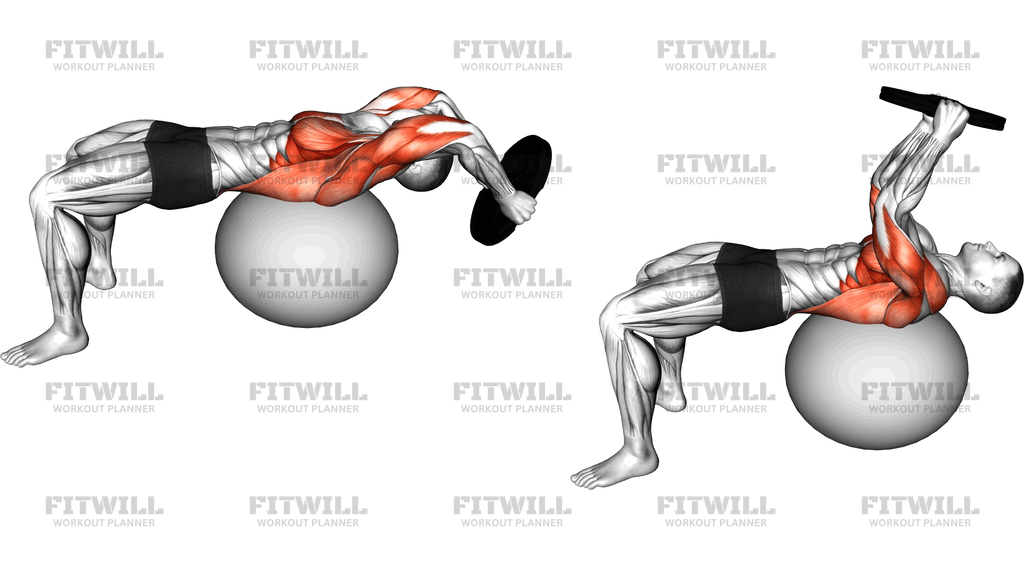
Weighted Plate Pullover On Stability Ball is a pullover performed with your upper back supported on a stability ball instead of a bench, holding a single weight plate in both hands. You start seated on the ball, walk your feet forward, and roll down until your shoulders and upper back rest on top of the ball with your torso forming a roughly horizontal bridge. From there, you press the plate toward the ceiling with soft elbows, lower it in an arc back over your head until you feel a stretch across the chest and lats, then pull it back over the face to the top position.
The main work comes from the pectoralis major, which is highlighted through both the stretch behind the head and the pull back overhead, with meaningful contributions from the lats and the long head of the triceps as they assist the arm path. Because the ball replaces a stable bench, your entire trunk has to earn its place: the glutes stay engaged, the hips stay lifted, and the deep core works continuously to stop you from rotating or sagging as the weight travels overhead. That stabilizing demand is what separates this version from a standard bench pullover.
Setup matters more here than in most pullover variations. The ball should be positioned under your upper back and shoulder blades, not your lower back, so your head can drop slightly off the top of the ball and your torso stays level. Your feet are planted flat and slightly wider than hip width, knees bent around ninety degrees. If the ball sits too low toward your hips, the bridge position collapses; if it sits too high toward your neck, the overhead arc becomes uncomfortable and your balance suffers.
To execute it well, keep the plate held firmly in both hands at its edges, elbows slightly bent and fixed at that angle throughout. Lower on a slow count until the plate travels behind and below head level, then exhale and pull the plate back up in the same smooth arc, finishing with the plate stacked directly over your chest. The arc should feel like the plate is drawing a curve around your head, not a straight press and not a swing.
This movement suits lifters who want a loaded chest and lat stretch with extra core and balance demand, and it works well as a finishing exercise after pressing work or as a second exercise on a pull-focused day. Because the plate allows small load jumps and the ball limits how heavy you can safely go, it is best treated as a moderate-weight, higher-rep movement rather than a maximal strength lift. Anyone with balance limitations or no experience on a stability ball should learn the arc with body weight or a very light plate first.
[ Workout Log & Planner ]
Put your next workout in Fitwill
Keep your plan and training log ready when you are.


Instructions
- Sit on the center of a stability ball holding a weight plate by its edges with both hands, fingers wrapped around the rim rather than hooked under the flat face.
- Walk your feet forward and roll down until only your upper back and shoulder blades rest on the ball, head relaxed and slightly off the top, knees bent about ninety degrees, feet flat and a little wider than hip width.
- Lift your hips so your torso is roughly parallel to the floor and your lower back is neutral, then squeeze your glutes to hold that bridge position.
- Press the plate straight up over your chest with elbows slightly bent, and lock in that elbow angle for the whole set.
- Inhale and lower the plate in a smooth arc back over your face, letting the arms travel until the plate is behind your head and you feel a stretch across your chest and lats.
- Exhale and pull the plate back along the same arc until it finishes stacked directly over your chest, keeping the hips level and the ball still underneath you.
- Keep the movement slow enough that the plate never gains momentum; the arms should sweep, not swing.
- Complete the set, then carefully walk the feet back in and roll the body up to sitting before standing off the ball with the plate held close to your chest.
Tips & Tricks
- Position the ball under the shoulder blades, not the lower back. If your hips drop or your lower back arches hard, roll back until the contact point moves up an inch or two.
- Widen your foot stance if the ball shifts side to side. The plate traveling overhead on a round surface creates side-to-side forces a narrow stance cannot absorb.
- A common mistake is turning the pullover into a triceps extension by bending and straightening the elbows. Fix your elbow bend at the top and keep it constant so the arc stays on the shoulders.
- If the plate drifts too far behind the head, your hips usually sink first. Re-squeeze the glutes and slightly reduce the depth of the arc rather than letting the lower back take over.
- Keep the neck loose and let the head rest back on or just past the ball. Craning forward to watch the plate pulls tension out of the chest and strains the neck.
- Hold the plate by its rim with a firm double-hand grip. A slack grip on a smooth plate is the main safety risk of this setup, especially at the overhead end.
- Start lighter than you think you need. The instability of the ball changes the demand completely compared to a bench pullover, and control is the limiting factor, not strength.
- Pause for a beat at the top of each rep with the plate over the chest. This kills momentum and makes the pulling half of the arc do real work.
- If you lose your bridge mid-set, stop the set and reset rather than fighting through. Compensating with the lower back under load is not worth finishing two extra reps.
Frequently Asked Questions
What muscles does the Weighted Plate Pullover On Stability Ball work?
The chest is the primary mover, with the lats and the long head of the triceps assisting the overhead arc. Your glutes, deep core, and the stabilizers around the trunk work isometrically the entire time to keep you braced on the ball.
Why use a stability ball instead of a flat bench for pullovers?
The ball places your upper back on a curved, unstable surface, so the trunk and hip stabilizers must stay active while the weight moves overhead. It also lets you set your torso angle by rolling, which some lifters find more comfortable on the shoulders.
Where exactly should the ball sit under my body?
It should support your upper back and shoulder blades, with your head just off the top and your lower back free and neutral. If the ball is under your hips, the bridge collapses; if it is under your neck, the arc feels jammed and unstable.
How should I hold the weight plate?
Grip the rim of the plate with both hands, one on each side, fingers wrapped securely around the edge. Keep the elbows slightly bent and hold that same bend through every rep so the shoulders drive the arc instead of the elbows.
Is this exercise safe for beginners?
Yes, if you start with no weight or a very light plate and first practice rolling into the bridge position and holding it on the ball. Once you can keep your hips level for a full set without wobbling, add load gradually.
How heavy should the plate be?
Treat this as a moderate-load movement. The ball caps how much weight you can safely control overhead, so pick a plate that lets you complete all reps with a slow arc and a still torso, usually in the ten to fifteen rep range.
Why do my hips drop when the plate goes behind my head?
The weight pulling overhead lengthens your front side, and if the glutes relax the hips sink and the lower back takes the stress. Squeeze the glutes deliberately, brace the trunk, and shorten the arc slightly until you can keep the bridge solid.
What can I use if I do not have a weight plate?
A single dumbbell held vertically by the head with both hands works well, or a medicine ball if the load is light enough to grip safely. Without any weight, the movement still trains the arc and the ball stability.
Should I feel this in my triceps?
Some triceps involvement is normal because the long head crosses the shoulder and assists the pull, but the burn should center on the chest and lats. If the triceps dominate, your elbows are bending and straightening instead of holding a fixed angle.
How do I get off the ball safely at the end of a set?
Bring the plate back over your chest, hold it against your body, then walk your feet toward the ball and roll your torso up to a seated position before standing. Never stand up laterally off the ball while holding weight overhead.