Standing Supraescapular Nerve Mobilization
The Standing Supraescapular Nerve Mobilization is a gentle nerve glide performed standing, designed to move the suprascapular nerve through its pathway at the side of the neck and across the top of the shoulder blade. Unlike a traditional muscle stretch, this is a mobility drill for nervous tissue: the arm moves from a bent-elbow position with the fist near the shoulder out to the side as the elbow straightens, while the head tilts toward the working arm. This combination of shoulder and head motion creates a sliding effect on the nerve rather than a hard stretch, which is exactly what you want when the goal is nerve health and comfort.
This movement is most useful for people who feel tightness, ache, or referred discomfort around the top of the shoulder and upper back — areas served by the suprascapular nerve. Desk workers with rounded shoulders, overhead athletes, swimmers, throwers, and lifters who spend a lot of time pressing or carrying often accumulate tension in this region. Physical therapists commonly use suprascapular nerve glides as part of rehab programs for shoulder irritation, because the nerve can become sensitized when surrounding muscles and fascia are chronically tight.
The setup matters more than it looks. Because the suprascapular nerve crosses both the neck and the shoulder, the position of your head directly changes the tension on it. Tilting the head toward the moving arm as the elbow straightens offsets the lengthening of the arm, letting the nerve glide back and forth instead of being pulled taut. If you skip the head position or rush the arm motion, you turn a smooth nerve glide into an aggressive stretch, which can provoke symptoms rather than relieve them.
To execute it well, stay tall through the spine, keep the shoulder relaxed and down away from the ear, and move at a slow, even pace — think two to three seconds out, two to three seconds back. The range should be comfortable from start to finish. You are chasing smooth, symptom-free motion, not an end-range pull. The arm path follows a simple arc: elbow bent with the fist near the shoulder, then the elbow straightens as the arm swings out to the side to roughly shoulder height, then everything reverses to the start.
Use this drill as a warm-up before upper-body training, as a movement break during long desk sessions, or as part of a shoulder rehab or maintenance routine alongside scapular and rotator cuff work. Keep the intensity low, especially in the first week or two. If you notice tingling, pins and needles, or a sharp electrical sensation, that is a signal to reduce the range or rest — nerve tissue responds best to frequent, easy exposure, not to forcing.
A few practical safety points: never push into neurological symptoms, avoid holding the end position for long periods, and work both sides even if only one feels restricted. If your symptoms are persistent, worsening, or travel down the arm, get assessed by a qualified professional before continuing with self-mobilization.
[ Workout Log & Planner ]
Put your next workout in Fitwill
Keep your plan and training log ready when you are.


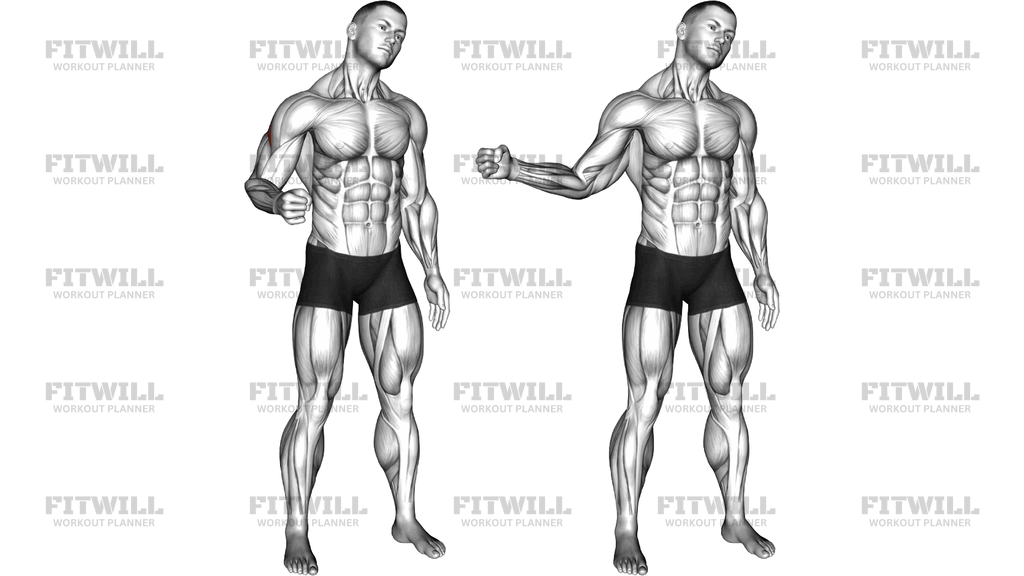
Instructions
- Stand upright with your feet about hip-width apart, weight even across both feet, and your spine tall without arching your lower back.
- Relax your non-working arm at your side and let your shoulders drop away from your ears before you begin.
- Bend the working elbow and raise your fist up near the shoulder on the same side, keeping the elbow tucked close to your torso.
- Tilt your head toward the working arm, bringing the ear toward the shoulder, and hold this head position throughout the glide.
- Slowly straighten the elbow and sweep the arm out to the side until it reaches about shoulder height, moving over two to three seconds.
- Pause briefly at the end of the arm swing — one to two seconds — without pushing further or shrugging the shoulder upward.
- Reverse the motion with the same control: bend the elbow and bring the fist back toward the shoulder while the head stays tilted.
- After completing the set on one side, return your head to neutral, take a breath, and repeat on the opposite arm.
- Breathe steadily throughout, exhaling as the arm moves out and inhaling as it returns; avoid holding your breath.
- Perform smooth, continuous repetitions rather than long static holds, and stop well short of any tingling or sharp sensation.
Tips & Tricks
- The most common mistake is letting the head drift back to neutral as the arm extends — that converts the glide into a tension stretch and can provoke symptoms, so keep the ear gently toward the working arm for the whole set.
- Shrugging the working shoulder toward the ear as the elbow straightens shortens the path of the nerve; consciously press the shoulder down while the arm swings out.
- Keep the movement slow and rhythmic; if you finish a set in five seconds, you are rushing it — aim for a full out-and-back cycle of roughly four to six seconds.
- Tingling, pins and needles, or an electric zing down the arm means you have gone too far — reduce the end range on the next rep rather than stopping cold.
- Do not crank the neck into a hard side bend; the head tilt should be modest and pain-free, just enough to offset the arm's reach.
- If standing feels unstable or you catch yourself leaning away from the arm, stand with your back near a wall or lightly brace one hand on a counter to stay square.
- Stop at shoulder height or slightly below; lifting the arm higher than a comfortable arc tends to recruit the upper traps and defeat the purpose.
- Frequent light sets — a few short sessions a day — usually work better for nerve mobility than one long, aggressive session.
- Pair this drill with gentle upper trap and levator scapulae stretches, since tight muscles around the nerve's path can limit the glide's effect.
Frequently Asked Questions
What does the Standing Supraescapular Nerve Mobilization actually target?
It targets the suprascapular nerve, which travels from the side of the neck across the top of the shoulder blade to supply the supraspinatus and infraspinatus muscles. The drill glides that nerve through its path rather than stretching a specific muscle.
Why does my head tilt toward the working arm during this movement?
Tilting the head toward the arm slackens the nerve while the straightening arm lengthens its path, which creates a smooth sliding motion. If the head tilts away instead, the nerve gets pulled taut and the drill becomes a much more aggressive tension stretch.
Is the Standing Supraescapular Nerve Mobilization a stretch or a strength exercise?
It is a mobility drill, not a strength or flexibility exercise in the usual sense. The goal is to move nervous tissue gently, so it is categorized as a stretch and should never feel like muscle work.
How many repetitions should I do?
Start with around 8 to 10 slow, continuous glides per side, once or twice a day. Because nerve tissue responds well to frequent light exposure, several short sessions spread through the day usually beat one long session.
Can beginners do this drill, or should it only be done under supervision?
Beginners can perform it safely because it uses body weight only and the range is self-selected. The key is staying well short of any tingling or sharp sensations; if you are unsure about your symptoms, have a physical therapist or clinician teach you the glide first.
What is the most common mistake with the Standing Supraescapular Nerve Mobilization?
The biggest error is moving the arm too fast or pushing into end range, which stresses the nerve instead of gliding it. Shrugging the shoulder and letting the head return to neutral mid-rep are the two other frequent faults.
I feel tingling in my arm during the movement — should I push through it?
No. Tingling or electric sensations are a signal to back off immediately. Reduce how far the arm extends, lessen the head tilt, or shorten the session, and only work within a completely symptom-free range.
Can I do this exercise if I have a rotator cuff injury?
Many shoulder rehab programs include suprascapular nerve glides, but if you have a diagnosed rotator cuff tear, post-surgical shoulder, or acute pain, get clearance from your treating professional first and follow the range they specify.
Do I need any equipment or can I substitute anything for the Standing Supraescapular Nerve Mobilization?
No equipment is needed — just standing space for your arm to swing out to the side. If standing is uncomfortable, a seated version with the same head and arm positions works as a reasonable substitute.
When is the best time to use this drill in my routine?
It works well as a warm-up before pressing, pulling, or overhead training, and as a movement break during long stretches of desk work. Doing it when the neck and shoulder are already warm and relaxed makes the glide smoother.