Dumbbell Incline Breeding
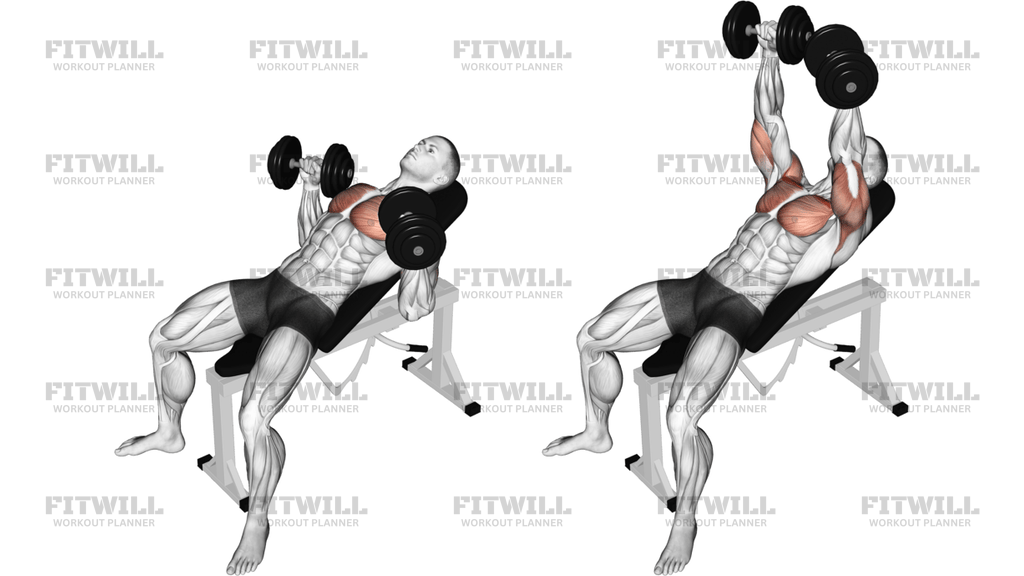
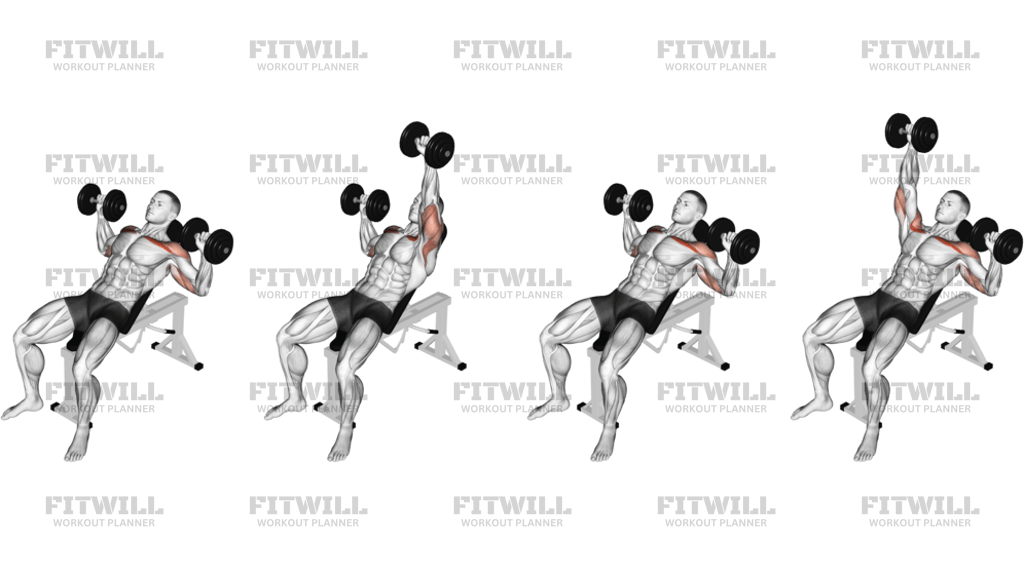
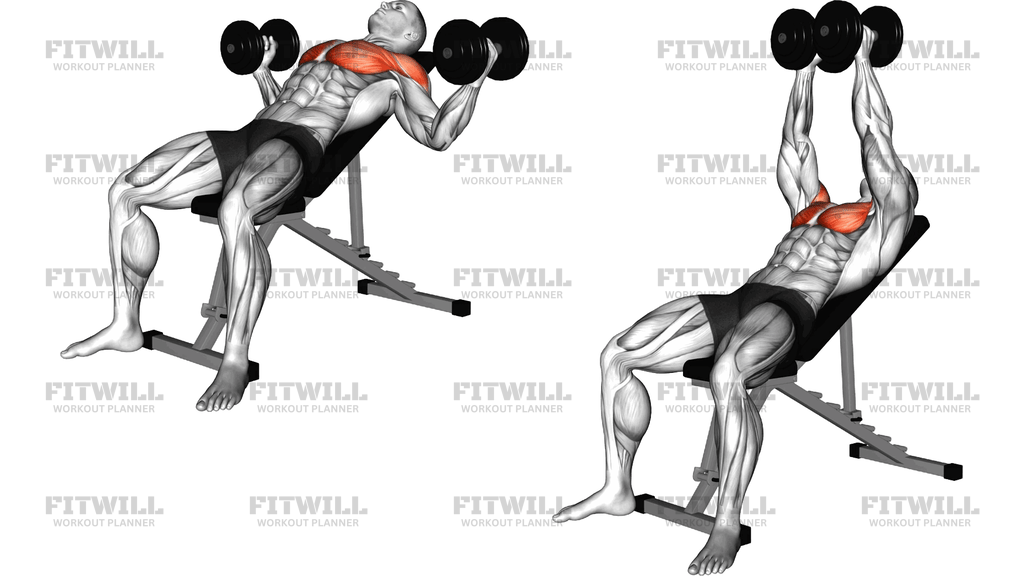
The Dumbbell Incline Breeding (commonly performed as an incline fly) is an isolation movement for the upper chest performed on an angled bench, typically set between 30 and 45 degrees. You lie back with a dumbbell in each hand, arms extended toward the ceiling, and sweep the weights out and down in a wide arc until you feel a stretch across the upper chest, then bring them back together along the same path. Unlike a press, where the elbows bend and extend, the fly keeps a soft, nearly fixed elbow angle throughout, so the chest does the work instead of the triceps.
Because the bench is inclined, the emphasis shifts to the clavicular head of the pectoralis major, the upper portion of the chest that flat presses hit less directly. The front delts assist on every rep, and the biceps and forearms work isometrically simply to hold the dumbbells. If your upper chest looks underdeveloped next to the rest of your torso, or if you feel flat presses mostly in your shoulders and triceps, this movement is a practical way to isolate that area.
The setup matters more here than in most pressing work. The bench angle determines which fibers lead the movement, so a modest incline targets the upper chest while steeper angles start pulling the front shoulders into the exercise. Your back, shoulders, and hips should stay planted against the bench for the entire set; once your torso starts rocking or your shoulders roll forward off the pad, the dumbbells are no longer being moved by the chest.
To execute well, think of your arms as two fixed arcs rather than two pressing levers. Lower the dumbbells out to the sides until they reach roughly chest height, keeping a small bend locked into the elbows, then squeeze the weights back up along that same wide path until they meet above your upper chest or shoulders. The arc should feel like you are hugging a large barrel, not flinging the weights outward and jerking them back.
This exercise fits best in the middle or end of an upper-body or chest session, after your main pressing movement, where lighter loads and higher focus are appropriate. It pairs naturally with incline presses, dips, or any horizontal push. Common use cases include building upper-chest fullness, warming up the chest with light dumbbells before pressing, and giving lifters a chest option that spares aggravated elbows or wrists.
For safety, treat the stretch position with respect. Going deeper than your shoulder allows, or letting the dumbbells drift behind your torso line under load, is the most common way this movement goes wrong. Start with weights you could press comfortably for 12 to 15 reps, learn the arc, and only add load once the path stays smooth and controlled from start to finish.
[ Workout Log & Planner ]
Put your next workout in Fitwill
Keep your plan and training log ready when you are.


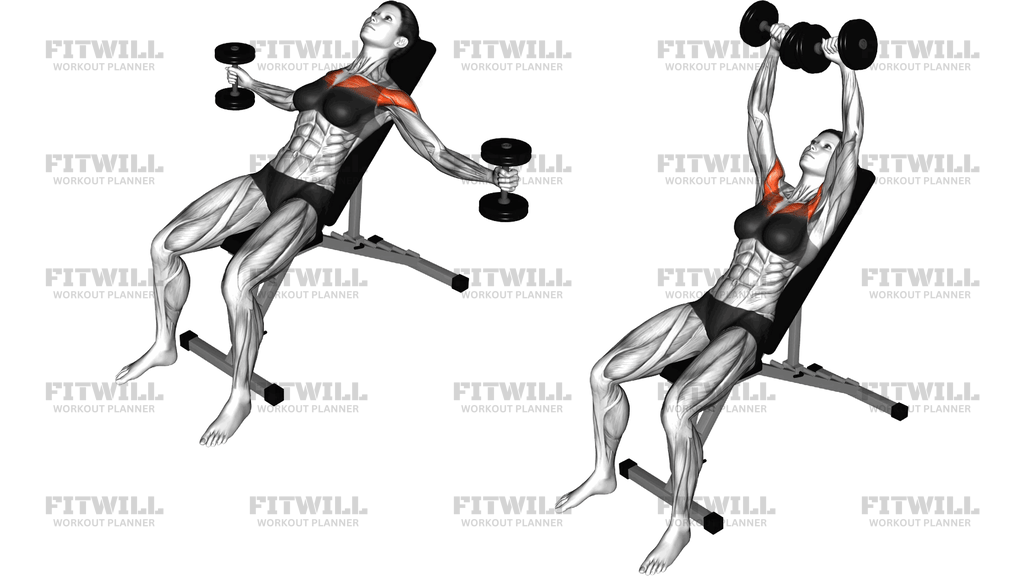
Instructions
- Set an adjustable bench to a 30-45 degree incline and place a dumbbell of moderate weight on each side of the bench within easy reach.
- Sit on the bench with your feet flat on the floor, then pick up the dumbbells and lean back so your head, upper back, and hips rest fully against the pad.
- Press the dumbbells straight up above your upper chest, palms facing each other, with a small bend in each elbow that you hold for the entire set.
- Brace your core lightly and draw your shoulder blades down and together so your shoulders stay pinned to the bench.
- Inhale and lower the dumbbells out to the sides in a wide arc, keeping the elbow bend constant, until you feel a stretch across the upper chest.
- Stop the descent when the dumbbells reach roughly chest or shoulder level; do not let them sink behind your torso.
- Exhale and sweep the weights back up along the same arc, squeezing your upper chest until the dumbbells nearly touch above your shoulders.
- Pause briefly at the top without clanging the dumbbells together, then begin the next rep from that fully extended position.
- Complete all reps, then bring the dumbbells up over your chest, sit upright, and set them on the floor on both sides of the bench.
Tips & Tricks
- The most frequent error is turning the fly into a press: if your elbows are bending and straightening as the dumbbells rise, the load has shifted off the chest. Recheck that your elbow angle never changes from the first rep to the last.
- Letting the dumbbells drop too low behind shoulder level loads the shoulder capsule rather than the chest. Set a mental stop at bench-pad height and pause there instead of chasing a deeper stretch.
- If your hips lift off the pad as you raise the weights, the dumbbells are too heavy or you are rushing the top half of the rep. Reduce the load and drive your hips into the bench before each rep.
- Keep the dumbbells traveling over your upper chest and shoulder line, not over your face. Weights drifting toward the head is a sign the shoulder blades have crept forward off the bench.
- A neutral grip, palms facing each other, is easiest on the shoulders for most lifters. If you feel front-shoulder pinching, rotate the palms slightly toward each other and shorten the range.
- Use a three-second lowering phase on the way down. The stretch is where this exercise earns its results, and rushing it turns a chest movement into momentum practice.
- Do not clang the dumbbells together at the top. Stopping just short of contact keeps constant tension on the upper chest instead of unloading it between reps.
- If your wrists ache or bend backward under load, grip the handles so the dumbbells sit stacked over your forearms rather than letting the wrists collapse inward.
- Start with a lower incline than you think you need. If the front of your shoulders fatigues before your chest, the bench angle is likely too steep.
Frequently Asked Questions
What muscles does the Dumbbell Incline Breeding work?
It primarily targets the upper chest, specifically the clavicular head of the pectoralis major. The front shoulders assist throughout, and the biceps and forearms work statically to hold the dumbbells.
How steep should the incline bench be for this exercise?
Set the bench between 30 and 45 degrees. Lower angles shift work toward the mid-chest, while angles steeper than 45 degrees increasingly turn the movement into a front-shoulder raise.
Is the Dumbbell Incline Breeding suitable for beginners?
Yes, provided beginners start with light dumbbells and prioritize learning the arcing path. It is often easier on the elbows and wrists than pressing, which makes it a friendly first isolation exercise for the chest.
How is this different from a flat dumbbell fly?
The incline angles your torso upward, so the arc travels over the upper chest and emphasizes the clavicular fibers rather than the sternal head. A flat fly follows a path over the mid-chest instead.
Should my elbows stay bent during the movement?
Hold a small, fixed bend, around 10 to 20 degrees, from start to finish. Completely locked elbows strain the joint, and bending further as you press up converts the fly into a press.
Why do I feel this in my shoulders instead of my chest?
The usual causes are a bench angle that is too steep, dumbbells lowered below shoulder level, or the elbows drifting behind the torso line. Raise the stopping point of each rep, check the bench angle, and keep the arc in front of your shoulders.
What can I use instead of an incline bench if my gym has none?
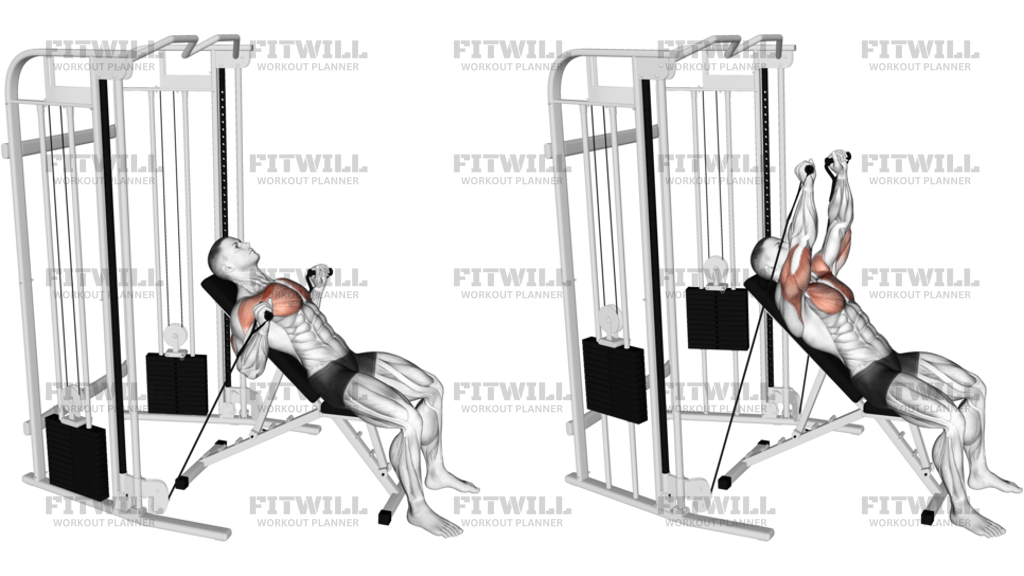
A stability ball can substitute for the angled torso position, though it is less stable under load. Alternatively, a low-to-mid cable crossover performed with the arms sweeping upward can replicate the same upper-chest emphasis without a bench.
How heavy should the dumbbells be?
Choose a weight noticeably lighter than your incline press dumbbells, often 40 to 60 percent of that load. If you cannot control a three-second descent to chest height, the weight is too heavy for this movement.
Where should I place this exercise in my chest workout?
Perform it after your main compound presses, when the chest is pre-fatigued but heavy pressing is already done. It works well for 3 to 4 sets of 10 to 15 reps as a finisher for the upper chest.
Is it safe to do this exercise with a shoulder injury history?
If you have a current or recent shoulder issue, shorten the range so the dumbbells stop well above bench level and use a neutral palm-to-palm grip. Stop immediately if you feel pinching and consult a qualified professional before continuing.