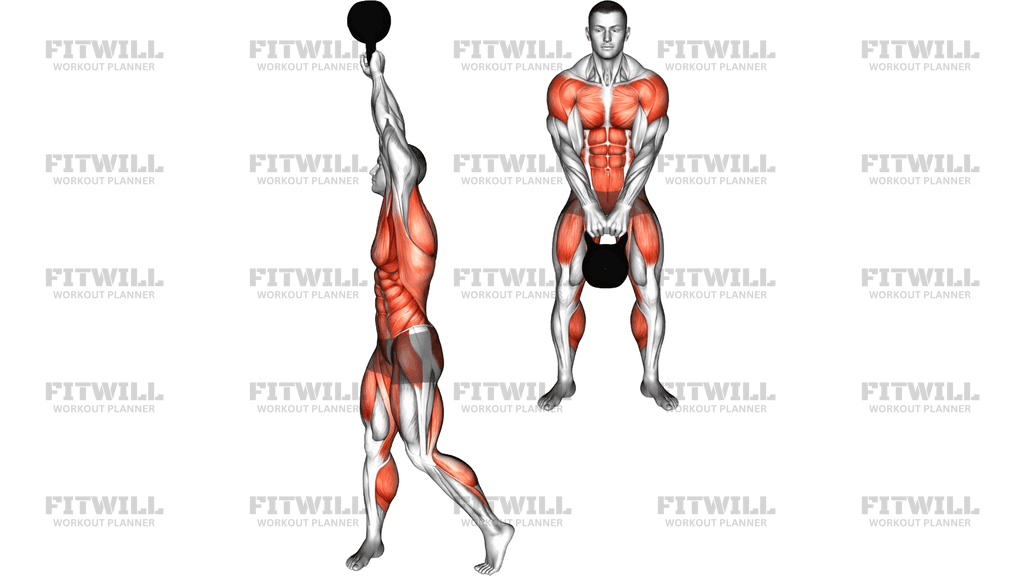
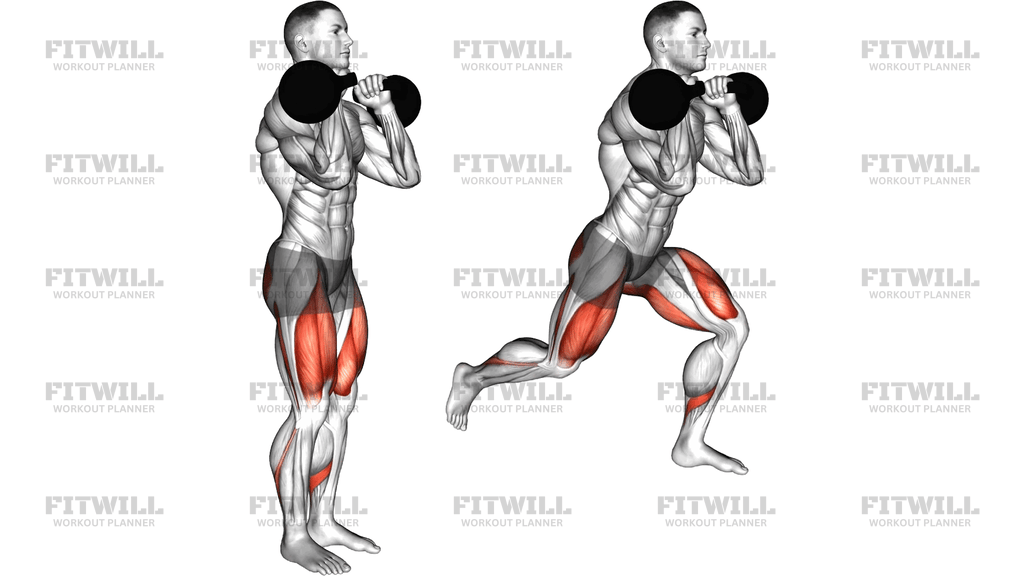
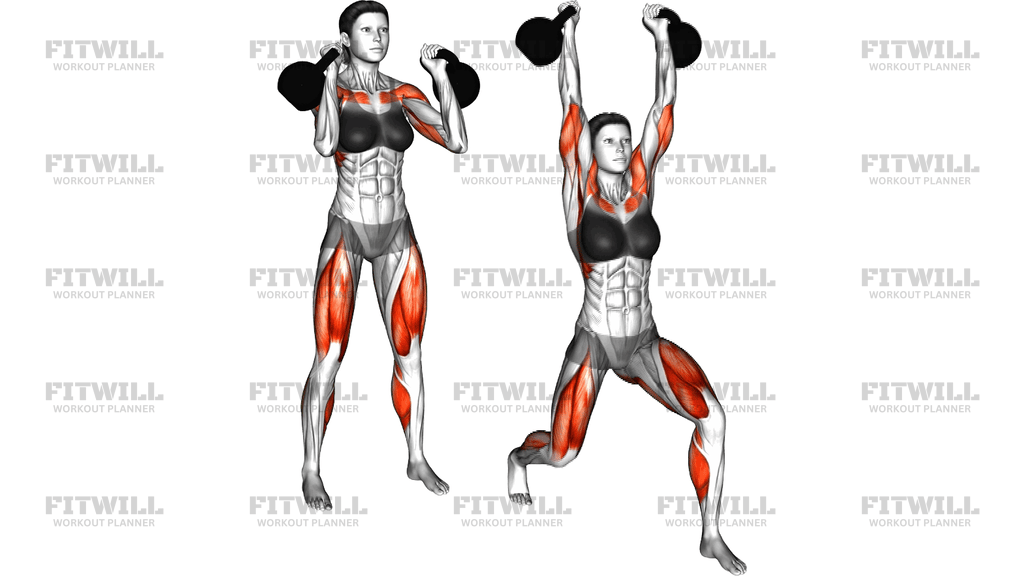
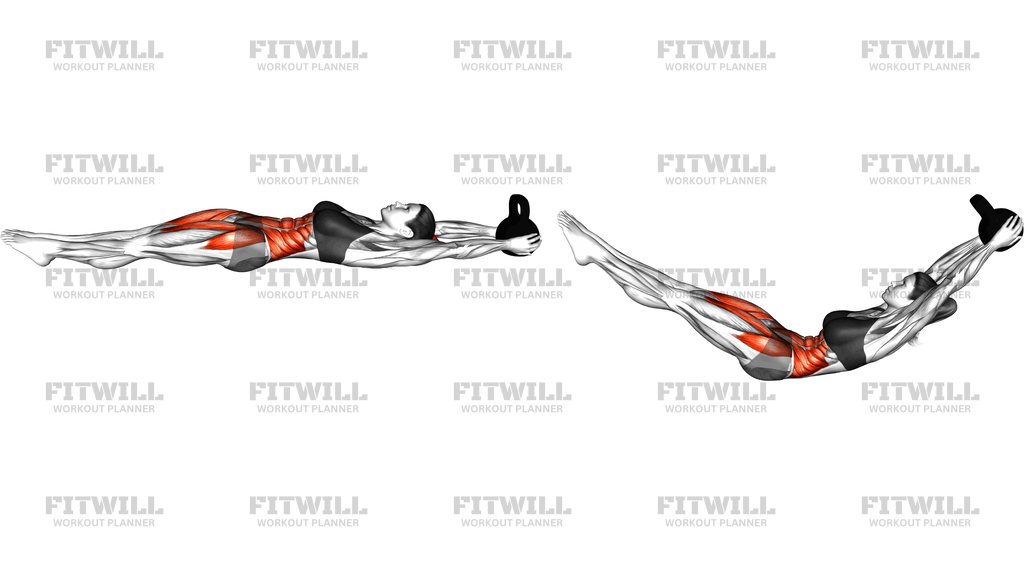
Clock Goblet Squat
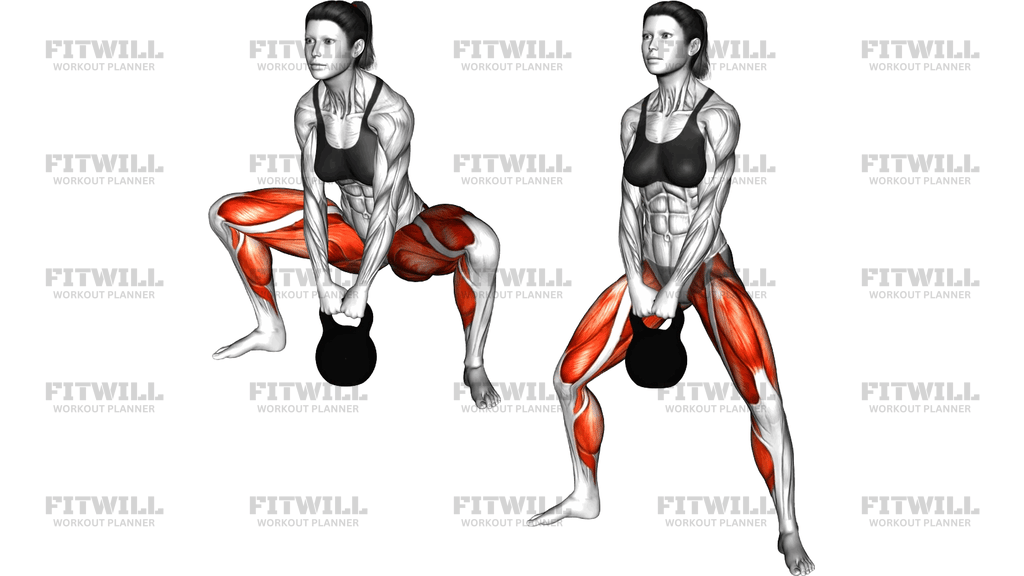
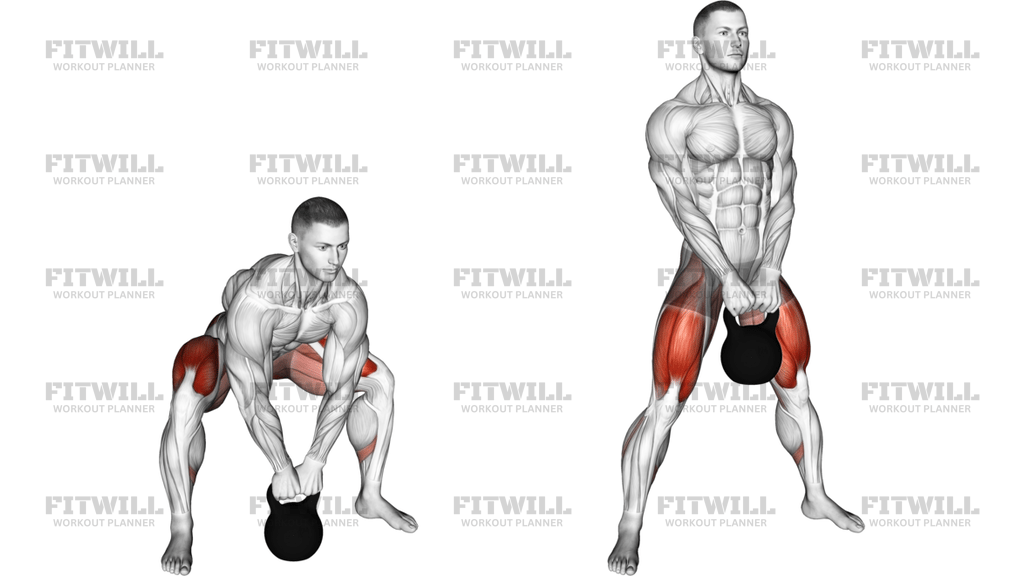
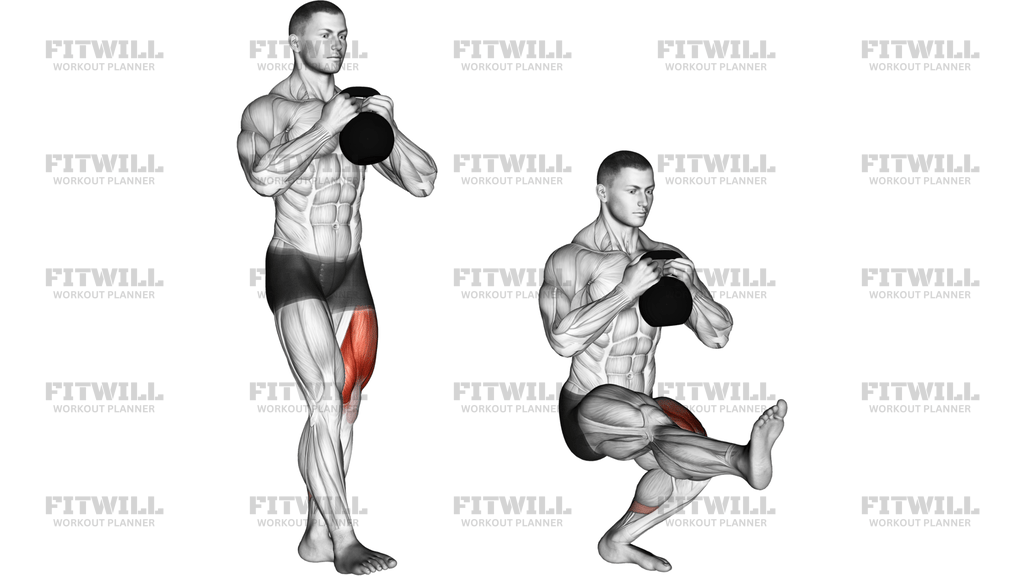
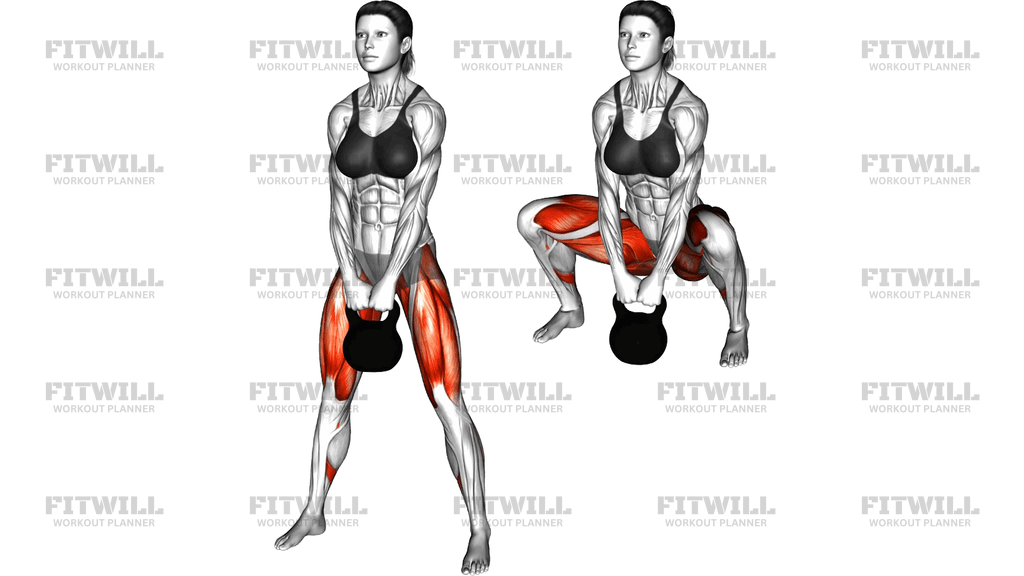
The Clock Goblet Squat is a multi-directional squat variation where you hold a kettlebell or dumbbell in the goblet position at your chest while shifting your squat toward different directions, as if you were standing in the middle of a clock face. Instead of squatting straight down, you load one leg at a time and reach your hips toward various points — for example, shifting toward 3 o'clock and 9 o'clock, or stepping out toward other hours — before returning to center. The weighted counterweight at your chest keeps your torso upright and makes the shifting pattern much easier to control than an unweighted version.
This exercise is especially useful for lifters who feel strong on standard squats but stiff or unstable when their hips have to move sideways. The lateral and diagonal angles load the inner thighs and hip stabilizers far more than a conventional squat, while the quads and glutes still do the bulk of the work on every rep. Because each direction asks one leg to absorb your body weight plus the weight of the bell, it also builds single-leg strength and balance without requiring the coordination demands of a full single-leg squat.
Setup matters more here than in a regular squat. Your stance should be comfortably wider than shoulder width so you have room to shift without your feet moving, and the bell needs to stay tight against your sternum with elbows tucked. If the weight drifts forward or your elbows flare, your chest will drop and the shifting directions will turn into a lean instead of a squat.
To execute it well, think of sitting your hips toward the target direction rather than bending sideways at the waist. The knee of the loaded leg travels over or slightly outside that foot while the opposite leg lengthens and its foot stays flat. Move deliberately through each direction, finish the rep back at center with equal weight on both feet, and only then transition to the next hour on the clock.
You will see this movement used in warm-ups for lower-body days, in general strength programs that want more hip mobility work under load, and in rehab-adjacent training where controlled lateral squatting is reintroduced gradually. It is also a practical choice for home gym training, since one kettlebell and a small area of floor space are all you need.
From a safety standpoint, the main risks are losing the upright torso and letting the extended knee collapse inward. Start with a light weight or even just body weight with hands clasped at the chest, limit yourself to two or three clock directions per session, and stop the depth at whatever point your heels and hips can stay in control.
[ Workout Log & Planner ]
Put your next workout in Fitwill
Keep your plan and training log ready when you are.


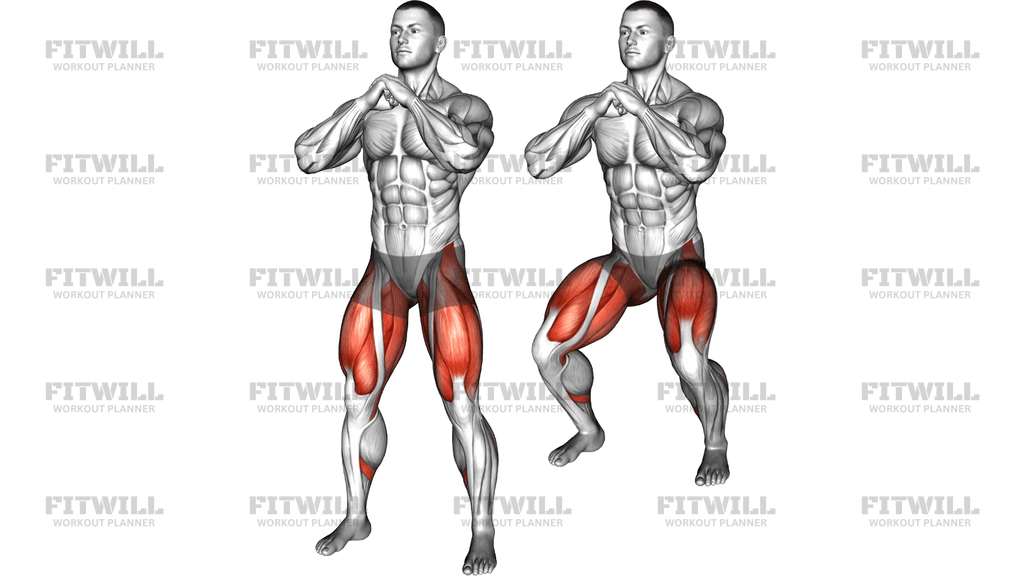
Instructions
- Stand with your feet wider than shoulder width and turned slightly outward, imagining you are standing at the center of a clock face.
- Hold a kettlebell by the horns against your sternum, or a dumbbell vertically at your chest, with both elbows pointing down and tucked close to your ribs.
- Brace your core and set your shoulders down and back so the bell rests firmly against your chest rather than being held out in front.
- Choose your first direction, such as shifting toward 3 o'clock: push your hips toward that side and bend that knee while the opposite leg straightens.
- Lower until the loaded thigh is near parallel to the floor or as deep as your hips allow, keeping the loaded foot flat and the extended leg's foot flat as well.
- Pause briefly at the bottom, then drive through the midfoot of the loaded leg to pull yourself back to center with weight even on both feet.
- Repeat the shift on the opposite side, such as toward 9 o'clock, to complete one pair of reps.
- Exhale as you shift down into each direction and inhale as you return to the center position.
- Keep your chest tall and the bell in contact with your sternum through every direction — if it pulls you forward, reset before the next rep.
- Finish the set by standing fully upright at center, setting the weight down with control, and shaking out your hips before the next set.
Tips & Tricks
- The most common mistake is leaning your torso sideways instead of moving your hips sideways — think of the bell staying vertical over your midfoot the entire time.
- If your extended leg's heel lifts off the floor, your stance is too narrow; widen it an inch or two per side before your next set.
- Keep the movement in the hips and knees, not the spine — any rotation of your shoulders toward the loaded side means you are twisting instead of squatting.
- Start with only lateral shifts toward 3 and 9 o'clock; add diagonal directions later once both sides feel symmetrical.
- Expect one side to feel stronger and deeper than the other; match your sets to the weaker side rather than chasing extra range on your good side.
- A light kettlebell actually improves form here because the counterweight helps you sit back — going too heavy makes the shifting directions sloppy.
- Do not let the loaded knee dive inward as you come up; cue your knee toward your pinky toe to keep the hip doing its job.
- If your inner thighs cramp early, that is normal for this pattern — reduce the range, stay a couple of inches higher, and build depth over weeks.
- Barefoot or flat-soled shoes work best, since a cushioned heel can roll your weight toward the toes during the lateral shifts.
Frequently Asked Questions
What muscles does the Clock Goblet Squat work?
The quads and glutes do most of the work on every shift, while the adductors and hip stabilizers work hard because of the wide stance and lateral angles. Your core stays engaged throughout to keep the kettlebell upright against your chest.
What does the 'clock' in Clock Goblet Squat actually mean?
You picture yourself standing in the center of a clock face and shift your squat toward different hour positions, typically starting with the lateral points like 3 and 9 o'clock. Each direction changes which hip and leg takes the load.
Is the Clock Goblet Squat good for beginners?
Yes, it is one of the friendlier ways to introduce lateral squatting because the goblet position gives you a counterbalance. Beginners should start with a very light bell or just clasped hands and limit themselves to the two lateral directions.
How wide should my stance be for the Clock Goblet Squat?
Roughly one and a half times shoulder width, wide enough that one leg can bend deeply while the other extends without either heel lifting. If you feel pinched or unstable, adjust a couple of inches rather than forcing the position.
Why do my inner thighs burn so much during this exercise?
The wide stance and one-sided loading put the adductors under a stretch and a load at the same time, which standard squats do not do. This is expected — reduce your depth if it turns into cramping, and the tolerance will build quickly.
Can I do the Clock Goblet Squat without a kettlebell?
Yes, a single dumbbell held vertically at your chest works the same way, and a body-weight version with hands clasped at the sternum is a valid starting point. The weight mainly serves as a counterbalance to keep your torso upright.
How is this different from a Cossack squat?
A Cossack squat usually involves a much wider stance, a deeper single-leg position, and often a rotating straight leg. The Clock Goblet Squat keeps both feet planted in a fixed stance and uses shorter, controlled shifts, making it easier to progress from.
How deep should I go on each clock direction?
Go as deep as you can while keeping the loaded foot flat, the knee tracking outward, and your chest tall. Depth that costs you one of those positions is not doing you any favors.
How many reps and directions should I use per set?
Two to three shifts per side per set is a good starting dose, all in the same two directions, before adding diagonal hours. Treat it more like a quality mobility-strength drill than a max-effort lift.
Is it safe for my knees if I feel pulling around the bent knee?
A stretch along the inner thigh or hip is normal, but sharp pain at the knee joint itself is a signal to shorten the range and check that your knee is tracking over the foot. If discomfort persists, work with a lighter load and a shallower angle first.