Weighted Kettlebell Hollow Hold
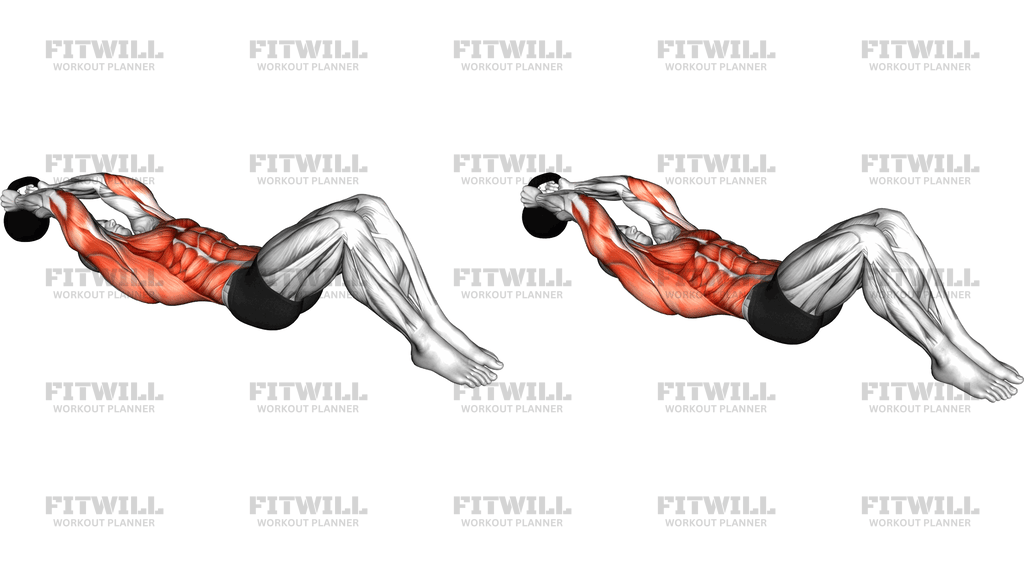
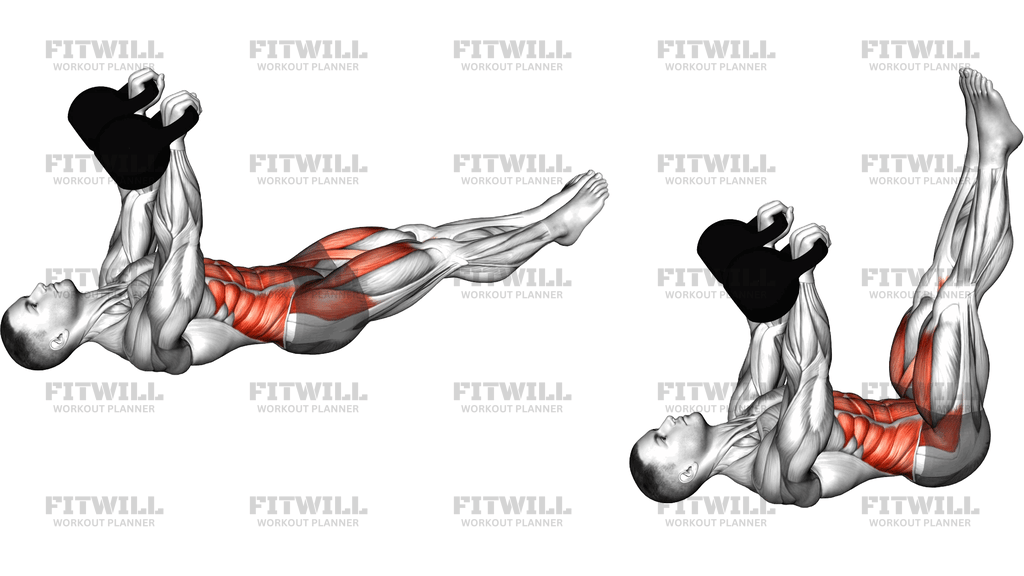
The Weighted Kettlebell Hollow Hold is an isometric core exercise that takes the classic gymnastics hollow body position and adds a kettlebell held in the hands, with the arms extended straight overhead. You lie on your back, press your lower back into the floor, lift your shoulder blades and straightened legs a few inches off the ground, and hold that shallow banana shape while the kettlebell reaches beyond your head. Because the weight sits far from your center of mass, it dramatically increases the leverage your abs have to fight against.
This is a progression, not a starting point. The unweighted hollow hold is already demanding for most people, so the kettlebell version suits lifters, gymnasts, calisthenics athletes, and anyone who has mastered the bodyweight version and needs a harder stimulus. It is especially valuable for building the rigid midline strength that carries over to overhead pressing, pull-ups, handstands, and heavy squats and deadlifts, where a braced torso keeps force transferring cleanly through the body.
The main muscles working are the rectus abdominis and deep core, which hold the trunk in a slightly flexed, flattened position. The hip flexors work hard to keep the straight legs elevated, the quads and glutes keep the legs locked out and controlled, and the shoulders and lats are active as the arms press the kettlebell up and back. The longer the lever arms — arms overhead plus extended legs — the greater the demand, which is exactly why adding weight at the hands is so effective.
Setup is where most of the difficulty is earned. Before you ever lift off, your lower back must be flattened against the floor; if there is a gap between your lumbar spine and the ground, the hold shifts stress into the lower back instead of the abs. Choose a kettlebell light enough that you can hold the full position with clean shape for the entire set — typically 15 to 30 seconds. A weight that is too heavy will pull your arms toward the floor, arch your back, and turn a core exercise into a lower back stressor.
To execute well, exhale as you brace, peel the shoulders off the floor, and squeeze the legs together with the toes pointed. Keep the kettlebell stable overhead rather than letting it drift or swing. Hold for time, breathe shallow but continuous breaths through the set, and lower down under control rather than collapsing. Rest fully between sets, since this is a high-tension hold and sloppy reps under fatigue teach poor positioning.
Common use cases include gymnastics and cross-training conditioning, core finishers after compound lifts, and pre-season midline work for athletes in sports that demand bracing under load. Practical safety points are simple: keep the lumbar spine pressed down at all times, drop the hold early rather than letting your back arch, and if the weighted version breaks your position, regress to a lighter bell, bend the knees slightly, or return to the bodyweight hollow hold until the shape is solid again.
[ Workout Log & Planner ]
Put your next workout in Fitwill
Keep your plan and training log ready when you are.


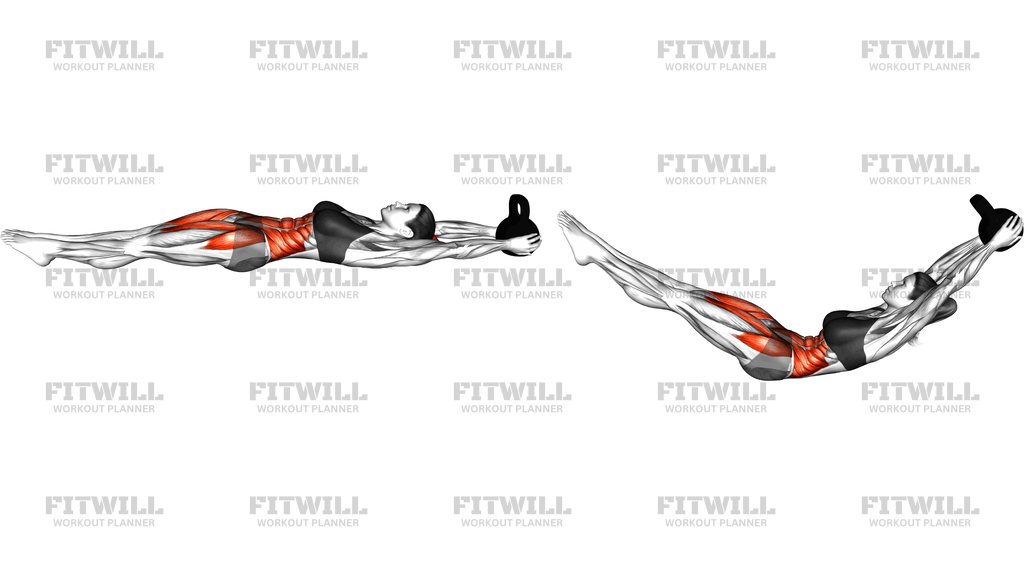
Instructions
- Lie flat on your back on the floor or a mat with your legs together and fully extended.
- Grip the kettlebell by the horn with both hands and extend your arms straight so the kettlebell rests on the floor just beyond and behind your head.
- Press your lower back firmly into the floor and draw your ribs down, creating a braced, flattened torso before lifting anything.
- Exhale to tighten the abs, then lift the kettlebell off the floor so the arms stay straight and reach up toward the ceiling at a slight angle past your head.
- Raise your shoulder blades and upper back a few inches off the floor while keeping the kettlebell stable overhead.
- Lift both straight legs to a similar low height, squeezing the thighs together and pointing the toes so the body forms a shallow, even arc from hands to heels.
- Hold this hollow position for your target time — commonly 15 to 30 seconds — keeping the lower back glued to the floor the entire time.
- Breathe in short, shallow breaths through the hold instead of holding your breath, and keep the kettlebell from drifting side to side or toward your head.
- When the hold ends, lower the legs first, then set the kettlebell back on the floor under control rather than dropping it.
- Rest fully before the next set; if your lower back starts to arch or the ribs flare, end the set early.
Tips & Tricks
- The most common failure is the lower back lifting off the floor as the kettlebell pulls the arms down — if you feel arching, use a lighter bell or reduce the hold time rather than pushing through it.
- Squeeze the kettlebell handle hard with both hands; a firm grip helps stabilize the shoulders and keeps the bell from wobbling overhead.
- If the arms overhead position is too much, hold the kettlebell at chest level instead — it shortens the lever while keeping the weighted demand on the abs.
- Point the toes and press the knees fully straight; soft, bent legs quietly shrink the difficulty and let the hold feel easier than it should.
- Keep the kettlebell stacked roughly over the hands rather than letting it hang behind the wrists, or the forearms will fatigue before the core does.
- Film yourself from the side once — most people think their back is flat when it is actually arched a visible inch off the floor.
- Progress by time first, then load: extending from 20 to 40 seconds at the same weight builds more control than jumping to a heavier bell immediately.
- Avoid holding your breath for the entire set; short rhythmic breaths keep tension without spiking blood pressure.
- Place the kettlebell on a mat or towel before you lift it off, so it does not slide if you need to set it down quickly.
Frequently Asked Questions
What muscles does the Weighted Kettlebell Hollow Hold work?
The rectus abdominis and deep core do most of the work holding the trunk in the hollow position, while the hip flexors keep the straight legs elevated. The shoulders, quads, and grip are also active supporting the kettlebell overhead.
How heavy should the kettlebell be for the Weighted Kettlebell Hollow Hold?
Pick a weight you can hold overhead with straight arms for the full set without your lower back arching. For most people this is far lighter than what they would swing or press — start around 4 to 8 kg and only add load once form is locked in.
Is the Weighted Kettlebell Hollow Hold good for beginners?
Not usually as a first core exercise. Beginners should learn the bodyweight hollow hold, often with bent knees or arms at the sides, and only add the kettlebell once they can hold a clean flat-backed hollow for 30 to 45 seconds.
Why does my lower back hurt during the Weighted Kettlebell Hollow Hold?
That usually means your lumbar spine is arching off the floor because the abs can no longer hold the position. End the set, reduce the weight or hold time, or regress to the unweighted version until you can keep the back pressed down throughout.
How long should I hold the Weighted Kettlebell Hollow Hold?
Most sets fall between 15 and 30 seconds because the position is very demanding with the weight overhead. Quality of the hollow shape matters more than total time, so stop before your back arches or the kettlebell starts to wobble.
Can I hold the kettlebell at my chest instead of overhead?
Yes, hugging the kettlebell to the chest shortens the lever arm and reduces shoulder involvement while still adding load to the abs. It is a useful intermediate step before the full overhead version.
What can I substitute if I don't have a kettlebell?
A dumbbell or a small weight plate held in both hands works the same way, or you can use a resistance band stretched overhead. If nothing is available, the bodyweight hollow hold with arms extended past the head is a solid alternative.
How is the Weighted Kettlebell Hollow Hold different from a regular hollow hold?
The kettlebell held in straight arms beyond your head lengthens the lever and adds load far from your center of mass, which forces the abs and hip flexors to produce much more tension to keep the same shape.
How often should I include the Weighted Kettlebell Hollow Hold in my training?
Two to three sessions per week is plenty, since the deep core needs recovery from high-tension isometric work just like other muscles. Place it near the end of a workout so fatigue does not compromise heavier lifting.
Should my shoulder blades stay off the floor the entire hold?
Yes, the upper back and shoulder blades should stay lifted so the abs, not the floor, support the trunk. If they drop down mid-set, the hold has effectively ended and you are just resting with a weight over your head.