Forward Step Swim
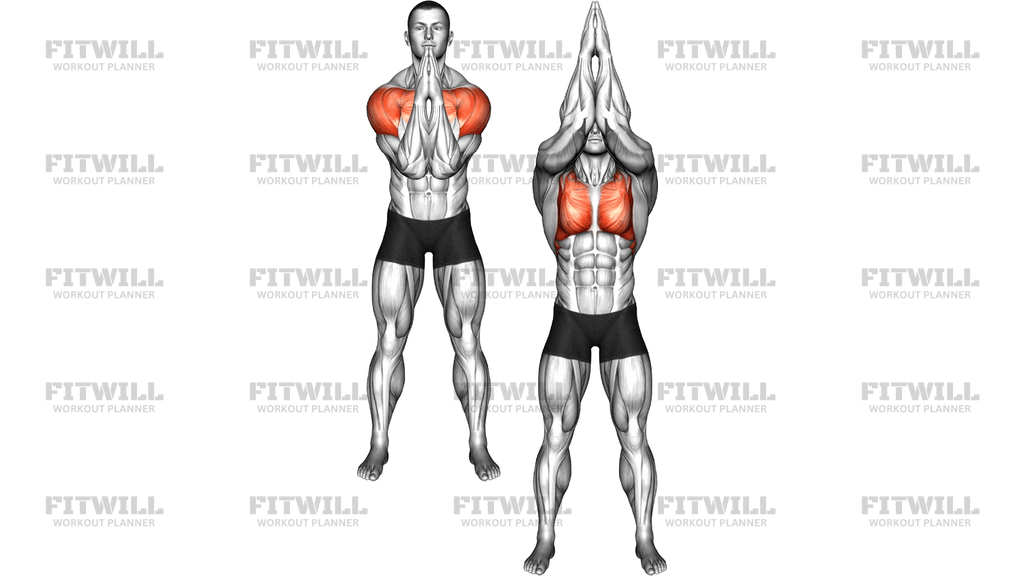
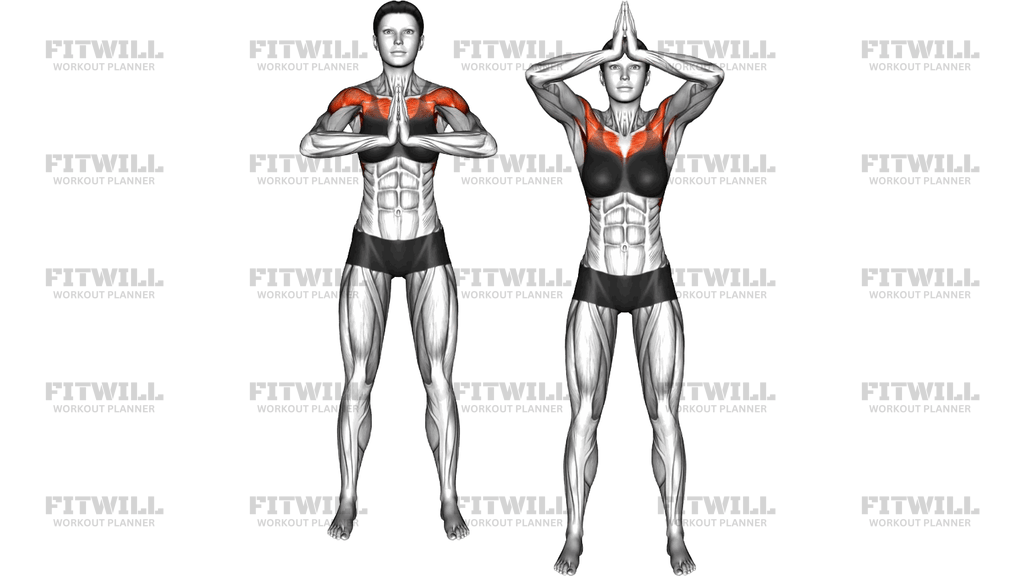
The Forward Step Swim is a standing bodyweight movement that pairs a forward step with a wide, sweeping arm action that mimics a swim stroke performed on land. You begin with your hands together in front of your chest, then step forward while sweeping both arms out wide to the sides at shoulder height, before bringing the hands back together as you reset your stance. Because the arms travel through a large horizontal arc with nothing but your own muscular effort resisting them, the chest and front shoulders do most of the work, while the legs drive the stepping and keep you balanced.
This movement is useful for people who want to warm up the upper body before pressing or swimming, or for anyone building shoulder mobility and endurance without equipment. Swimmers and martial artists often use patterns like this to groove the feel of horizontal arm sweeps, and it works well as a low-impact conditioning drill because the continuous stepping and arm circling raise your breathing rate without pounding the joints.
The main muscles involved are the pectorals, which pull the arms forward and inward across the body, and the front deltoids, which lift and control the arms at shoulder height. Each forward step loads the quads and calves briefly, and your core stays engaged the whole time to keep the torso upright as the arms move. Because the arms act as a long lever, the demand on the shoulders grows quickly if you let them drift above shoulder height or rush the sweep.
Setup matters more than it looks. Your stance, posture, and hand position determine whether the sweep travels through the chest and shoulders or whether your lower back and neck pick up the slack. Stand tall with the ribs stacked over the pelvis, soften the knees slightly, and keep the hands at chest height rather than letting them float up toward the chin. From there, the movement is a smooth, continuous rhythm: step, sweep wide, sweep back in, reset.
To execute it well, think of pushing the water apart on the way out and slicing it back together on the way in. Keep the elbows just below or level with the wrists, the palms facing the direction of travel, and the shoulders pulled gently down away from the ears. The step should be modest, roughly hip-width to shoulder-width forward, so you can keep your balance through the whole arm arc.
The Forward Step Swim fits best in warm-ups, movement breaks, swim dryland sessions, or as part of a bodyweight circuit. Because it needs no equipment and very little space, you can perform it almost anywhere. Stop or reduce the range if you feel pinching at the front of the shoulders, and build up the number of repetitions gradually so the shoulder endurance develops before the volume gets high.
Fitwill
Log Workouts, Track Progress & Build Strength.
Achieve more with Fitwill: explore over 9600 exercises with images and videos, access built-in and custom workouts, perfect for both gym and home sessions, and see real results.
Start your journey. Download today!




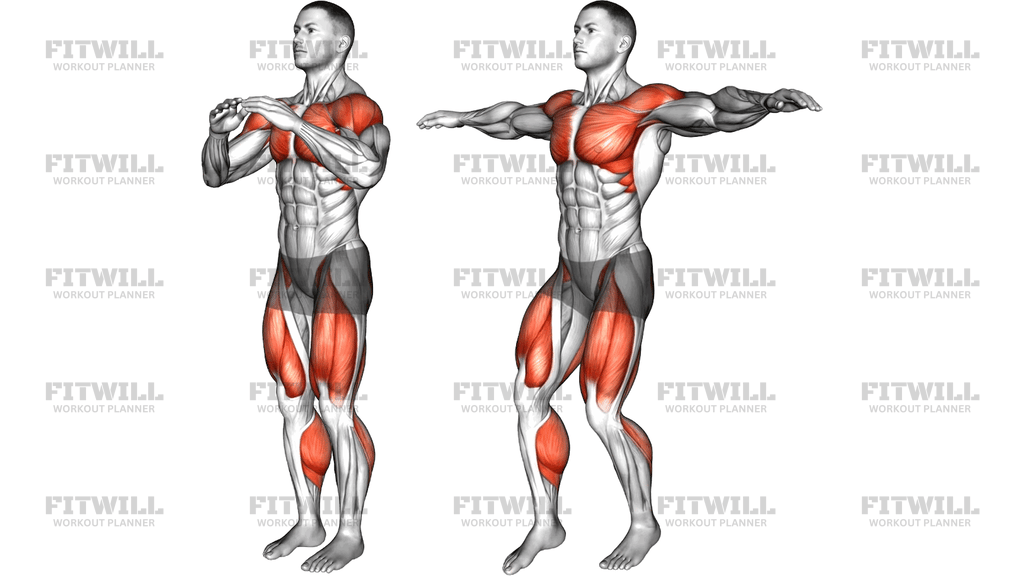
Instructions
- Stand upright with your feet together or hip-width apart, knees softly bent, and your weight balanced over the middle of each foot.
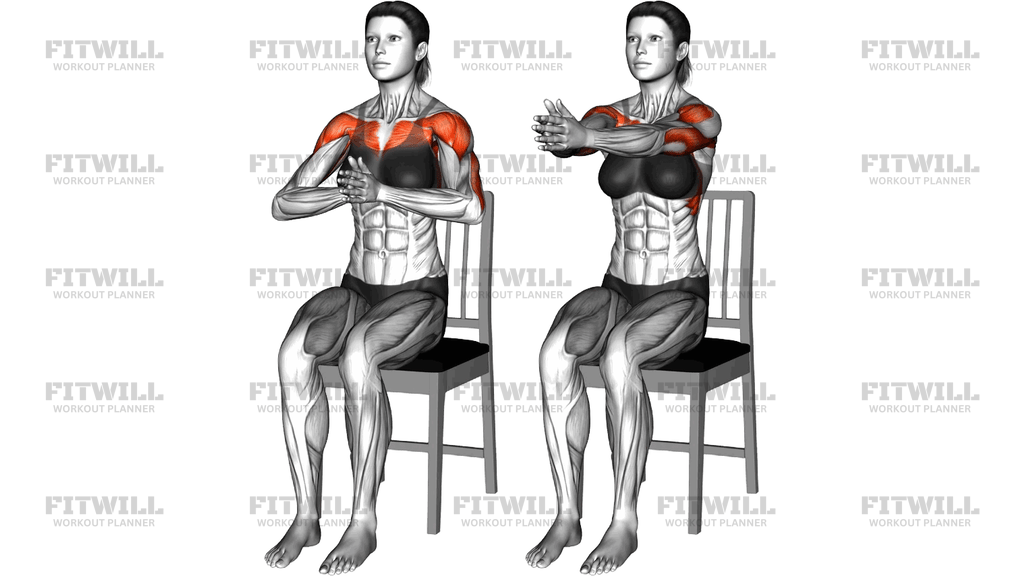
- Bring both hands together in front of your chest with the palms facing each other or slightly inward, elbows loose and pointing down.
- Draw your shoulder blades down gently, brace your core, and keep your gaze forward so your head stays stacked over your spine.
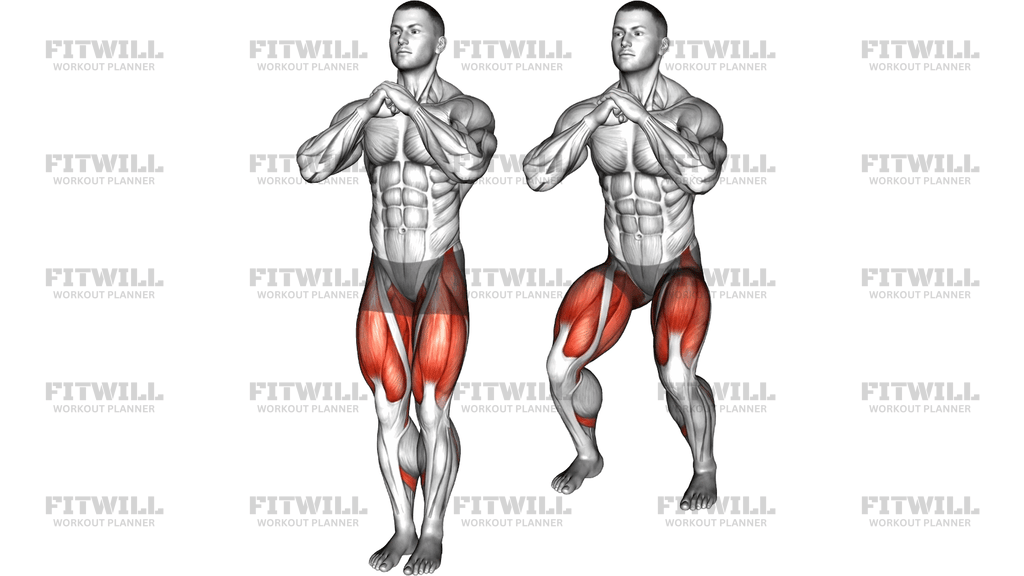
- Step one foot forward about hip-to-shoulder width and let the front knee bend slightly while the torso stays tall.
- From the hands-together position, sweep both arms out wide to the sides in a smooth arc until they extend at shoulder height, palms leading the way.
- Reverse the arc and bring the hands back together in front of your chest, feeling the chest draw the arms inward rather than letting them drop.
- Step the feet back to your starting stance, then repeat with the opposite leg stepping forward to keep the workload even.
- Exhale as the arms sweep open and step forward, inhale as they return together and you reset your stance.
- Keep the entire rhythm continuous and controlled, moving the arms at the pace of a relaxed swim stroke rather than an explosive swing.
- Finish the set by bringing both feet together, lowering the arms to your sides, and shaking out the shoulders before your next exercise.
Tips & Tricks
- If your shoulders shrug toward your ears during the sweep, drop your arms a few inches below shoulder height; most people reach higher than their mobility allows.
- Avoid arching the lower back as the arms open wide. Brace the abs lightly and keep the ribs stacked over the pelvis so the chest does the sweeping.
- Keep the step short. A long lunge-style step makes the arm arc feel stable at first but throws off your balance as the arms reach full extension.
- Do not let the hands cross far past the midline on the return; a gentle meeting point in front of the sternum keeps tension on the chest instead of dumping it.
- Think of the elbows staying slightly soft and below the wrists through the arc. Locked elbows turn the sweep into a momentum swing rather than a muscle-driven movement.
- Alternate which leg steps forward first each set so one side does not quietly take over the coordination demand.
- If you feel a pinch at the front of the shoulder, narrow the arc slightly and rotate the palms to face more downward rather than forward.
- Start with slow, exaggerated sweeps to learn the rhythm, then gradually speed up only as far as you can keep the arms level and the torso quiet.
Frequently Asked Questions
Which muscles does the Forward Step Swim work the most?
The chest and front shoulders do the bulk of the work, since they control the wide horizontal arm sweep. The quads and calves assist with each forward step, and the core stabilizes the torso throughout.
Is the Forward Step Swim a strength exercise or a cardio exercise?
It sits between the two. Individual sweeps are strength-oriented for the chest and shoulders, but continuous stepping and arm arcs raise your breathing rate, so it also works as light conditioning.
How high should my arms go during the sweep?
Aim for shoulder height, with the elbows level or slightly below the wrists. Going higher usually causes shrugging and shoulder discomfort rather than extra benefit.
I feel a pinch in the front of my shoulder during Forward Step Swim. What should I change?
Reduce the width of the arc, lower the arms a few inches, and rotate your palms to face more toward the floor. If the pinch continues, stop and have it assessed before continuing.
Can beginners do the Forward Step Swim?
Yes. It is bodyweight-only and low impact. Beginners should start with a narrower arc, slower tempo, and a shorter forward step, then expand the range as coordination and shoulder endurance improve.
Do I need to alternate the stepping leg?
Alternating legs keeps the workload and balance challenge even on both sides. If you step with the same leg for an entire set, switch the lead leg on the next set at minimum.
How many repetitions of the Forward Step Swim should I do?
For a warm-up, 10 to 20 continuous reps per side at a relaxed pace works well. In a circuit, 30 to 45 seconds of continuous stepping and sweeping is a common interval.
What can I use instead if standing balance is difficult?
Perform the same arm sweep while standing still with a wider stance, or hold a wall or sturdy chair lightly with one hand and sweep with the other arm. Progress to the full stepping version as balance improves.
Why do my hands need to start together in front of my chest?
The hands-together start gives the chest a full inward pull on every rep and defines the length of the arc. Starting with the arms already wide removes half of the sweep and cuts the work the pectorals do.
Can I add speed to make the Forward Step Swim harder?
Yes, but only after the arm path is consistent. Faster sweeps raise the conditioning demand, yet swinging with locked elbows or a leaning torso turns it into momentum work, so build speed in small steps.