Dumbbell Kroc Row
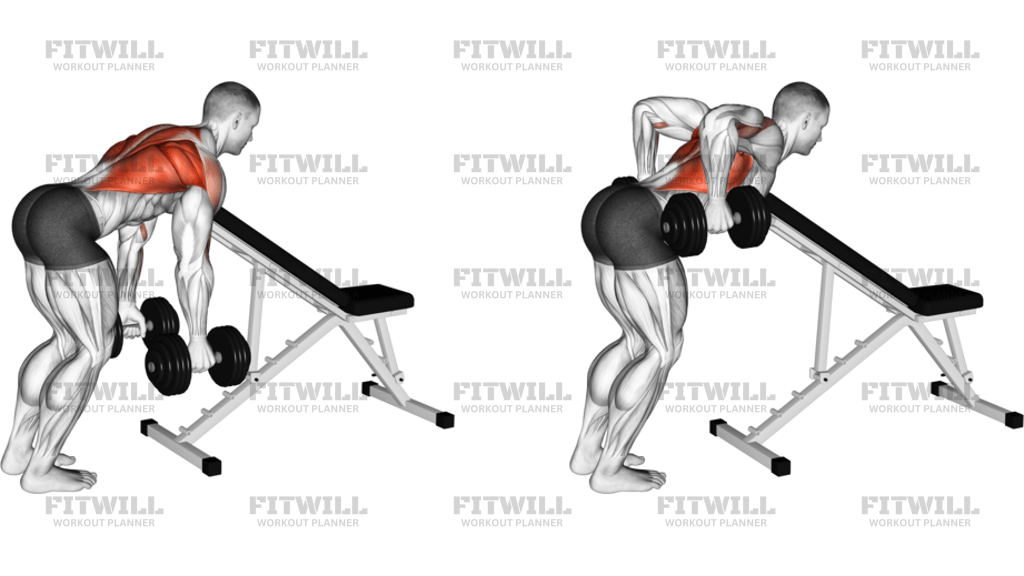
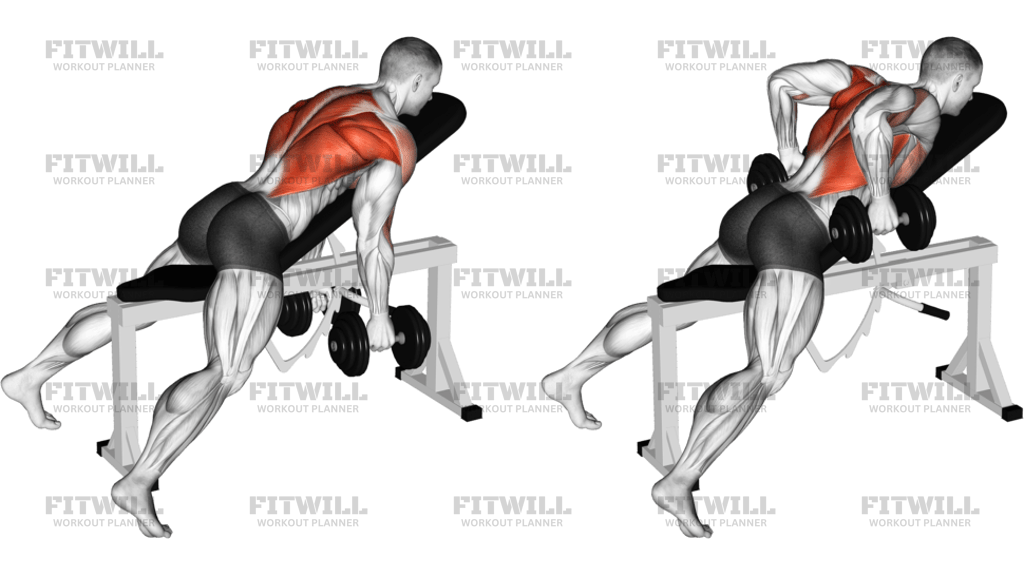
The Dumbbell Kroc Row is a high-volume, single-arm dumbbell row performed with one hand braced on the raised end of an incline bench and the feet in a staggered stance. It began as a grip-building accessory for deadlifters and has become a staple for anyone chasing a thicker, denser upper back. Unlike a strict chest-supported row, the Kroc row deliberately allows a small amount of body movement on the final reps, letting you push past the point where a perfectly rigid row would stall.
This movement trains the lats as the primary mover, with heavy involvement from the mid and upper traps, rhomboids, and rear delts as the shoulder blade retracts. Because you typically work for 15 to 30 or more reps per set with a challenging dumbbell, the forearms and grip take a serious beating, which is exactly why pulling athletes love it. The bent-over torso position also keeps the lower back and core engaged isometrically from start to finish.
Setup matters more here than in a standard row. The bench height, your stance width, and how far you hinge forward all determine whether the dumbbell travels in a clean line toward your hip or drifts into a sloppy swing. A good rule is to set the bench so your supporting hand sits roughly at or slightly below shoulder height, then stagger your feet so the same-side leg as your working arm is back, giving you a stable three points of contact: hand, front foot, back foot.
Execution is straightforward but demands intent. Let the dumbbell hang with a full stretch at the bottom, drive the elbow up and back toward the hip, and pull the handle to the lower ribs rather than the armpit. The last few reps will involve some torso rotation and hip drive, and that is acceptable, as long as the dumbbell keeps moving under control and you never round your lower back into a slumped position.
The Dumbbell Kroc Row fits well as a finisher on back or deadlift days, when you want to load the pulling muscles hard without heavy spinal compression from a barbell. It is also one of the best single exercises for turning weak grip strength into a non-issue, which pays off in deadlifts, pull-ups, and carries.
[ Workout Log & Planner ]
Put your next workout in Fitwill
Keep your plan and training log ready when you are.


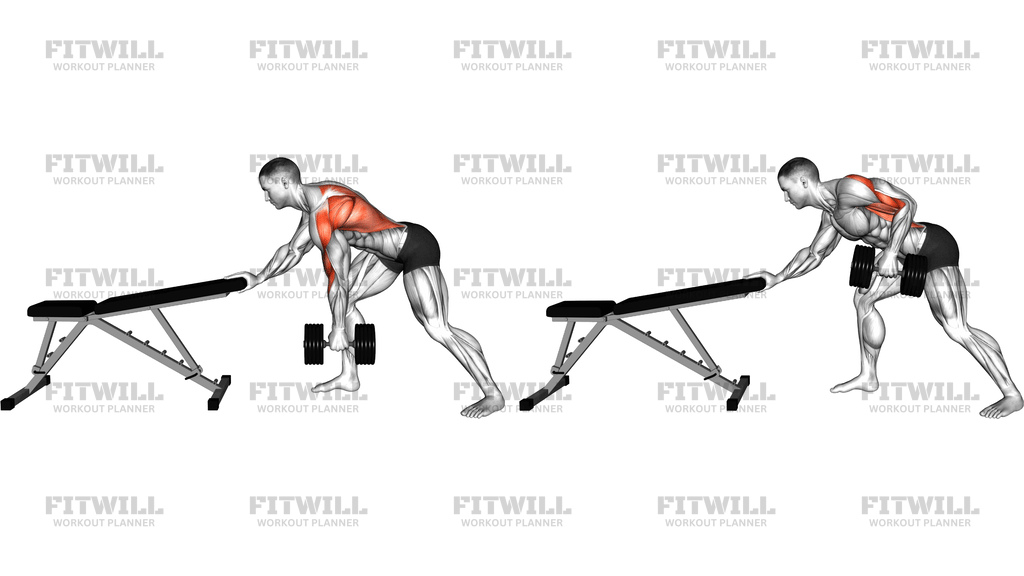
Instructions
- Set an incline bench to a moderate angle and place a dumbbell on the floor beside it.
- Stand next to the bench with your feet in a staggered stance, the leg on the same side as your working arm positioned back and the opposite foot forward.
- Hinge forward and place your non-working hand on the top edge of the bench so your torso angles down toward the floor, back flat and neck in line with your spine.
- Grab the dumbbell with a firm overhand or neutral grip and let it hang at full arm's length, feeling a stretch across the lat.
- Brace your core and take a breath into your belly to lock your torso in place before starting the set.
- Row the dumbbell up and back toward your lower ribs, driving the elbow past your torso rather than flaring it wide.
- At the top, squeeze the shoulder blade back and down for a beat without shrugging it up toward your ear.
- Lower the dumbbell under control to a full hang at the bottom, letting the lat stretch before the next rep.
- Exhale on each pull, then reset your breath every few reps once the set gets demanding.
- Finish the set, switch sides, and rest before taking the other arm through the same rep count.
Tips & Tricks
- Pick a weight you can row honestly for around 15 reps, then plan to grind out extra reps with a little body english as the set goes on. That gradual loosening is part of the method, not a failure.
- The most common mistake is turning the entire set into a swing from rep one. Keep the first two-thirds of the set strict and save the momentum for the final reps only.
- If your shoulder blade shoots up toward your ear at the top, the traps are taking over. Think of tucking the elbow into your back pocket and pulling the handle to the hip.
- Keep the back foot far enough behind you that you can lean into the bench without the front knee collapsing. A too-narrow stance makes you wobble as the weight gets heavy.
- Use lifting straps on the heaviest sets or longest reps if grip gives out before your back does, but run some sets unstrapped to keep building the forearms.
- Do not let the dumbbell drift toward your armpit. The correct path runs roughly from a full hang up toward the hip, which keeps the lat doing most of the work.
- If your lower back starts sagging or rounding instead of just rotating slightly with the pull, end the set. Fatigue in the torso position is the signal to stop, not push through.
- Chalk your hands or use a firm grip on the handle; a slipping dumbbell mid-set is the fastest way to lose the rowing line.
- Rest 60 to 90 seconds between sides and match the rep count on each arm so you do not develop a side-to-side gap.
Frequently Asked Questions
What muscles does the Dumbbell Kroc Row work?
The lats do the bulk of the pulling, supported by the mid and upper traps, rhomboids, and rear delts as the shoulder blade retracts. Because the sets run long, the forearms and grip get trained almost as hard as the back.
How is the Dumbbell Kroc Row different from a regular one-arm dumbbell row?
The Kroc row uses higher reps, a heavier relative load, and deliberately permits some body movement on the final reps to squeeze out extra volume. A standard row stays strict throughout and usually sits in the 8 to 12 rep range.
Why does the Dumbbell Kroc Row use an incline bench for support instead of doing it freestanding?
Bracing one hand on the raised bench gives you a stable three-point base so you can handle heavy dumbbells for long sets without wasting effort on balance. It still leaves enough freedom for the small hip and torso drive that defines the movement.
How many reps should I do on the Dumbbell Kroc Row?
Most lifters run 15 to 30 reps per arm, often going heavier for the low end of that range. The point is sustained pulling volume, so pick a weight that leaves a few honest reps in the tank before form starts to erode.
Is it okay for my torso to twist during the Dumbbell Kroc Row?
A modest amount of rotation on the hardest final reps is built into the exercise, but the set should not start loose. If you are heaving the dumbbell from the first rep, the weight is too heavy.
Should beginners do the Dumbbell Kroc Row?
Beginners are better off mastering a strict one-arm dumbbell row first, since the Kroc row rewards good torso control under fatigue. Once you can hold a solid bent-over position for 12 to 15 strict reps, the Kroc variation is a natural progression.
My grip always fails first on the Dumbbell Kroc Row. What should I do?
That is partly the point of the exercise, so run some sets unstrapped to strengthen the forearms. On your heaviest or longest sets, use lifting straps so the back still gets the intended volume.
Can I do the Dumbbell Kroc Row with my knee on a flat bench instead?
You can, and that version is more supported and stricter, but it changes the character of the movement. The staggered stance with only a hand on the bench is what allows the controlled body drive that makes Kroc rows unique.
Where should I place the Dumbbell Kroc Row in my workout?
It works best as a finisher after your main back or deadlift work, when the heavy barbell pulling is done. Placing it first would fatigue your grip and torso before your big lifts.
Is the Dumbbell Kroc Row safe for the lower back?
It is generally well tolerated because one hand on the bench reduces the load on the spine compared to a freestanding bent-over row. Keep your back flat rather than rounded, brace before each set, and stop if your torso position collapses rather than just rotating slightly.