Resistance Band Seated Calf Stretch
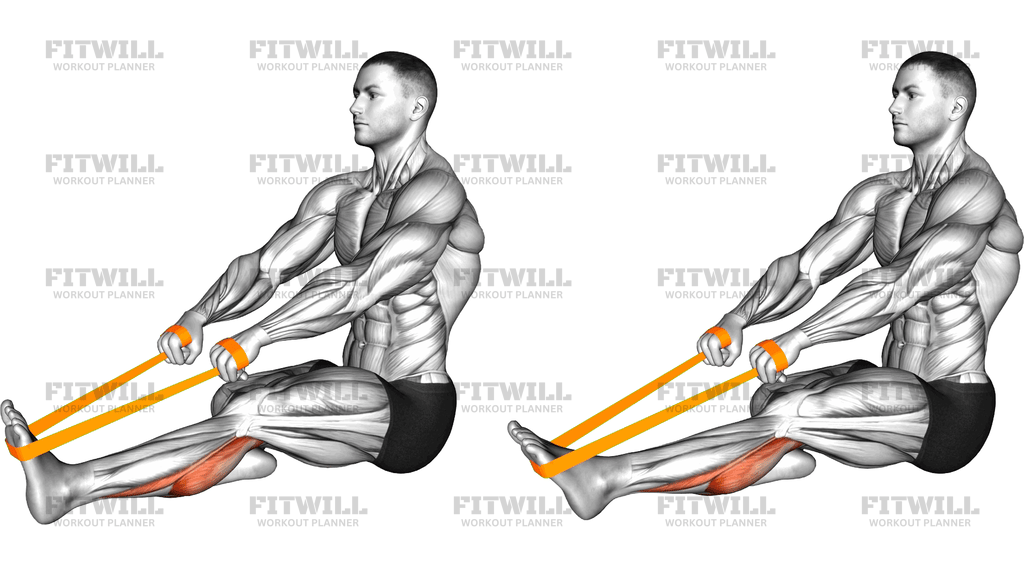
The Resistance Band Seated Calf Stretch is a guided flexibility drill for the back of the lower leg. You sit on the floor with one leg extended, loop a resistance band around the ball of your foot, and gently pull the band toward you so the foot flexes back toward the shin. The highlighted area in this movement is the calf complex — mainly the gastrocnemius, with the soleus working underneath it — and the band simply lets you control exactly how much stretch you take on.
This stretch suits almost anyone with tight calves: runners and lifters, people who spend long hours standing or sitting, or anyone whose heels lift off the ground in a deep squat. Because the gastrocnemius crosses both the knee and ankle, keeping the knee straight during the stretch biases that muscle. If you soften the knee slightly, tension shifts down toward the soleus and Achilles area, which is a useful adjustment to know.
The band is what makes this version practical. Grabbing your toes by hand often collapses your back and pulls you out of position, but the band lets you sit tall with a long spine and still apply steady tension to the forefoot. Wrapping the band across the ball of the foot — not the toes — targets the ankle joint rather than straining the toes.
Set up by sitting with both legs extended and your torso upright. Loop the band around the ball of one foot, hold an end in each hand, and let your arms hang relaxed toward your legs. From there, pull the band until you feel a clear, comfortable stretch along the back of the calf. Hold for twenty to thirty seconds, breathe steadily, and ease off slowly before switching legs.
Common use cases include post-workout recovery after running or leg training, warm-down routines, and general ankle mobility work for squats and lunges. It is also a low-load option for people rebuilding ankle flexibility, since the tension is fully adjustable by how hard you pull or how much slack you leave in the band.
Keep the stretch mild to moderate. You should feel length along the calf, never sharp pain at the heel or the back of the ankle. Keep the extended leg's knee from locking hard, keep the toes relaxed rather than splayed, and stop if you feel any cramping. Calves cramp easily when stretched cold, so a brief walk or a few ankle pumps beforehand helps.
[ Workout Log & Planner ]
Put your next workout in Fitwill
Keep your plan and training log ready when you are.


Instructions
- Sit on the floor with both legs extended in front of you and your torso tall, resting on your sit bones.
- Loop a resistance band around the ball of one foot, placing it just across the base of the toes, and hold one end of the band in each hand.
- Keep the extended leg's knee mostly straight, with the toes pointing up toward the ceiling.
- Brace lightly through your trunk and roll your shoulders back so your upper body stays upright and relaxed.
- Pull the band toward your chest with both hands, drawing the ball of the foot back until your ankle flexes and you feel tension along the back of the calf.
- At the end position, your foot should be tilted back toward your shin while the knee stays extended and the heel stays relaxed.
- Hold the stretch for 20 to 30 seconds, keeping the pull steady rather than jerking the band.
- Exhale slowly as you deepen the pull, and breathe normally throughout the hold.
- Ease the tension off gradually, let the foot return to neutral, then unwrap the band and switch to the other leg.
- Repeat one to three rounds per side, repositioning the band each time you change feet.
Tips & Tricks
- Wrap the band across the ball of the foot rather than the toes — pulling on the toes turns this into a toe stretch instead of a true calf stretch.
- If your knee bends as you pull, the gastrocnemius loses tension; press the back of the knee toward the floor or bend it slightly on purpose to shift the stretch toward the soleus.
- Do not yank the band to get deeper. The calf responds better to a slow, steady pull held for time than to bouncing.
- Keep your lower back long. If you find yourself rounding forward to pull harder, lengthen your grip on the band or use a longer band instead of slumping.
- Watch for cramping in the arch of the foot — if the toes start to cramp, relax them completely and let the band do the work at the ankle.
- A slightly wider split of the band ends in your hands keeps the tension even across the foot, so the pull does not roll the ankle inward or outward.
- Warm calves stretch better. A few ankle pumps or a short walk before starting reduces the chance of a cramp mid-hold.
- The heel should drift slightly forward as the foot flexes back. If the whole leg slides toward you, anchor the opposite heel into the floor.
Frequently Asked Questions
Which muscles does the Resistance Band Seated Calf Stretch target?
It primarily targets the gastrocnemius, the large superficial calf muscle, with the soleus and Achilles tissues taking some of the lengthening as well. Bending the knee slightly shifts more of the stretch toward the soleus.
Why use a resistance band instead of just grabbing my foot?
The band lets you keep your back upright and shoulders relaxed while still applying firm tension to the ball of the foot. Reaching for your toes by hand usually rounds the spine and reduces the quality of the stretch.
Is the Resistance Band Seated Calf Stretch good for beginners?
Yes. It is low-load, easy to adjust, and you control the intensity completely through how much tension you create in the band. Beginners should start with a light stretch and shorter holds of about 15 to 20 seconds.
How long should I hold the stretch?
Twenty to thirty seconds per side works well for most people, repeated one to three rounds. For general flexibility, holding longer with less tension is preferable to short, aggressive pulls.
Should my knee be straight or bent during this stretch?
Keep the knee mostly straight to emphasize the gastrocnemius, which crosses the knee joint. If you want to bias the soleus lower in the leg, bend the knee slightly and keep the same foot position in the band.
My foot cramps when I pull the band. What should I do?
Cramping usually means the toes or arch are working to fight the band. Relax your toes completely, place the band across the ball of the foot rather than the toes, and reduce the tension until the cramping stops.
Can I do the Resistance Band Seated Calf Stretch every day?
Yes, gentle calf stretching is generally safe to perform daily, especially after running, walking, or leg training. Just keep the intensity moderate and avoid forcing a deep stretch every session.
What can I use if I do not have a resistance band?
A towel works as a substitute — loop it around the ball of the foot the same way and hold one end in each hand. The band simply offers more consistent, adjustable tension than a towel.
Is this stretch safe after an ankle or calf injury?
It can be useful during recovery because the load is so adjustable, but check with a healthcare professional first. Stop if you feel sharp pain at the heel or the back of the ankle rather than a broad stretch along the calf.