Stick Sitting Side To Side Bend
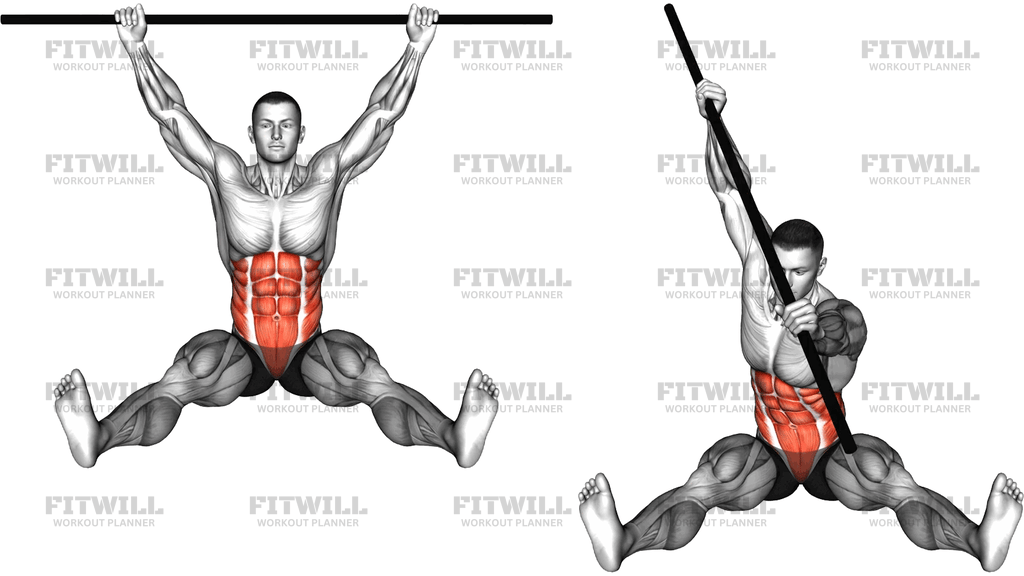
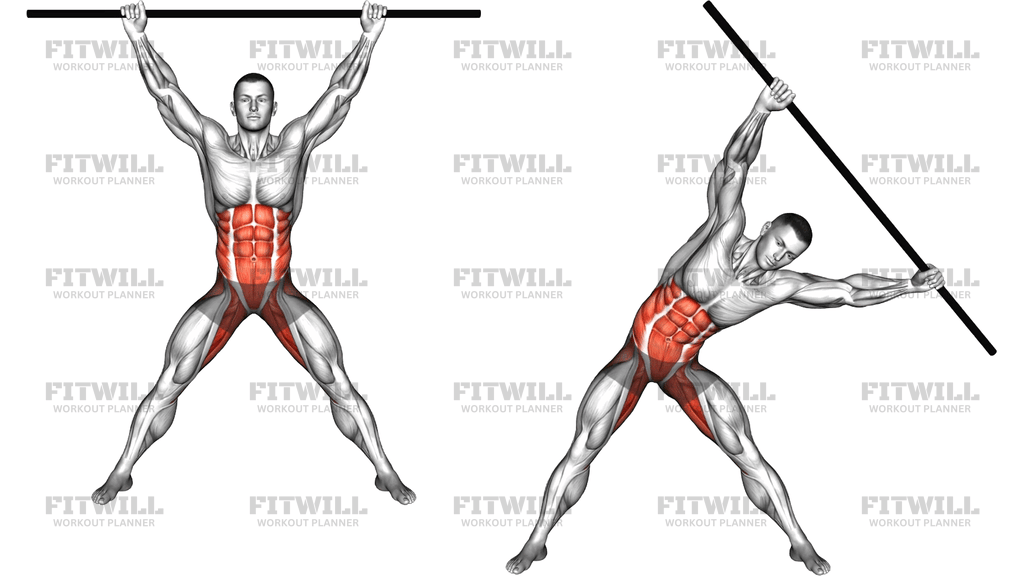
The Stick Sitting Side To Side Bend is a seated core exercise performed with a light stick, broom handle, or similar bar held overhead with a wide grip. You sit on the floor with your legs spread wide apart, arms locked out above your head, and then bend directly sideways from the waist, lowering the stick toward one side before sweeping back up through the middle and over to the other side. The wide straddle seat anchors your hips in place, which forces the side-bending to come from your trunk rather than from your pelvis.
This movement primarily targets the abdominal wall, with the rectus abdominis working to keep the trunk controlled as it tilts, and the obliques and quadratus lumborum driving the side-to-side motion. Holding the stick overhead also engages the shoulders, upper back, and triceps isometrically, since your arms must stay extended and stable while the torso moves underneath them. The wide-legged seated position additionally lengthens the inner thighs and hamstrings, giving you a passive adductor stretch while the core works.
The setup matters more than it might first appear. Sitting on the floor with the legs straddled wide removes the option of cheating with your hips or legs, so the exercise isolates lateral trunk flexion in a way that standing side bends often do not. The overhead stick acts as both a training load and a built-in form check: as long as the stick stays long and your arms stay straight, you can see exactly how far and how cleanly you are bending, and any twisting shows up immediately as the stick tips forward or back.
To execute it well, keep the movement in the frontal plane. Bend straight out to the side as if the space between two walls were compressing you, let the top shoulder stay long rather than collapsing it toward your ear, and move at a pace you can fully control. Sweep back up through vertical without pausing or resting, then flow into the opposite side. The goal is a smooth, continuous arc, not two separate drops.
This exercise suits lifters who want direct oblique and abdominal work without loading the spine with heavy weight, as well as anyone warming up the trunk before squats, presses, or sport. It is also a practical choice for people who spend long hours seated and need to restore lateral mobility through the waist. Because the resistance comes only from the stick and your own control, the difficulty lives in quality of movement: keep the reps slow, the hips planted, and the arc even on both sides, and stop if you feel any strain in the lower back rather than the sides of your waist.
[ Workout Log & Planner ]
Put your next workout in Fitwill
Keep your plan and training log ready when you are.


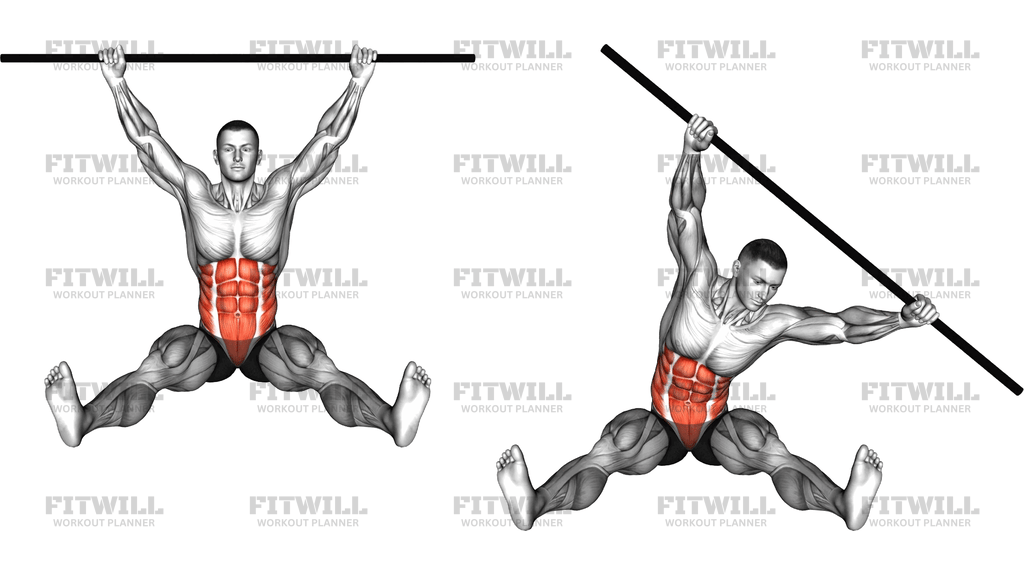
Instructions
- Sit on the floor with your legs spread wide apart, knees soft, and your sitting bones planted firmly into the ground.
- Grip a stick or broom handle with an overhand grip wider than your shoulders, and press it straight overhead so your arms are fully extended.
- Brace your abdominal wall and sit tall, stacking your ribs over your pelvis before you begin to move.
- Bend directly sideways at the waist, lowering the stick so the top hand travels out and over toward one side while your hips stay flat on the floor.
- Continue until you feel a clear contraction along the lower side of your waist and a stretch up the opposite side, keeping the stick long and your arms straight.
- Pull yourself back up through the upright position using the muscles on the side you just stretched, without twisting the stick forward or back.
- Without stopping at the top, flow into the same side bend toward the opposite side to complete one full rep.
- Exhale as you bend to each side and inhale as you pass back through the upright position.
- Keep your gaze forward and your chest open throughout so the stick stays in a vertical plane over your body.
- Complete your set, then lower the stick with control and gently shake out the shoulders and waist before standing up.
Tips & Tricks
- The most common mistake is bending forward instead of sideways, which turns the stick diagonal toward the floor in front of you. Fix it by imagining bending between two panes of glass placed just in front of and behind your body.
- Do not let the working-side shoulder collapse toward your hip as you drop. Keep the top arm reaching long so the obliques, not gravity on a slack arm, control the descent.
- If your hips rock or lift as you bend, narrow your straddle slightly. A stance wider than your current flexibility allows will pull your pelvis off the floor and steal work from your waist.
- Keep the grip wide and relaxed. A narrow or death-grip on the stick shifts tension into the forearms and traps and makes the overhead position harder to hold.
- Moving too fast is another frequent error. Because the load is light, speed is the only way to cheat, so cap the pace at something slow enough that you could pause at any point in the arc.
- If your hamstrings or inner thighs feel tighter than your waist during the set, sit on a low step or folded mat to elevate the hips and tilt your pelvis forward slightly.
- Bend only as far as you can return from under control. The return through the middle is where the obliques do their best work, so a deeper drop with a sloppy recovery is worth less than a modest one with a clean pull back up.
- If the overhead position bothers your shoulders, widen your grip further or use a lighter stick until your overhead mobility improves.
Frequently Asked Questions
What muscles does the Stick Sitting Side To Side Bend work?
The abdominals, especially the rectus abdominis, do the bracing and control, while the obliques and quadratus lumborum produce and manage the side-bending. The shoulders and upper back also work isometrically to keep the stick held steady overhead.
Why is this exercise done sitting with the legs spread wide?
The wide straddle seat pins your pelvis to the floor so your hips cannot sway or cheat, isolating the side bend in your trunk. It also lengthens the inner thighs and hamstrings while you work.
Is the Stick Sitting Side To Side Bend suitable for beginners?
Yes, as long as you use a very light stick and keep the range modest. Beginners should focus on sitting tall, keeping the arms straight, and bending only as far as they can smoothly return from.
How wide should my grip be on the stick?
Grip wider than shoulder width so the stick stays level when your arms are straight overhead. If your shoulders feel crowded or the stick tips forward, widen your hands further.
Should I pause at the top between sides?
No. The upright position is the start of the next rep, not a rest stop. Sweeping continuously from one side to the other keeps the obliques under tension and makes the movement harder to fake.
Can I add weight to make it harder?
You can progress by using a slightly heavier bar or a longer stick, but be cautious adding load overhead in a seated position. Increasing time under tension with slower reps is usually the safer first step.
My lower back feels this instead of my waist. What am I doing wrong?
You are likely leaning forward or letting your pelvis tilt as you bend. Keep the stick in a vertical plane over your body, re-brace your abdominals before each side bend, and shorten the range until the work shifts back to your waist.
What can I use if I do not have a stick?
Any long, light object works, such as a broom handle, PVC pipe, or a resistance band held overhead. You can even do the movement with empty hands by reaching both arms long above your head.
Is this a stretching exercise or a strength exercise?
It functions as both. The working side contracts through the bend while the opposite side lengthens, so you get active oblique work paired with a lateral trunk and inner-thigh stretch in the same rep.