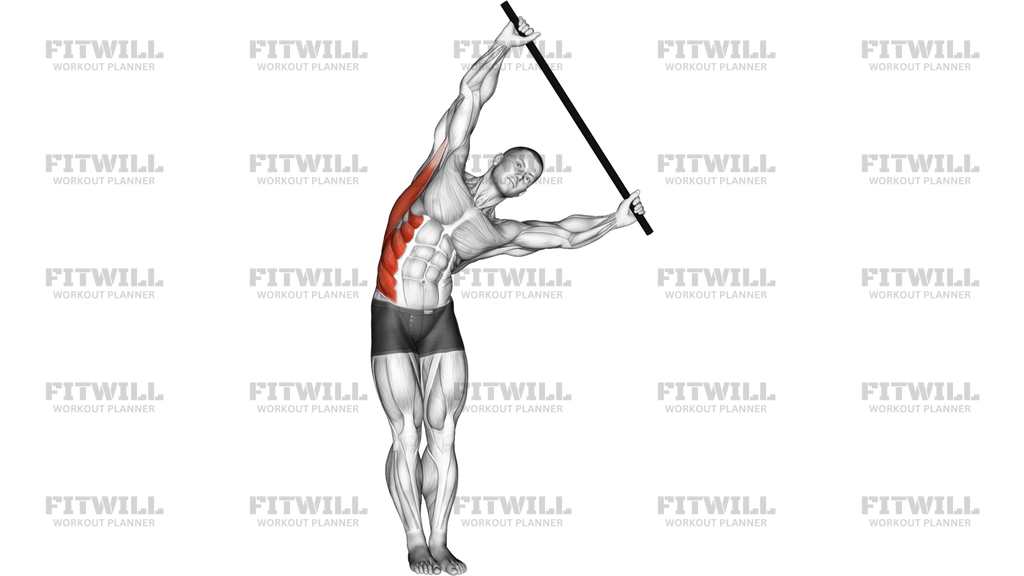
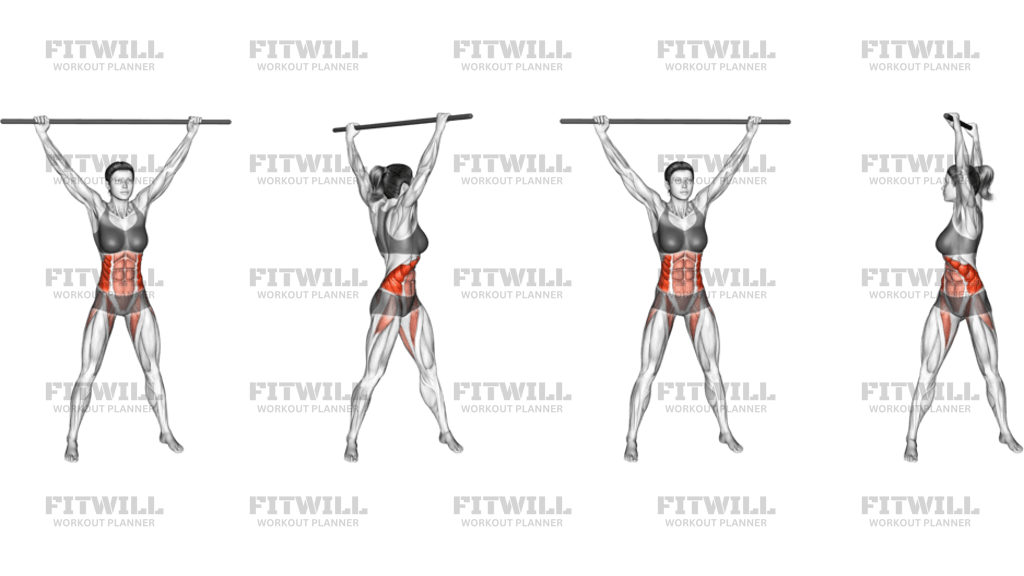
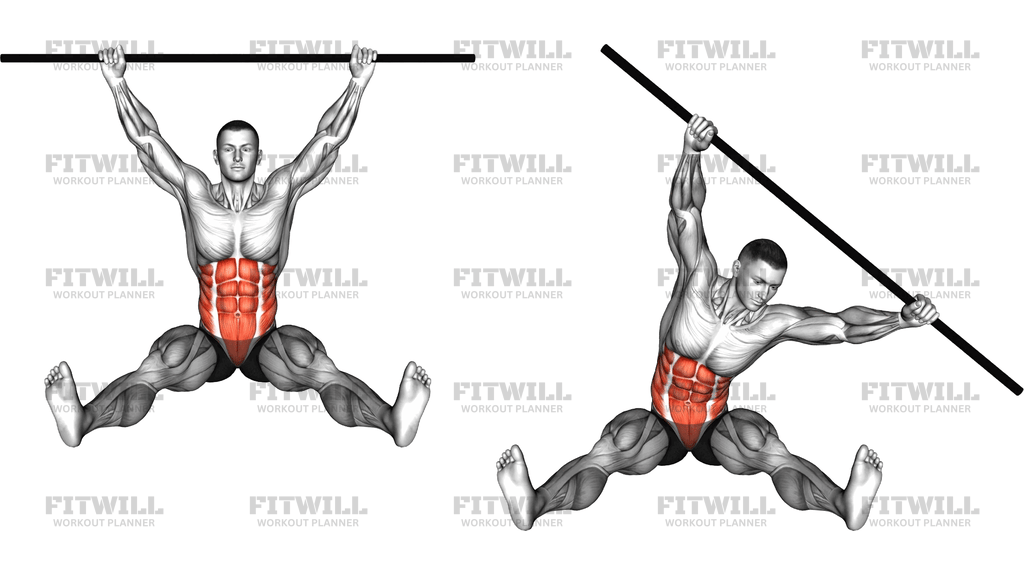
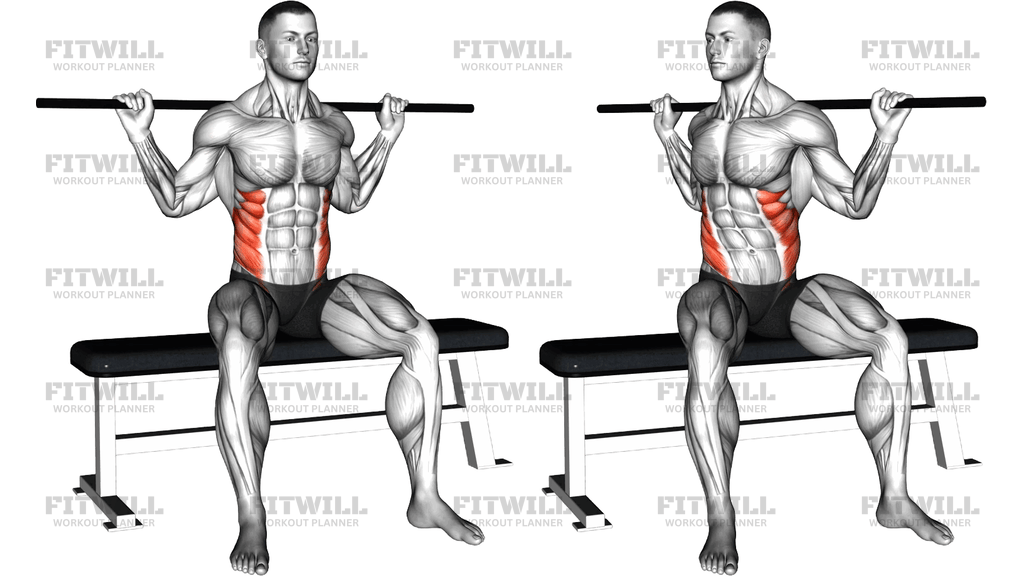
Stick Sitting Side To Side Bend Along The Wall
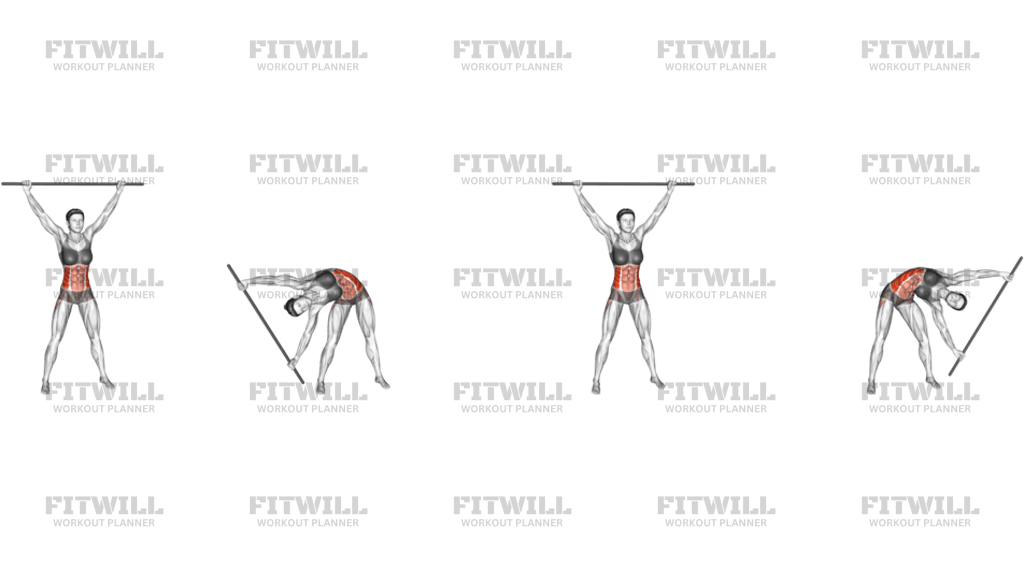
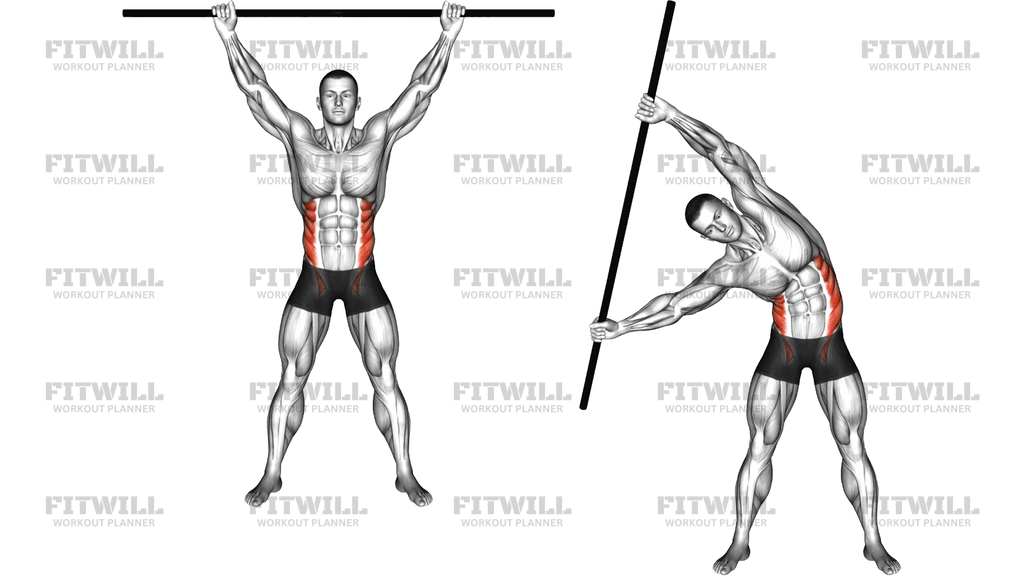
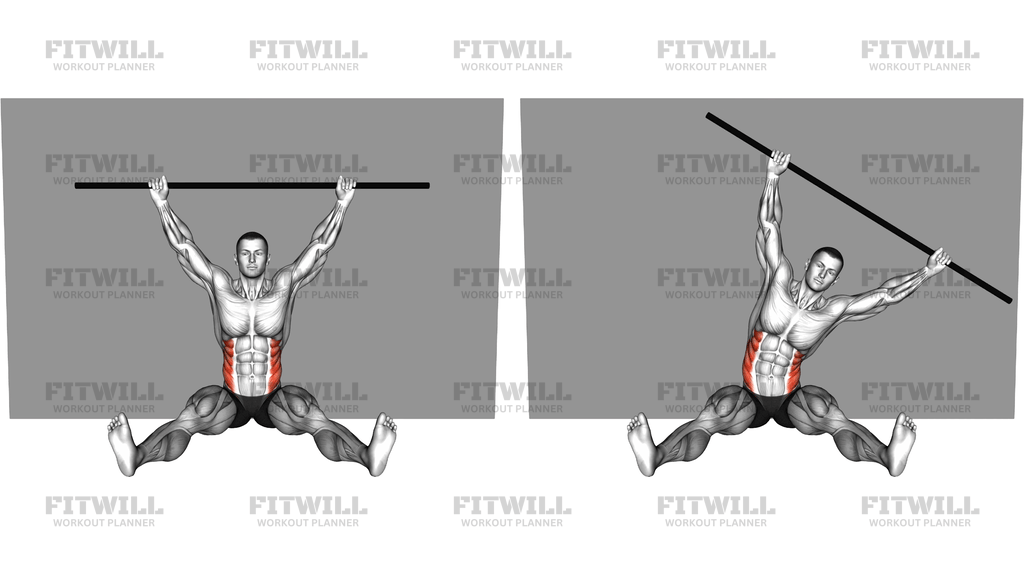
The Stick Sitting Side To Side Bend Along The Wall is a seated lateral flexion drill performed with a long stick held overhead in a wide grip while the back rests against a wall. You sit on the floor with your legs spread wide apart, press your back flat against the wall behind you, and raise the stick above your head with straight arms. From there, you bend sideways from the waist, lowering the stick diagonally toward one side, then return through the middle and bend to the other side. The wall and the overhead stick work together to lock your torso into one plane of motion, which makes it very hard to cheat with rotation or forward rounding.
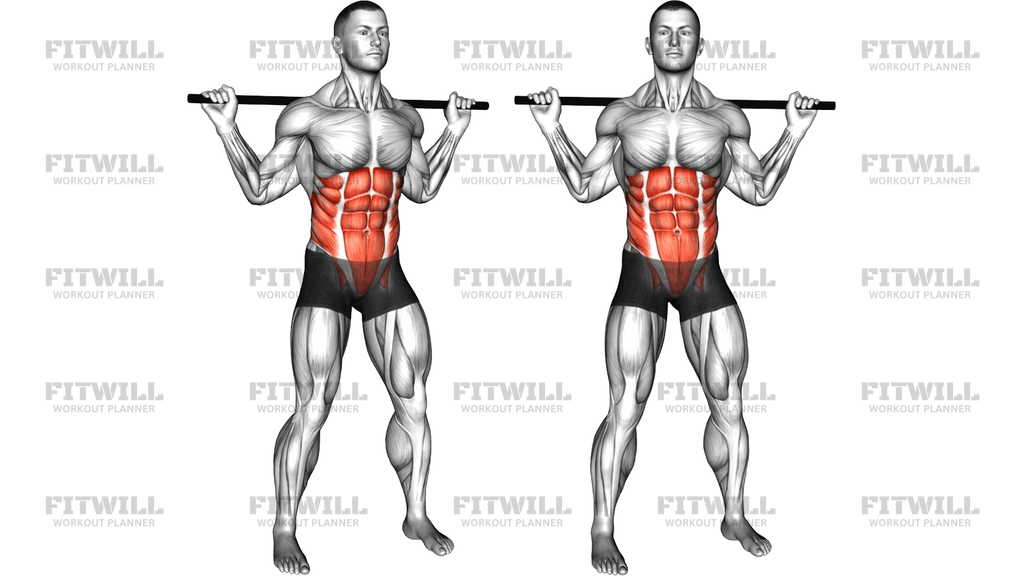
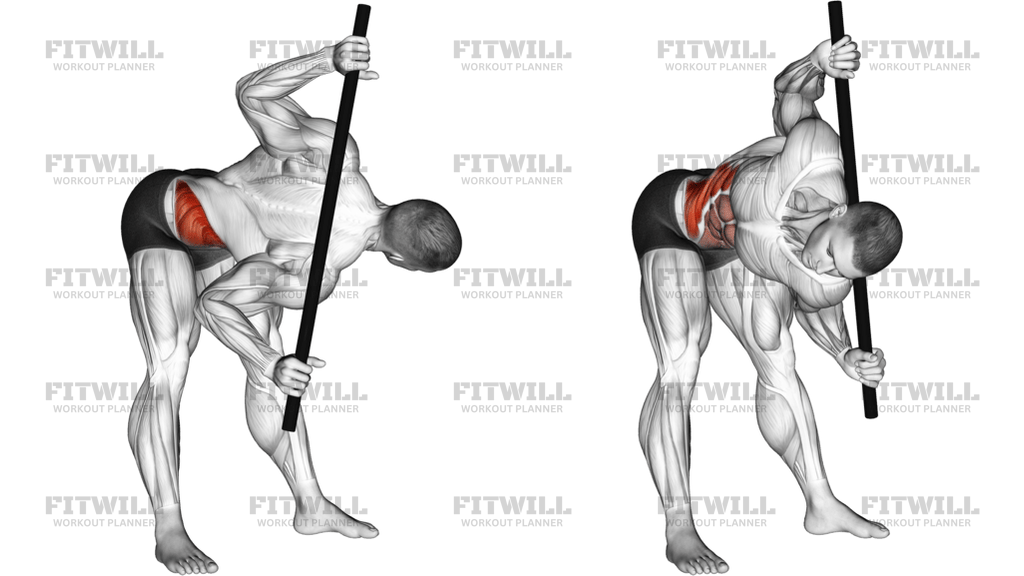
This movement primarily targets the obliques along the sides of your waist, with the deep core and the small muscles along the spine helping to control each bend. The wide straddle position also asks your inner thighs and hips to hold a stable split stance on the floor, and the overhead stick keeps the shoulders and upper back involved throughout. Because the wall gives constant feedback, you can feel immediately when your hips shift or your back peels away from the surface, which is exactly what makes this drill useful for learning what a true side bend feels like.
It suits a wide range of people: lifters who want to mobilize and strengthen the lateral trunk, beginners who struggle to bend sideways without twisting, and anyone rebuilding trunk control after long periods of sitting. It is also a practical warm-up or cool-down drill before or after lower body and core sessions, since it opens the side of the waist while the legs are already in a stretched position.
The setup matters more than it looks. The wall prevents backward lean and the wide, light grip on the stick keeps both arms long and symmetrical, so the bend has to come from the waist rather than from the elbows, shoulders, or hips. Sit tall with your lower back and shoulders in contact with the wall, and let the stick travel in a smooth arc overhead as you lean.
Keep the movement slow and deliberate. Bend only as far as you can while keeping both hips grounded and your back against the wall, pause briefly at your end range, then move through center to the opposite side. Avoid forcing depth; the goal is a clean, side-to-side arc where the stick stays in one diagonal plane, not a maximum reach. If you feel pinching in the shoulder or a strain in the low back rather than a stretch along your side, reduce the range and shorten your grip on the stick.
[ Workout Log & Planner ]
Put your next workout in Fitwill
Keep your plan and training log ready when you are.


Instructions
- Sit on the floor with your back against a wall and spread your legs wide apart, knees soft, so your inner thighs and hips rest comfortably in a straddle position.
- Take a stick with an overhand grip, hands set wide, and raise it straight overhead so both arms are long and the stick sits level above your head.
- Press your head, upper back, and lower back gently against the wall, and sit tall through the crown of your head to lengthen your spine before moving.
- Brace your core lightly and keep both hips firmly planted on the floor with your legs relaxed and still.
- Keeping your arms straight, bend sideways from the waist, letting the stick tilt in a diagonal arc as the muscles along the opposite side of your waist stretch.
- Hold the end position for a brief moment, making sure your back stays against the wall and your hips have not lifted or twisted.
- Slowly return through the upright center position and immediately bend to the opposite side, tracing the same smooth arc with the stick.
- Exhale as you bend into each side and inhale as you return upright through the middle.
- Continue alternating side to side for your target number of repetitions, keeping the tempo even and the range identical on both sides.
- When finished, lower the stick to your chest, then to the floor, and gently bring your legs together out of the straddle.
Tips & Tricks
- If your lower back rounds or lifts off the wall during the bend, you are going too deep; shorten the range until only your shoulders and hips stay anchored.
- Grip the stick slightly narrower than your comfortable maximum. A grip that is too wide makes the arc feel loose, while too narrow turns it into a shoulder stretch instead of a waist movement.
- A common mistake is pulling the stick down with the top arm. Keep both arms passive and long, and let the waist create the angle.
- Watch that the knee of the side you are bending toward does not lift off the floor; if it does, your hips are rotating and the obliques are no longer doing the work.
- Keep your neck neutral by looking straight ahead rather than tilting your head toward the side you are bending into.
- If tight hips make the wide straddle uncomfortable, shorten the spread of your legs slightly rather than forcing the knees toward the floor.
- Move slower than feels necessary. Most people rush the return through center, which is where the transition from one oblique to the other should be felt.
- A lightweight stick or even a broom handle works fine; avoid anything heavy, since a heavy stick shifts the effort into the shoulders.
- If one side feels noticeably tighter, spend an extra repetition or two on that side but keep the range symmetrical on both ends of each rep.
Frequently Asked Questions
Which muscles does the Stick Sitting Side To Side Bend Along The Wall work?
The obliques on the sides of your waist are the main muscles working and stretching, with support from the deep core and the muscles along the lower spine. The wide straddle position also places a gentle stretch on the inner thighs and hips.
Why is this side bend done against a wall?
The wall keeps your back upright and prevents you from leaning backward, rotating, or rounding forward while you bend sideways. That feedback forces the movement to come from the waist instead of being compensated by the hips or shoulders.
Why is a stick held overhead instead of just reaching with the arms?
The stick links both hands into one long lever, so both arms stay symmetrical and the bend happens as a single diagonal arc. Without it, one arm tends to drift forward or pull, which turns the drill into a shoulder movement.
Can beginners do the Stick Sitting Side To Side Bend Along The Wall?
Yes, and it is actually a good teaching drill for beginners because the wall makes cheating difficult. Start with a smaller range of motion and a comfortable leg spread, then gradually increase depth as the waist gains mobility.
What should I do if I cannot sit comfortably with my legs spread wide?
Narrow your stance until you can sit tall without forcing your knees toward the floor. The exercise still trains the lateral bend effectively with a moderate straddle, and your hip flexibility can improve over time.
How many repetitions should I perform?
Alternate side to side for about 8 to 12 bends per side, moving slowly with a brief pause at the end of each bend. One to two sets work well as a warm-up or as a finisher for the waist.
Is this a strength exercise or a stretching exercise?
It functions as both: the obliques actively control the bend, which builds lateral trunk control, while the opposite side of the waist lengthens under load. Most people use it as a mobility and core-activation drill rather than a heavy strength movement.
What is the most common mistake in this exercise?
Lifting the hips or twisting the torso to reach further sideways. If either hip leaves the floor or your back separates from the wall, reduce the range and refocus on bending purely through the waist.
Can I substitute the stick with something else?
A broom handle, PVC pipe, or any light, straight bar of similar length works. Avoid heavy bars, because extra weight shifts the work into the shoulders and changes the feel of the arc.
Is it safe if I have lower back discomfort?
Move within a comfortable range and stop short of any pinching or sharp sensation along the spine. Because the wall limits unwanted leaning, this is a controlled drill, but if a bend reproduces your symptoms, reduce the depth or consult a qualified professional before continuing.