Stick Side Bend Stretch
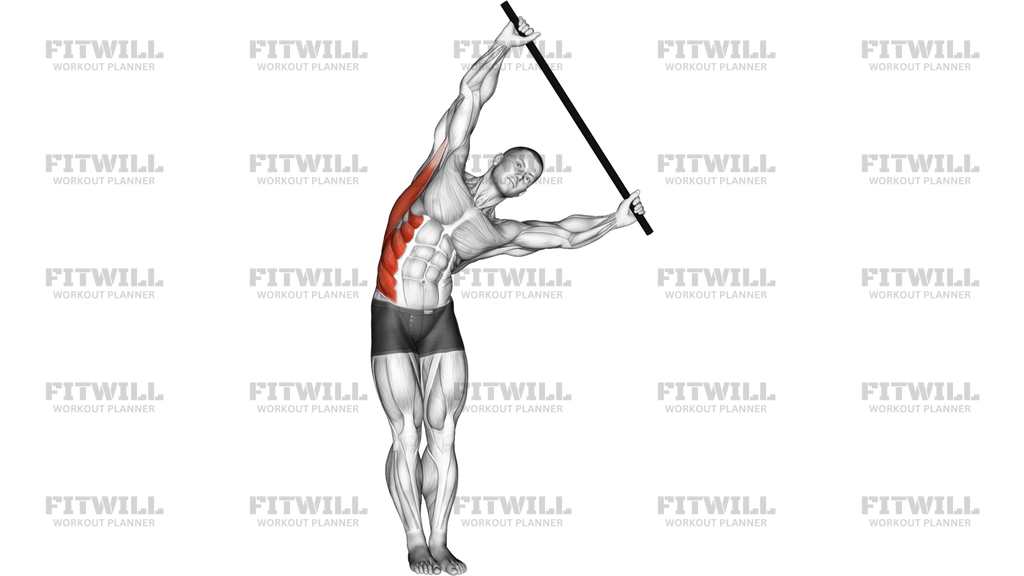
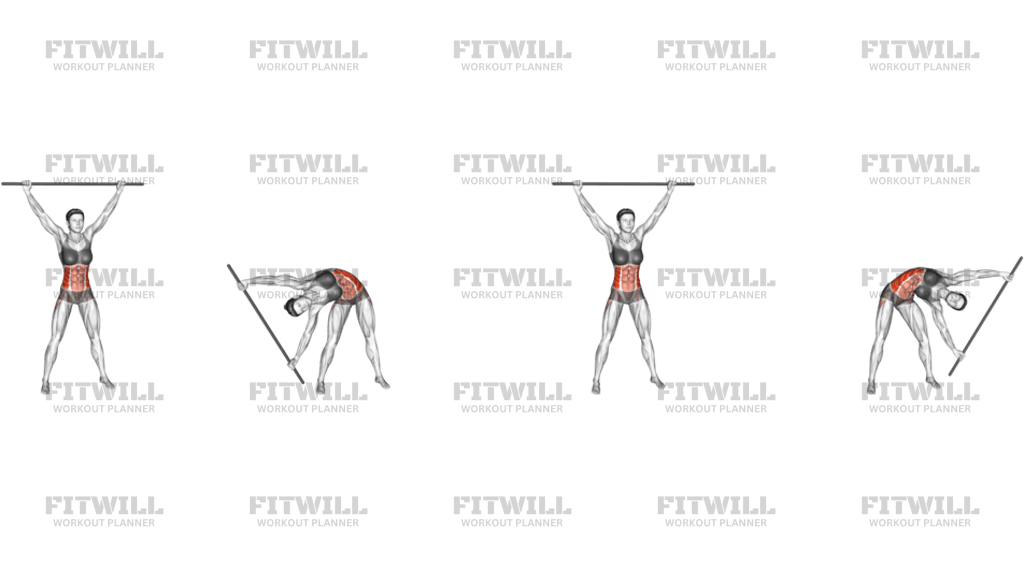
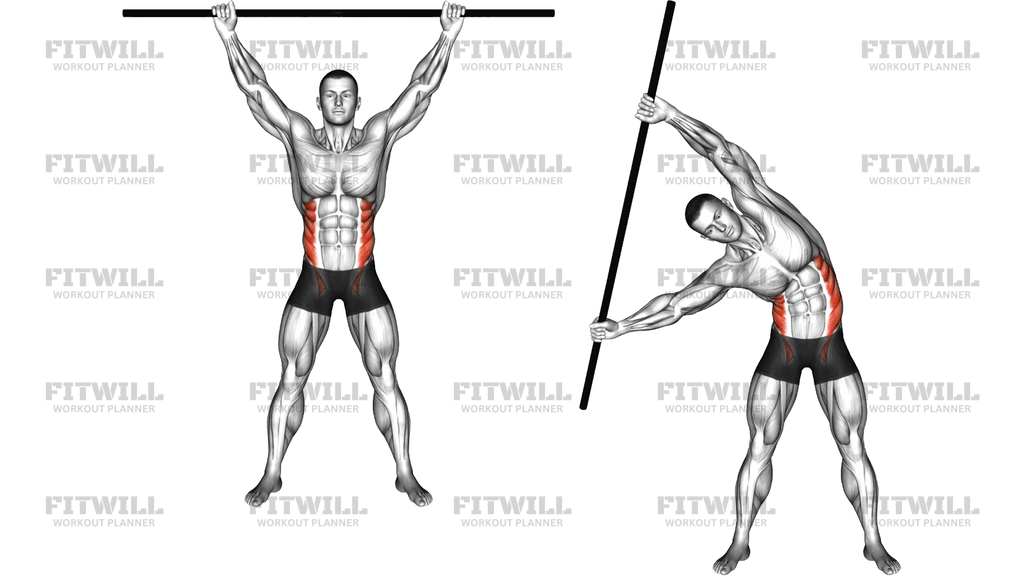
The Stick Side Bend Stretch is a standing lateral flexion stretch performed with a light stick, dowel, or bar held overhead with a wide, overhand grip. From a tall stance with feet about shoulder-width or slightly wider, you keep both arms fully extended as you bend sideways to one side, letting the stick tilt into a diagonal line above you. The highlighted working area in this movement is the side of the trunk — the obliques, along with the deep muscles of the lower side back like the quadratus lumborum — which lengthen on the side you bend away from and shorten on the side you bend toward.
This stretch is useful for almost anyone who spends long hours sitting, because prolonged sitting tends to stiffen the lateral trunk and compress the sides of the lower back. It is also a common warm-up or cool-down choice for lifters who train overhead pressing, deadlifts, or weighted carries, and for anyone whose side waist feels tight after ab work. Because the stick keeps both arms connected in a straight line, it gives you instant feedback: if the stick bows or one elbow bends, you know your form has drifted.
The setup matters more than it looks. A wide grip on the stick keeps your shoulders open and lets the stick travel smoothly overhead without crowding your neck. Feet planted firmly and hips staying level ensure the bend comes from your spine and side waist rather than from your pelvis tipping sideways. If your stance is too narrow or your hips shift, you lose the clean lengthening sensation along the opposite side of your torso and may instead load the lower back unevenly.
To execute it well, press the stick straight overhead, brace lightly through your midsection, and then reach up and over to one side as if the top hand were being pulled toward the far wall. The bend should feel like a long, even stretch from your hip up through your ribs and armpit, not a sharp pinch in your lower back. Pause briefly at your end range, breathe steadily, and return through the same controlled arc before switching sides.
In practice, this movement works well as part of a mobility circuit, a pre-training warm-up for core or overhead days, or a gentle mid-day reset at the office or gym. Keep the movement slow and pain-free, treat the stick as a guide rather than something to wrench against, and one to two smooth bends per side is usually enough to feel the sides of your waist open up.
[ Workout Log & Planner ]
Put your next workout in Fitwill
Keep your plan and training log ready when you are.


Instructions
- Stand tall with your feet roughly shoulder-width apart or a touch wider, weight spread evenly across both feet.
- Grip the stick with an overhand grip, hands set wider than your shoulders, and raise it straight overhead so the stick sits level above your head.
- Keep both elbows locked out and your shoulders relaxed down away from your ears, with your ribs stacked over your hips.
- Brace your midsection lightly and keep your hips square and level — do not let one hip drift up as you bend.
- Inhale, then exhale as you bend sideways to the right, reaching your left hand up and over so the stick tilts into a diagonal line above you.
- Continue until you feel a clear stretch along the left side of your waist, ribs, and armpit, keeping your head neutral between your arms.
- Hold the end position for a breath or two, keeping the stretch long rather than forcing deeper.
- Exhale as you bend back up through the same controlled arc until the stick is level overhead again.
- Repeat the side bend to the left for the same hold, then complete your desired number of repetitions per side.
- Lower the stick to your chest or waist to rest between sets, and reset your stance before the next round.
Tips & Tricks
- If your lower back pinches at the bottom of the bend, you are likely collapsing sideways through the hips — squeeze your glutes slightly and think of bending along a flat wall so both hips stay facing forward.
- Bending too fast is the most common mistake here; the stretch comes from a slow reach, so let the top hand travel away from your body instead of simply dropping your shoulder toward the floor.
- If one elbow softens mid-stretch, your grip may be too narrow — slide the hands out toward the ends of the stick until both arms can stay straight overhead.
- Keep your neck neutral between your arms; craning your head toward the bending side shortens the very muscles you are trying to lengthen.
- A light knee bend is fine if your balance is shaky, but avoid leaning forward or backward — the stick should stay in one flat plane, not drift toward the mirror.
- If your shoulders complain overhead, widen the grip further or use a lighter, shorter stick; the goal is the side waist, not an overhead shoulder test.
- Match the bend to your breath: reach a little further on each exhale rather than pushing deeper all at once.
- Do equal holds on each side even if one side feels tighter, so you do not build a left-right imbalance over time.
Frequently Asked Questions
What muscles does the Stick Side Bend Stretch target?
The main targets are the obliques on the sides of your waist, along with the quadratus lumborum deep in the lower side back. The lats and shoulders also get a gentle lengthening because your arms stay extended overhead.
Why use a stick instead of doing side bends with just my arms?
The stick links both hands in a straight line, so any bend in your elbows or twist in your shoulders is immediately obvious. It also makes the reach overhead easier and gives you a clearer sense of the diagonal path.
Is the Stick Side Bend Stretch suitable for beginners?
Yes. It is a low-load, bodyweight stretch, and beginners can start with a smaller bend and a shorter hold. Keep the movement slow and stay within a comfortable stretch rather than chasing maximum range.
Should my hips move during the stretch?
No — your hips should stay square and level while the bend comes from your spine. If one hip hikes up, the stretch shifts away from the waist and can load the lower back unevenly.
How wide should my grip be on the stick?
Start with your hands noticeably wider than your shoulders, roughly near the ends of the stick. If your elbows want to bend or your shoulders crowd your neck, widen the grip further.
How long should I hold each side bend?
One to two slow breaths at the end range is a good default, or about 10 to 20 seconds. Repeat one to two bends per side, especially before core or overhead training.
What can I use if I do not have a stick or dowel?
A lightweight broom handle, PVC pipe, or even a resistance band held taut between both hands works well. Without any equipment, you can mimic the reach by interlacing your fingers and pressing your palms overhead.
When is the best time to do this stretch?
It works well as a warm-up before lifts like deadlifts, carries, or overhead pressing, and as a cool-down after intense ab training. It is also a simple mid-day mobility break if your sides feel stiff from sitting.
Can I do the Stick Side Bend Stretch with lower back discomfort?
If the movement is pain-free and feels like a stretch rather than a pinch, gentle versions are generally fine. If bending sideways causes sharp or radiating symptoms, stop and consult a qualified professional before continuing.