Prayer Circle
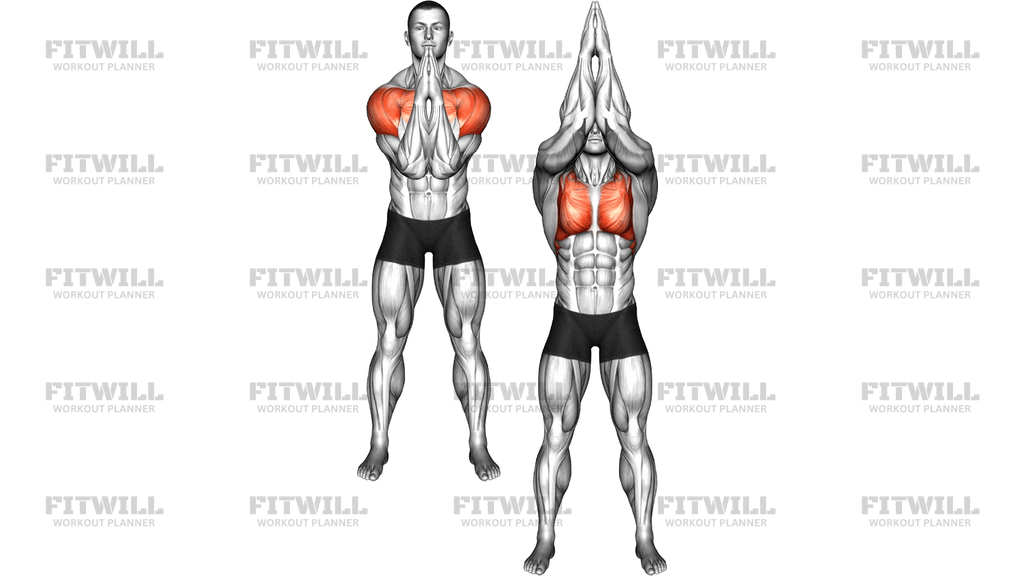
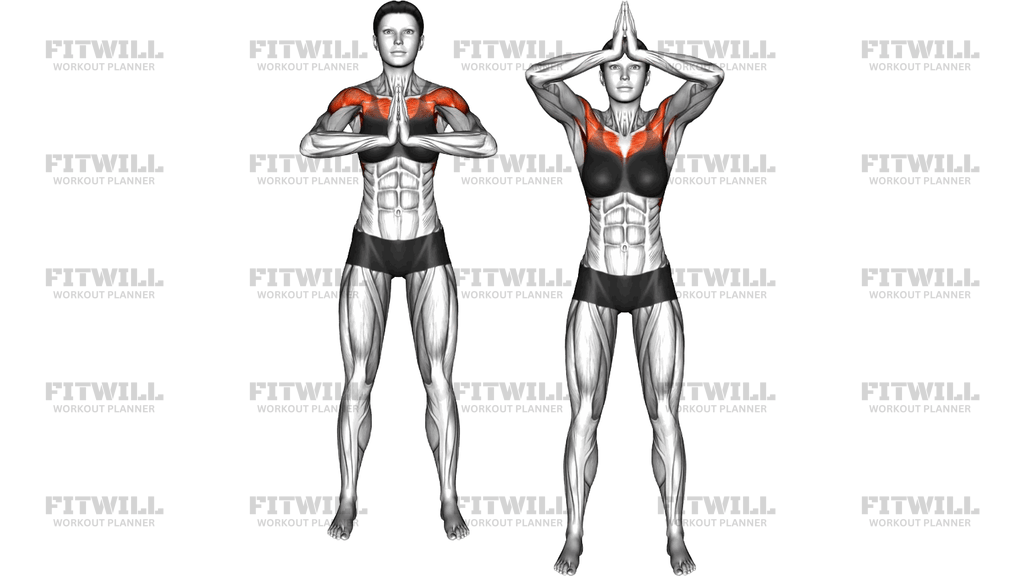
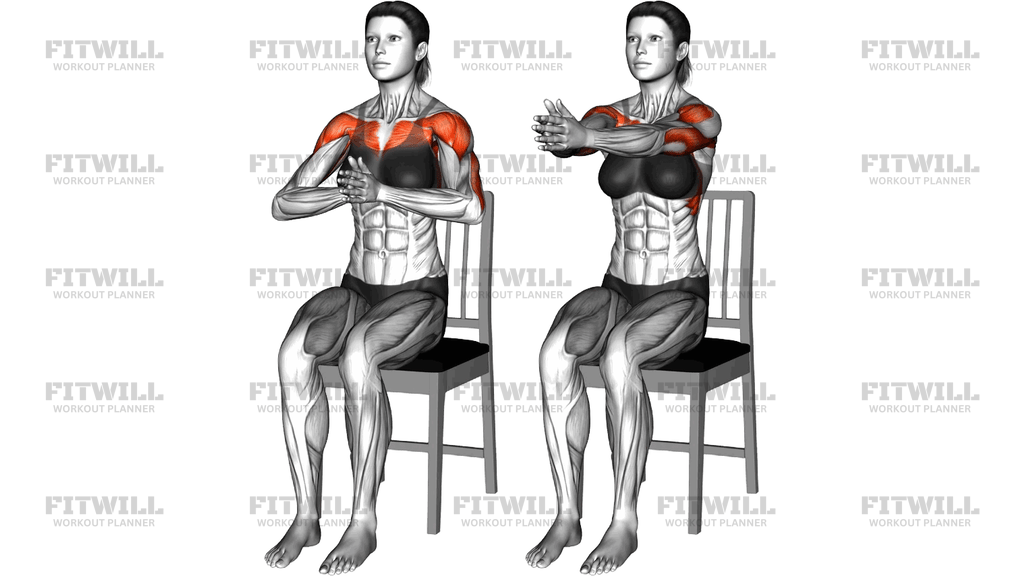
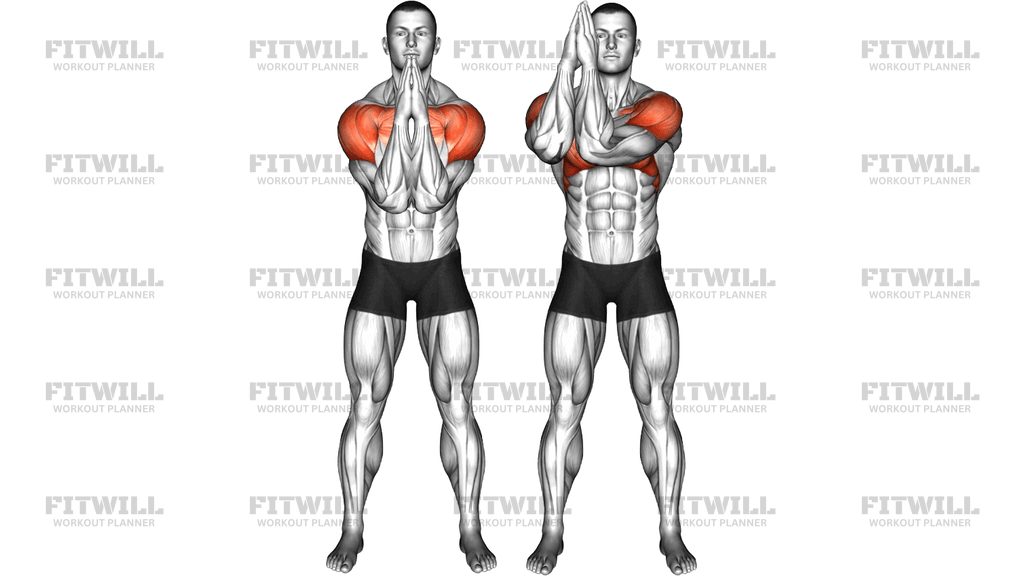
The Prayer Circle is a self-resisted, body weight exercise for the chest that uses nothing but your own hands pressing against each other. You stand tall with your palms glued together in front of your chest in a prayer position, then trace a slow circular path with your hands and elbows while maintaining constant inward pressure. Because your arms resist each other, the pressing muscles of the chest and front shoulders work hard the entire time, even though no external load is involved.
This movement is especially useful when you have no equipment available, when you are warming up before a pressing session, or when you want to feel your chest working without stressing the shoulder or elbow joints with weight. The continuous squeeze trains the pectoralis major in its main job, which is pressing the arms toward the midline of the body, and the circular path keeps the tension moving through slightly different angles of the muscle. The front delts and triceps assist, and your core stays quietly engaged to keep your torso upright.
Setup matters more than it looks. Stand with feet about hip-width apart, soften your knees, and bring your palms together at chest height with fingers pointing up and elbows tucked fairly close to your ribs. If your hands drift away from each other, the chest stops working and the exercise turns into a simple arm circle, so the quality of the entire set depends on how firmly you keep pressing your palms together.
To execute it well, press your palms into each other with moderate-to-firm effort, then slowly move your hands in a circle, letting the elbows travel outward and upward on one half of the circle and back down toward your ribs on the other half. Keep the pressure constant through the whole loop, keep your shoulders relaxed away from your ears, and breathe steadily instead of holding your breath. Reverse the direction after completing your reps one way so both halves of the chest's range get trained.
You will see this exercise used in hotel-room and at-home workouts, as a pre-exercise activator before bench pressing or push-ups, and in rehab-style or beginner programs where a joint-friendly chest contraction is the goal. It is also a simple way to teach a new lifter what a chest squeeze is supposed to feel like before they load a press.
The most common fault is rushing the circle or letting the pressure fade as fatigue builds. Keep the circles slow, aim for a full loop of two to four seconds in each direction, and stop the set when you can no longer hold firm palm pressure. If your wrists ache, angle your hands slightly or reduce the pressing force rather than pushing through pain.
[ Workout Log & Planner ]
Put your next workout in Fitwill
Keep your plan and training log ready when you are.


Instructions
- Stand upright with your feet hip-width apart, knees slightly soft, and your weight spread evenly across both feet.
- Bring your palms together in front of your chest in a prayer position, fingers pointing up, with your elbows tucked near your lower ribs.
- Press your palms firmly into each other and hold that inward pressure for the entire set.
- Draw your shoulders down and back, lift your chest, and brace your stomach lightly to keep your torso from swaying.
- Keeping the palm pressure constant, trace a slow circle with your hands, letting your elbows swing outward and upward as your hands rise, then inward and downward as they return.
- Keep the circle small to medium and controlled, taking roughly two to four seconds to complete each full loop.
- Breathe steadily throughout, inhaling and exhaling naturally rather than holding your breath during the press.
- Complete your reps in one direction, then reverse the circle and perform the same number of reps the other way.
- When finished, release the palm pressure gently, drop your arms to your sides, and shake out your shoulders and wrists before the next set.
Tips & Tricks
- The exercise only works while your palms are actively pressing together, so the moment you feel the pressure fading, pause and reset instead of letting your hands slide apart.
- A common mistake is shrugging the shoulders up toward the ears as the elbows lift; keep your shoulder blades pulled down so the chest and front delts do the work.
- If your wrists complain during the press, turn your fingers slightly outward at an angle rather than keeping them perfectly vertical.
- Do not let your lower back arch as the elbows travel upward; keep your ribs stacked over your hips and your stomach lightly braced.
- Bigger circles are not better. If the pressure breaks or your elbows fly wide at the top, shrink the circle until you can keep tension from start to finish.
- Use the effort dial like a weight: press around 60 to 80 percent of your max squeeze. Pressing as hard as possible usually causes your shoulders and neck to take over.
- This makes an effective pre-press activator. Do one or two light sets before bench pressing or push-ups to feel your chest engaging before you load it.
- If you feel it mostly in your arms rather than your chest, tuck your elbows a little closer to your ribs and focus on squeezing your palms toward the center line of your body.
- Slow the circle down before you add more reps. A two-second loop rushed to half a second loses most of the chest tension.
Frequently Asked Questions
What muscles does the Prayer Circle work?
The chest, particularly the pectoralis major, is the main muscle working as you press your palms together. The front shoulders and triceps assist, and your core stabilizes your torso throughout the circles.
Is the Prayer Circle good for beginners?
Yes, it is one of the simplest chest exercises to learn because there is no equipment and no external load. Beginners should start with lighter palm pressure and small circles to master keeping constant tension.
How hard should I press my palms together during the Prayer Circle?
Use a firm but sustainable squeeze, roughly 60 to 80 percent of your maximum effort. Pressing at absolute maximum force tends to shift tension into the neck and shoulders and is hard to maintain for a full set.
Why do I need to circle in both directions?
Each direction of the circle emphasizes a slightly different path through the chest's pressing range. Reversing the loop after your first set helps you work the movement more evenly on both sides.
Can the Prayer Circle replace push-ups or bench pressing?
It can be a useful substitute when you have no equipment or want a joint-friendly chest contraction, but it does not provide the progressive loading of a weighted press. Treat it as a supplement or temporary stand-in rather than a full replacement.
Is the Prayer Circle an isometric exercise?
It is a hybrid: the palm press is isometric because your hands do not move relative to each other, while the circular path of the arms adds a slow dynamic element. That combination keeps tension on the chest through a small moving range.
How many reps and sets should I do?
A practical starting point is two to three sets of 15 to 20 seconds of continuous circling per direction, resting about 30 to 45 seconds between sets. Adjust the duration based on how long you can keep firm palm pressure.
Why do I feel the Prayer Circle in my shoulders instead of my chest?
This usually means your elbows are drifting too far from your body or you are shrugging as your hands rise. Tuck your elbows closer to your ribs, press your palms inward deliberately, and keep your shoulder blades pulled down.
Is it safe to do the Prayer Circle if I have wrist discomfort?
The wrist is held in a bent, pressed position, so discomfort is fairly common. Try angling your fingers slightly outward or easing the pressing force, and stop if pain persists rather than pushing through it.