Weighted Sandbag Shouldering
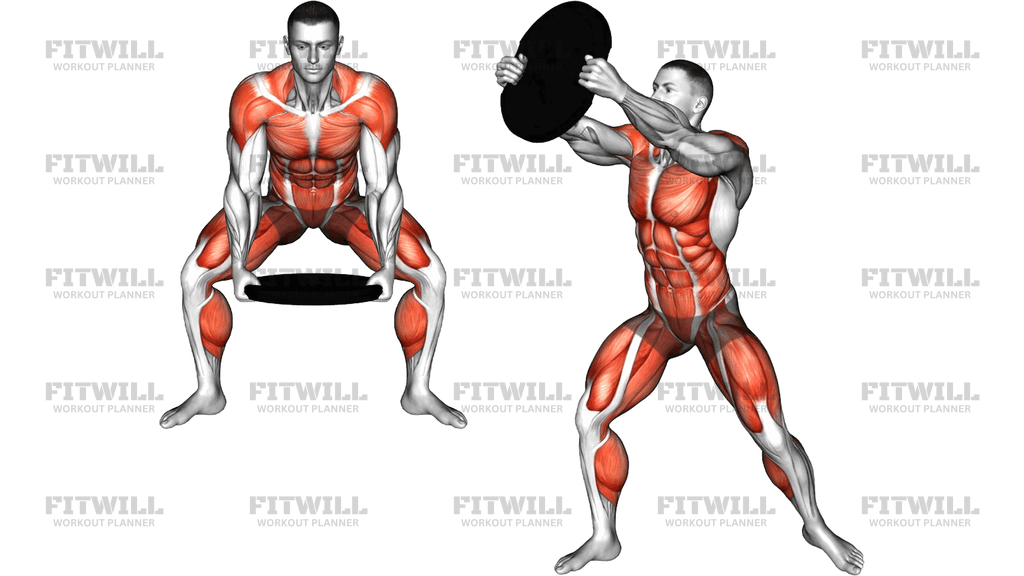
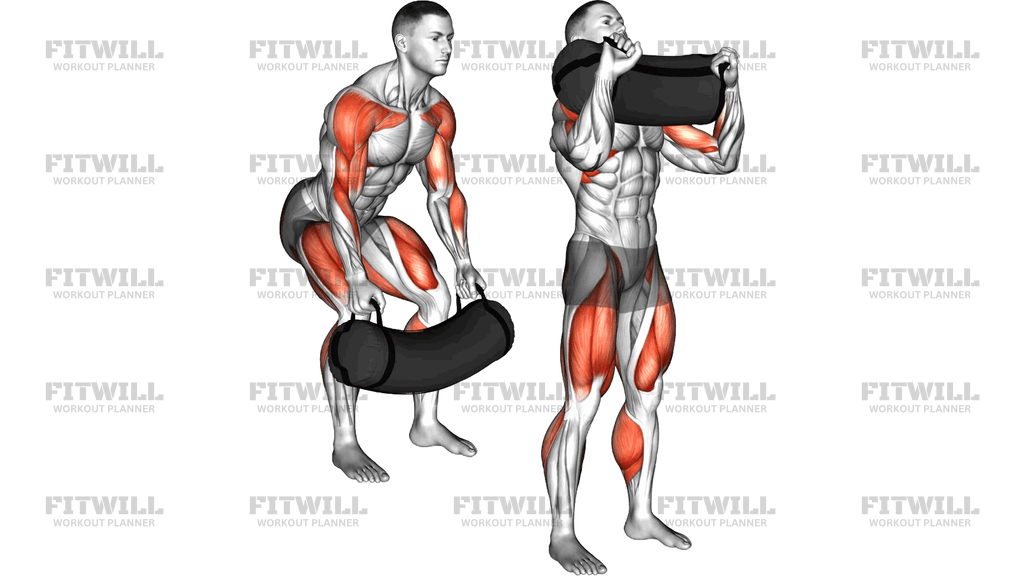
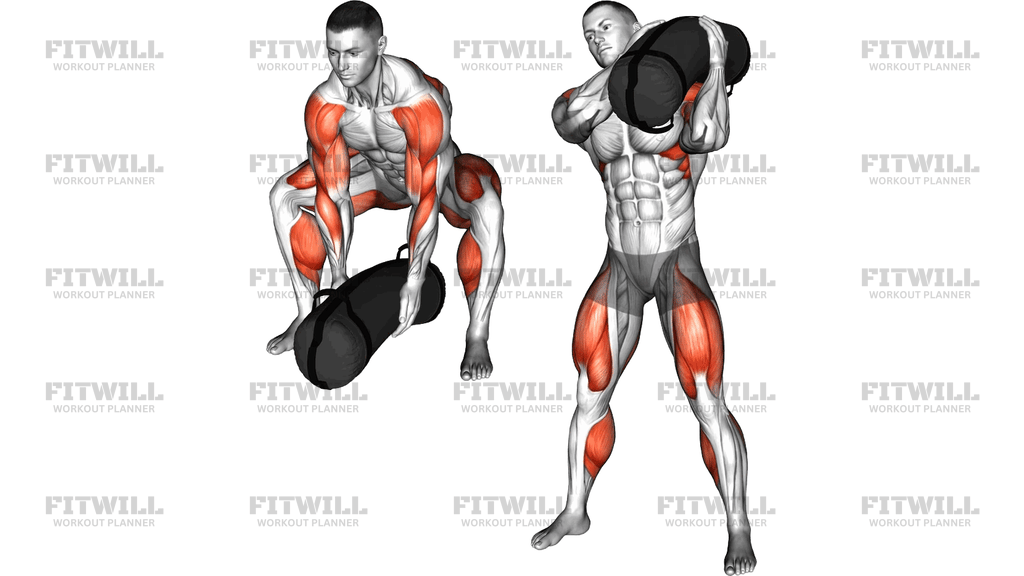
Weighted Sandbag Shouldering is the drill of hauling a sandbag from the floor up to one shoulder in a single committed lift, then lowering it back down and repeating on the other side. Because the sand shifts inside the bag, every rep forces you to adjust as you go, which is something no barbell or dumbbell can replicate. The finish position, with the bag resting across one shoulder and your hands gripping it on either side, is exactly how you would carry a heavy object in real life, so the carryover from this movement is unusually direct.
The lift runs through the whole body. The pull from the floor is a hinge and squat pattern loaded by the glutes, hamstrings, and quads, the trunk fights the twisting and side-bending forces the offset bag creates, and the shoulders and upper back do the final work of receiving and stabilizing the load at the top. The grip gets a serious challenge too, since you are squeezing a soft, shifting cylinder rather than a rigid handle.
Who benefits most? Combat athletes and CrossFit-style trainees love shouldering for conditioning, but it is just as valuable for anyone who wants a stronger posterior chain and a trunk that can handle awkward loads. Because the sandbag is forgiving on the body, it also suits lifters who find a barbell uncomfortable on the back or hips but still want heavy, full-body work.
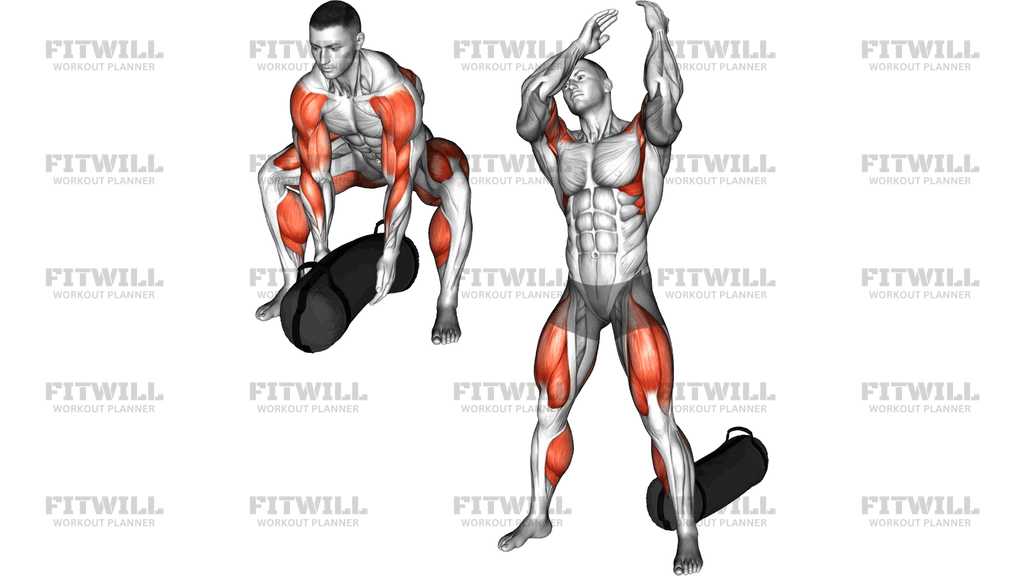
The setup matters more than most people expect. Position the bag with its long axis running across your body, your feet in a wide stance straddling or flanking it, and your hips lower than your shoulders before you start the pull. A rushed setup usually means the bag ends up too far from your body, which turns a clean, powerful drive into a strained lower-back wrench.
To execute well, grip the bag firmly on both sides, brace your trunk, and drive the floor away with your legs. Rather than deadlifting the bag slowly and curling it up, think of scooping it over one shoulder with a quick rotational drive, letting the momentum carry it into the rack position against your neck and shoulder. Exhale as the bag lands, stand fully upright, then lower it with control back toward the floor before resetting for the next side.
Treat shouldering as a skill as much as a strength lift. Start lighter than feels necessary, alternate shoulders rep by rep, and only add load once the bag lands quietly on your shoulder every time without you leaning away to catch it.
Fitwill
Log Workouts, Track Progress & Build Strength.
Achieve more with Fitwill: explore over 9600 exercises with images and videos, access built-in and custom workouts, perfect for both gym and home sessions, and see real results.
Start your journey. Download today!




Instructions
- Place a filled sandbag on the floor in front of you with the long end pointing across your body, then set your feet in a wide stance outside or straddling the bag.
- Hinge at the hips and bend your knees to squat down, keeping your chest tall, and grip the bag firmly with both hands on either side of the cylinder, sinking your hips low.
- Brace your trunk as if about to be punched, pull the slack up on the bag so it tightens against your body, and settle your weight into your heels and mid-foot.
- Drive your legs into the floor and extend your hips forcefully, pulling the bag upward and diagonally across your torso toward the shoulder you want to load.
- Let the bag roll or scoop over your hand and land on the front of your shoulder, then clamp both arms around it, keeping one hand high near the top of the bag and the other low for control.
- Stand all the way up with the bag racked on your shoulder, ribs down, torso upright, and hold the position briefly to establish control.
- Lower the bag under control by bringing it back across your body toward the floor, hinging and bending your knees to set it down softly rather than dropping it.
- Exhale sharply as the bag arrives at your shoulder, breathe in before the next pull, and avoid holding your breath through the whole lift.
- Reset your stance and grip fully between reps, alternating shoulders each rep so both sides of your body get equal work.
- Begin with a light bag for several sessions, then increase the fill weight only when the bag lands on your shoulder without you swaying or hopping to catch it.
Tips & Tricks
- The most common mistake is pulling the bag with your arms and lower back instead of driving with your legs, which shows up as the hips rising early and the chest falling toward the floor. If you notice this, lower your hips at the start and think about pushing the floor away.
- A bag that lands loosely on your shoulder and slides off means you are receiving it with straight arms. Pull your elbows up and close to your ribs as the bag approaches so your shoulder forms a shelf for it.
- Avoid twisting away from the bag as it comes up. If your torso is collapsing sideways to catch the load, the bag is too heavy or you are pulling too far from your midline; reposition the bag against your thighs before each rep.
- Keep the bag tight to your body on the way up. A gap between bag and torso multiplies the strain on your lower back and steals most of your leg drive.
- Use a wide, stable stance rather than a narrow deadlift stance. The extra width gives the soft, shifting bag room to travel over your shoulder without pulling you off balance.
- If the bag bulges in the middle and is hard to grip, redistribute the filler evenly along its length. A poorly filled bag turns a clean pull into a wrestling match.
- Warm up your hips and shoulders with lighter shouldering reps rather than jumping to your working weight, since the rotation at the top catches stiff hips off guard.
- Alternate shoulders every rep instead of completing all reps on one side first. This evens out side-to-side development and keeps you from favoring your dominant side.
- On hard sets, place the bag down completely and stand up between reps. Chain-repping from a half-squat position shortens the hip drive and builds sloppy habits.
Frequently Asked Questions
What muscles does Weighted Sandbag Shouldering work?
The glutes, hamstrings, and quads produce the drive from the floor, the shoulders and upper back receive and stabilize the bag, and the core and lower back resist the rotation and side-bending the offset load creates. Your grip works hard the entire time.
Is Weighted Sandbag Shouldering good for beginners?
Yes, provided you start with a light bag and treat the movement as a skill. The sandbag is forgiving on the joints, but the lift is technical, so a few sessions of practicing the scoop motion are worth it before adding significant weight.
How heavy should my sandbag be for shouldering?
Choose a weight you can lift to your shoulder ten or more times with clean technique. If you have to lean away, swing wildly, or hop to catch the bag on your shoulder, it is too heavy for your current skill level.
Why does the bag keep sliding off my shoulder at the top?
Usually your arms are too straight when the bag arrives, so there is no shelf for it to rest on. Pull your elbows in as the bag rises, squeeze it against your neck and shoulder, and keep the hand on the upper side of the bag clamped down tight.
Can I do Weighted Sandbag Shouldering without alternating sides?
You can, and some programs use single-side blocks deliberately, but most people should alternate shoulders rep by rep. This keeps the work balanced between sides and reduces the risk of developing a noticeable strong-side preference.
What can I use if I do not have a sandbag for Weighted Sandbag Shouldering?
A heavy duffel bag filled with sand bags or weight plates can work in a pinch, though the shifting feel will not be identical. There is no true substitute for the rolling, awkward character of a sandbag, so a proper sandbag is worth the investment.
Should I squat down to pick up the bag or hinge over it?
Use a mix: sink your hips down with bent knees like a squat so the bag stays close to your shins, while hinging enough to keep your chest higher than your hips. This position lets you scoop the bag upward with your legs instead of straining your lower back.
Is it safe to drop the sandbag after each rep?
From a low height onto a suitable floor, dropping a sandbag is fine and is common in conditioning work. However, lowering it under control for at least some reps builds eccentric strength and teaches you how to put a heavy object down safely.
How is Weighted Sandbag Shouldering different from a barbell clean?
A barbell is rigid and moves along a predictable path, while a sandbag is soft, shifts its weight, and needs to be scooped and rotated onto one shoulder. That unpredictability is precisely what makes shouldering so demanding on your trunk and stabilizers.